
Gangaur — Story and Significance
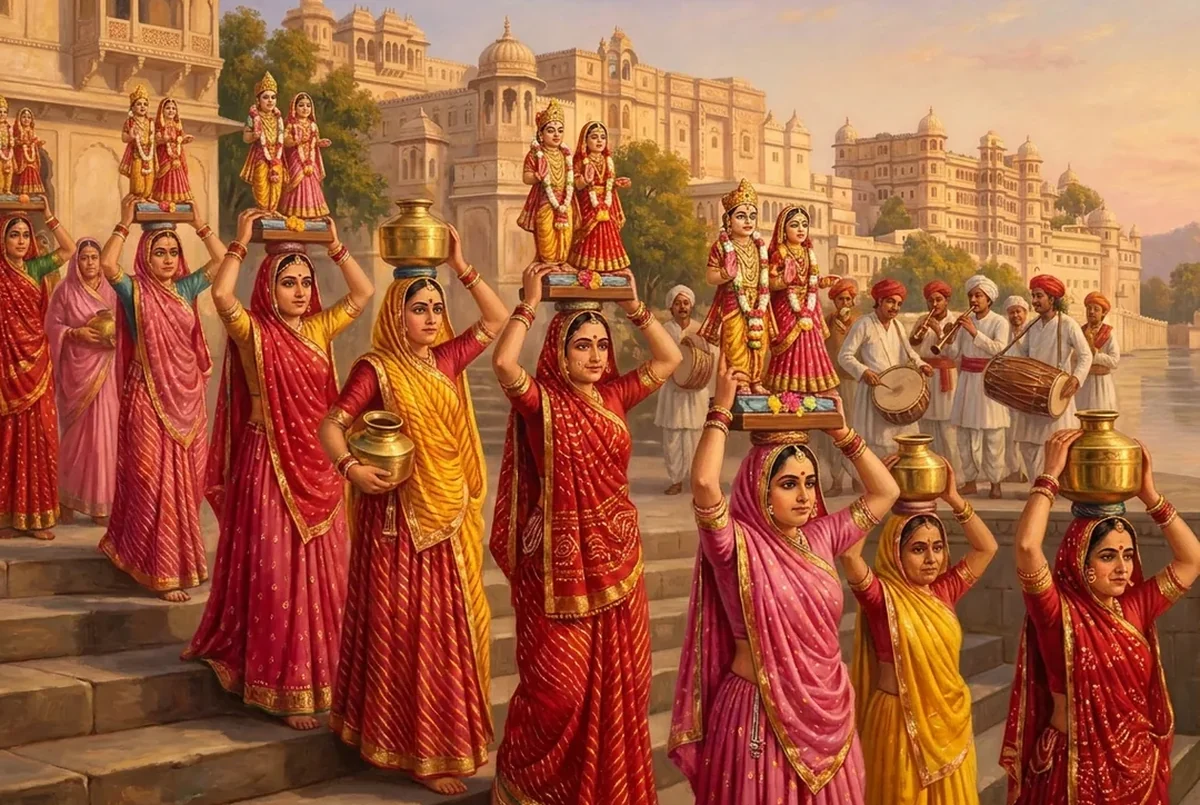
Gangaur — When is it
- 9 April 2027, Friday
| Tritiya tithi | from 9 April, 3:11 AM until 10 April, 1:32 AM |
| Sunrise · Sunset | 6:03 AM · 6:44 PM |
Times are for Delhi · 9 April 2027
Why is this day celebrated?
Gangaur is a great folk festival of Rajasthan and the Malwa-Nimar region of Madhya Pradesh, completed on Chaitra Shukla Tritiya. Gan stands for Lord Shiva, lovingly called Isar here, and Gaur for Goddess Gauri; from the day after Holi, women worship Isar and Gauri for sixteen to eighteen days. Married women pray for their husband's long life and a happy marriage, and unmarried girls for a good husband.
The katha
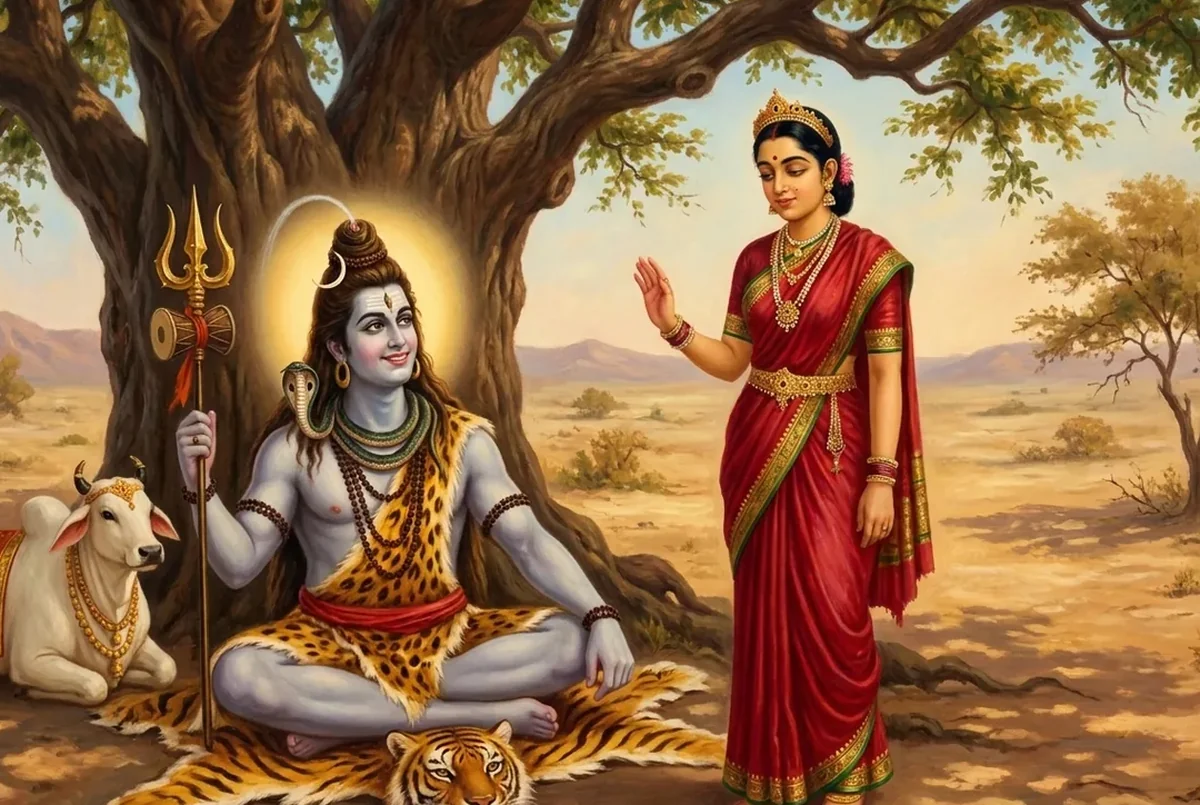
Once, on Chaitra Shukla Tritiya, Lord Shiva, Goddess Parvati and the sage Narada set out to wander the earth and came to a village. Word spread that Shiva and Parvati had come. The first to hurry out were women from simple, poor homes. They had no gold or silver plates. Just as they were, they brought a little turmeric, rice and water on their plates and worshipped with all their hearts.
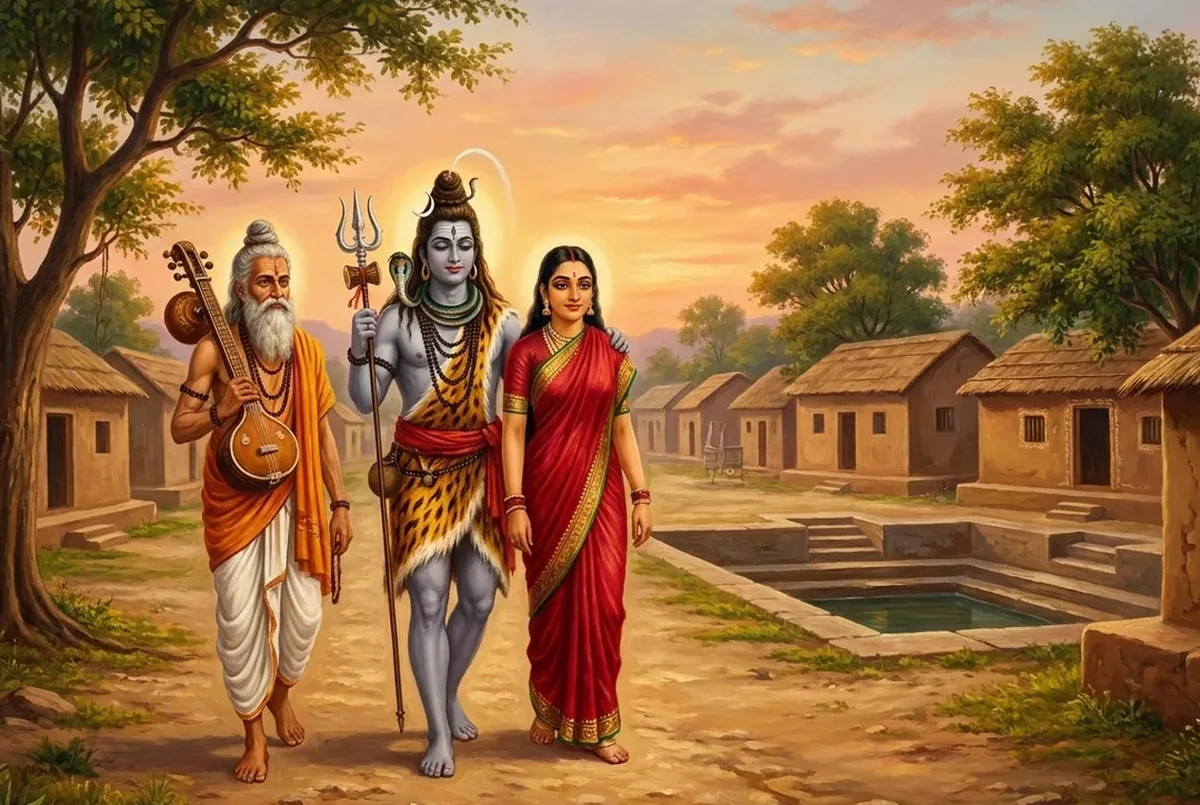
Parvati was deeply pleased by their sincerity and sprinkled the blessing of suhaag over them, that they would always be happily married. The women went home joyful. A little later, women from wealthy homes arrived with decorated plates full of dishes. Shiva smiled and asked, Devi, you have already sprinkled your suhaag on those women, what will you give these?
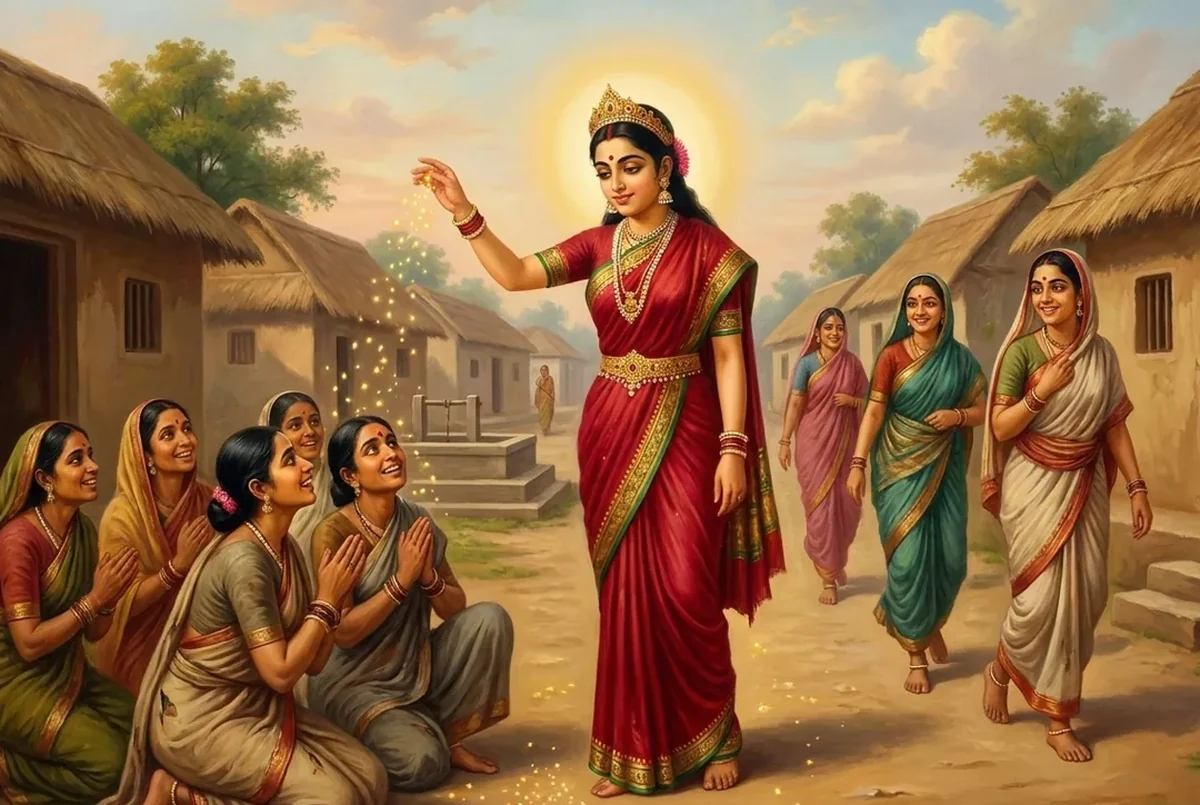
Parvati said, what they received was a blessing from outside; to these I will give a share of my own suhaag. The folk tale says the goddess pricked her finger and sprinkled the drops over these women, and each one touched by a drop received good fortune as lasting as her own. So the goddess blessed them all, but first of all those who came with the truest hearts.
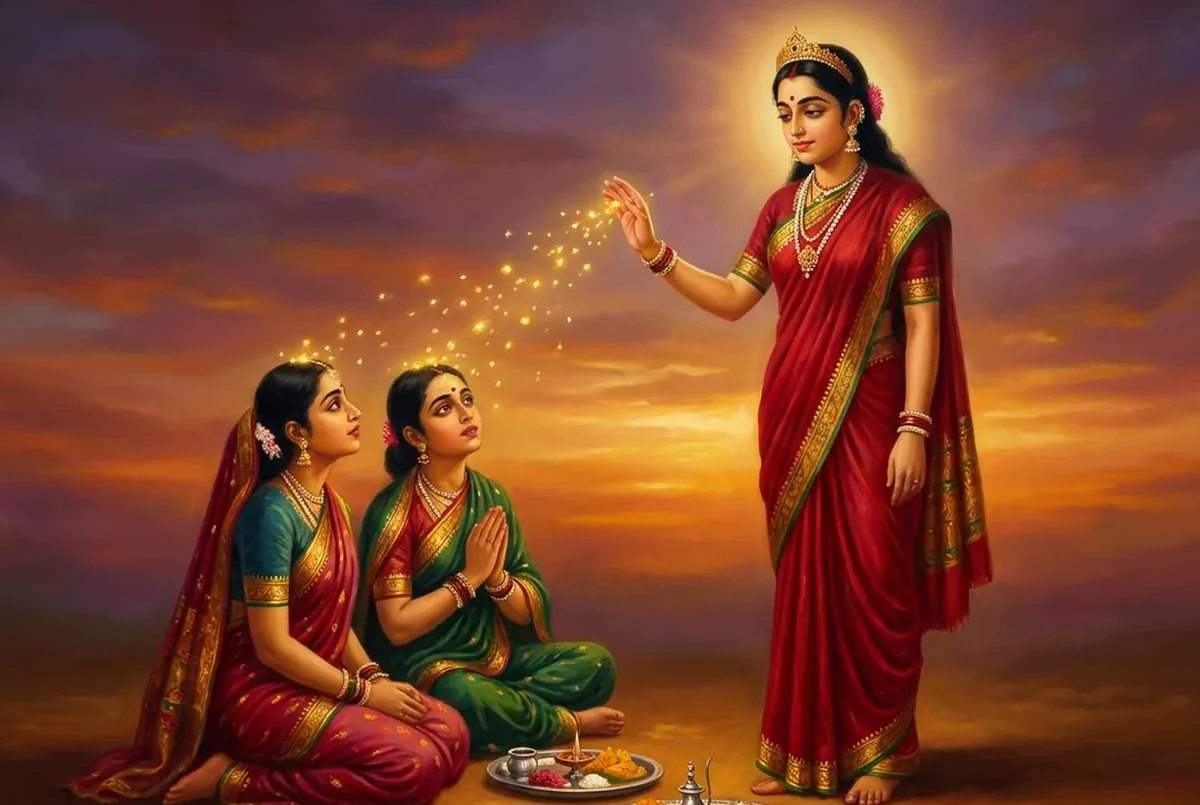
Then Parvati took Shiva's leave to bathe in the river. After bathing she shaped a Shivling from the river sand and worshipped it. She made offerings of sand, walked around the linga, took two grains of sand as prasad and marked her forehead with tilak. Moved by her devotion, Shiva appeared from that sand linga and blessed her: any woman who worships this way and keeps the vrat on this day will have lasting married happiness.
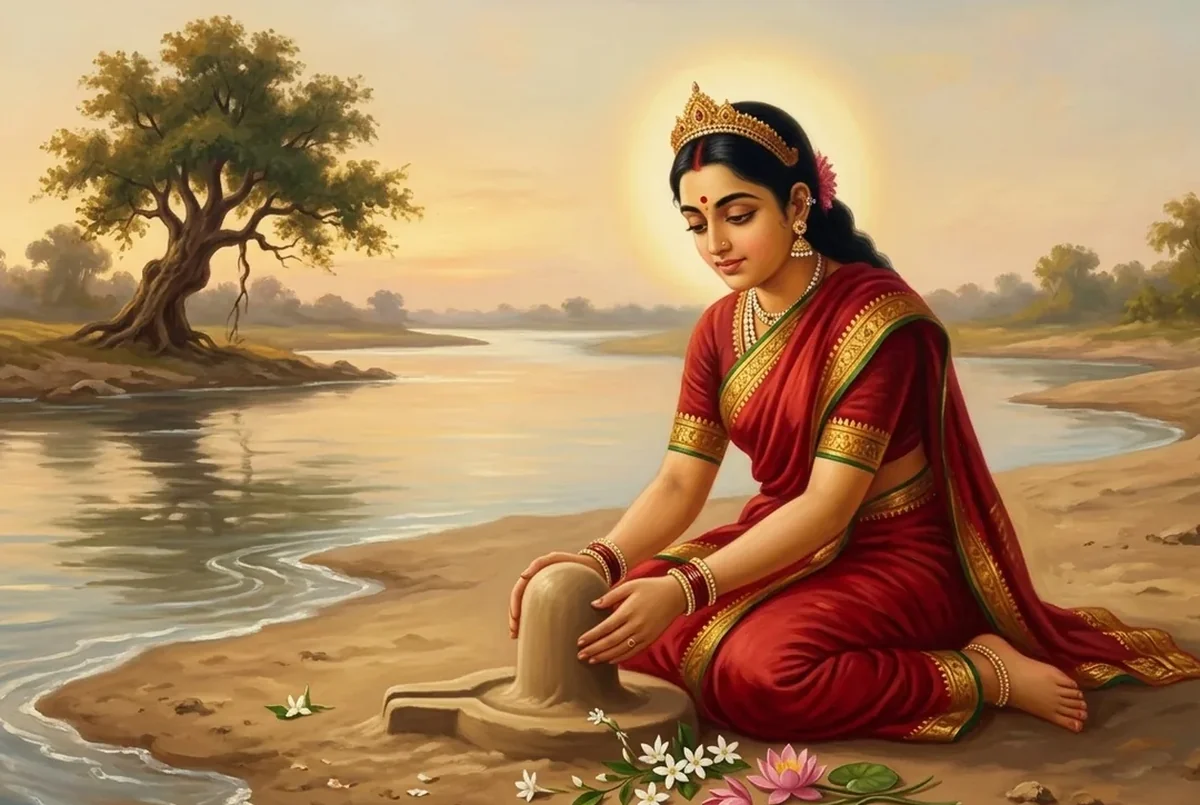
The worship took time. When she returned, Shiva asked what had kept her so long. Hiding the truth, Parvati said her family from her parents' home had met her by the river and fed her milk and rice. Shiva, who knows everything, said, then let us go, I too will eat milk and rice with your family. Parvati was worried and silently prayed to Shiva himself to save her from embarrassment. When they reached the river, a beautiful palace stood there, and Parvati's brother and his wife welcomed them with great honour. They stayed two days.
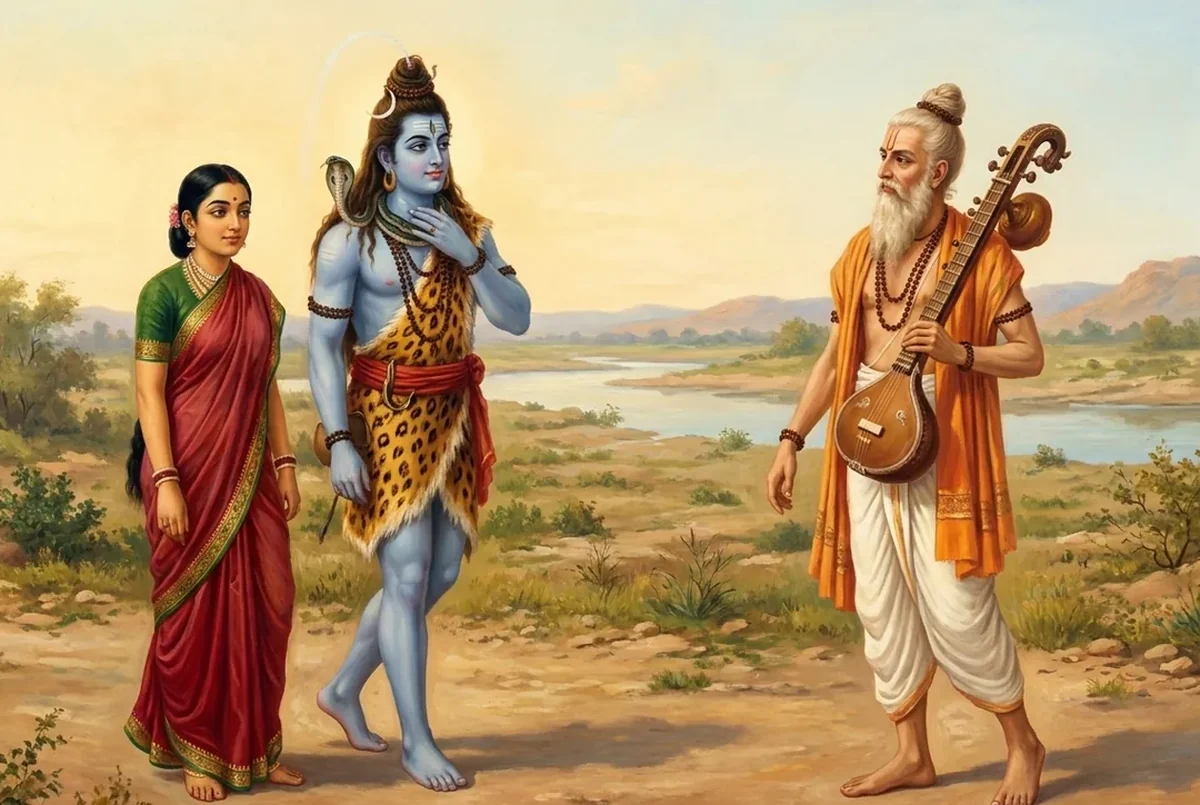
On the third day Parvati said it was time to go. After walking some way, Shiva said he had left his rosary behind and sent Narada to fetch it. When Narada reached the spot there was no palace and no people, only empty forest. Then lightning flashed, and in its light he saw the rosary hanging from a tree. Amazed, he returned and told Shiva. Shiva laughed and said, this was all Parvati's doing, she wanted to keep her worship secret. Narada then praised Parvati's devotion and constancy with all his heart.
Many Gangaur customs come from this story. Women worship together, from the heart, and in many places Gangaur prasad is not given to men, because the goddess too kept her worship secret. The story also teaches that the goddess loves a sincere heart more than a shining plate. May Isar and Gauri keep love and good fortune in every home.
How it is observed
- From the day after Holi, women and girls worship Isar and Gauri every morning; small figures are shaped from Holi ash or clay, and later decorated wooden or clay images of Isar and Gangaur are installed.
- Water is sprinkled with durva grass, and sprouts of wheat and barley, flowers, mehndi, kajal and roli are offered; Gangaur folk songs are sung to please Gaura Maa.
- The day before Gangaur is Sinjara, when mehndi, clothes, jewellery and sweets are sent for daughters and daughters-in-law; a new bride usually worships her first Gangaur at her parents' home.
- On Chaitra Shukla Tritiya women fast, worship and hear the katha, then bid Gangaur farewell and immerse her in a well, pond or river; in some places the farewell is the next day.
- In Jaipur a royal Gangaur procession sets out near the City Palace, and in Udaipur a great celebration is held at Gangaur Ghat on Lake Pichola.
Frequently asked questions
When is Gangaur 2027?
Gangaur 2027 is on 9 April 2027, Friday. Dates follow the Hindu panchang for Delhi; other cities can differ by a day.
What is the puja or fasting time for Gangaur 2027?
Tritiya tithi from 9 April, 3:11 AM until 10 April, 1:32 AM (Delhi)
Why is Gangaur celebrated?
Gangaur is a great folk festival of Rajasthan and the Malwa-Nimar region of Madhya Pradesh, completed on Chaitra Shukla Tritiya.
Source
This Gangaur vrat katha of Shiva and Parvati is a folk tradition of Rajasthan and Malwa, told in different versions from village to village.