
Vat Savitri Vrat Katha

Vat Savitri Vrat — When is it
- 4 June 2027, Friday
| Amavasya tithi | from 4 June, 4:06 AM until 5 June, 1:10 AM |
| Sunrise · Sunset | 5:23 AM · 7:16 PM |
Times are for Delhi · 4 June 2027
Why is this day celebrated?
This fast honours Savitri, who through wisdom, patience and unshakeable devotion won back her husband Satyavan's life from Yama, the lord of death. It all happened under a banyan tree, the vat. So on this day married women worship the banyan and pray for their husband's long life and the wellbeing of the family.
The katha
The story goes that King Ashvapati of Madra was a righteous man with no children. For eighteen years he worshipped the goddess Savitri, and by her grace a gifted daughter was born, named Savitri after her. When she grew up, her radiance was such that no suitor came forward, so her father told her to choose a husband herself.

In the forest Savitri met Satyavan and chose him in her heart. He was the son of King Dyumatsena of Shalva, who had lost his sight and his kingdom and now lived in the forest with his family. Then the sage Narada revealed that Satyavan had only one year left to live. Her father pleaded, but Savitri calmly said that the one she had chosen was her husband forever.
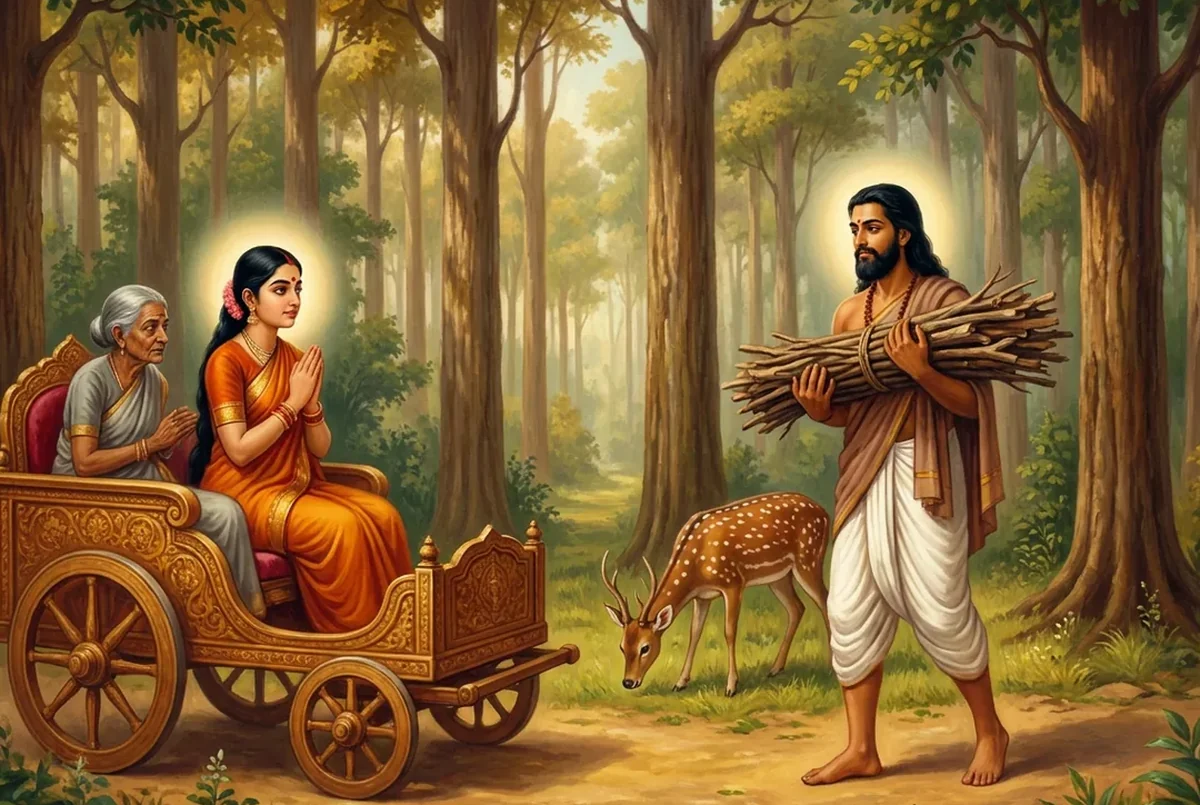
After the wedding she left palace comforts behind and served her husband and his parents in the forest. As the fated day drew near, she fasted for three days. That morning Satyavan went to cut wood and Savitri went with him. His head began to ache, and he lay down with his head in her lap beneath a great banyan tree. Yama appeared, drew out Satyavan's life and set off towards the south.
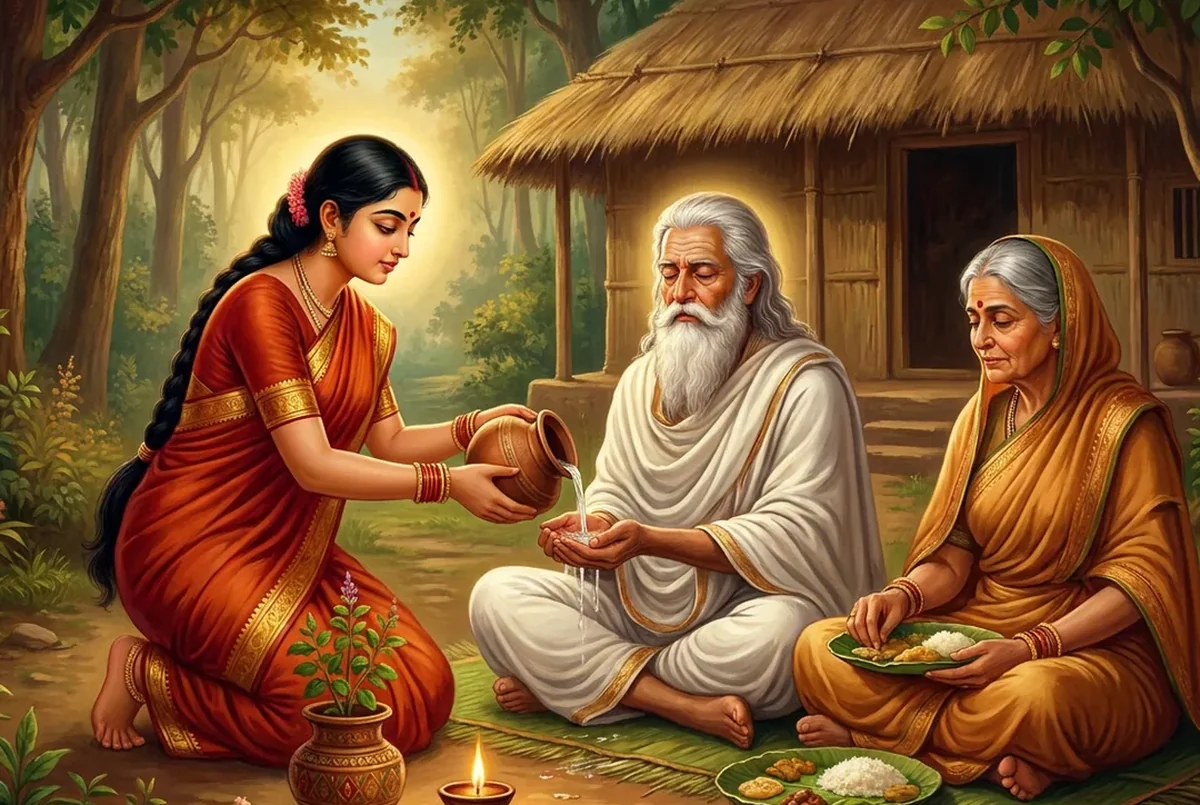
Savitri followed. Again and again Yama told her to turn back, yet she spoke so wisely about dharma, good company and true love that he was pleased and offered her any boon except Satyavan's life. First she asked for her father-in-law's sight and kingdom to be restored. Next she asked for sons for her own father.
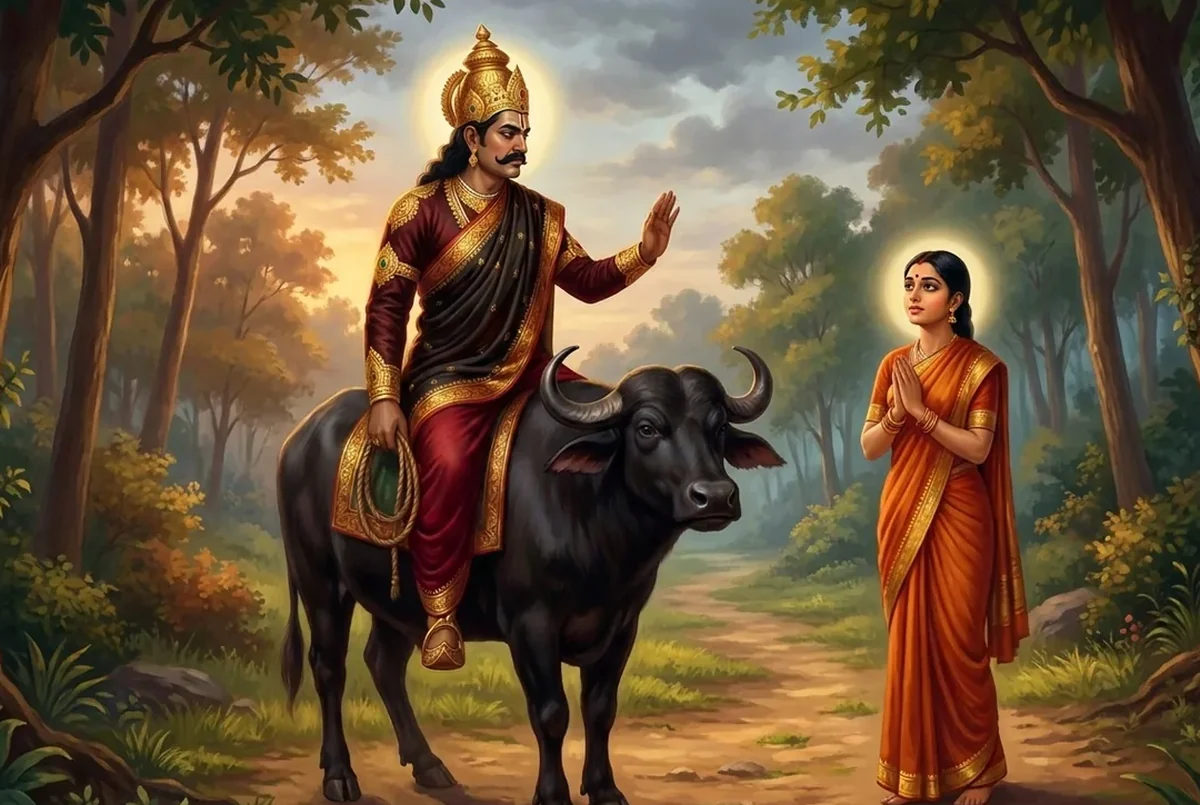
Still she walked on. Yama offered a third boon, and Savitri humbly asked to become the mother of a hundred sons by Satyavan. Yama said, so be it. Then she asked how that could come true without her husband. Moved by her wisdom and faith, Yama returned Satyavan's life. Back under the banyan, Satyavan sat up as if waking from deep sleep.
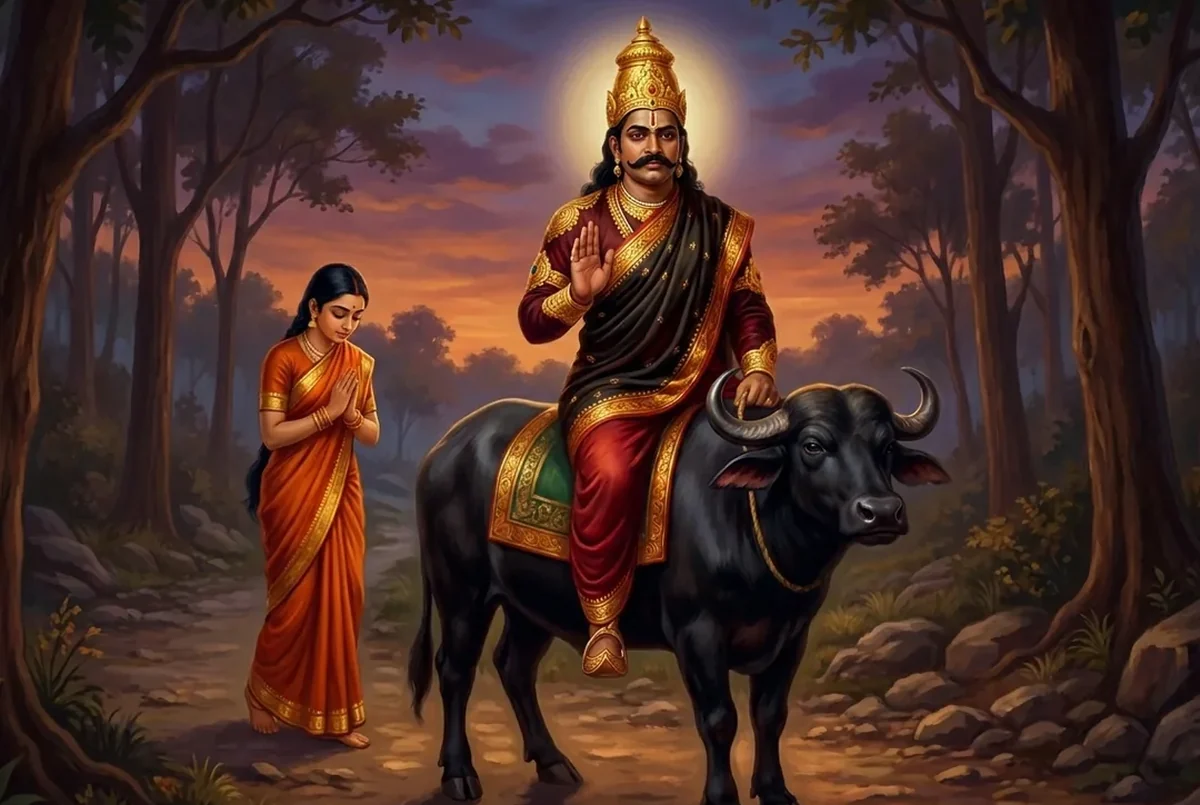
That is why the banyan is worshipped today, with threads wound around its trunk. In north India the vrat falls on Jyeshtha Amavasya; in Maharashtra and Gujarat it is kept on Jyeshtha Purnima as Vat Purnima. Savitri's story shows that love, wisdom and dharma together can overcome anything. May Mother Savitri bless every family.
How it is observed
- Married women bathe, dress in their finery and fast as per family custom; in some places the vrat lasts three days.
- Pour water at the roots of the banyan and offer roli, turmeric, rice, flowers, soaked gram, fruit and sweets.
- Wind raw cotton thread or mauli around the trunk while circling the tree seven, twenty-one or one hundred and eight times.
- Listen to the story of Savitri and Satyavan, seek the blessings of elders and break the fast as per custom.
- North India keeps it on Jyeshtha Amavasya; Maharashtra and Gujarat on Jyeshtha Purnima as Vat Purnima.
Frequently asked questions
When is Vat Savitri Vrat 2027?
Vat Savitri Vrat 2027 is on 4 June 2027, Friday. Dates follow the Hindu panchang for Delhi; other cities can differ by a day.
What is the puja or fasting time for Vat Savitri Vrat 2027?
Amavasya tithi from 4 June, 4:06 AM until 5 June, 1:10 AM (Delhi)
Why is Vat Savitri Vrat celebrated?
This fast honours Savitri, who through wisdom, patience and unshakeable devotion won back her husband Satyavan's life from Yama, the lord of death.
Source
Mahabharata, Vana Parva, the story of Savitri; the vrat is described in the Skanda Purana and Bhavishya Purana. The three-boon version is the popular vrat katha; in the Mahabharata Yama grants five boons.