
Tulsi Vivah — Story and Significance
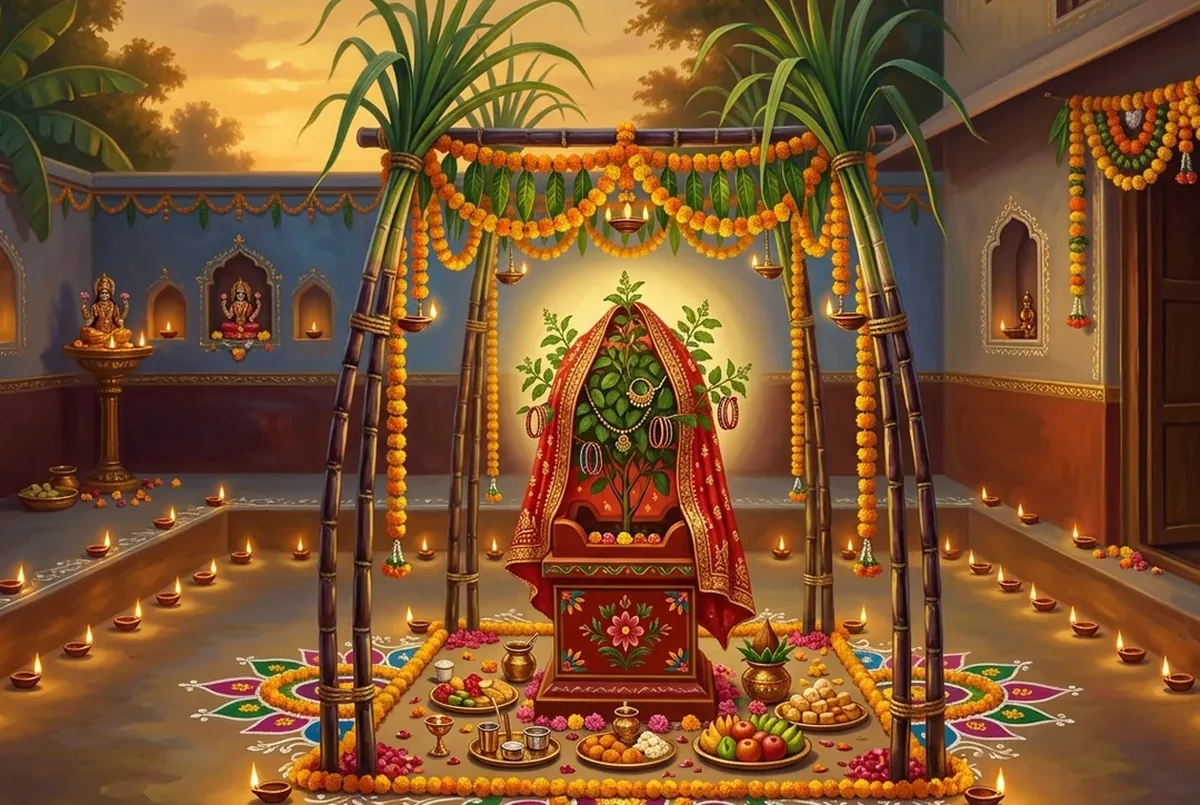
Tulsi Vivah — When is it
- 21 November 2026, Saturday
- 11 November 2027, Thursday
| Dwadashi tithi | from 21 November, 6:32 AM until 22 November, 4:57 AM |
| Sunrise · Sunset | 6:48 AM · 5:26 PM |
Times are for Delhi · 21 November 2026
Why is this day celebrated?
Tulsi Vivah is celebrated on Kartik Shukla Dwadashi, the day after Dev Uthani Ekadashi; many families hold it on any auspicious day between that Ekadashi and Kartik Purnima. Tulsi is married to Lord Vishnu in his Shaligram form with all the rites of a real wedding. Giving Tulsi away in kanyadaan is believed to bring the same merit as giving away a daughter, and the wedding season begins after this day.
The katha
Tulsi's story begins with a devotee named Vrinda. Though born into an asura family, from childhood her heart was absorbed in the name of Lord Vishnu. When she grew up she married Jalandhar, who is said to have been born in the ocean from the fiery energy of Lord Shiva, and so was immensely strong. Vrinda was wholly devoted to her husband, and the power of her virtue became his shield.
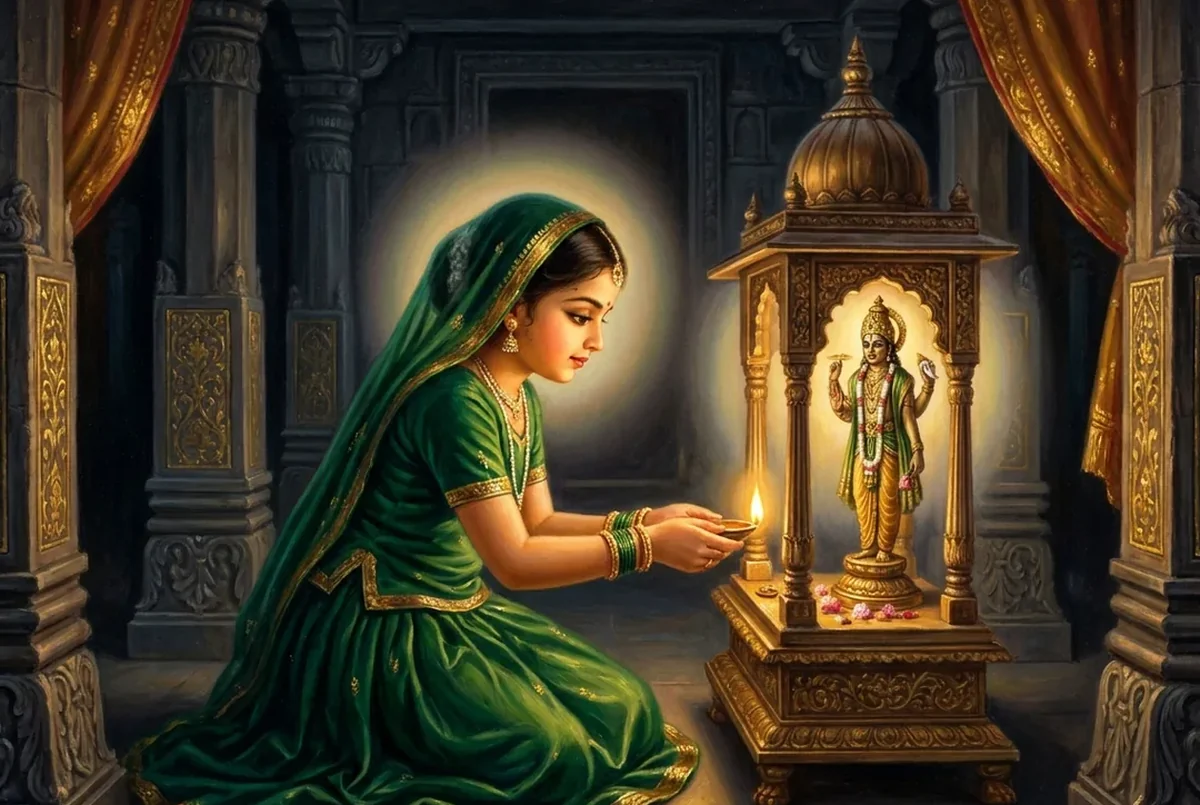
Proud of his strength and boons, Jalandhar defeated the gods, seized heaven, and at last set out to fight Lord Shiva himself. As he left, Vrinda vowed that she would not rise from her worship until her husband returned from battle. She lit a lamp and sat in meditation. As long as her vow held, no power could defeat Jalandhar. The gods, alarmed, went to Lord Vishnu for help.
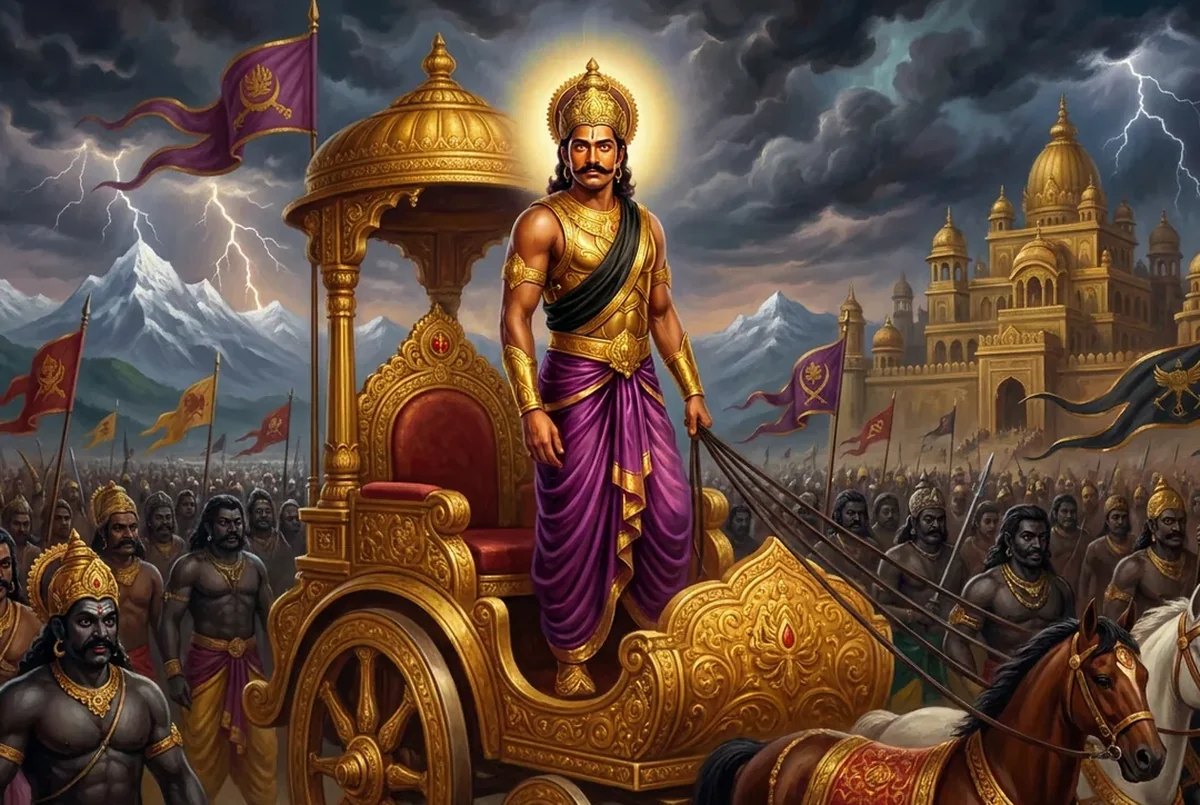
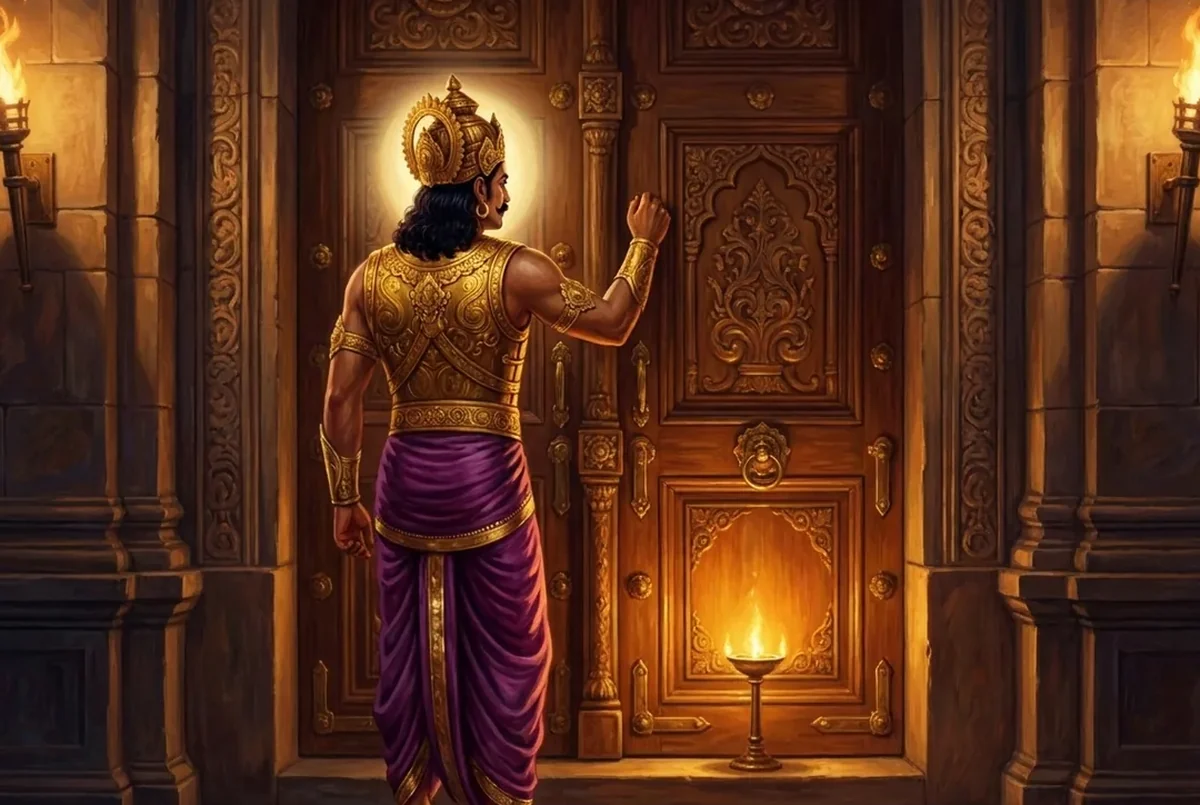
To protect the world, Vishnu took Jalandhar's form and came to Vrinda's door. Thinking her husband had returned, she rose joyfully from her worship and touched his feet. In that moment her vow was broken, and on the battlefield Shiva ended Jalandhar. Soon Vrinda learned the truth. The very Lord whose name she had chanted since childhood had done this. Her heart filled with sorrow.
In her pain Vrinda cursed the Lord to turn to stone. He bowed his head, accepted the curse, and became stone. With the Preserver turned to stone, the balance of creation began to falter. The gods and Goddess Lakshmi came to Vrinda with folded hands and pleaded. Her heart softened with compassion. She took back the curse, and then, resolving to follow her husband, gave up her body in the fire of her own penance.
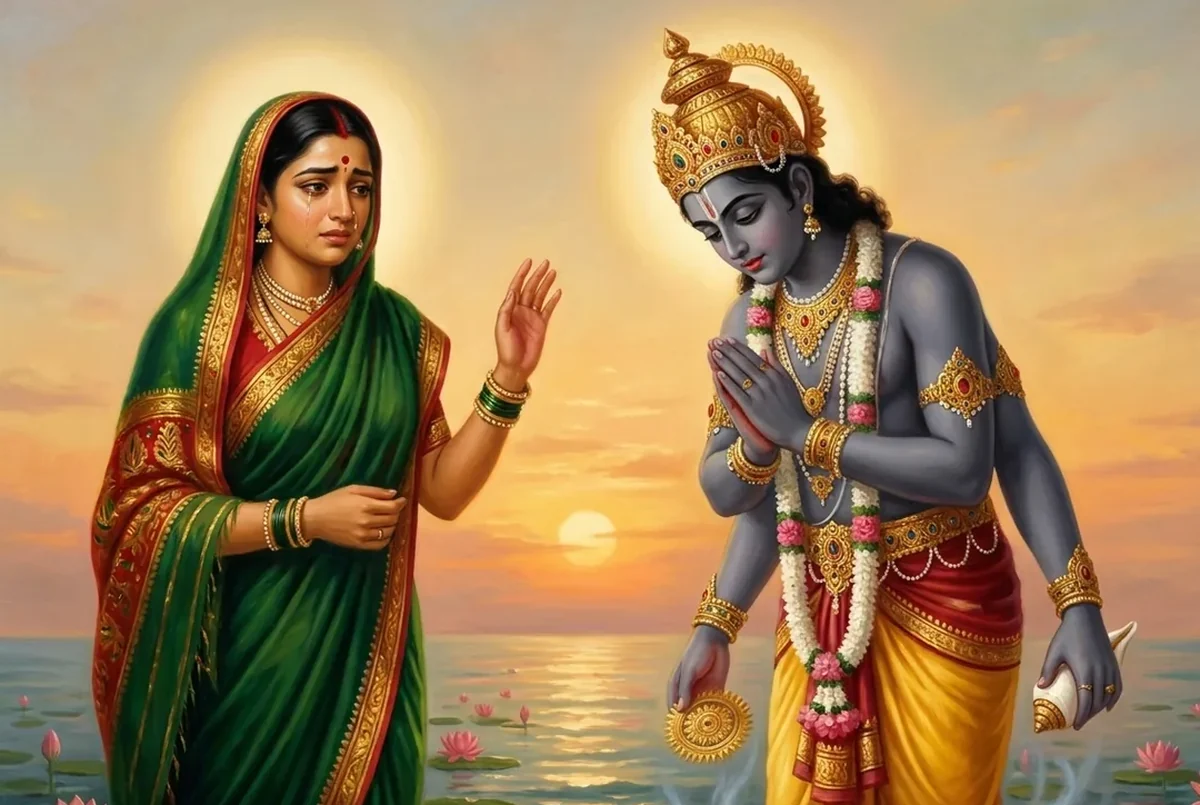
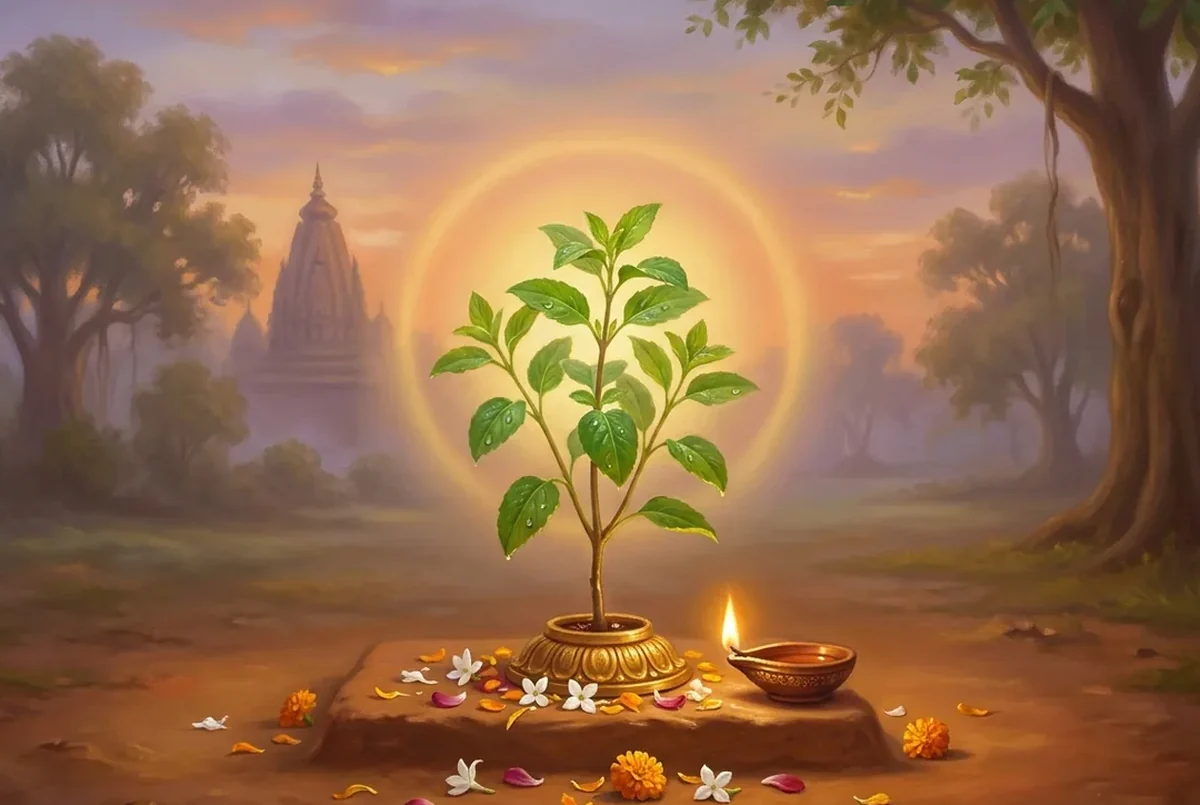
Where Vrinda's body came to rest, a tender green plant grew, and it was called Tulsi. Lord Vishnu said, Vrinda, your devotion and purity will be honoured for ever. No offering to me will be complete without a Tulsi leaf. To honour your curse, one form of mine will remain as the Shaligram stone, and every year in Kartik I will marry you in that form. To this day Shaligram stones are found in the Gandaki river of Nepal and worshipped together with Tulsi.
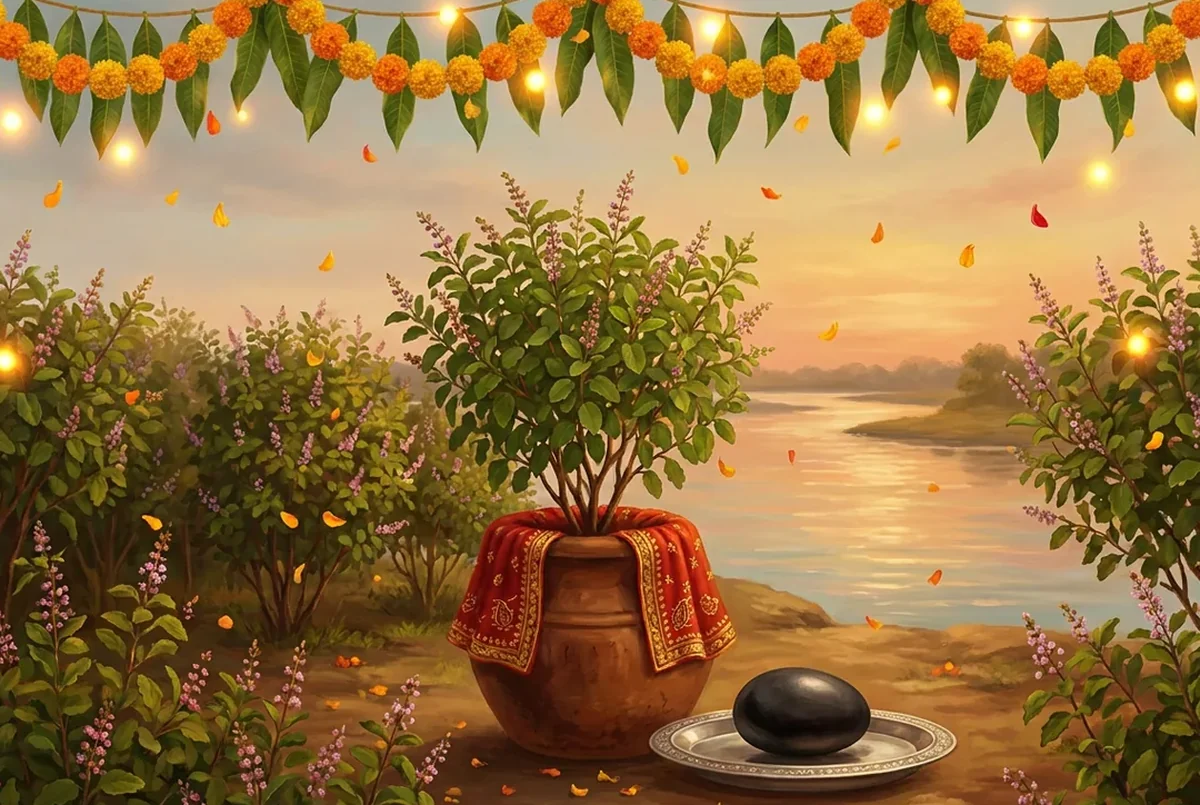
It is said the gods themselves arranged the first wedding of Tulsi and Shaligram, and from then the custom spread from home to home. There is also a belief that the forest thick with Tulsi came to be called Vrindavan after Vrinda. Families who have no daughter give Tulsi away in kanyadaan and so know the joy of sending a daughter off with blessings.
The story of Tulsi Vivah holds both sorrow and forgiveness. Vrinda bore the grief of being deceived, yet withdrew her curse for the sake of the world; and the Lord honoured his devotee so highly that Tulsi is worshipped in every courtyard today. The message of the day is that true devotion and a generous heart are never wasted. May Tulsi Mata and Shaligram Bhagwan bless every home.
How it is observed
- In the evening a canopy of sugarcane is built around the Tulsi pot in the courtyard or on the roof, with rangoli and lamps.
- Tulsi is dressed as a bride in a red chunri with bangles, bindi and sindoor, and Shaligram or an image of Vishnu, dressed in yellow, is seated beside her.
- As at a wedding there is haldi, kanyadaan and the pheras; holding Shaligram, a family member walks seven times around Tulsi while wedding songs are sung.
- Seasonal fruits such as water chestnut, ber, sweet potato and sugarcane are offered with kheer and puri, and the prasad is shared by all.
- Many families give grain and clothes to a priest or someone in need after the wedding; temples also hold the Tulsi-Shaligram wedding with great festivity.
Frequently asked questions
When is Tulsi Vivah 2026?
Tulsi Vivah 2026 is on 21 November 2026, Saturday. Dates follow the Hindu panchang for Delhi; other cities can differ by a day.
What is the puja or fasting time for Tulsi Vivah 2026?
Dwadashi tithi from 21 November, 6:32 AM until 22 November, 4:57 AM (Delhi)
Why is Tulsi Vivah celebrated?
Tulsi Vivah is celebrated on Kartik Shukla Dwadashi, the day after Dev Uthani Ekadashi; many families hold it on any auspicious day between that Ekadashi and Kartik Purnima.
Source
The story of Jalandhar and Vrinda is in the Shiva Purana (Rudra Samhita, Yuddha Khanda) and the Padma Purana; this form, with the curse withdrawn, Lakshmi's plea and the Tulsi-Shaligram wedding, is as told in folk tradition, and the Brahmavaivarta Purana tells a different version with the names Tulsi and Shankhachuda.