
Ayyappa: Manikandan: The Prince of Pandalam Who Became Ayyappa of Sabarimala
Sabarimala, Kerala

Ayyappa, also called Dharma Sastha and Manikandan, is among Kerala's most beloved gods; devotees see him as born of the power of both Shiva and Vishnu. His shrine stands on Sabarimala, deep in the forests of the Western Ghats in Kerala. Every year lakhs of devotees keep a forty-one-day vow and climb to him carrying the irumudi on their heads.
The story goes that when Mother Durga ended Mahishasura, his sister Mahishi did fierce tapas to avenge him. From Brahma she won a boon that no one could defeat her except one born of both Shiva and Vishnu. Sure that no such being could ever exist, she began to torment the gods. Then Lord Vishnu took the form of Mohini, and from the power of Shiva and Mohini a divine child was born, called Hariharaputra, the son of Hari and Hara.
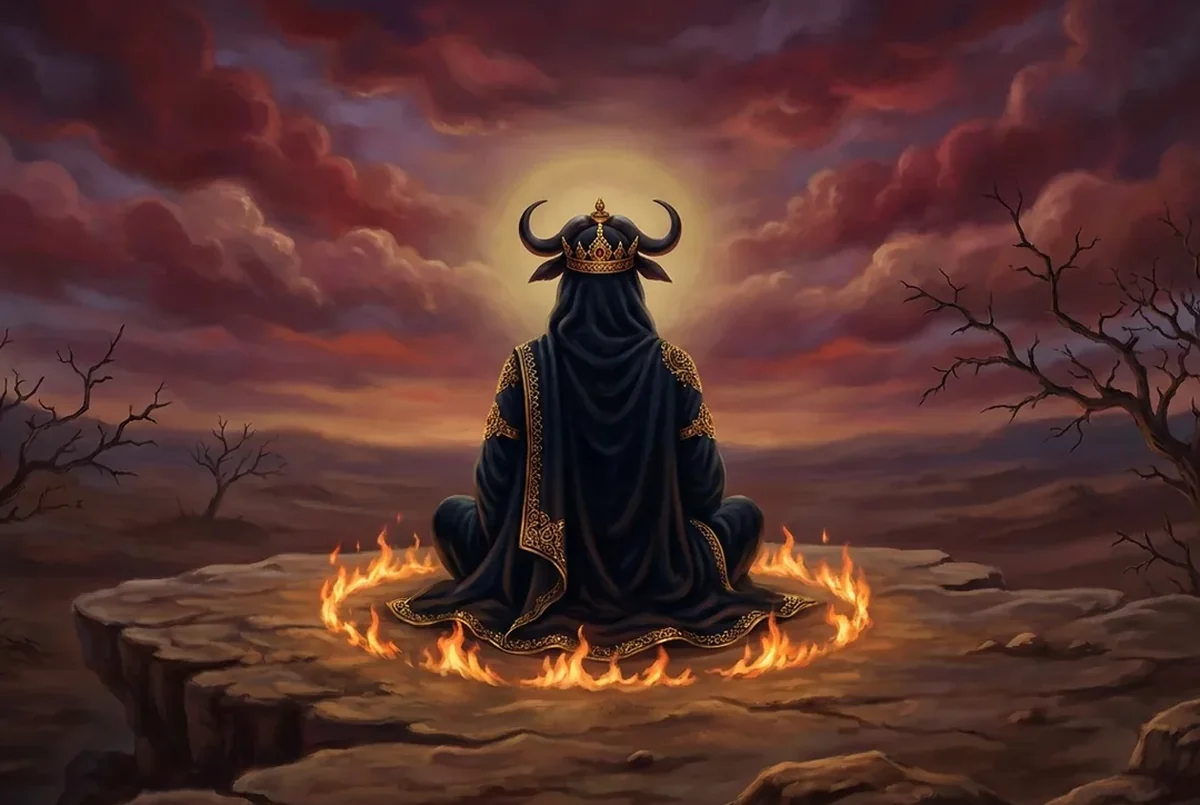
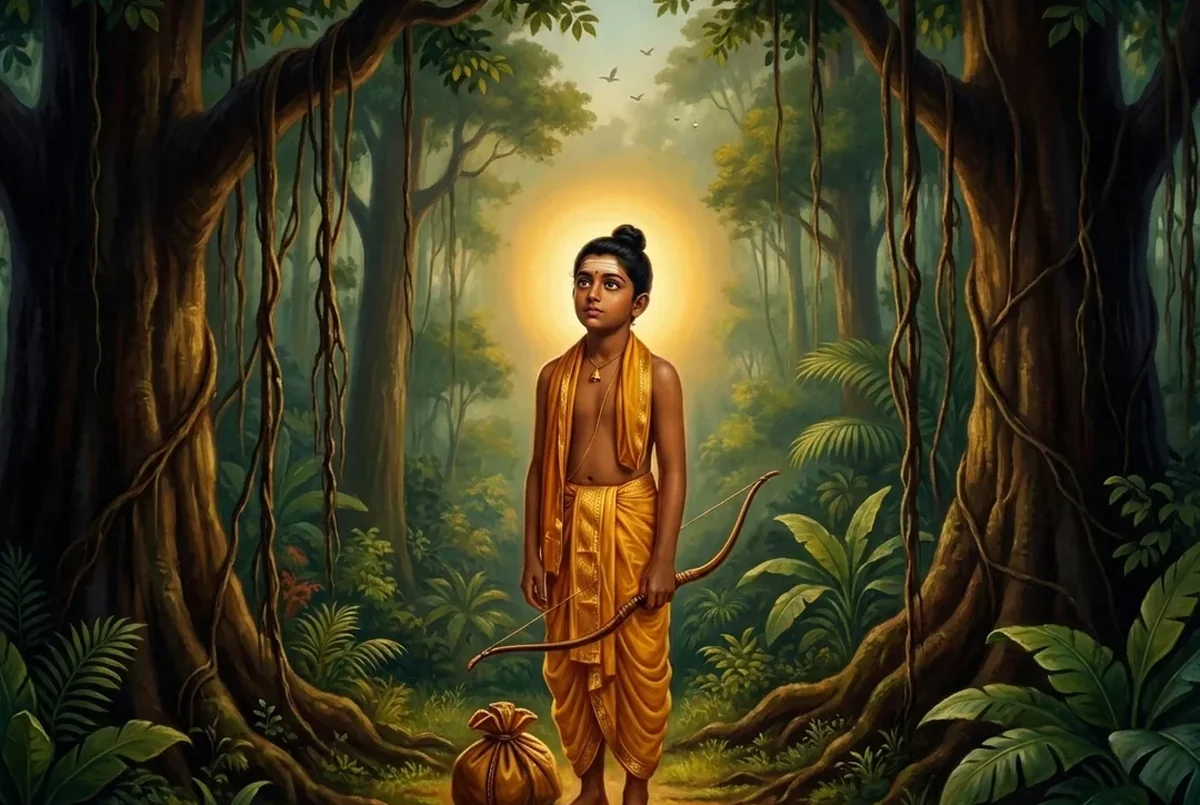
In those days Rajasekhara, the king of Pandalam, grieved that he had no children. One day he went hunting in the forest by the river Pamba and heard a baby crying. Going closer, he found a radiant boy lying there with a small golden bell tied around his neck. Just then an ascetic appeared and said, take this child home and name him Manikandan, the one with a bell at his throat. When he turns twelve, the secret of his birth will reveal itself.
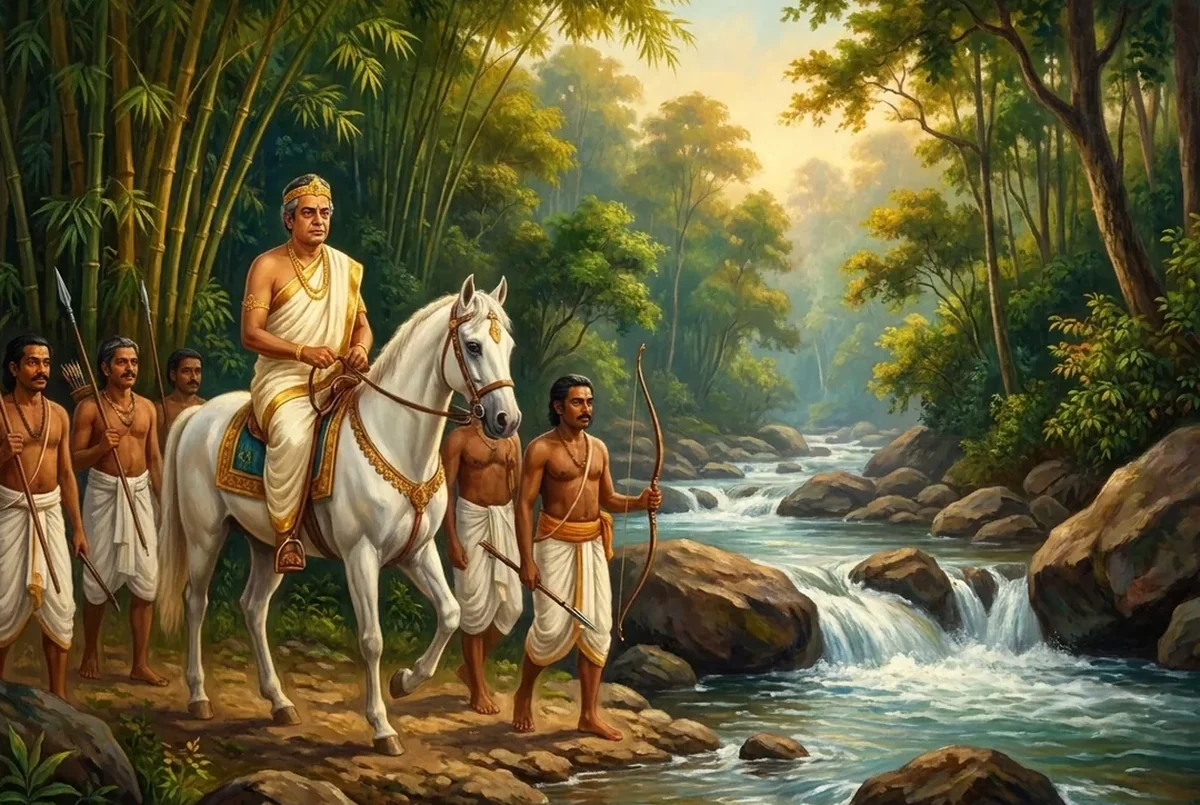
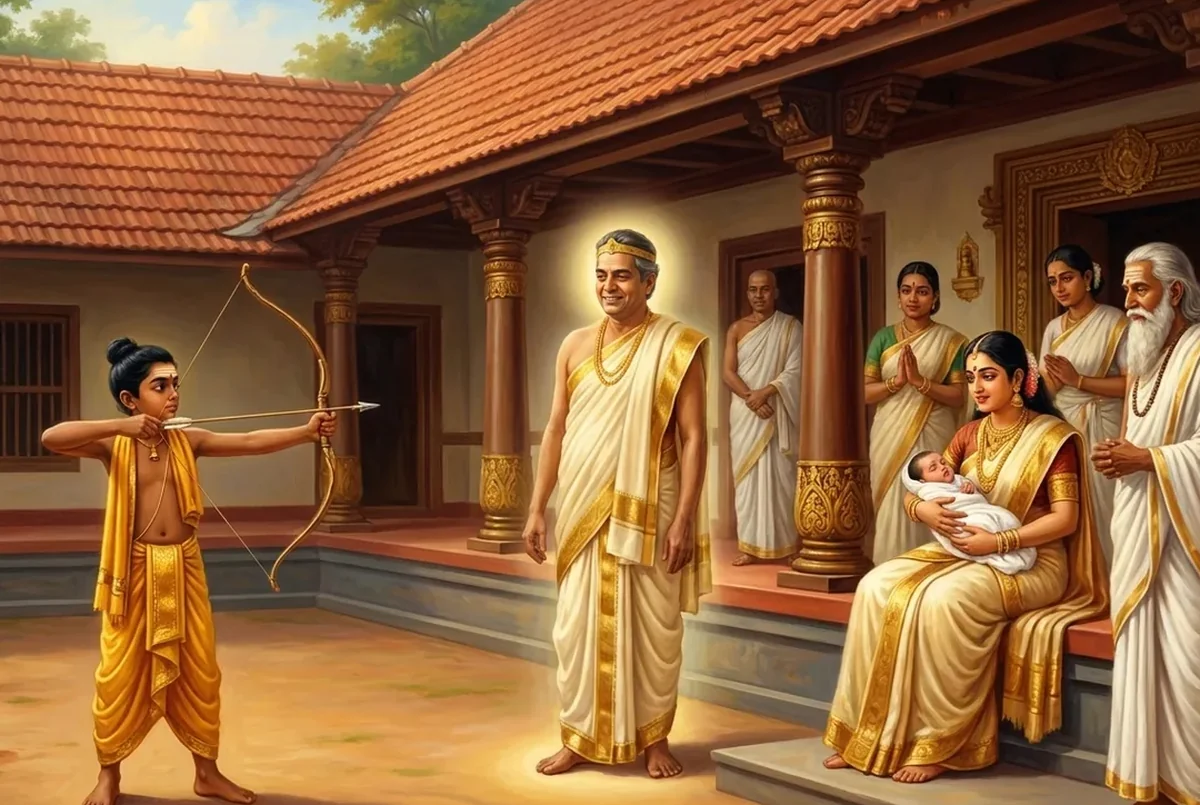
The king and queen raised Manikandan as their own. He mastered every skill, was loved by all and remained humble. After some years the queen bore a son of her own, yet the king still wished to make Manikandan crown prince. A minister did not want this. He filled the queen's mind with fear about what would become of her own son if Manikandan became king, and slowly the queen came under his influence.
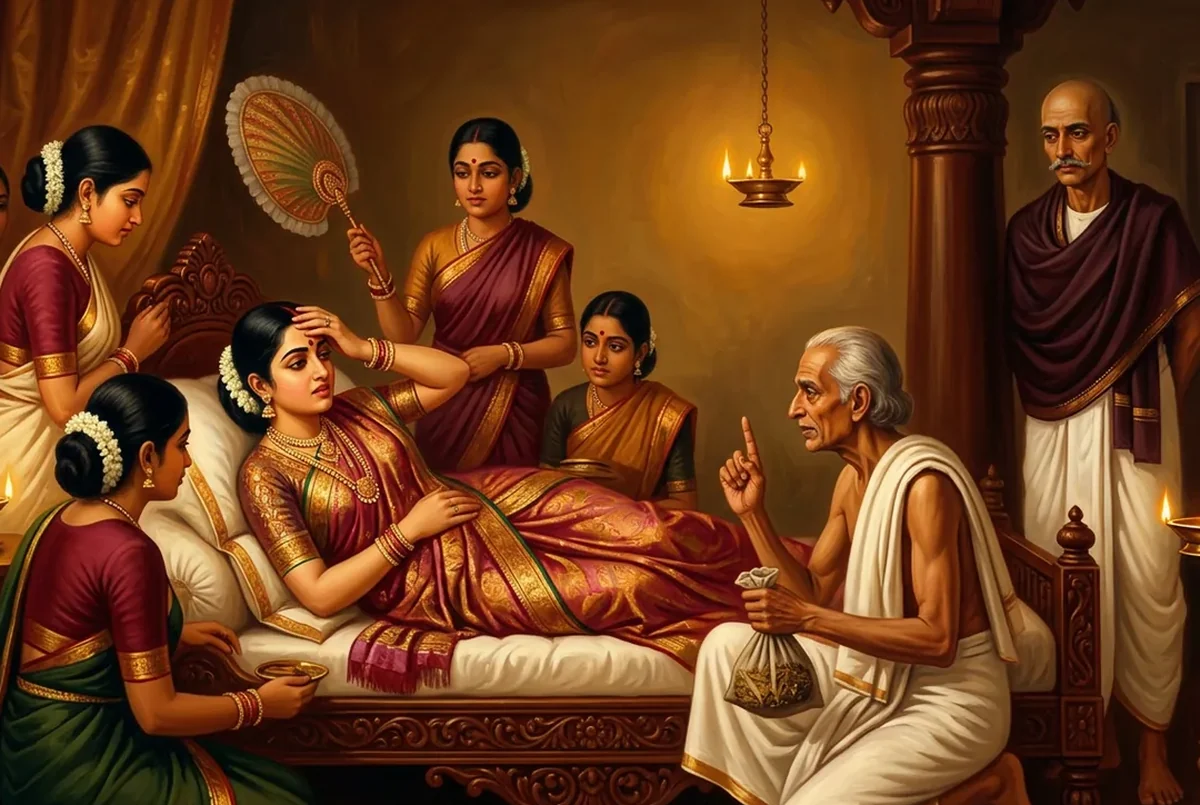
One day the queen pretended to have an unbearable headache. A physician, coached by the minister, declared that only tigress's milk could cure it. Everyone knew that going after tigress's milk meant walking towards death. Twelve-year-old Manikandan said, I will go, for my mother. The king tried hard to stop him, but he would not turn back. At last the king tied up food for the journey and coconuts with his own hands. It is said that the irumudi devotees carry today is the memory of that bundle.
In the forest, Manikandan remembered why he had been born. It was in these very woods that Mahishi was terrorising the gods. Manikandan challenged her, and a mighty battle followed. In the end Mahishi fell before the son of Hari and Hara, and it is believed that the cursed soul within her found release. The gods rejoiced. Indra himself became a tigress, and the other gods became tigers and cubs and went along with Manikandan.
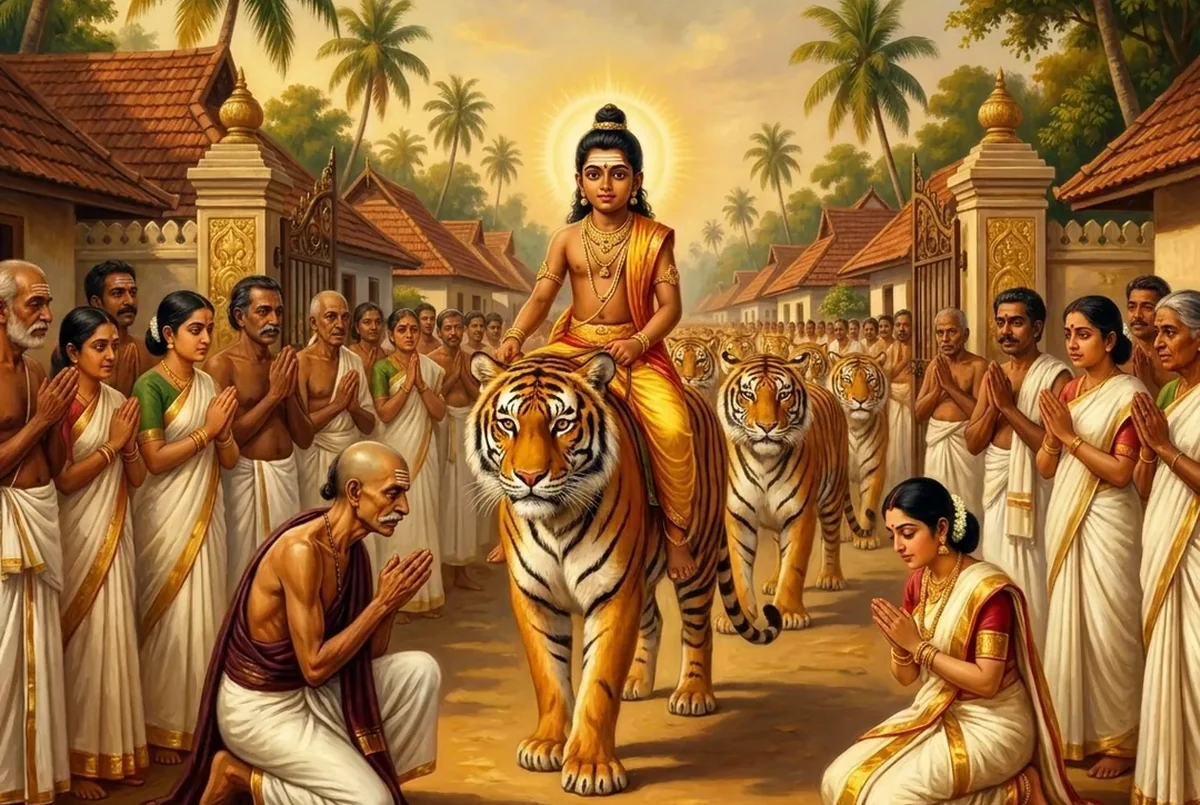
When the people of Pandalam saw their prince riding into town on a tigress with a pack of tigers behind him, they stood still in fear and wonder. The queen and the minister saw their wrong and fell at his feet asking forgiveness. Manikandan forgave them all. The king understood that his son was no ordinary boy. Manikandan told him that the work he had come to earth for was done, and that he must now go.
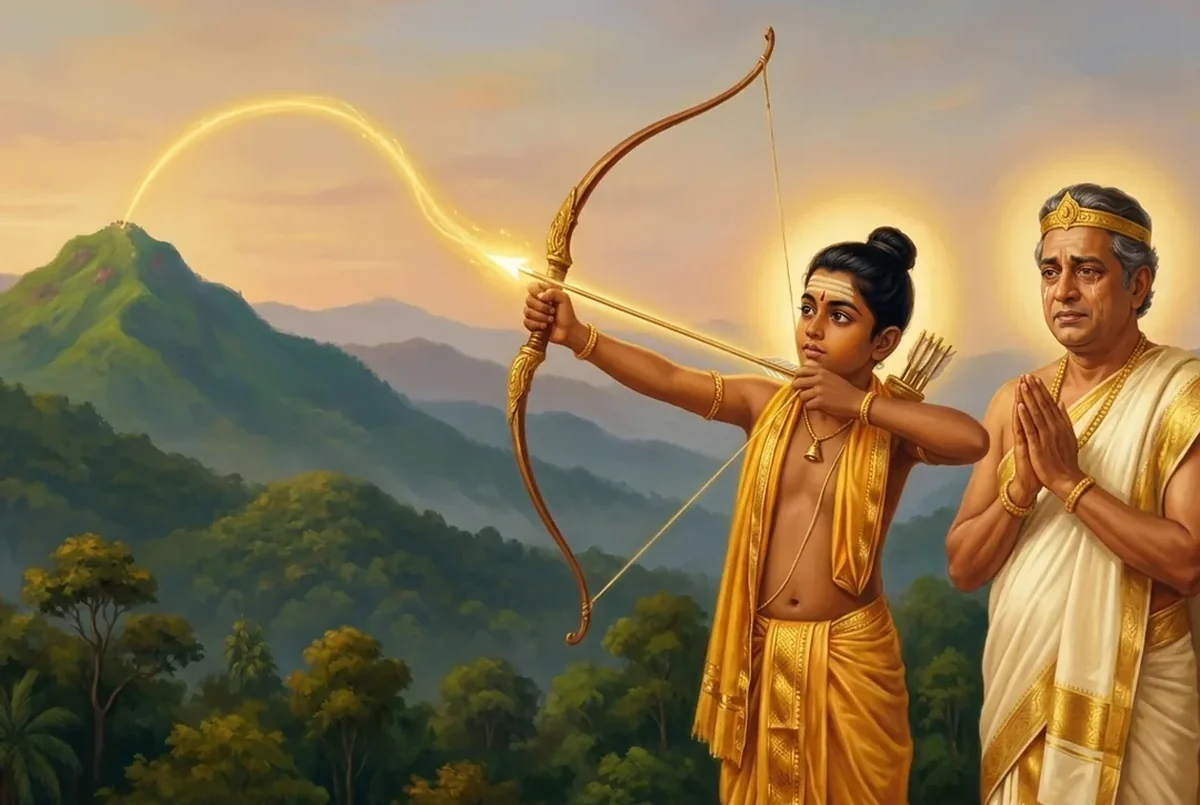
With tears the king begged for a place where they could worship him. Manikandan shot an arrow, which came down on Sabarimala, and said, build my temple there. The king built the shrine, and it is believed that Manikandan dwells there as Ayyappa, seated in yoga, deep in meditation. He said that devotees who come after keeping a vow, living simply and climbing the hard mountain path with a pure heart would have his blessing.
Even today devotees keep the forty-one-day mandala vow, wear black, blue or saffron, call one another swami, and chant Swamiye Saranam Ayyappa as they climb the eighteen holy steps. At Makaravilakku, Ayyappa's sacred ornaments, the Thiruvabharanam, are carried in procession from Pandalam to Sabarimala, as if a father still comes to adorn his son. Before the shrine are written the words Tat Tvam Asi, that thou art: the same Ayyappa lives in every devotee.
Source
This is Kerala's temple and folk tradition connected with the Pandalam royal family and the Sabarimala temple; the place of the battle with Mahishi and several other details are told differently in different versions.