
Padmanabhaswamy: Anantha Padmanabha: The Sage and the Child
Thiruvananthapuram, Kerala
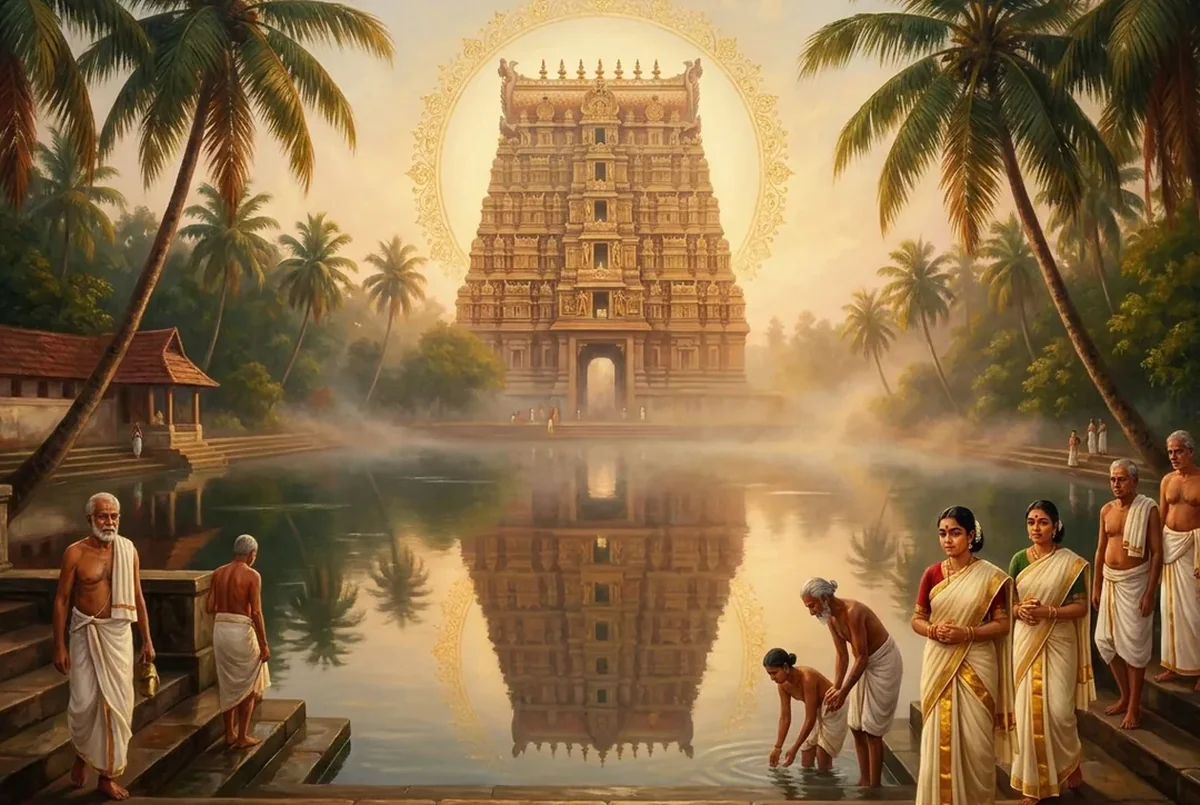
At the Sree Padmanabhaswamy temple in Thiruvananthapuram, Lord Vishnu reclines in yoga nidra on the serpent Anantha, with Brahma seated on the lotus that rises from his navel. The image is so large that it is seen through three doors. The city itself takes its name from this Lord: Thiru Anantha Puram, the sacred city of Anantha.
The temple tradition holds a much-loved story. Long ago an ascetic from the Tulu country named Divakara Muni had done tapas for years, longing for a vision of Lord Vishnu. One day a beautiful little boy came to his hermitage. The sage's heart overflowed at the child's smile, and he asked him to stay. I will stay, said the boy, on one condition: the day you treat me with disrespect, I will leave.
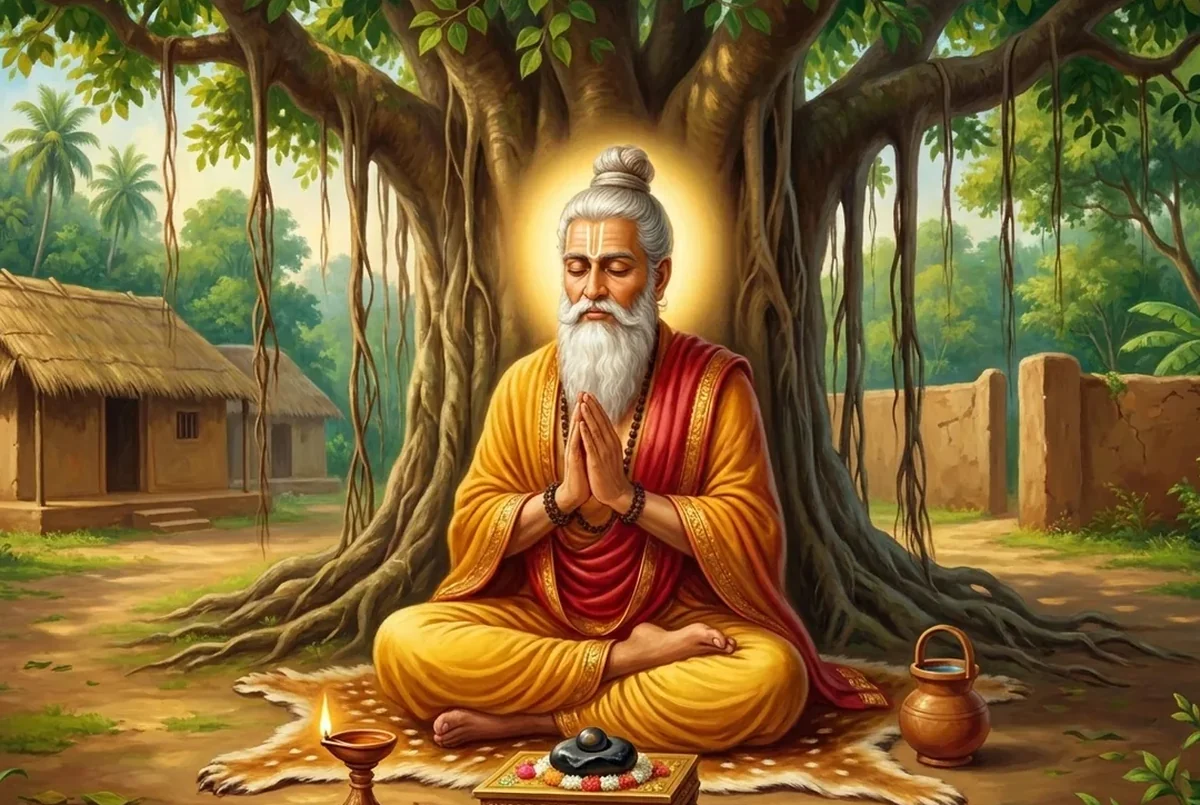
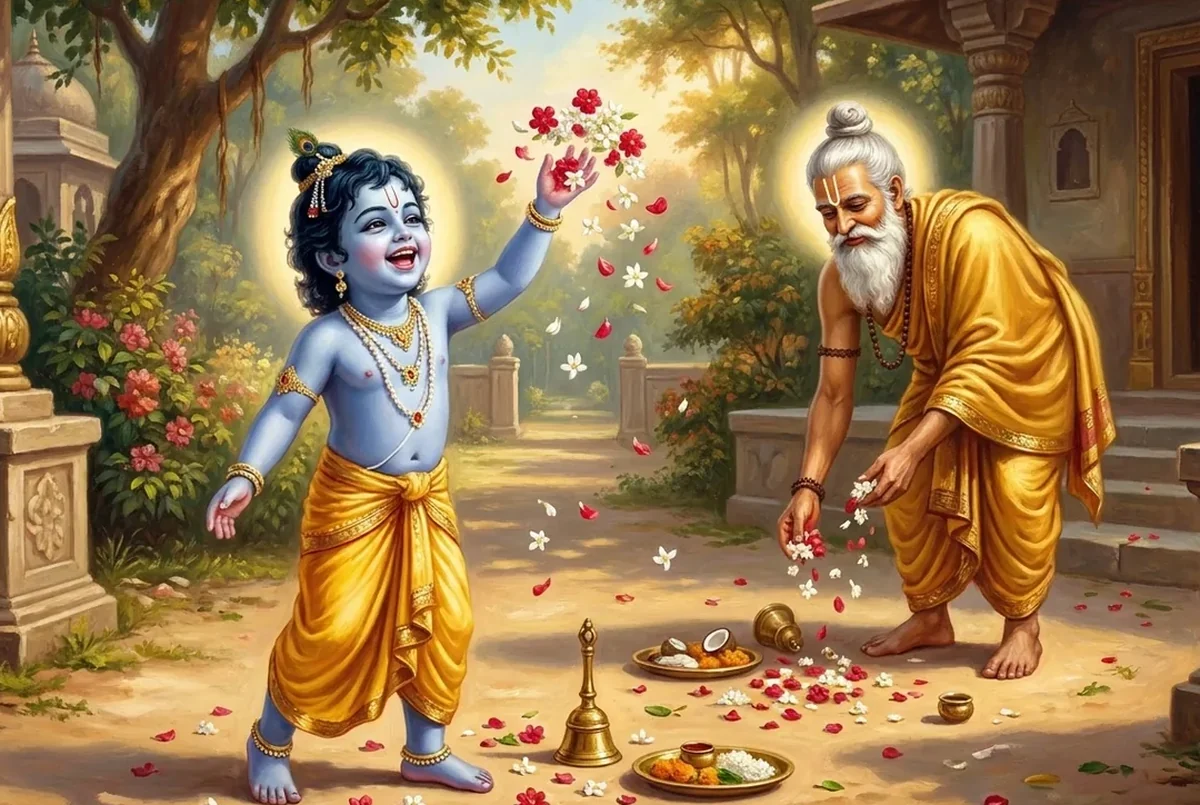
The boy lived in the hermitage and was full of mischief, scattering flowers one day and moving the things of worship the next. Each time the sage was patient. But one day, while the sage sat in worship, the boy picked up the saligrama stone and put it in his mouth. At this the sage could not hold back; he scolded the boy and pushed him away. The boy ran off at once, calling as he went, if you want to see me again, come to Ananthankadu.
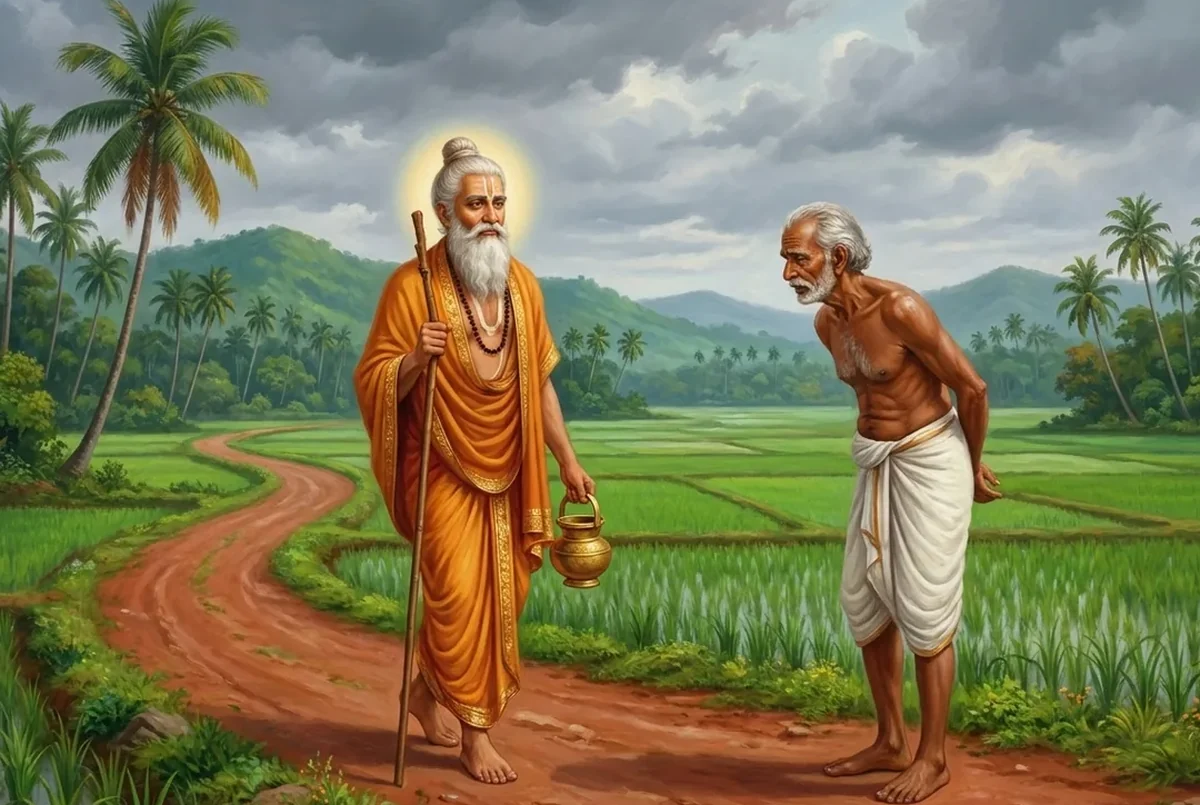
In that moment the sage understood who the boy had been. Full of remorse, he set out to find Ananthankadu, but no one knew where it was. Days and months passed. One day, passing a village near the sea, he heard a woman telling her crying child to hush, or she would leave him in the forest of Ananthankadu. The sage asked her the way, and she pointed him towards the forest.
Deep in the forest, the sage saw the same boy disappearing into a huge iluppa tree. At that instant the tree fell, and the fallen tree became the vast form of Lord Vishnu reclining on Anantha. Tradition says the form was so vast that the head lay at Thiruvallam and the feet miles away at Thrippappur. The sage trembled with joy and awe, for his eyes could not take in so great a form all at once.
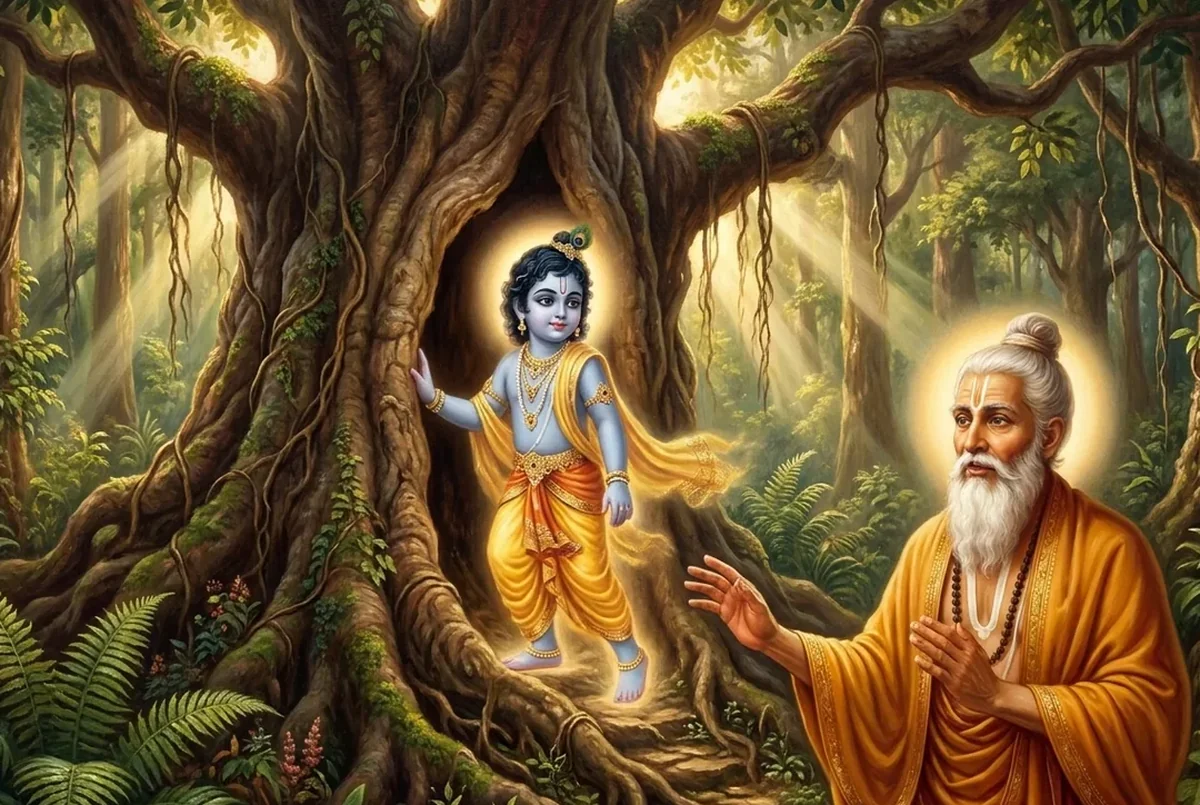
The sage folded his hands and prayed, Lord, take a form small enough for me to see you whole and worship you. Heeding his devotee, the Lord made himself smaller. Now the sage had nothing to offer. What he found close at hand, a raw mango and a little salt, he placed in a coconut shell and offered with great love. The Lord gladly accepted that simple offering.
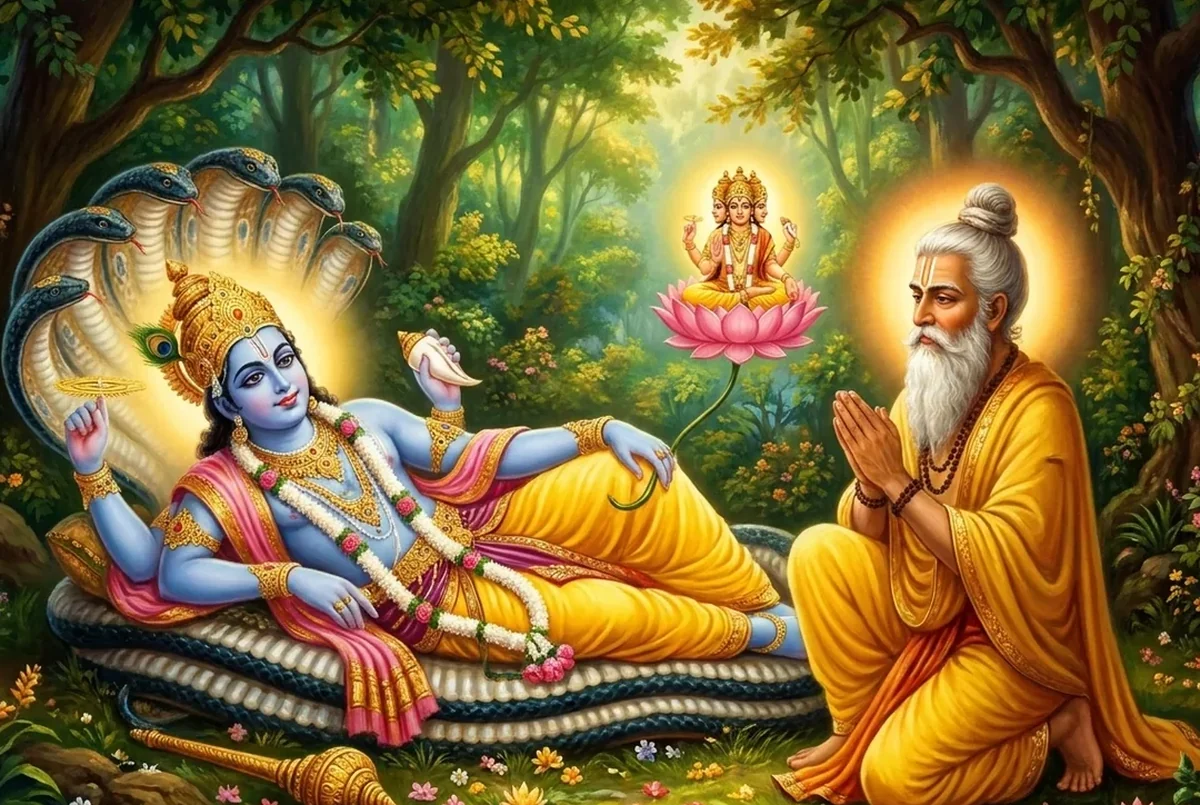
Even today at the Padmanabhaswamy temple, salted mango is offered to the Lord in a coconut shell. In time a temple rose on that spot. The image is so long that devotees see it through three doors: through the first, the Lord's face, with a Shiva linga beneath his hand; through the second, Brahma on the lotus from his navel; and through the third, the Lord's feet.
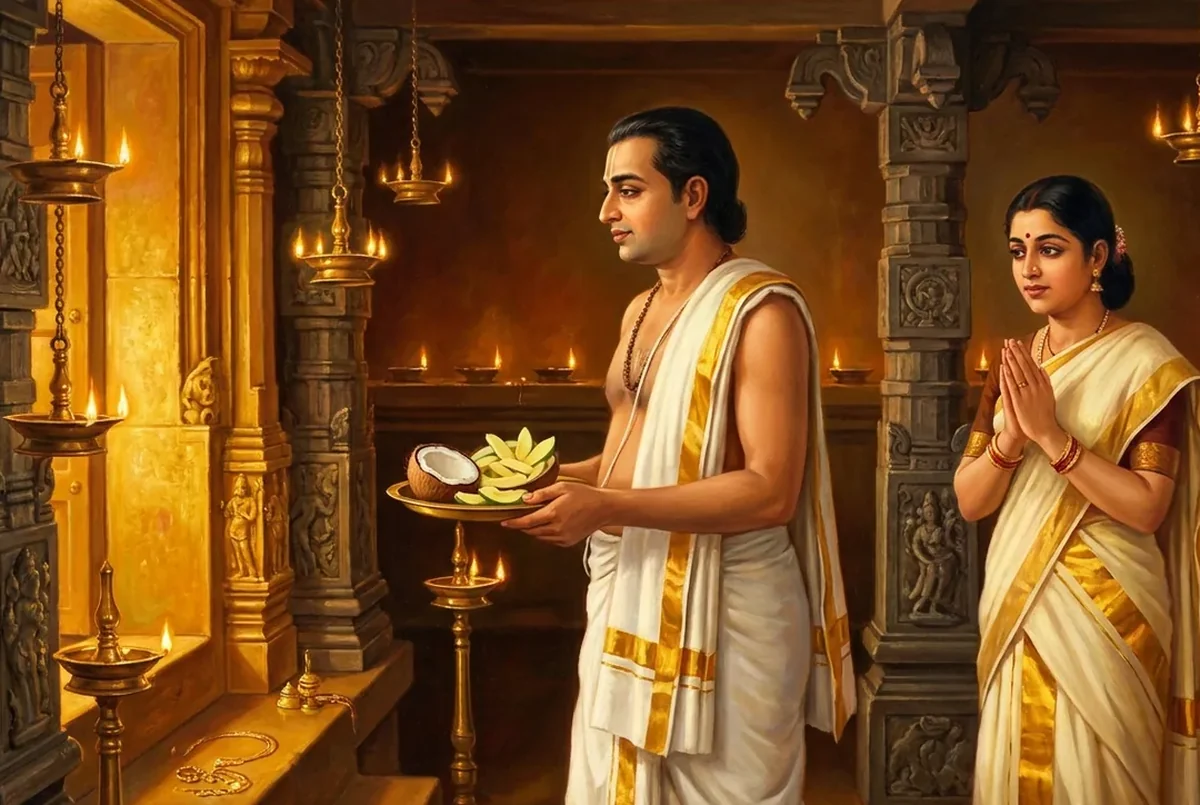
In Kerala the same story is also told with the saint Vilvamangalam Swamiyar in the sage's place. In both, the heart of it is the same: the Lord comes to a devotee as a child, is hurt by his mistake and leaves, yet tells him the way to find him again. The kings of Travancore called themselves Padmanabha Dasa, servants of Padmanabha. The story teaches that the Lord does not ask for gold and silver; a raw mango given with a true heart is dear to him.
Source
This is the sthala tradition of the Sree Padmanabhaswamy temple; in one version the sage is Divakara Muni, and in another, widely told in Kerala, Vilvamangalam Swamiyar. Details such as the length of the fallen form and the sage's search vary between versions.