
Bhadrachala Rama: Pokala Dammakka and Bhakta Ramadasu
Bhadrachalam, Telangana
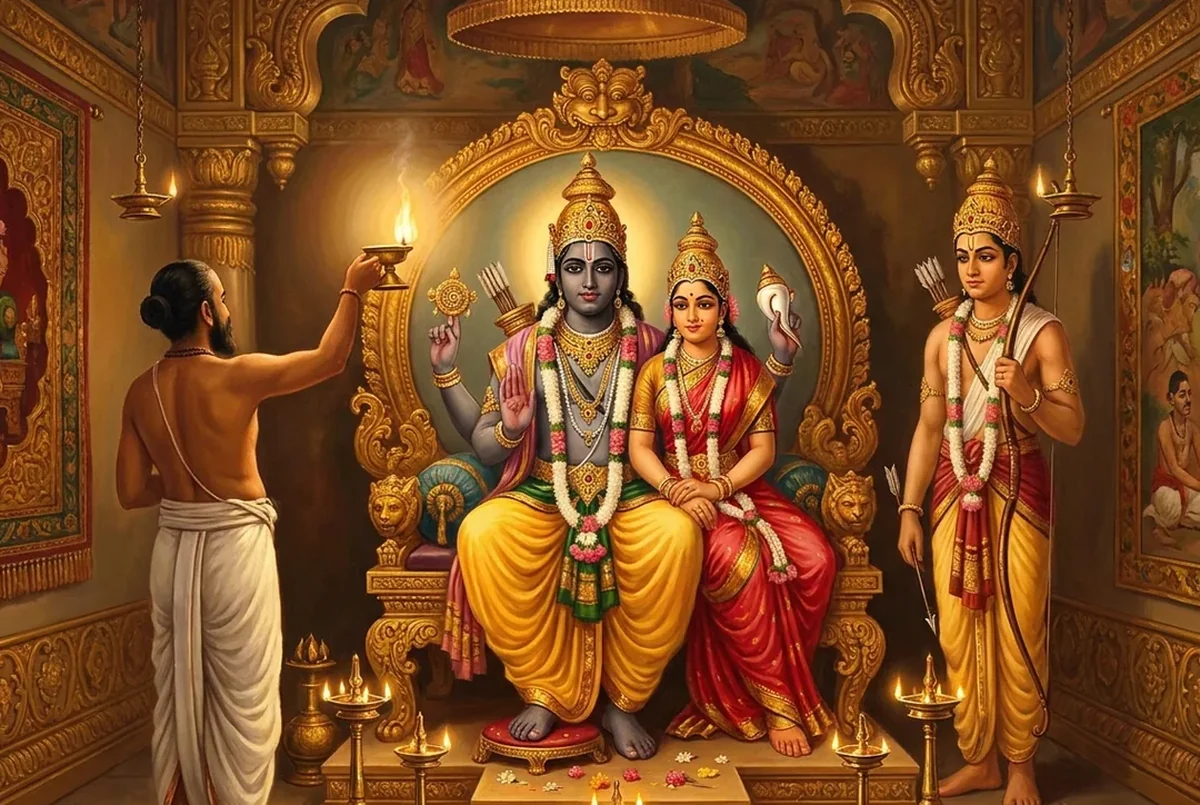
At Bhadrachalam on the Godavari, Sri Rama is worshipped as Vaikuntha Rama, with four arms, Sita seated on his lap and Lakshmana beside him. The temple's story belongs to two ordinary devotees: Pokala Dammakka, the village woman who found the images, and Kancherla Gopanna, who built the temple in the seventeenth century and is remembered as Bhakta Ramadasu.
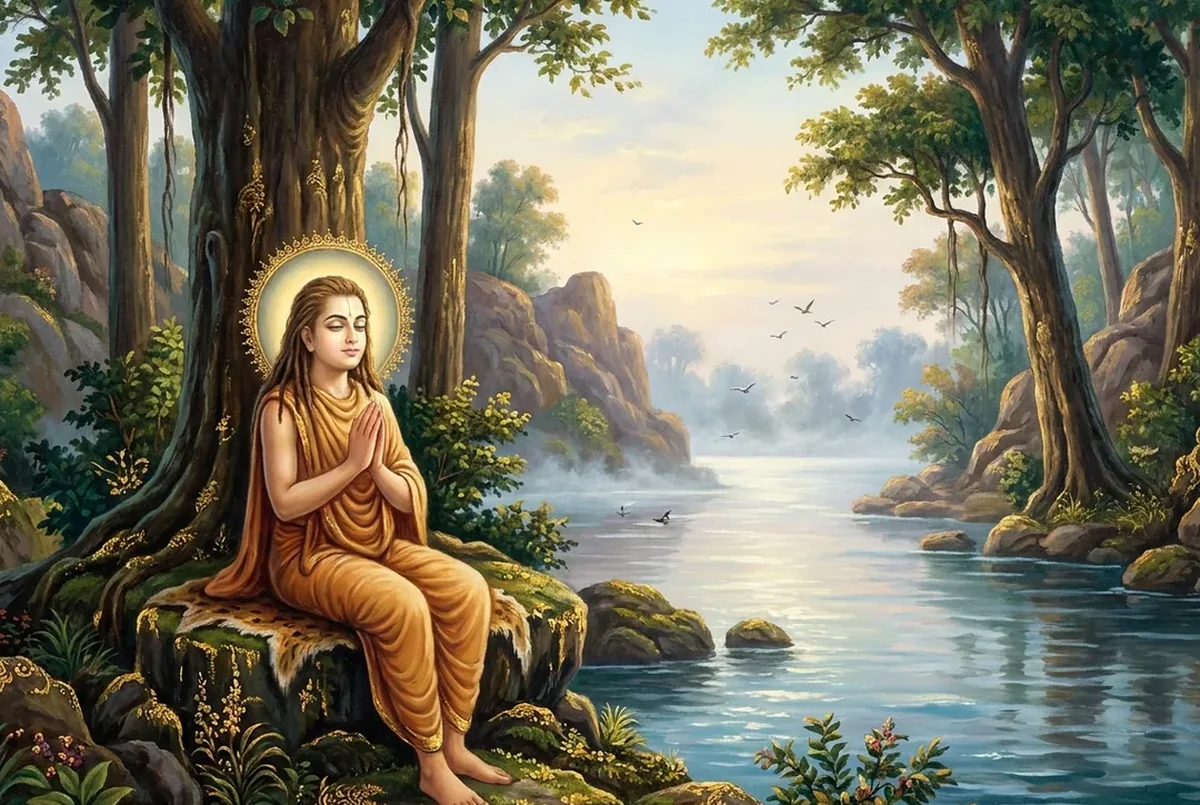
The temple tradition says that in the Treta Yuga, Bhadra, a son of Mount Meru, did long penance for Sri Rama on the banks of the Godavari. Passing this way during his years in the forest, Rama promised Bhadra that he would return and dwell on him. It is said that to keep this promise Lord Vishnu came as a four-armed Rama, and Bhadra became the hill that is the Lord's seat. So the hill is called Bhadragiri or Bhadradri, and the place Bhadrachalam.
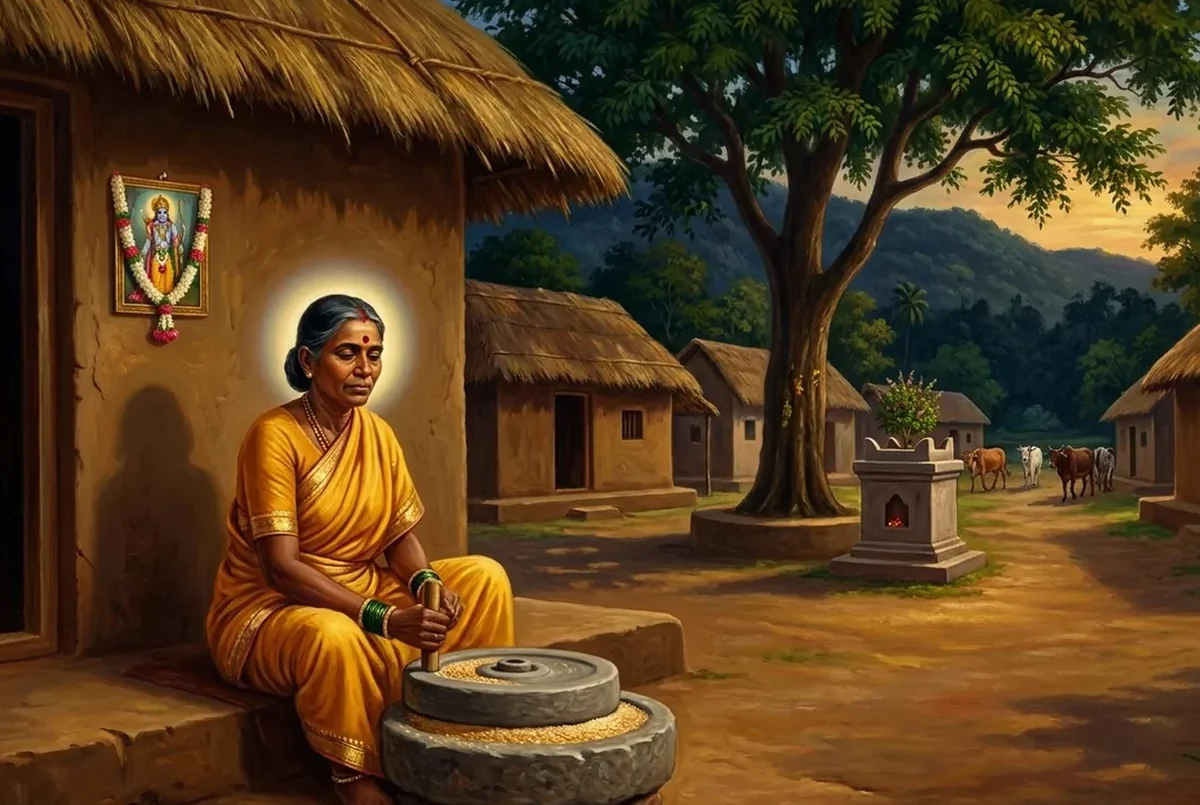
Ages went by and the hill was covered by thick forest. In the seventeenth century, in the nearby village of Bhadrireddypalem, there lived Pokala Dammakka, a simple woman whose heart was always full of Rama's name. One night Rama came to her in a dream, told her that his images lay hidden on Bhadragiri, and asked her to find them and worship them. At first light Dammakka set out into the forest, and searching, she came to a large anthill.
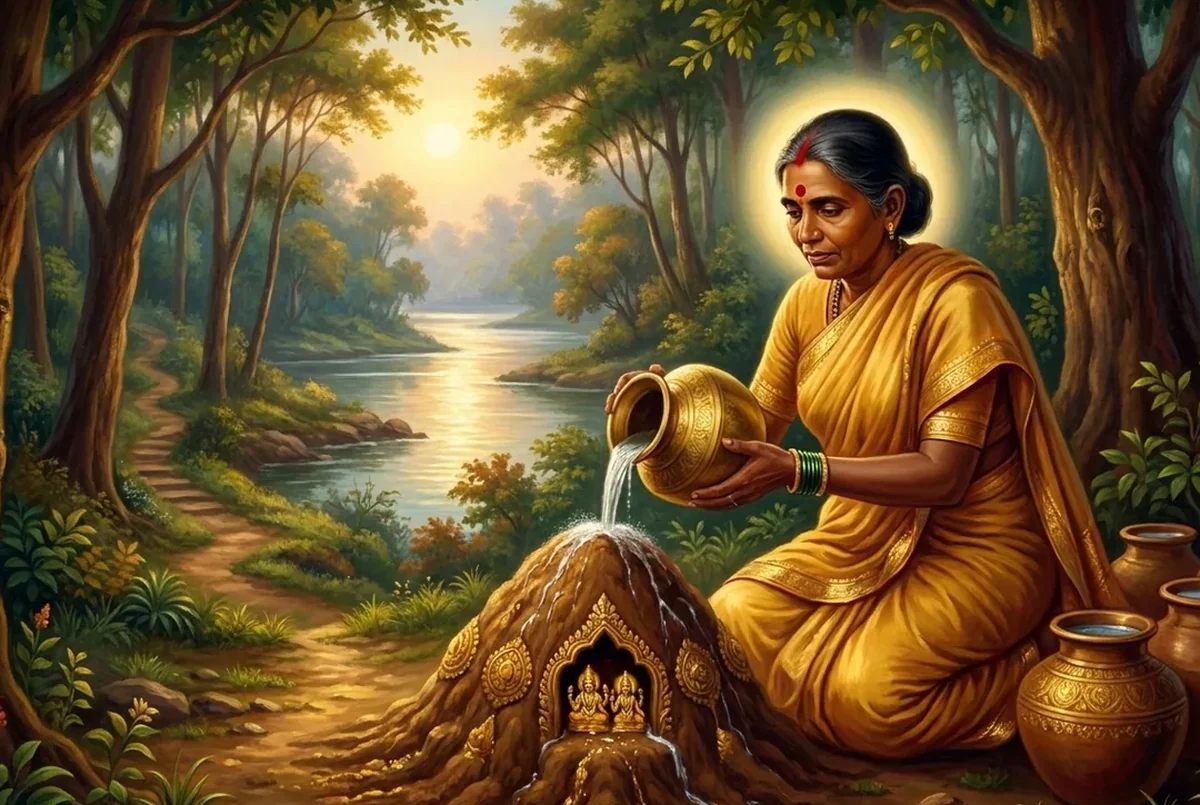
Peering into the anthill, she glimpsed the images inside. She carried pot after pot of water from the Godavari and poured it gently over the anthill. Slowly the earth melted away, and the images of Vaikuntha Rama, Sita and Lakshmana appeared. With the villagers' help Dammakka built a small thatched shelter over them and worshipped every day with fruits and flowers from the forest. She had just one wish: that one day the Lord would have a proper temple here.
Around that time Kancherla Gopanna of Nelakondapalli, a devotee of Rama since boyhood, was made the tahsildar, the revenue officer, of the Palvancha region under Abul Hasan Tana Shah, the ruler of Golconda. His maternal uncles Akkanna and Madanna held high office at the court. When Gopanna came to Bhadrachalam, saw the Lord under a thatched roof and heard Dammakka's wish, his heart overflowed, and he resolved to build a temple worthy of the Lord.
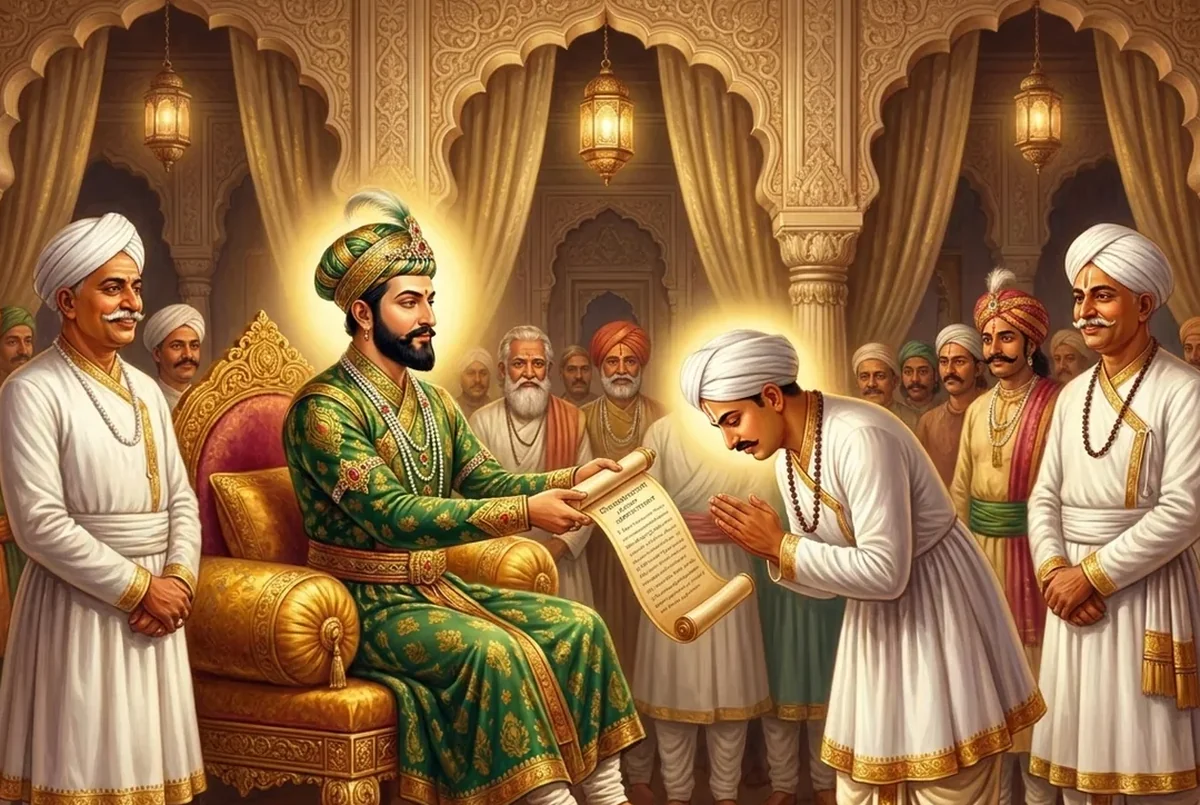
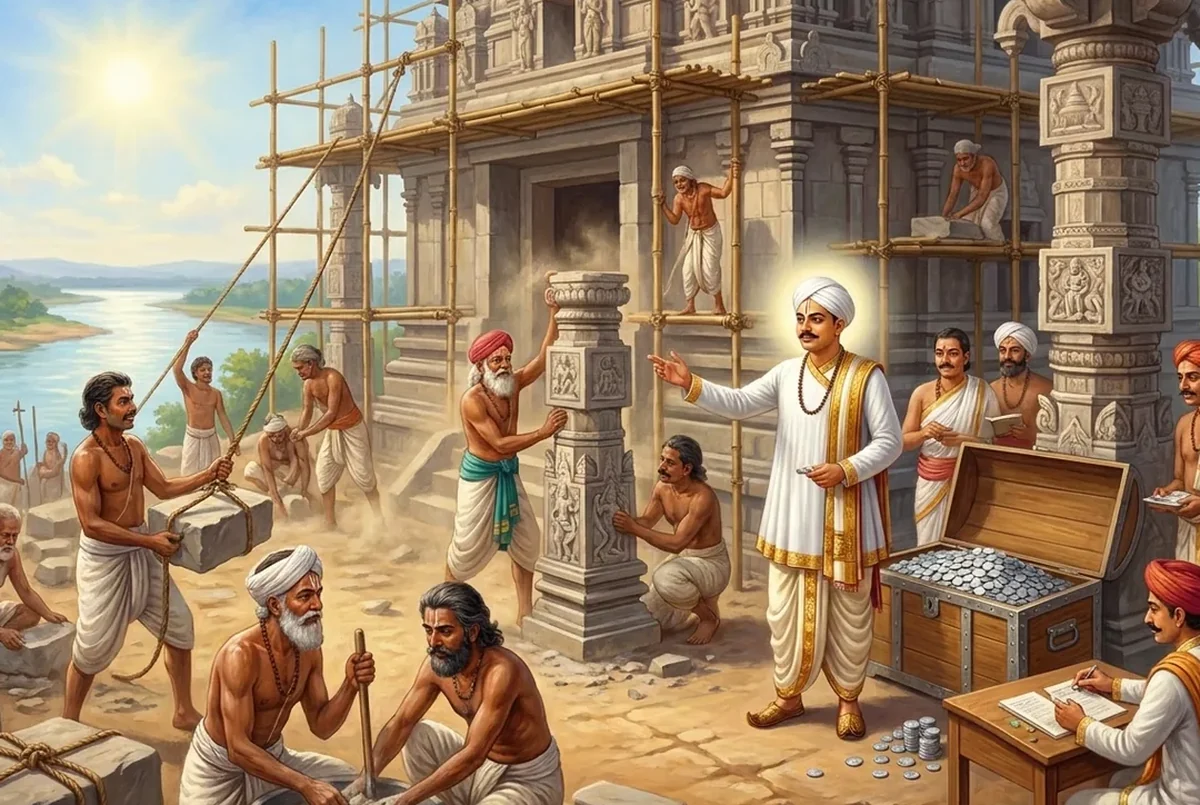
The people's donations fell short, so Gopanna spent the land revenue he had collected, said to be about six lakh varahas, on the temple, trusting he could make it good later. The temple rose on the hill, but a complaint reached Golconda. Charged with spending the treasury's money without leave, Gopanna was imprisoned in Golconda fort, and tradition says he stayed there twelve years. In that dark cell he poured his grief, his reproach and his love into songs addressed to Rama, songs still sung in Telugu homes and at Carnatic concerts.
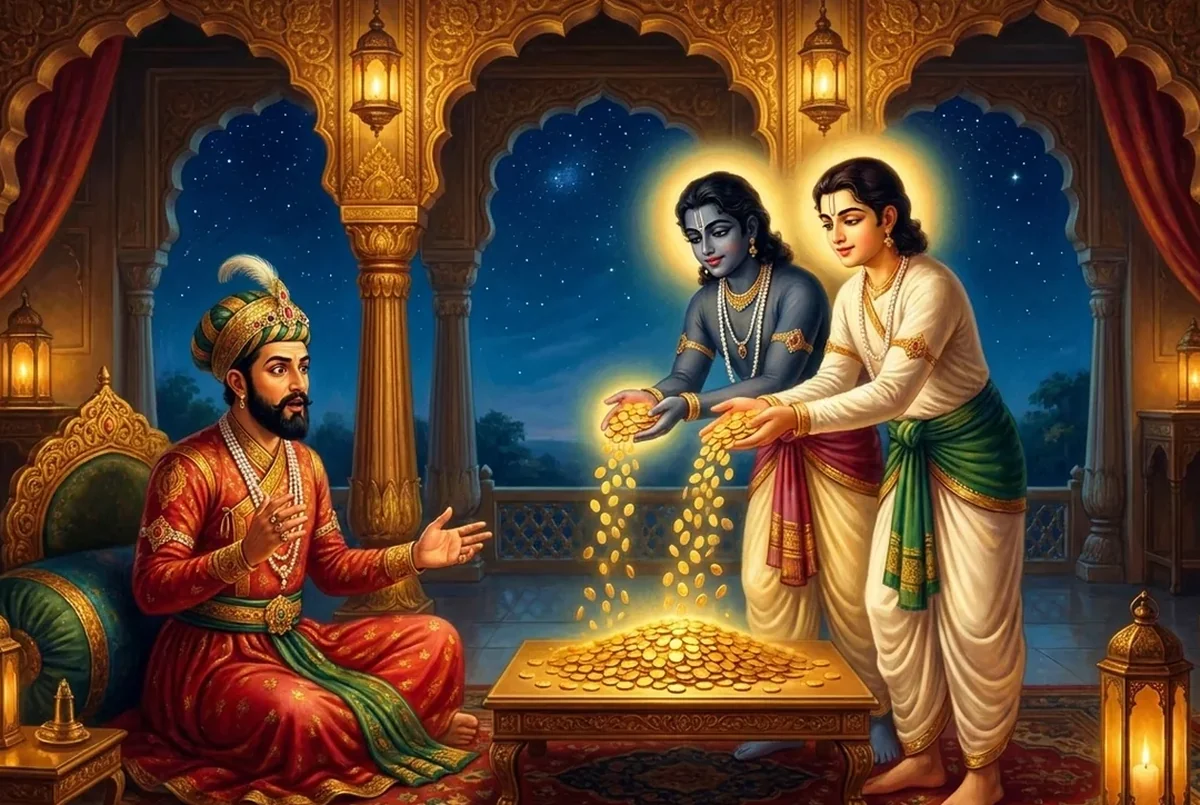
The story goes that one night two handsome young men, who gave their names as Ramoji and Lakshmoji, came before Tana Shah. They paid Gopanna's entire debt in gold coins bearing Rama's image, took a receipt, and left. When the ruler saw the coins, he knew his visitors had been no ordinary men, and he released Gopanna with honour. It is said that Gopanna wept, because the Lord he had called for twelve years had shown himself to the ruler, and not to him.
Tradition also says that Tana Shah made gifts to the temple and began the custom of sending pearls for the Sita Rama Kalyanam on Sri Rama Navami, a custom kept to this day. Gopanna spent the rest of his life serving the Lord at Bhadrachalam, and people called him Bhakta Ramadasu. Every year the crowds who come to see the Kalyanam remember both Dammakka and Ramadasu, who showed that devotion needs neither rank nor wealth, only unshaken love. May Bhadradri Rama keep his grace on all.
Source
Bhadra and Dammakka come from the temple tradition of Bhadrachalam. Gopanna is a historical figure; the gold-coin episode and the length of his imprisonment (twelve years, fourteen in some accounts) come from devotional tradition, and his exact dates are uncertain, so none are given.