
Venkateswara: The Wedding of Srinivasa and Padmavati
Tirumala, Andhra Pradesh
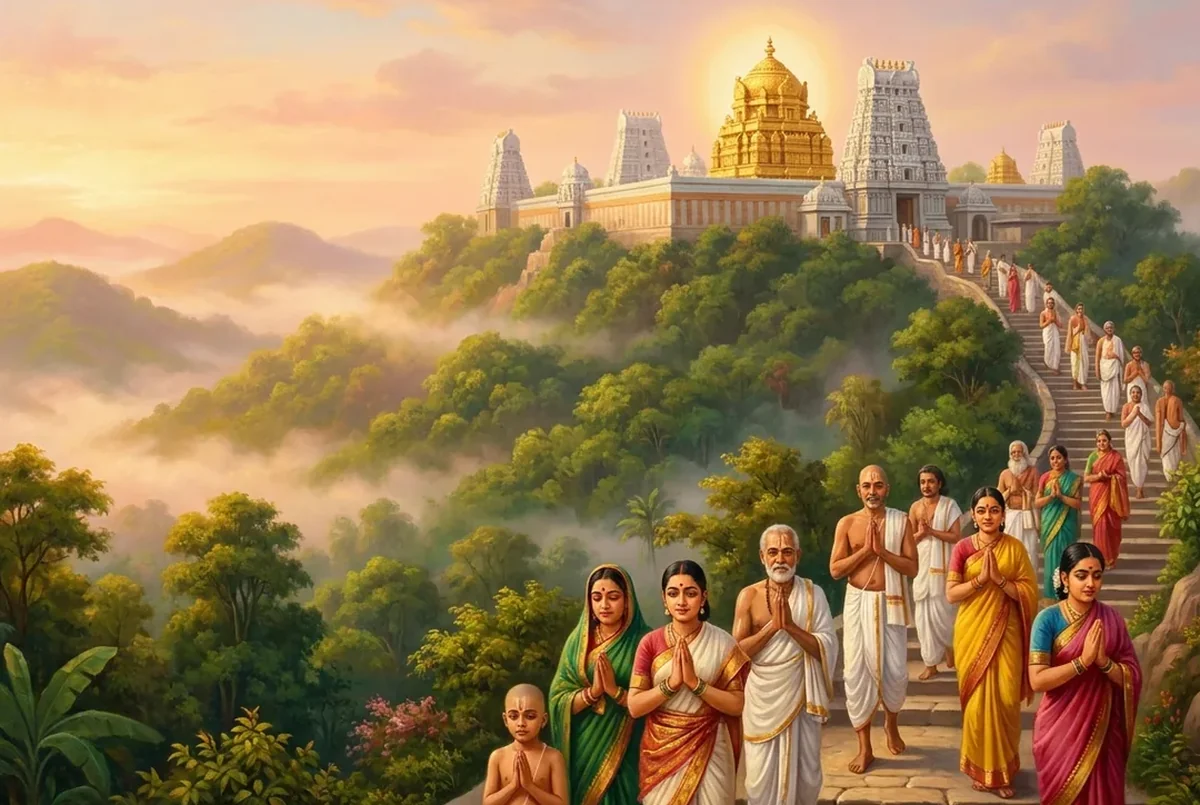
Sri Venkateswara, also called Srinivasa and Balaji, stands on the seven hills of Tirumala as the form of Lord Vishnu who came to live among his devotees in the Kali Yuga. This story tells why he left Vaikuntha for the Venkata hill, how he married Padmavati, and where the Tirumala custom of offerings in the hundi comes from.
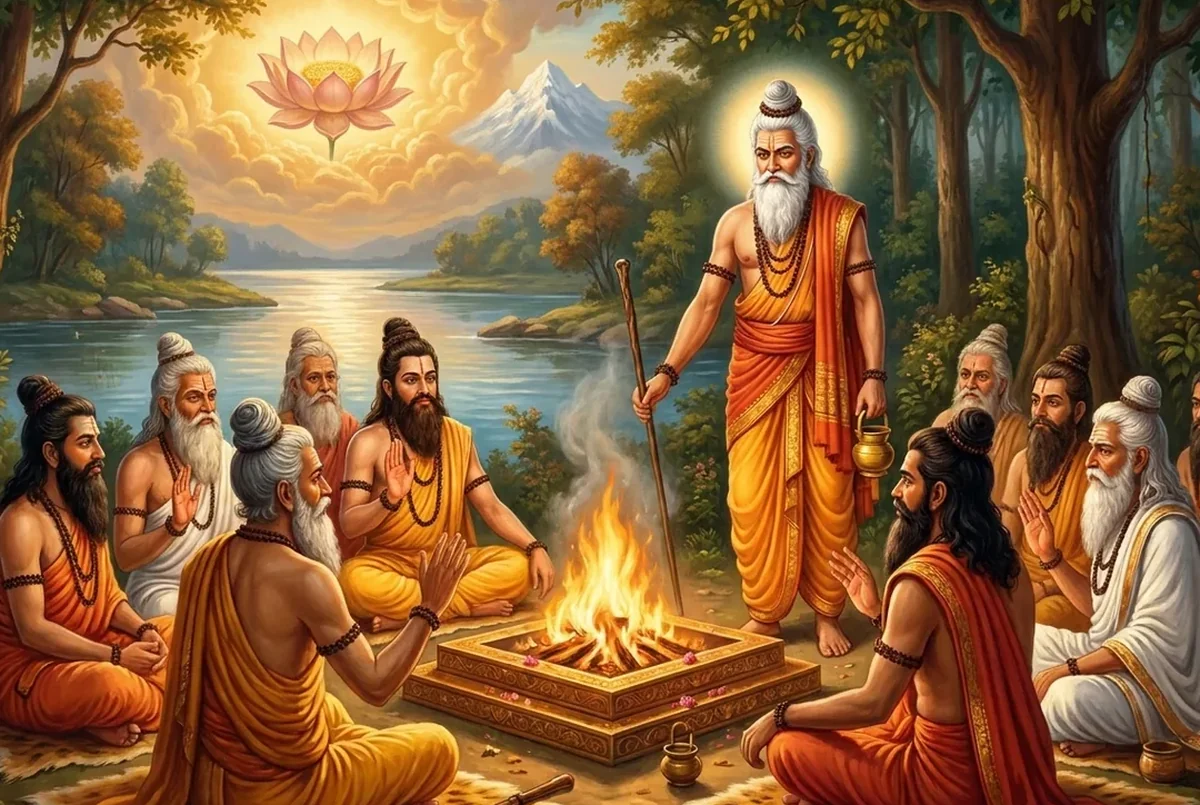
The story goes that the sages once began a great yagna and wondered to which of the three great gods its fruit should be offered. The sage Bhrigu was sent to find out. Brahma was absorbed in his work of creation and Shiva in his own bliss, and neither noticed him. At last Bhrigu reached Vaikuntha, where Lord Vishnu lay in yoga nidra with Lakshmi serving at his feet. Stung at being ignored once more, Bhrigu struck the Lord on the chest with his foot, the very place where Lakshmi is said to dwell.
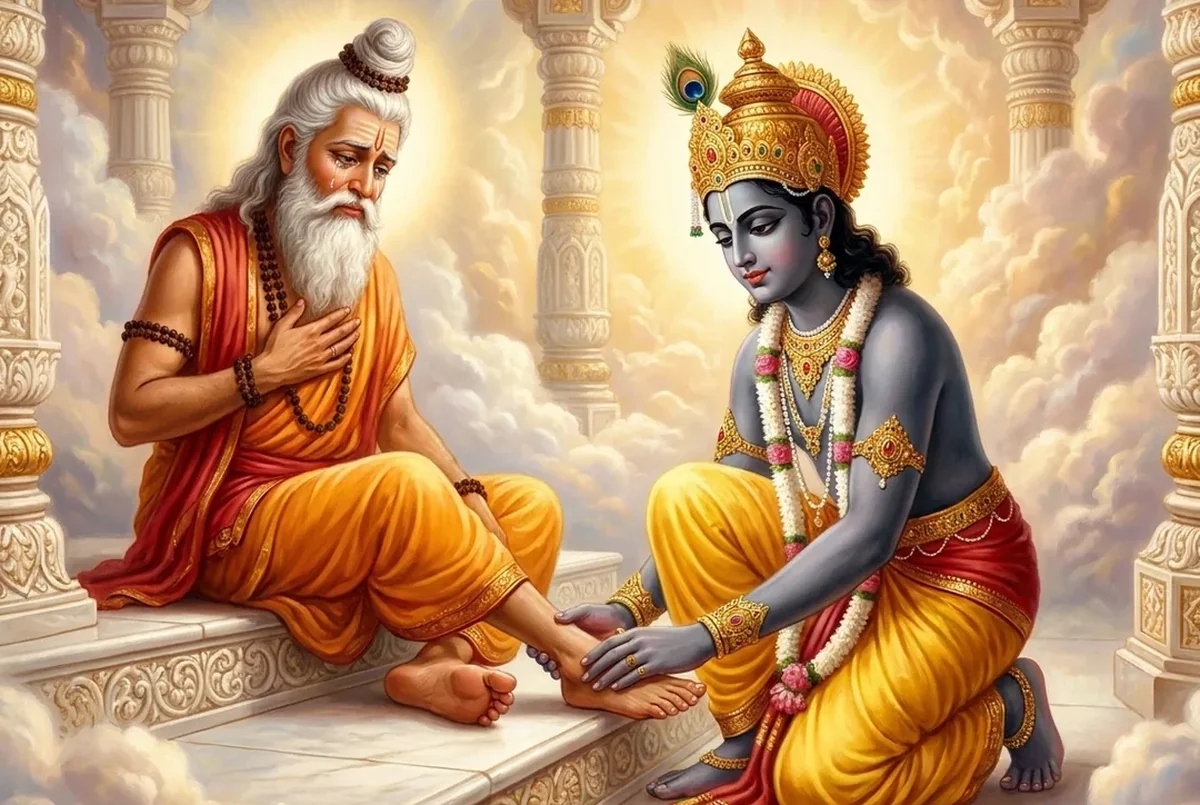
The Lord did not grow angry. He rose, took the sage's foot in his hands, asked gently whether it had been hurt, and pressed it with care. Before such humility Bhrigu's pride melted away. But Lakshmi could not bear that her dwelling place had been struck and the offence so easily forgiven. She left Vaikuntha for Karavirapura on earth, today's Kolhapur. Without her the Lord found no peace. He too came down to earth, and on the Venkata hill, beside the Swami Pushkarini, he sat in an anthill under a tamarind tree, lost in penance.
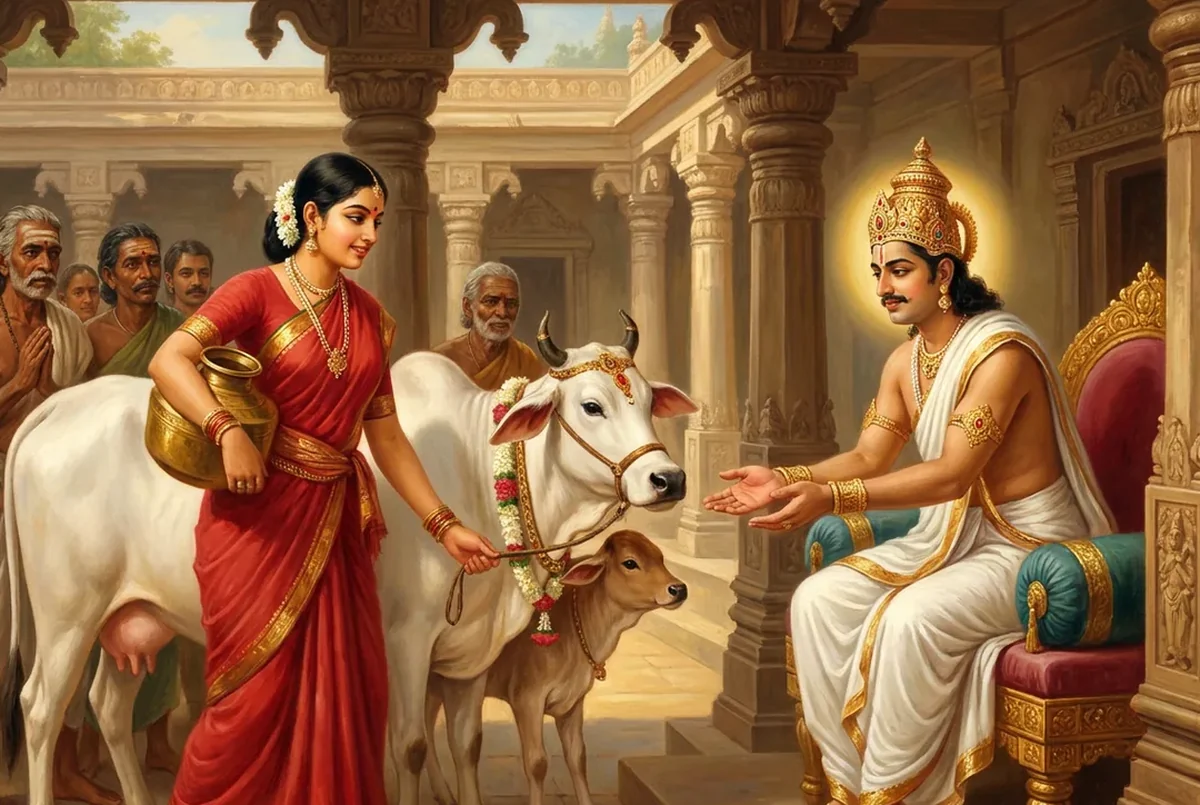
Seeing him go without food, Brahma and Shiva became a cow and her calf, and Lakshmi, dressed as a cowherd woman, sold them to the Chola king. Every day the cow slipped away to the hill and let all her milk flow over the anthill. One day the herdsman saw this and, in anger, swung his axe at the cow. The Lord rose from the anthill and took the blow on his own head. Wounded, Srinivasa sought shelter with Varaha Swami, the first lord of the hill, who gave him a place to stay. There Vakula Devi cared for him like a mother. She is believed to have been Yashoda, who had missed Krishna's wedding.
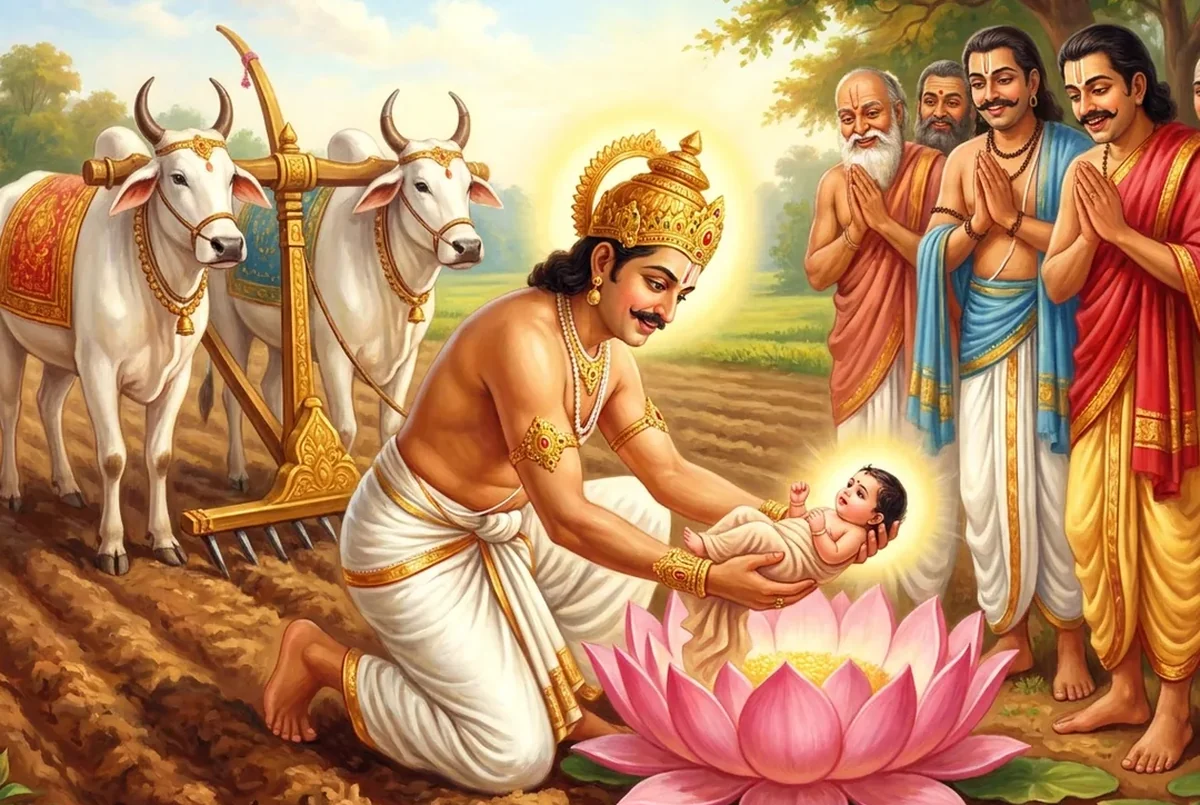
In those days Akasha Raja ruled at Narayanavanam. While ploughing the ground for a yagna, he found a baby girl lying in a lotus, and named her Padmavati, the one from the lotus. She grew up matchless in beauty and goodness. One day Srinivasa, out hunting, chased a wild elephant into the royal garden, where Padmavati was gathering flowers with her friends. Their eyes met, and in that moment their hearts were bound to each other.
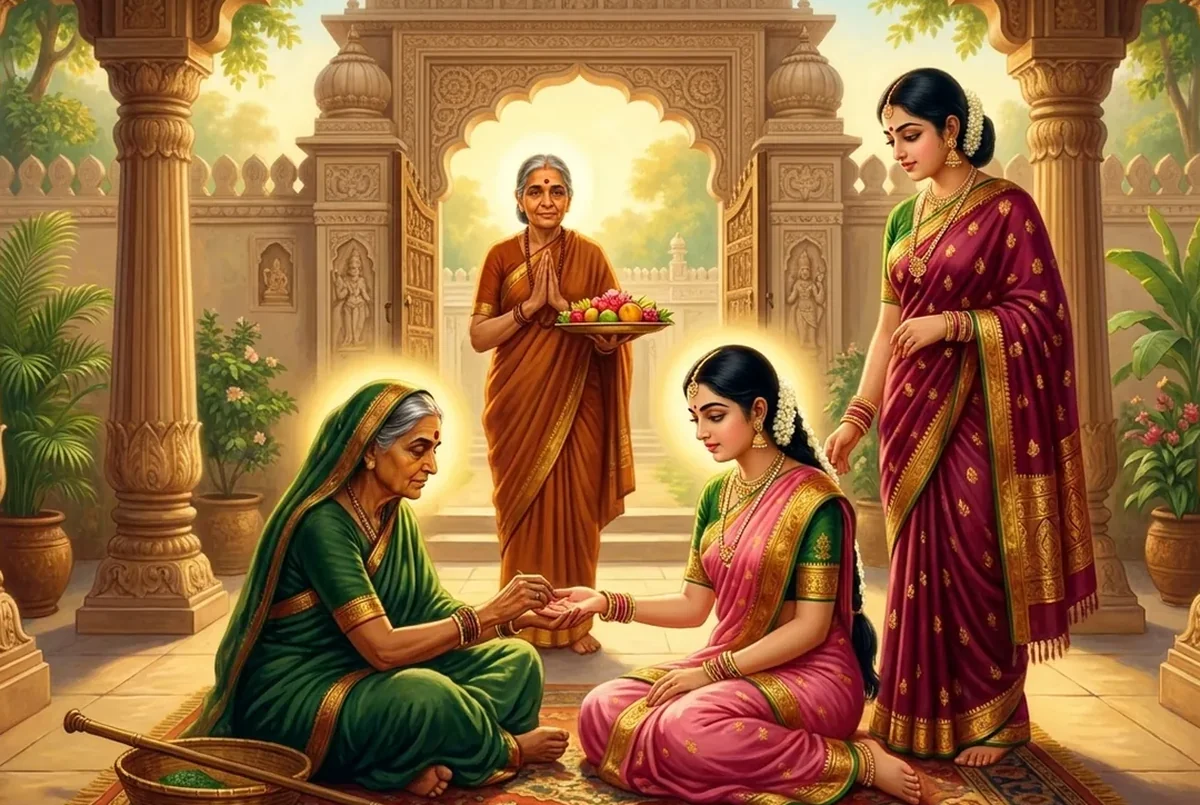
Vakula Devi went to the palace with the proposal of marriage. Meanwhile Srinivasa himself came in the guise of a woman fortune-teller and told the princess whom she would marry. After consulting Brihaspati, the guru of the gods, the king gladly agreed. But how was a forest-dweller to pay for a royal wedding? Srinivasa borrowed a great sum from Kubera, the lord of wealth, with Brahma and Shiva as witnesses. He promised to pay the interest through the whole Kali Yuga and to return the principal at its end.
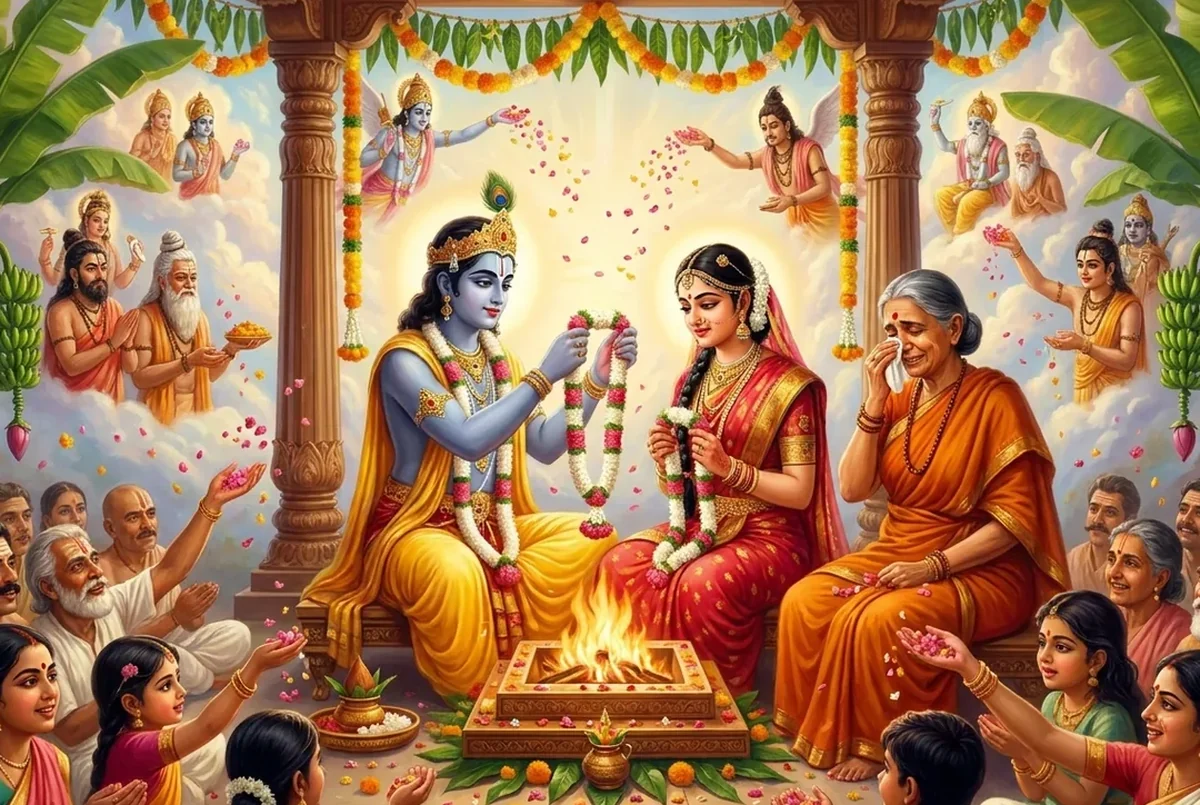
The wedding was held at Narayanavanam with great splendour, before the gods, the sages and the whole town, and Vakula Devi's long wish was fulfilled. Tirumala tradition says that the Lord then settled on this hill as Sri Venkateswara, holding Lakshmi on his chest, while Padmavati made her home below at Tiruchanur as Alamelu Manga. Tellings differ on how Lakshmi and Padmavati both came to be with the Lord, but in every one of them the story ends in love and peace.
Devotees believe the Lord is still paying Kubera's interest, and that every offering dropped in the hundi helps him with the debt. So people offer money, gold, grain, and in humility even their hair. Because of the promise made to Varaha Swami, pilgrims by custom visit his shrine first. The story reminds us that the Lord accepted even a debt in order to stay among his people, and that a devotee's small offering is part of that bond of love. May Sri Venkateswara bless every home.
Source
Sri Venkatachala Mahatmyam, a compilation of passages from several Puranas, and the temple tradition of Tirumala. Many versions of the story exist, especially of what happened after the wedding.