
Murugan: Murugan and Valli
Vallimalai and Thiruthani, Tamil Nadu
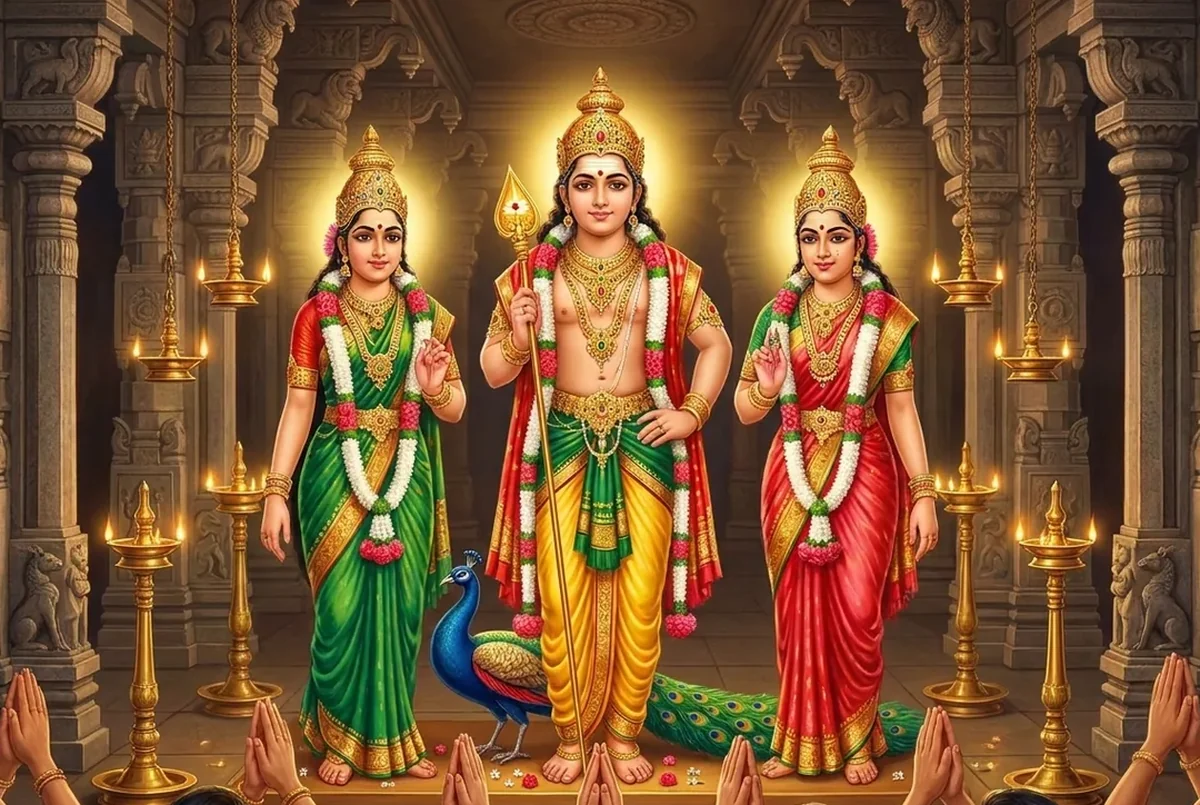
Murugan has two consorts: Deivanai, daughter of Indra, and Valli, the girl raised in the hills. The story of Valli's love and marriage is among the most loved in Tamil Nadu, and belongs to the hills of Vallimalai and the temple town of Thiruthani. In it, Ganesha, the elder brother, lends his younger brother a hand.
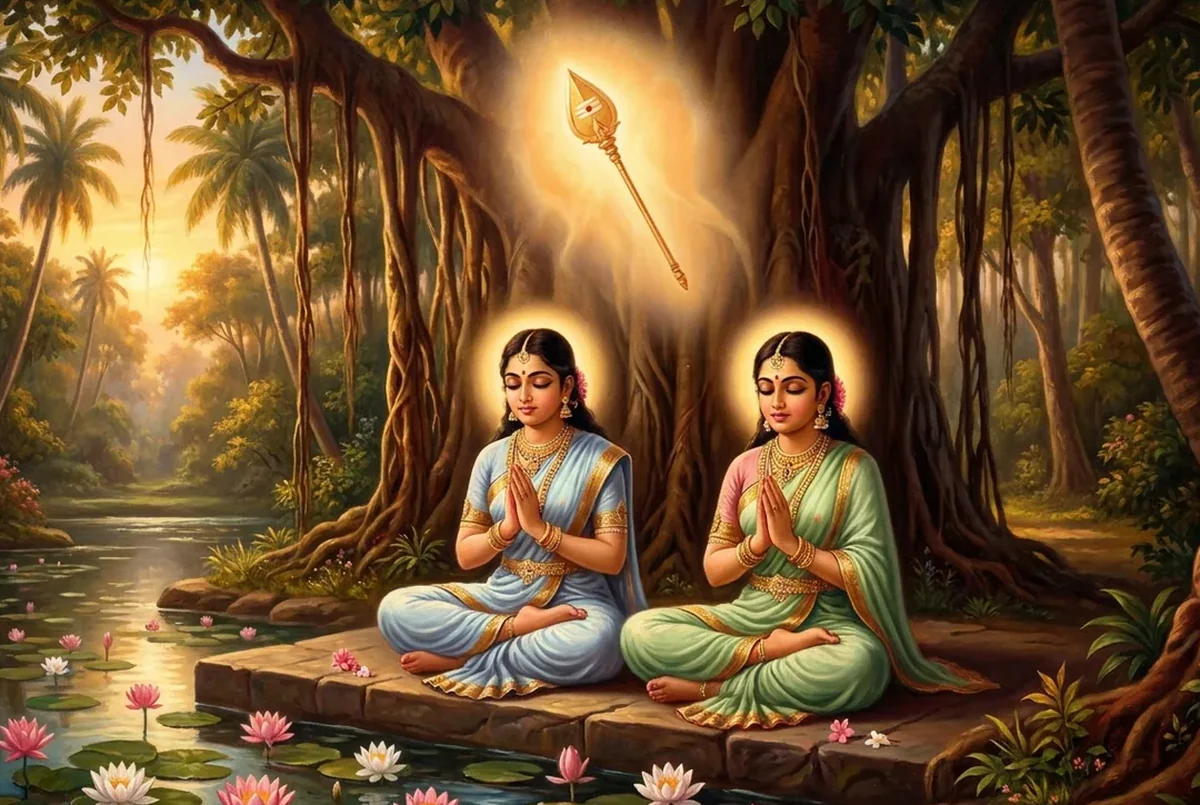
In an earlier birth, the story says, Lord Vishnu had two daughters, Amudhavalli and Sundaravalli. Both did tapas to have Murugan as their husband, and Murugan promised that in time he would accept them both. Amudhavalli grew up in Indra's home as Deivanai, and after Murugan had protected the gods he married her at Thiruparankundram. Sundaravalli was born on earth, among the hill people, as Valli.
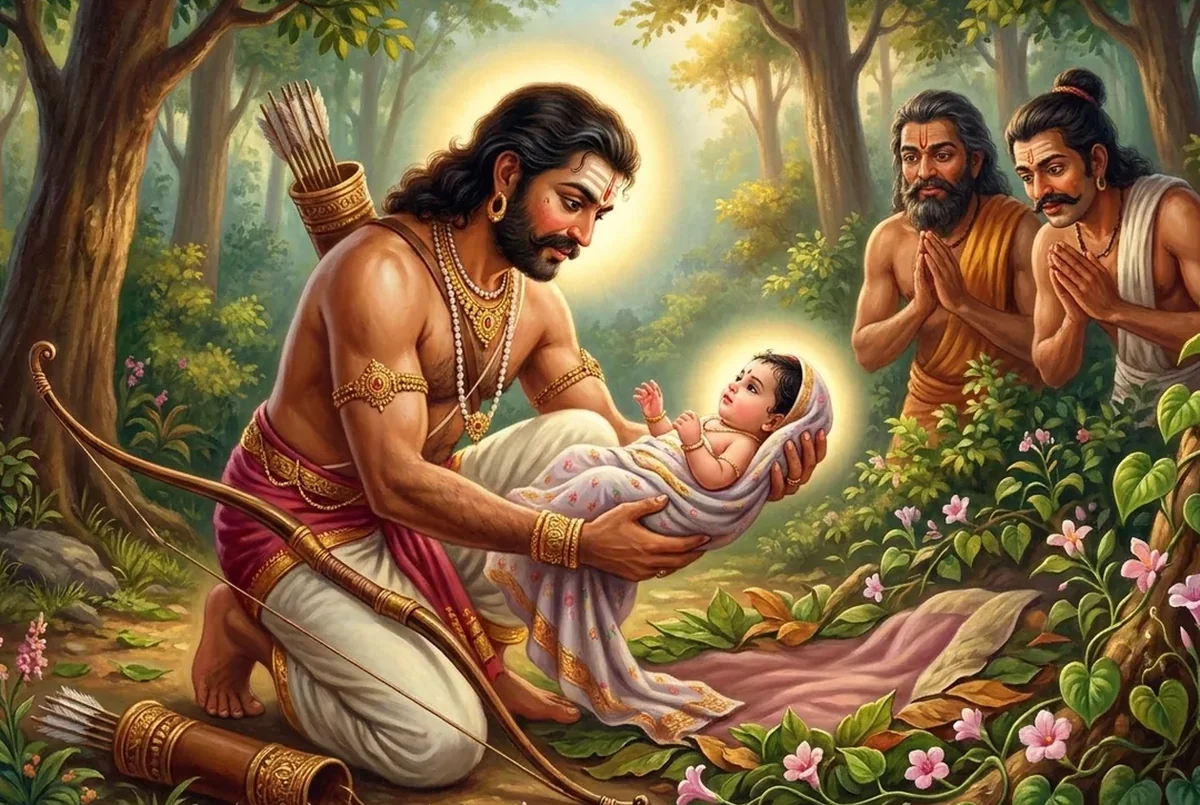
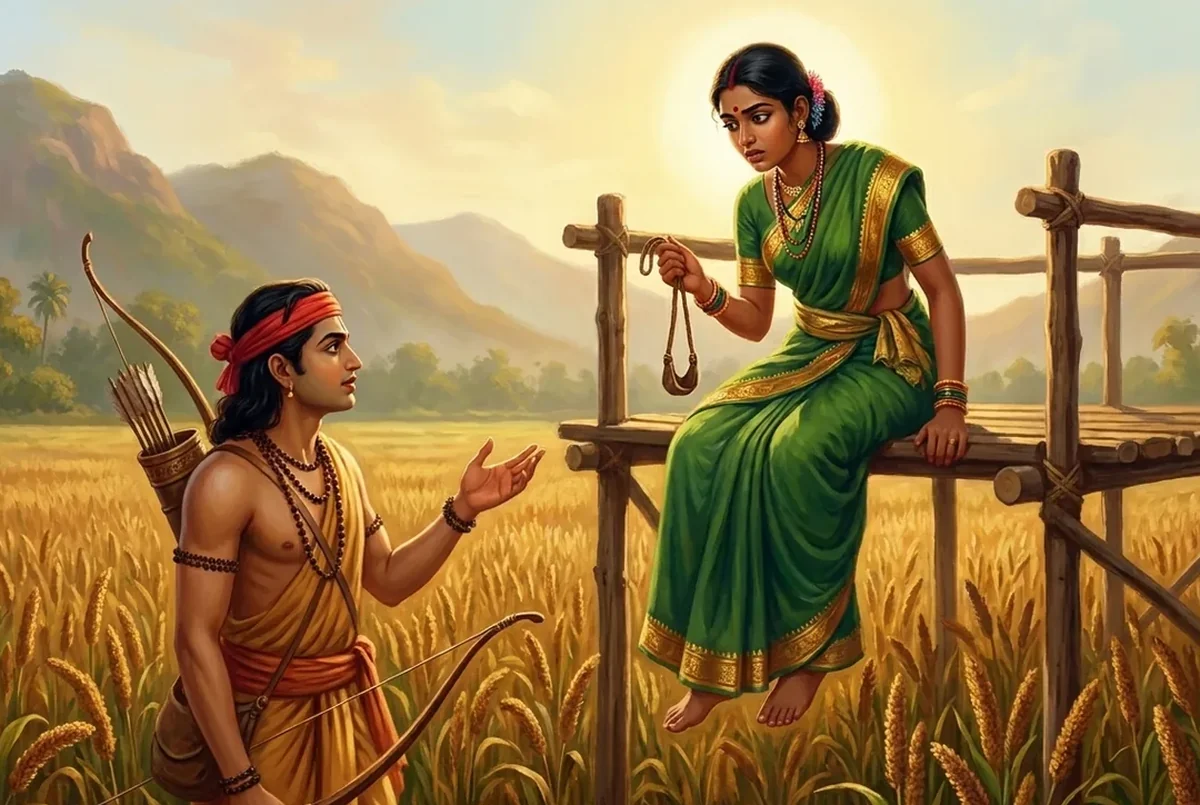
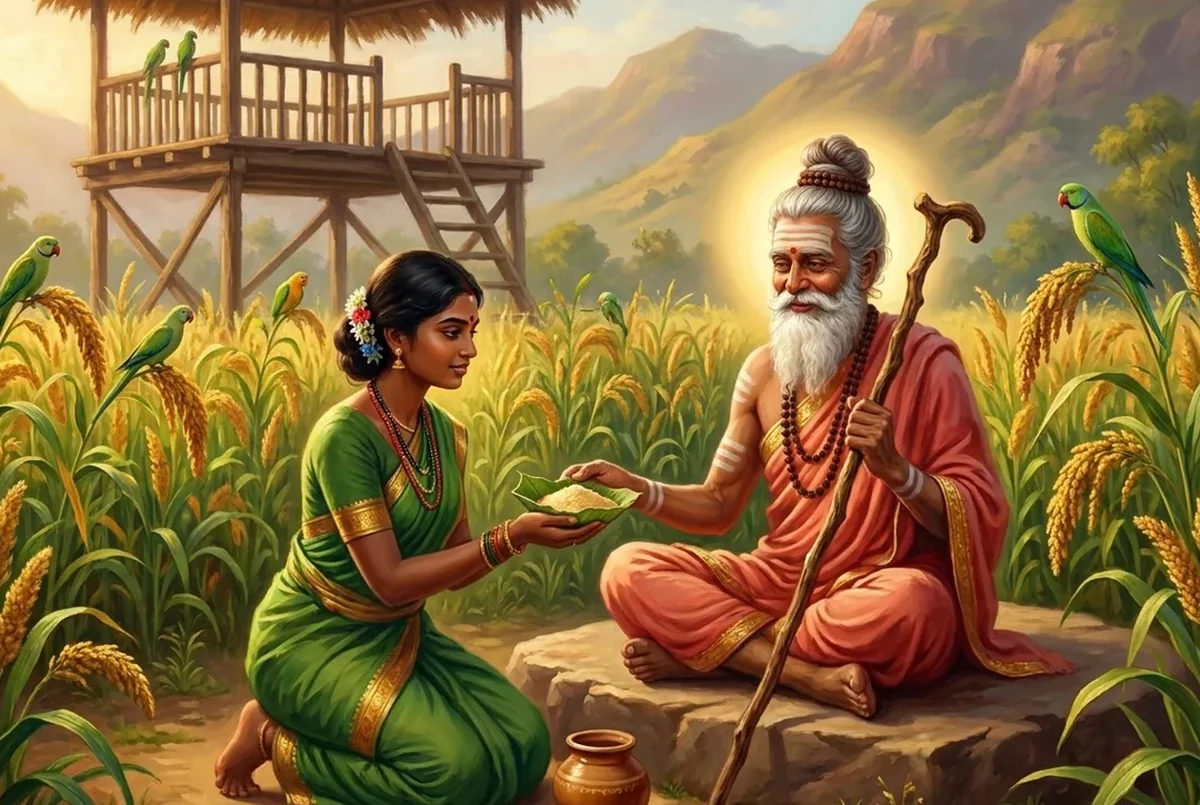
In the forest of Vallimalai, the hill chieftain Nambirajan found a baby girl lying near a valli creeper. He raised her as his own daughter and named her after the creeper. Valli grew into a brave and lovely young woman. When the thinai millet began to ripen, her father sent her to guard the field. From a raised platform she would whirl her sling and call out to drive away the parrots and sparrows.
Narada told Murugan of Valli's devotion and beauty, and Murugan came to the hills to see her, though not in his own form. First he came as a young hunter who claimed to have lost his way. When Nambirajan and his men were seen approaching, Murugan in an instant became a vengai tree. The men walked past noticing nothing, and Valli was left wondering where the young man had gone.
The next time, Murugan came as an old ascetic. When he said he was hungry, Valli respectfully gave him honey mixed with millet flour. When he said he was thirsty, she led him to a spring in the hills. After drinking, the old man began to speak of marrying her. Valli did not like this at all. She refused him plainly and turned to go home.
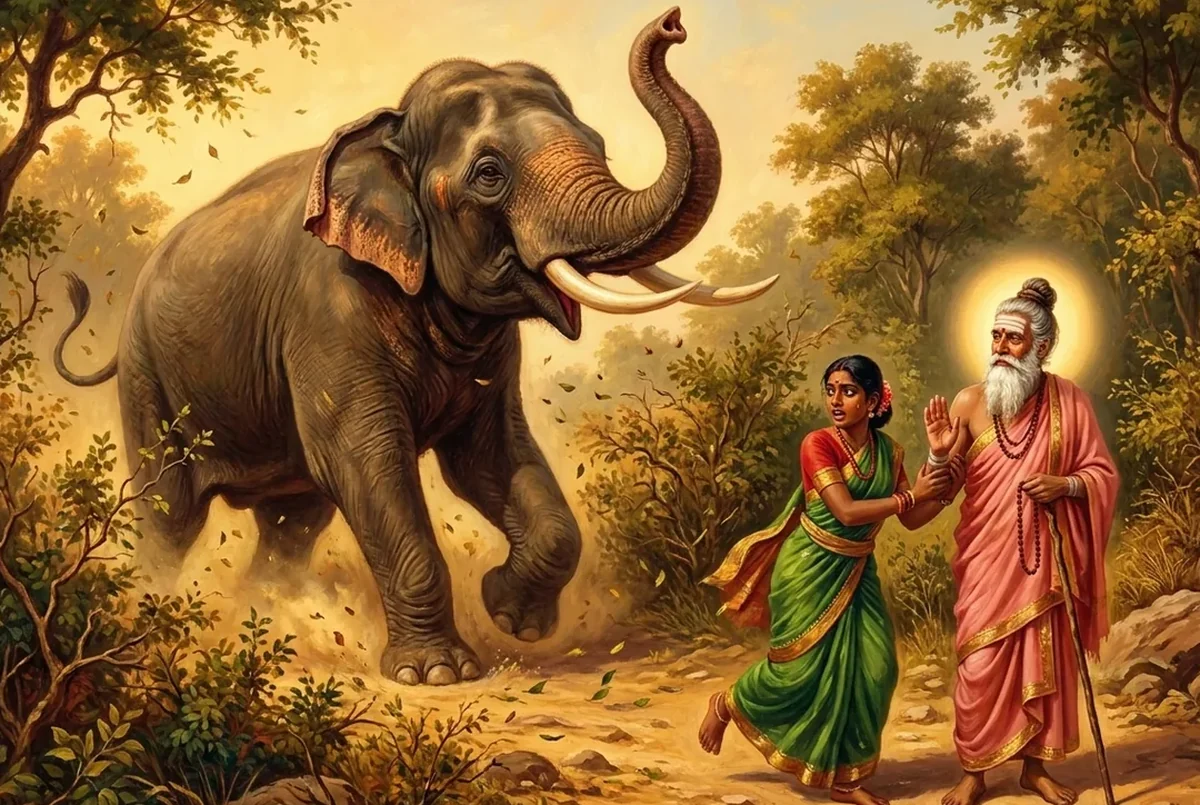
Murugan then called his elder brother Ganesha to mind. At once a huge wild elephant burst trumpeting out of the bushes. Terrified, Valli ran straight to the old ascetic and clung to him, saying, save me, and I will do as you ask. The elephant turned calmly away, and where the old man had stood was Murugan himself, radiant on his peacock, holding his vel. Valli knew him as the god she had worshipped in her heart all along.
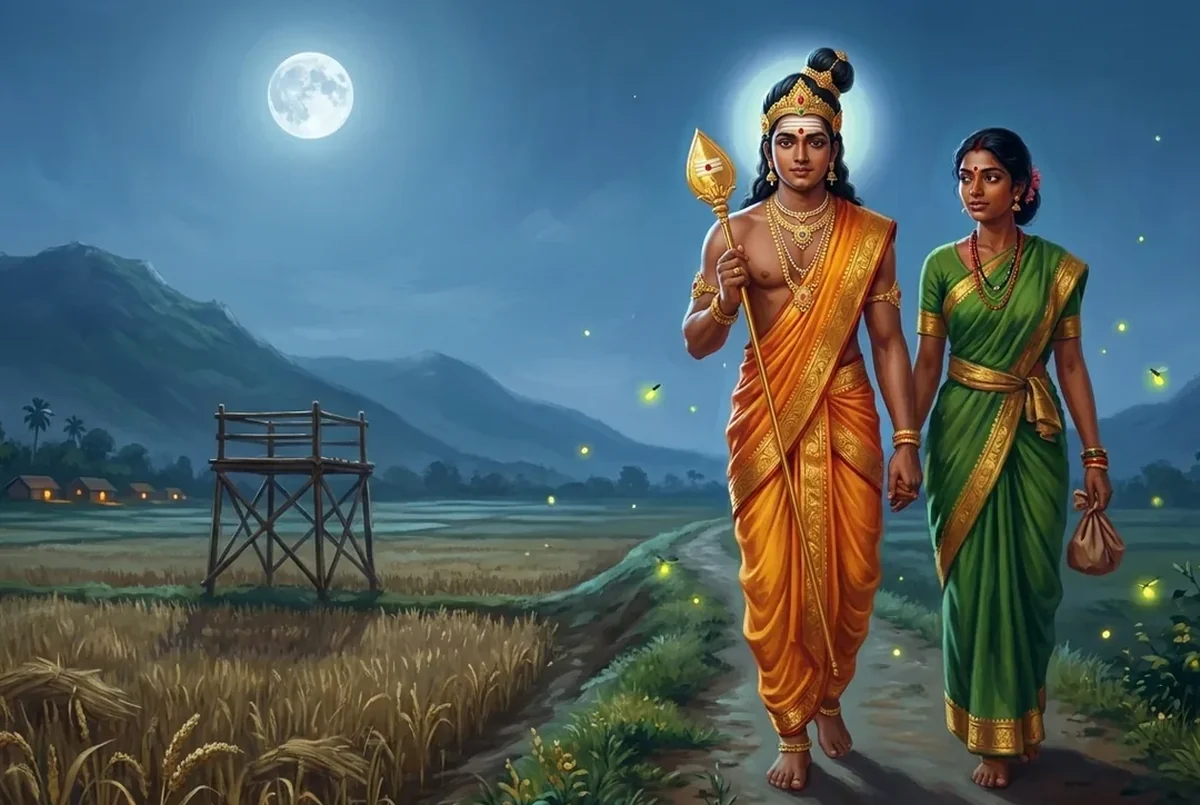
After the harvest Valli no longer went to the field, and it became hard for them to meet. One night Valli left with Murugan. In the morning Nambirajan came to know, and set out after them with his sons and his warriors. Arrows flew, but none could touch Murugan. Then, it is told, the rooster on Murugan's banner crowed, and all the pursuers fell to the ground without a movement.
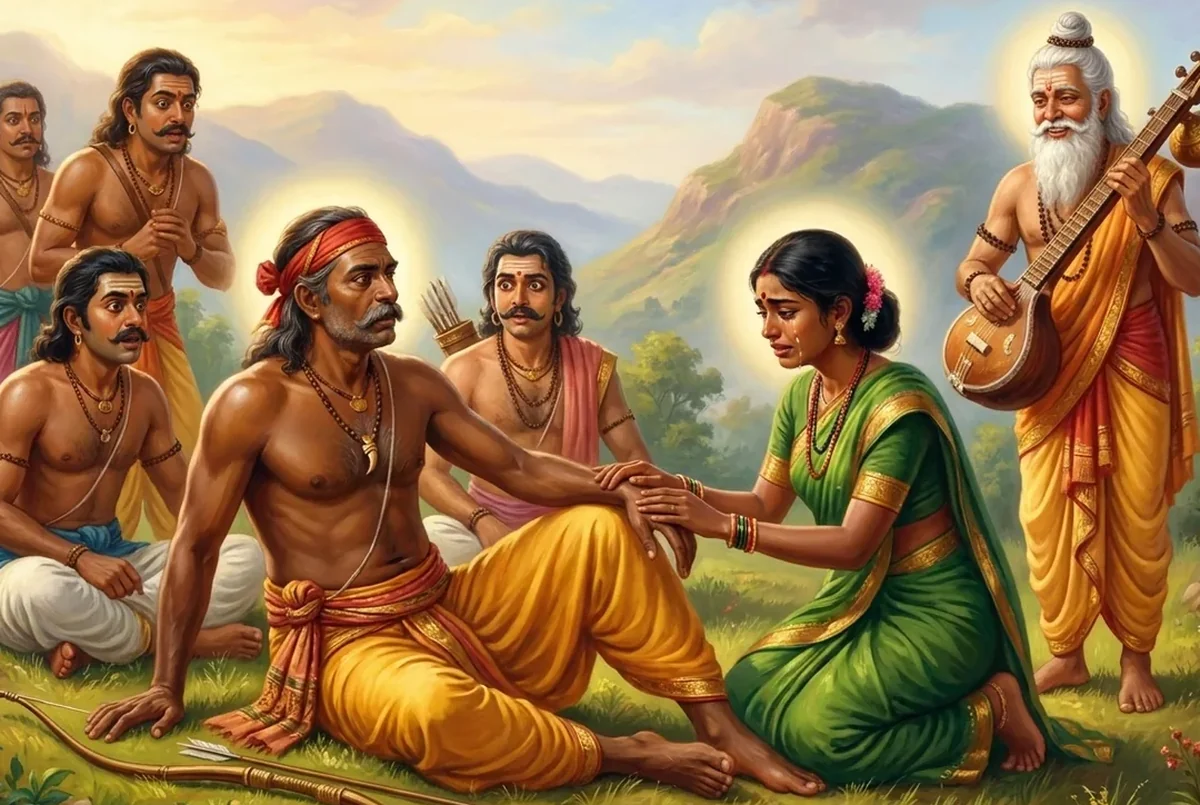
Narada came and pleaded with Murugan, and Valli too begged with tears for her father and brothers. At Murugan's word Valli touched them, and they all rose again. Now Nambirajan understood that his daughter had been chosen by God himself. With a glad heart and with proper rites he gave Valli in marriage to Murugan. Murugan then went with Valli to the hill of Thiruthani, one of his six abodes.
Tamil devotees say Valli and Deivanai are Murugan's two powers, the power of will and the power of action, and in temples he stands with both. The story of Valli tells us that God does not wait in palaces alone; he walks all the way to a simple girl sitting on a platform in a millet field. And it tells us that when a younger brother needs help, the elder brother is there.
Source
Valli's marriage is told in Kachiyappa Sivachariyar's Tamil Kanda Puranam and is very popular in Tamil folk tradition. Local versions differ, including the tradition of Kataragama in Sri Lanka.