
Murugan: The Fruit of Wisdom and the Renunciant of Palani
Palani, Tamil Nadu
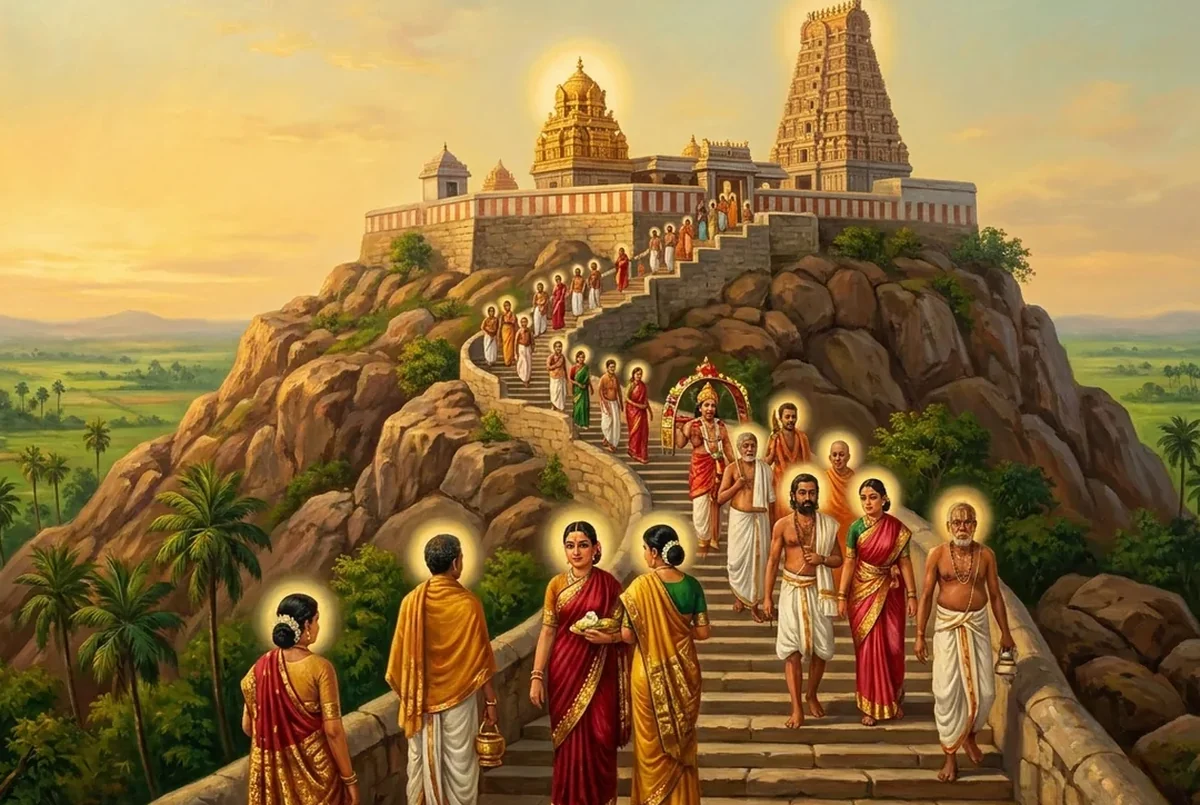
Murugan is the younger son of Lord Shiva and Mother Parvati and the younger brother of Ganesha, and the Tamil land holds him as its own dearest god. On the hill of Palani in Tamil Nadu he stands as Dandayudhapani, a young renunciant holding only a staff. Palani is one of Murugan's six sacred abodes, the Arupadai Veedu.
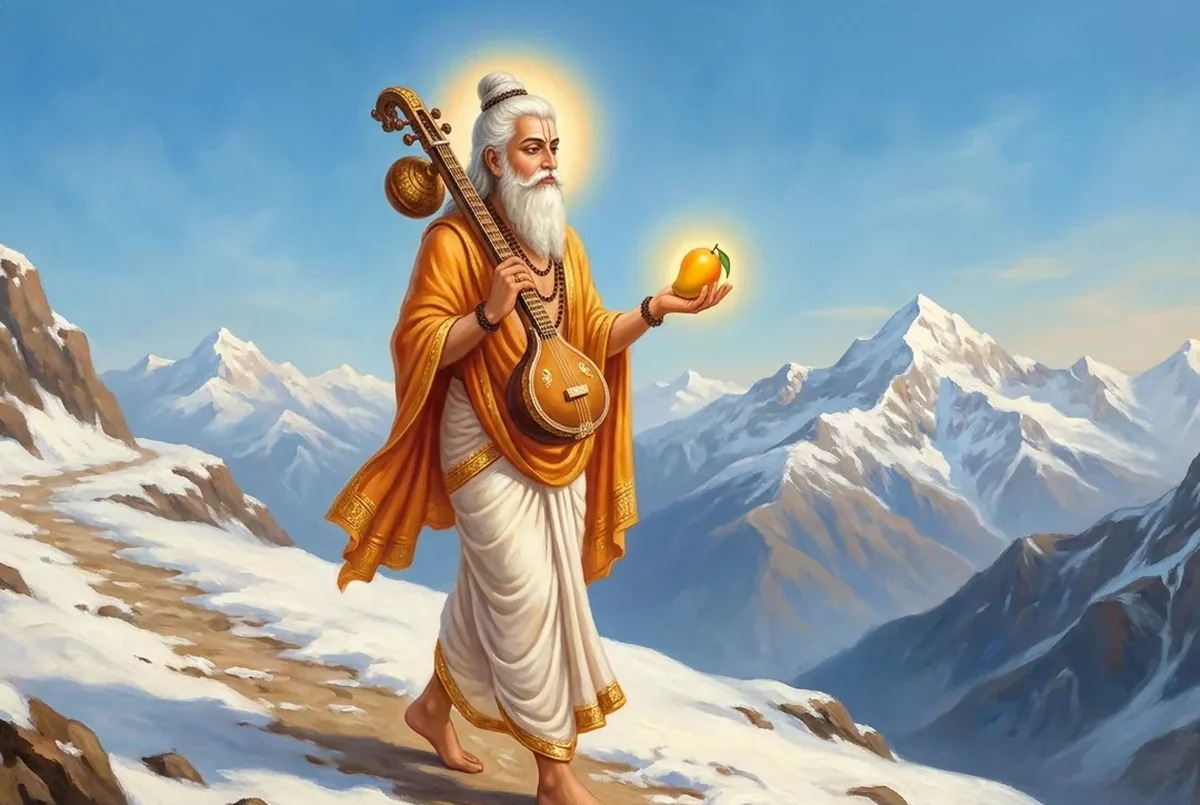
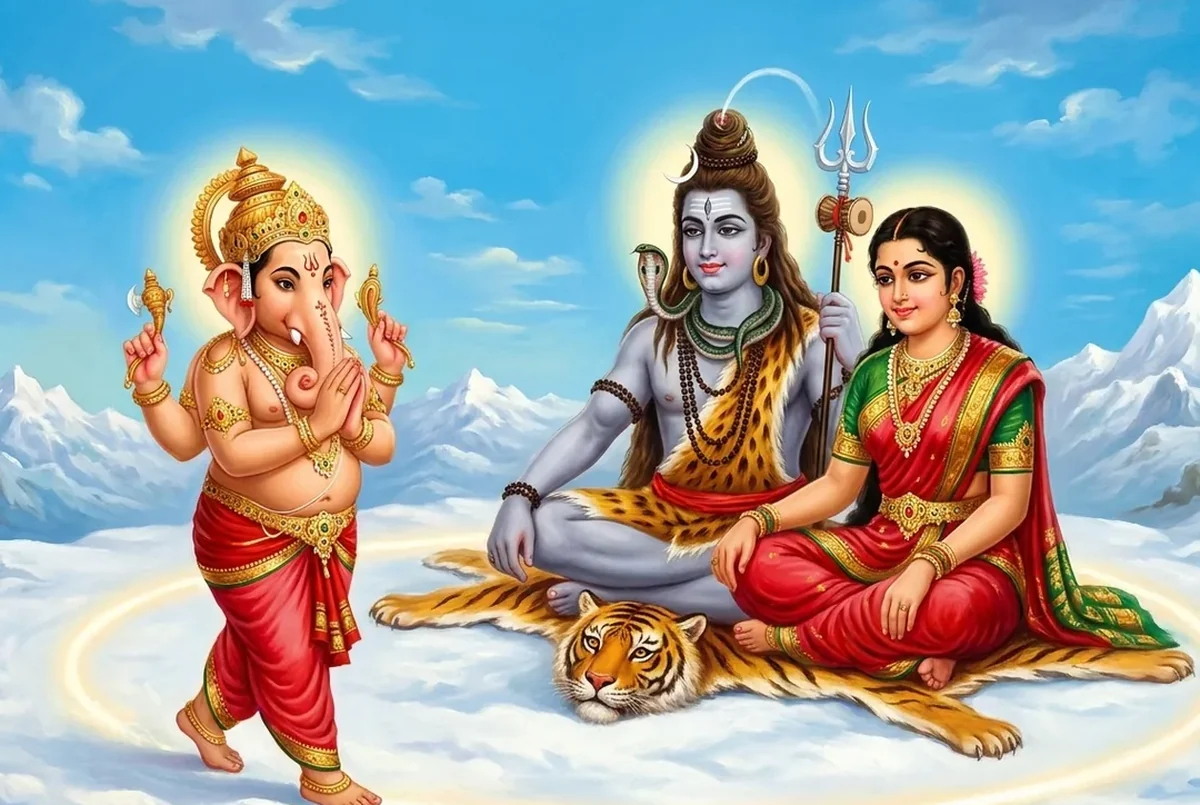
The story goes that the sage Narada once came to Mount Kailasa carrying a rare fruit. Tamil tradition calls it the gnana pazham, the fruit of wisdom, and many say it was a mango. Narada offered it to Lord Shiva. Close by sat his two sons, Ganesha and the young Murugan. Both of them looked at the fruit, and both of them wanted it.
There was only one fruit, and it could not be divided. So Shiva and Parvati smiled and set a contest: whoever went around the whole world and came back first would have it. Murugan did not wait a moment. He mounted his peacock and flew over mountains, seas and islands, sure that his swift bird would bring him home before anyone else.

Ganesha stayed where he was and thought for a while. Then he folded his hands and walked three times around his mother and father with devotion. For me, he said, my parents are the whole world, and going around them is going around the world. Shiva and Parvati were delighted by his understanding and placed the fruit of wisdom in his hands.
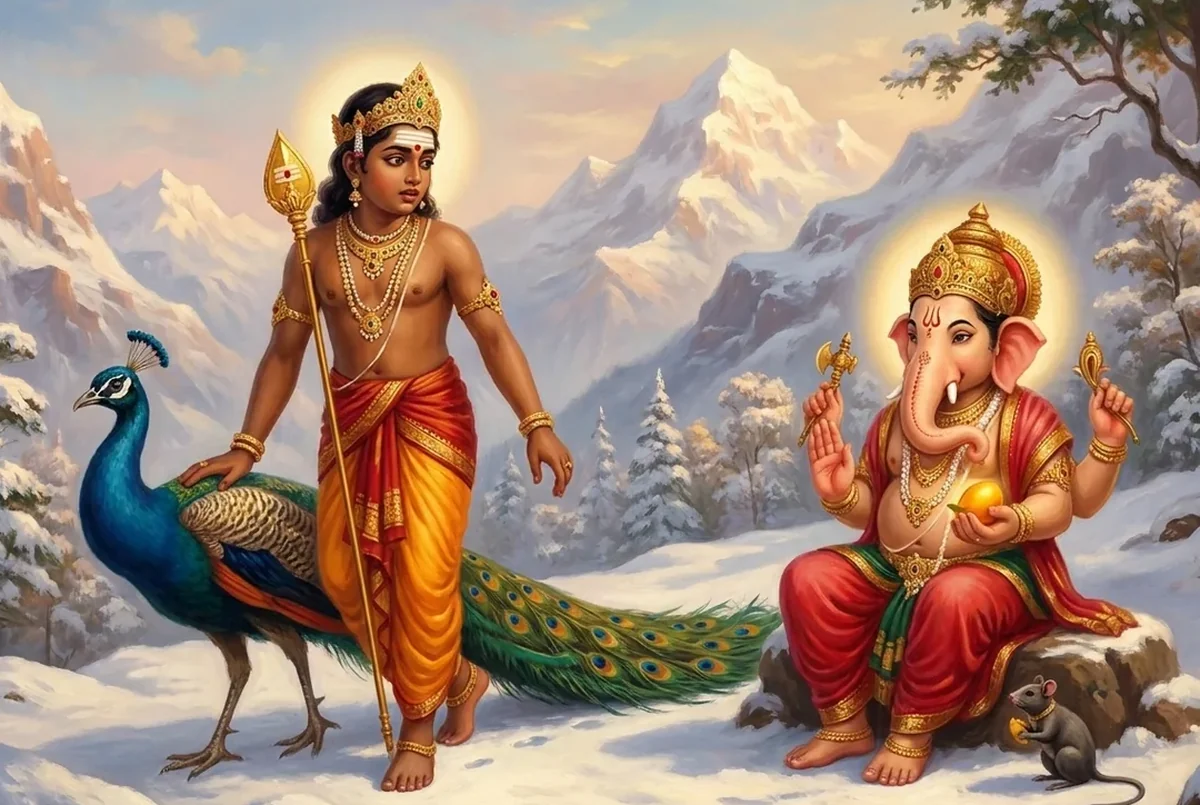
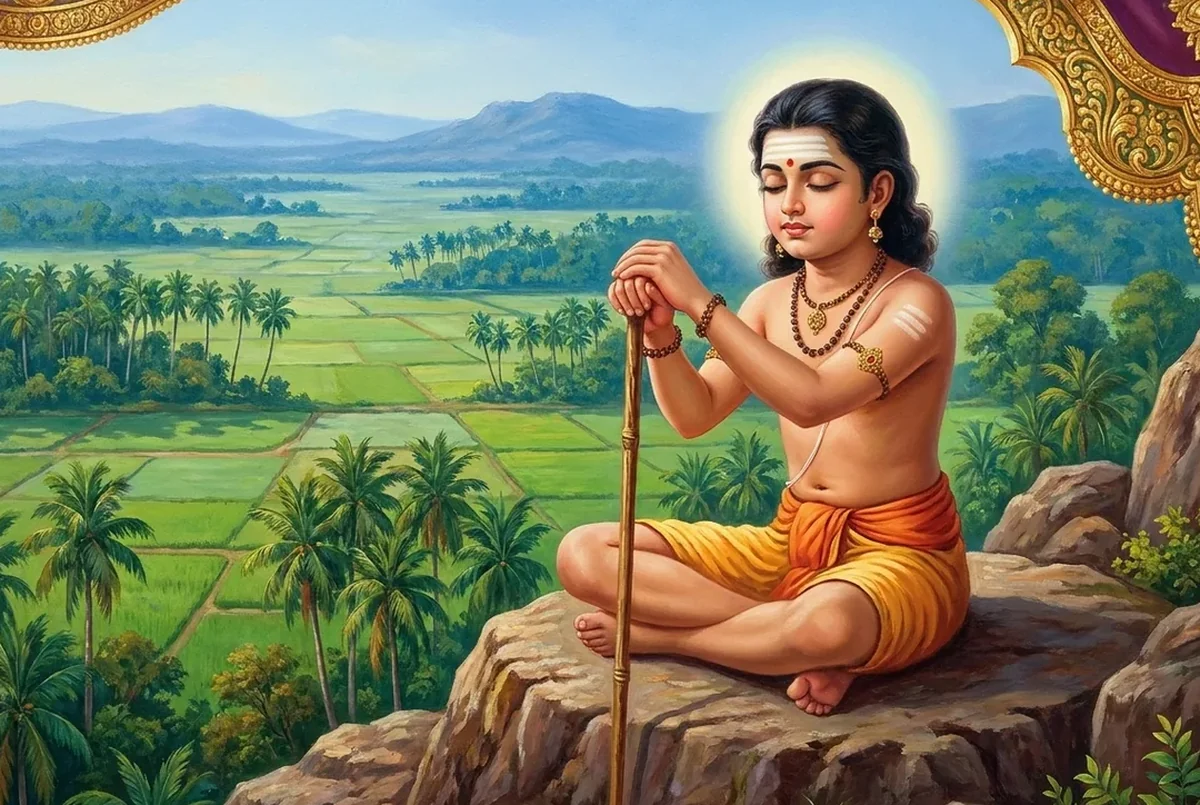
Some time later Murugan returned, tired after circling the world, and saw the fruit already with his elder brother. When he learnt what had happened, he was deeply hurt. It felt as if all his effort had counted for nothing. In that moment he decided he wanted no fruit, no silks and nothing that belonged to a prince. He took off his ornaments, wore only a loincloth, took up a simple staff and left Kailasa, walking south.
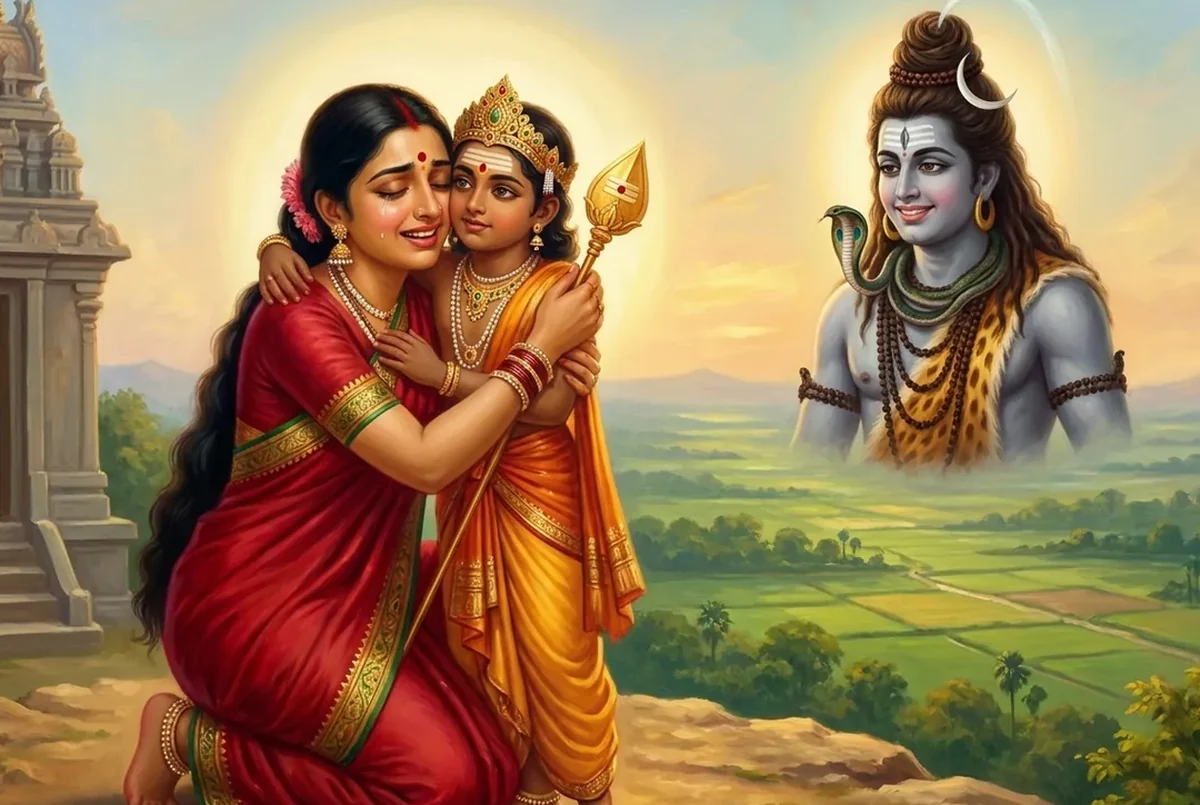
He walked until he reached a quiet hill in the Tamil country, and there he stood lost in tapas. The old shrine at the foot of that hill is Thiru Avinankudi, named among Murugan's abodes in the ancient Tamil poem Thirumurugatrupadai. Back on Kailasa, Mother Parvati could not bear to be without her younger son. So Shiva and Parvati came to the hill themselves.
The Mother held her son close and said tenderly, Pazham nee, you yourself are the fruit. What need do you have of a fruit, when you are wisdom itself? It is believed that from these words the place came to be called Pazhani, which we now write as Palani. His parents' love calmed Murugan's heart, yet he chose to remain on that hill so that his devotees could always find him there.
To this day Murugan is worshipped on the Palani hill in that very form, as Dandayudhapani, a young renunciant in a loincloth holding a staff. Tradition says the image was made by the siddha Bhogar. Devotees climb the steps for darshan, and many offer their hair as a vow, just as Murugan once gave up everything. The story of Palani reminds us that what we think we have lost can sometimes lead us to the wisdom within.
Source
The fruit of wisdom and the naming of Palani are Tamil temple and folk tradition, told in several versions. Thiru Avinankudi is named among Murugan's abodes in the Sangam-era Tamil poem Thirumurugatrupadai.