
Mariamman: The Mother of Samayapuram
Samayapuram, Tiruchirappalli, Tamil Nadu
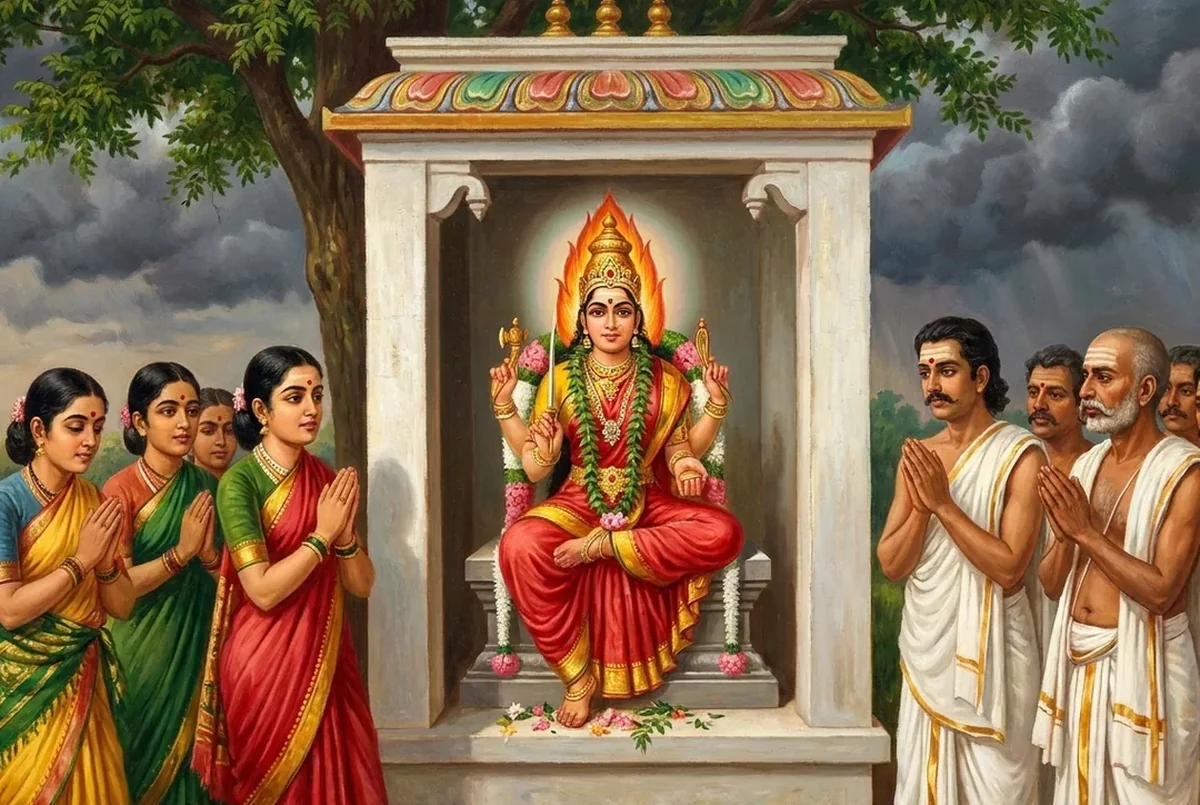
Mariamman is the Mother worshipped in villages across Tamil Nadu, the one people call on for rain and for protection in times of fever, pox and epidemic. Her temple at Samayapuram near Tiruchirappalli is one of her greatest shrines, where she is called Samayapurathal and Mahamayi. This telling draws on the temple's own tradition and Tamil folk belief.
From very old times Tamil villages have worshipped a Mother called Mariamman. In Tamil, mari can also mean rain. When fever spread in the hot months, when pox went from house to house and there was little medicine to be had, people called on this Mother. As rain cools the burning earth, they believed, so the Mother cools a burning body.
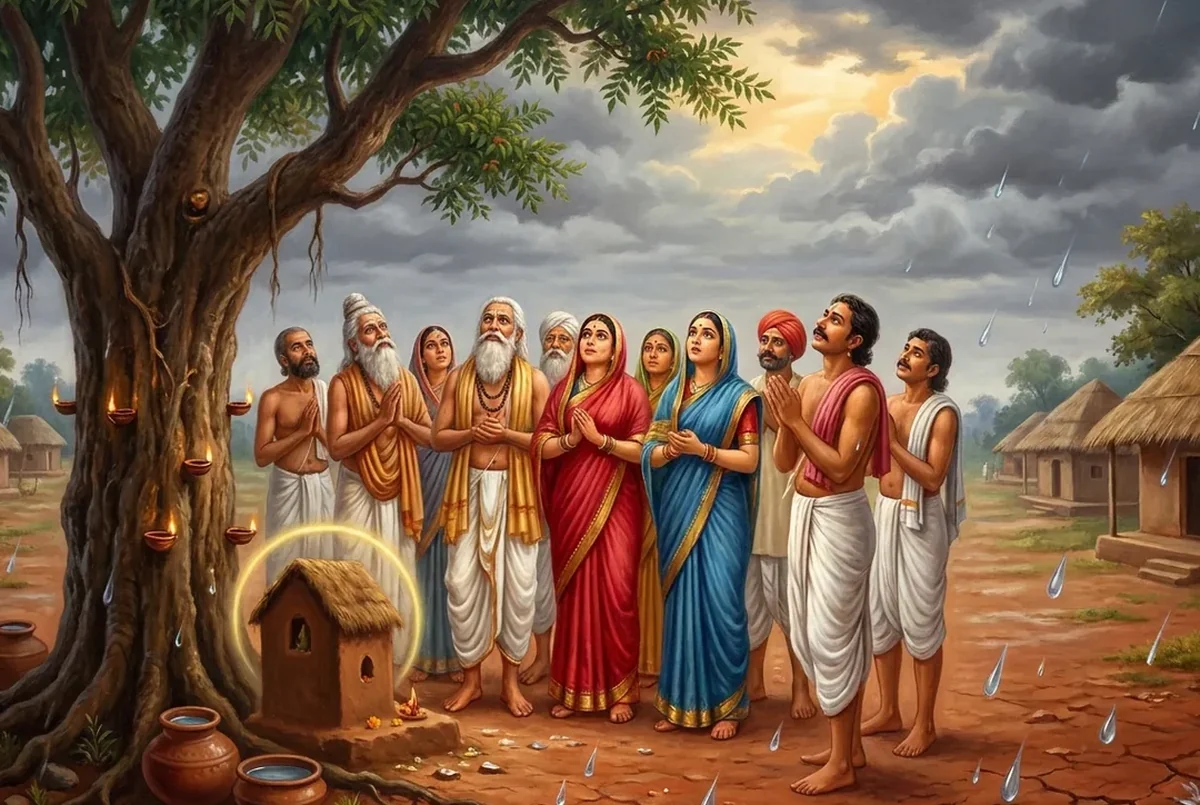
One story says that the image of the Samayapuram Mother once stood in the great temple at Srirangam. The tellings give different reasons, but it is said that the priests there felt her fierce power was not in keeping with that temple's worship, and she was taken out. The image was carried north and left in the forest at Kannanur, among neem trees. This is one reason many people fondly call her the sister of Ranganatha of Srirangam.
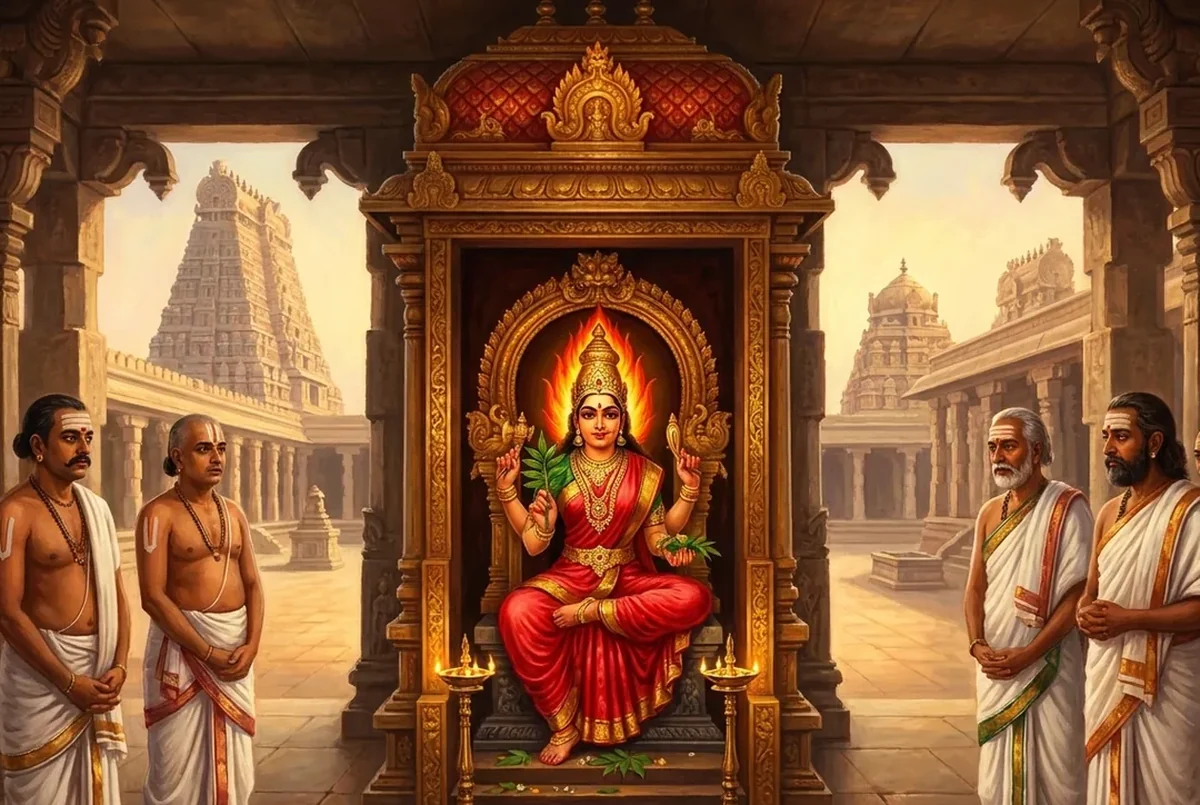
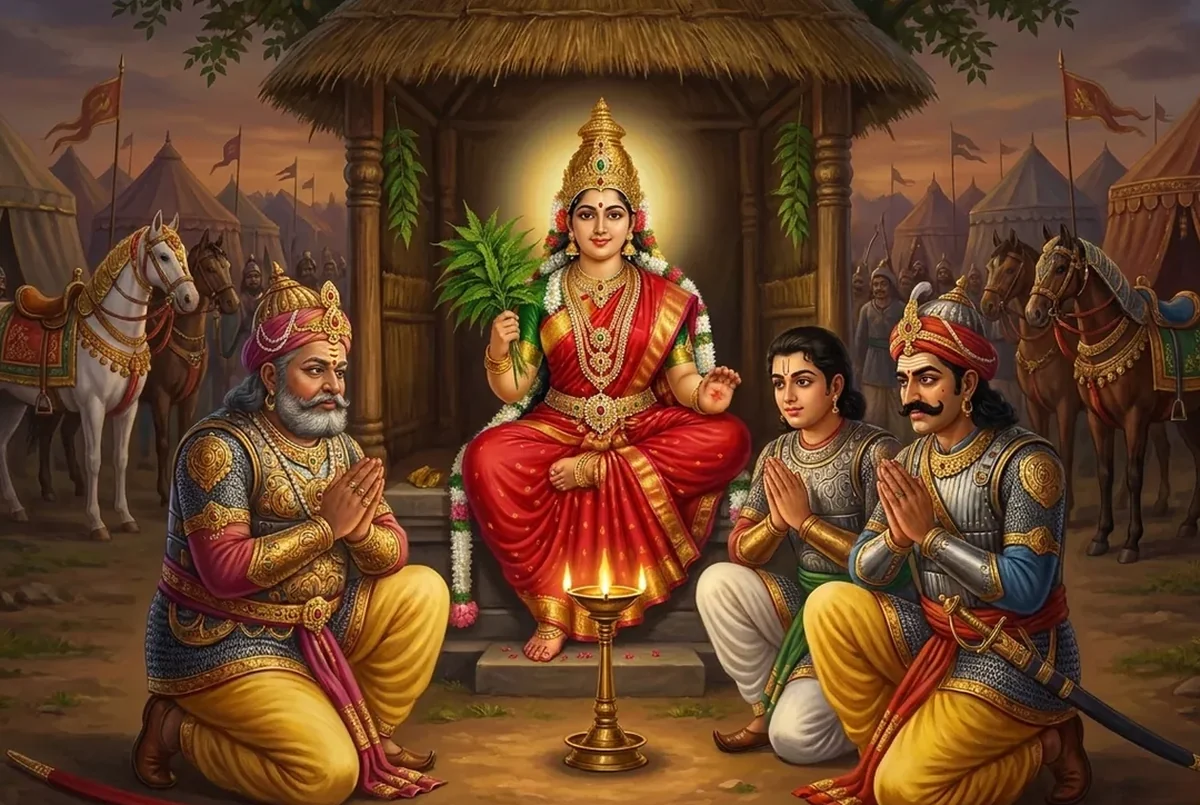
Cowherds and villagers passing that way found the Mother in the shade of the neem. They put up a small thatched shelter, lit a lamp and began to worship her in their own simple way. She came to be known as Kannanur Amman. The villagers felt that since she came, her shadow rested over the village. Mothers going to the fields would leave their children before her, and when someone fell ill, the family would place neem twigs by the bedside and call her name.
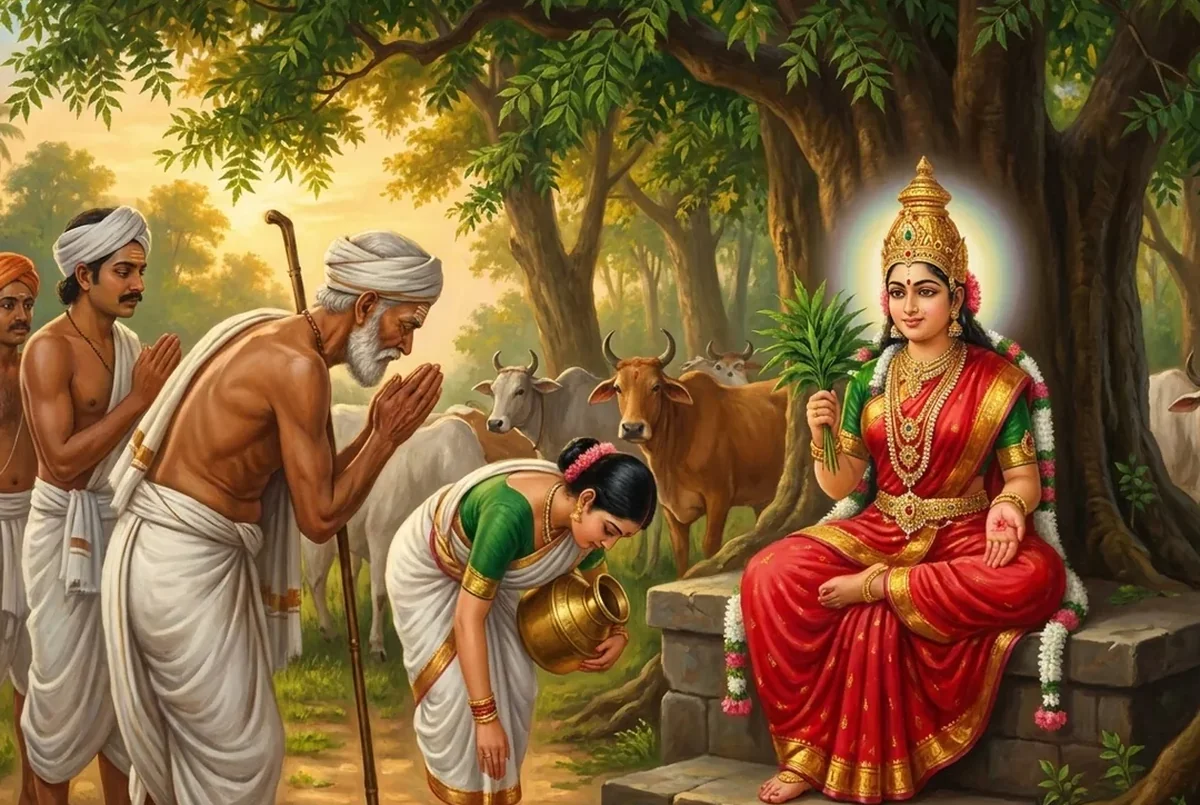
Much later, in the time of the Vijayanagara rulers, their army camped here. It is said that before a battle the commanders prayed before the Mother and vowed that if they won, they would build her a temple. They won, and they kept their word. Later rulers enlarged the temple. The main image is said to be made not of stone but of clay mixed with herbs, and so it is not bathed in abhishekam.
The most unusual thing about the Mother of Samayapuram is her own fast. Tradition says that from the last Sunday of the Tamil month of Masi, for twenty-eight days, the Mother herself fasts for the welfare of her people. This is the pachai pattini viratham. In these days no cooked food is offered to her, only buttermilk, tender coconut water and simple offerings like them. People from the villages around bring basketfuls of flowers and shower them over her, which is why the festival is called Poochoriyal.
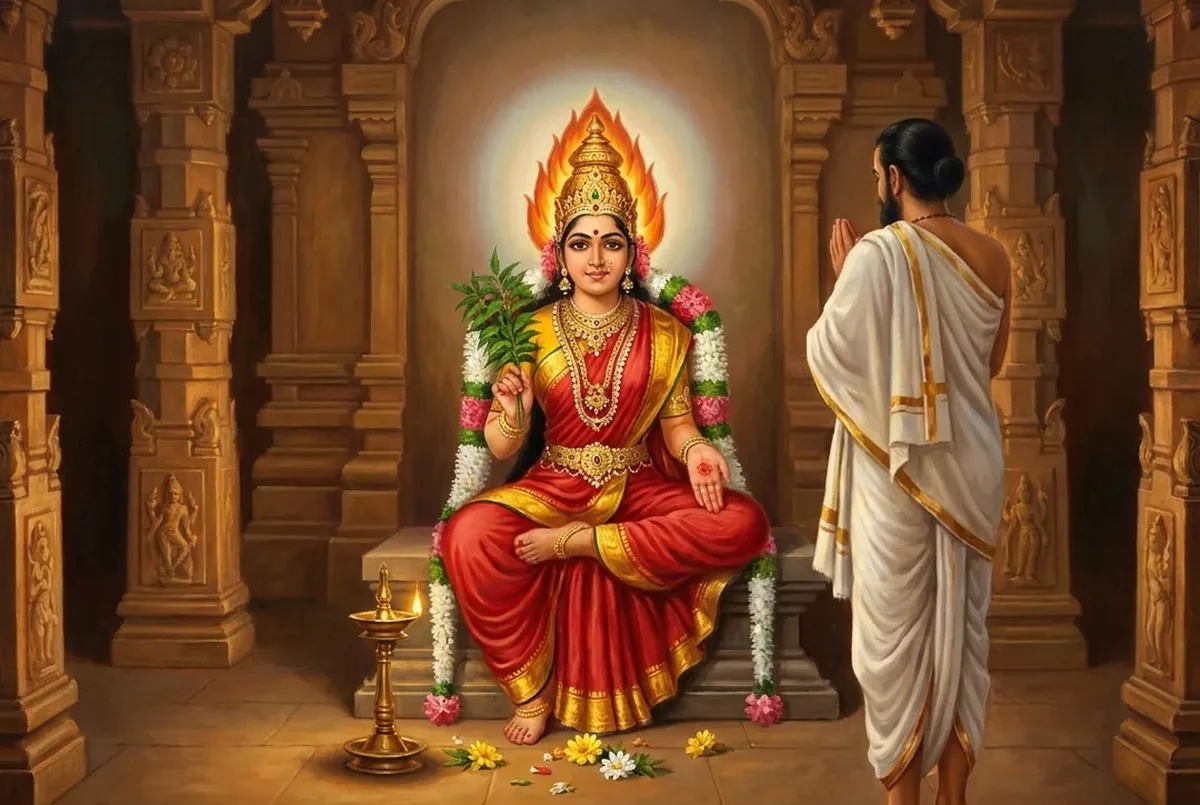
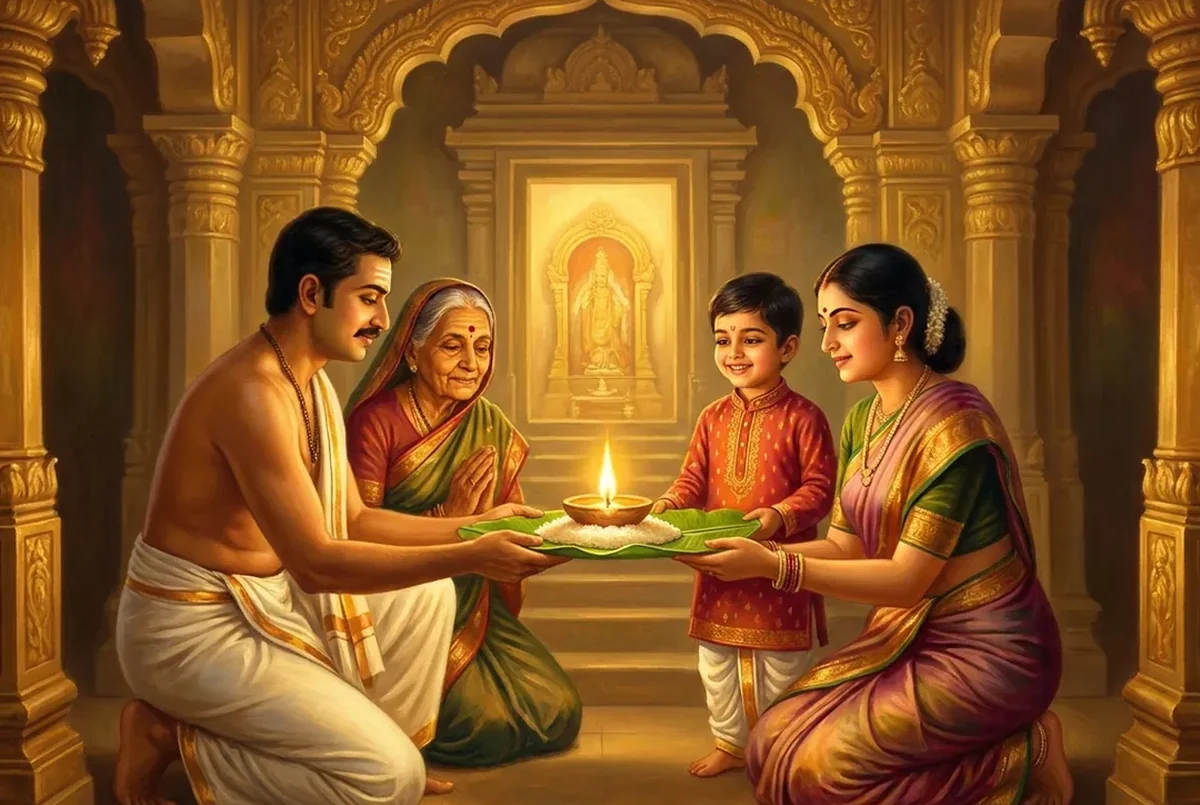
Even today, when someone at home is down with high fever or pox, many families pray in the Mother's name, and after recovery they come to Samayapuram to offer mavilakku, a lamp made of rice flour, jaggery and ghee. Village devotees also offer raw salt and neem leaves. For her devotees, the Mother's grace and the care of the sick go hand in hand; they take the sick to a doctor, and they also take her name.
In the month of Chithirai the Mother's chariot festival is held, and thousands pull her ther together. Yet the heart of Samayapuram's story is not a battle or a wonder. It is the story of a Mother who sits by the bedside when her children are ill, and who goes hungry herself for their good. Tamil devotees call to her in just that spirit: Aatha, Mahamayi, look after us.
Source
This is the sthala tradition of the Samayapuram temple and Tamil folk belief; there are several versions of why the image left Srirangam and how the temple came to be built. The pachai pattini fast and Poochoriyal are festivals the temple still keeps.