
Ranchhodrai: Bodana the devotee and Ranchhodrai of Dakor
Dakor, Kheda, Gujarat
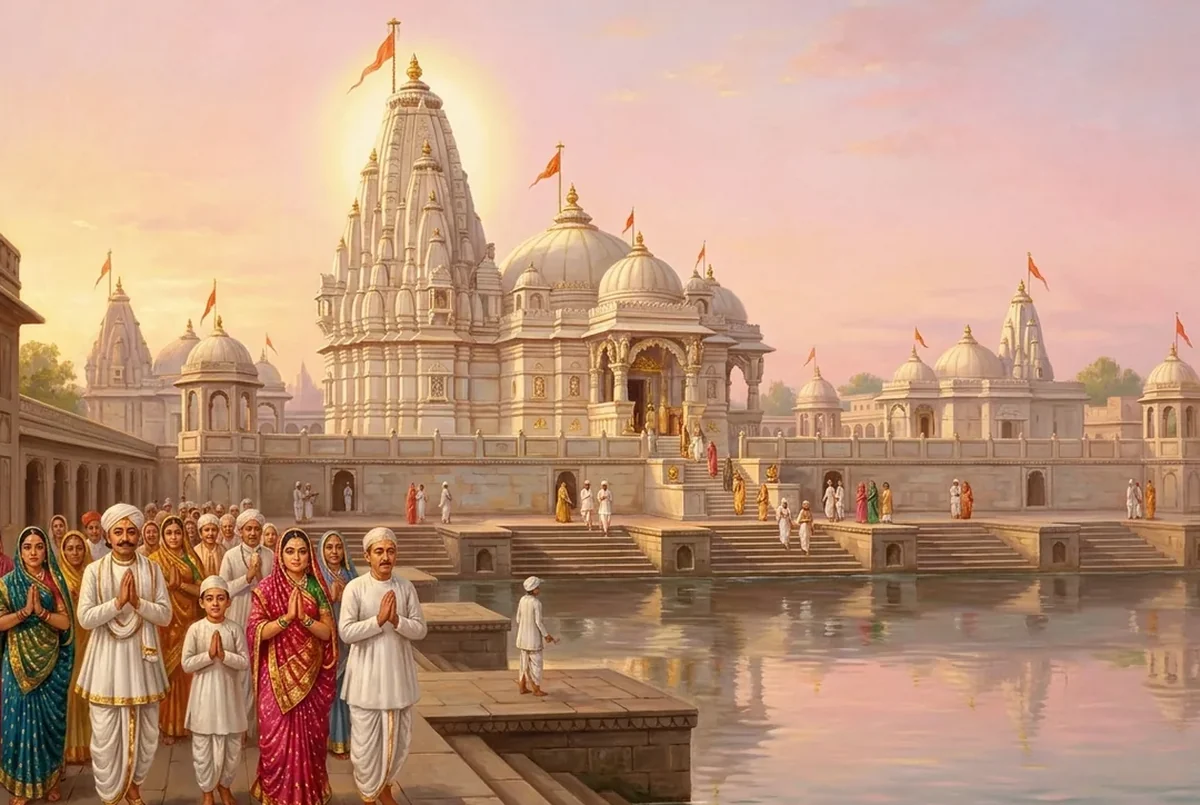
Dakor, in Gujarat's Kheda district, is a great pilgrimage town where Lord Krishna is worshipped as Ranchhodrai. The name Ranchhod recalls the time Krishna left the battlefield to protect the people of Mathura and founded Dwarka. Devotees believe that this same Lord of Dwarka came to Dakor, bound by the love of his old devotee Bodana.
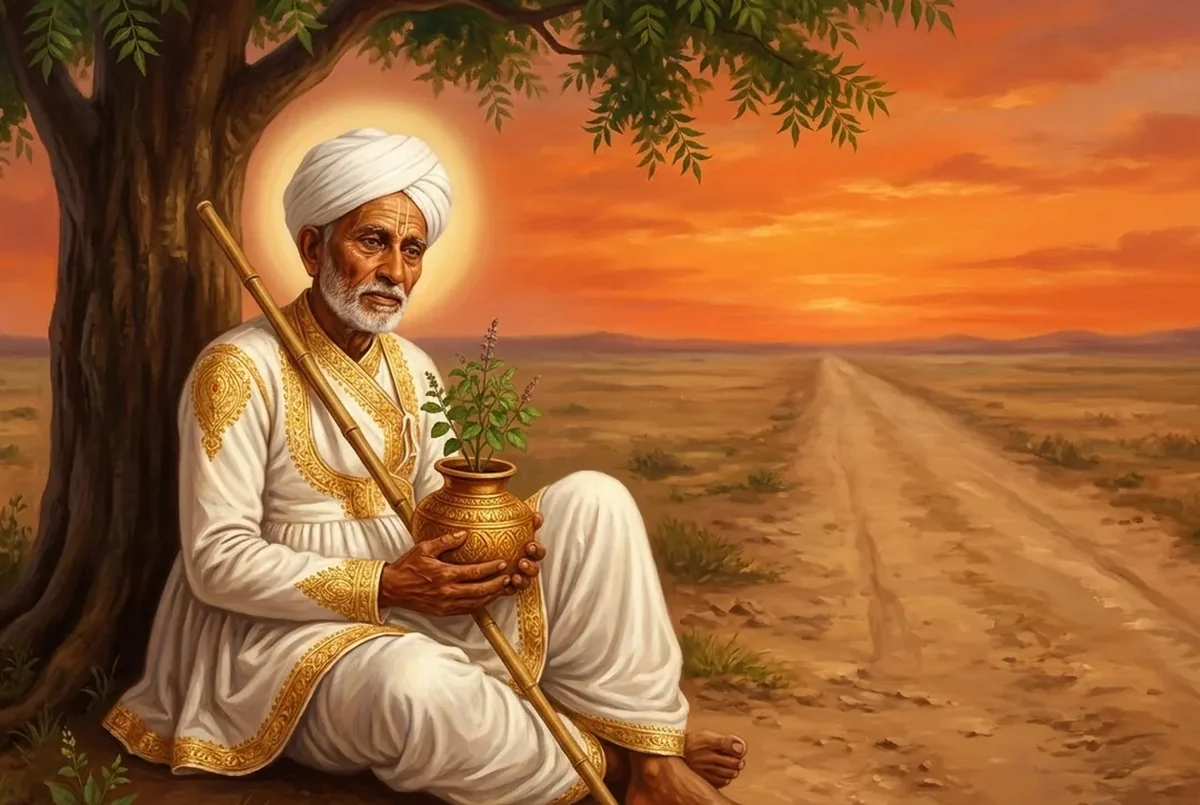
In the village of Dakor lived a simple devotee named Bodana, with his wife Gangabai. They had little money, but their hearts were full of love for the Lord of Dwarka. Bodana had vowed to walk to Dwarka every six months for the Lord's darshan. Carrying a tulsi plant in a pot on his palms and singing bhajans, he walked the long road and offered that tulsi at the Lord's feet.
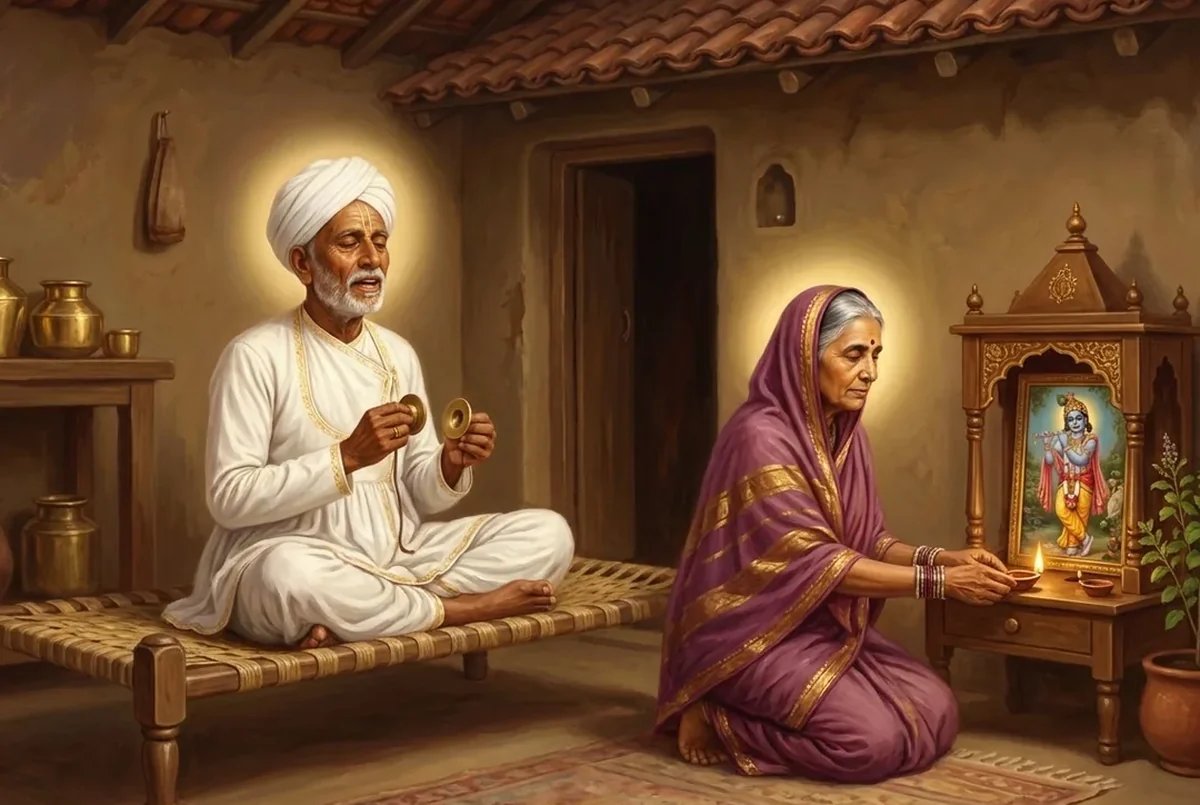
The years went by. It is said that Bodana kept this vow until he was seventy-two. By then his body was failing. Once, standing before the Lord in Dwarka, his eyes filled and he said silently, Lord, I may not be able to come again. That night the Lord appeared to him in a dream and said, Bodana, you need not come any more. Next time bring a bullock cart, and I will come with you to Dakor myself.
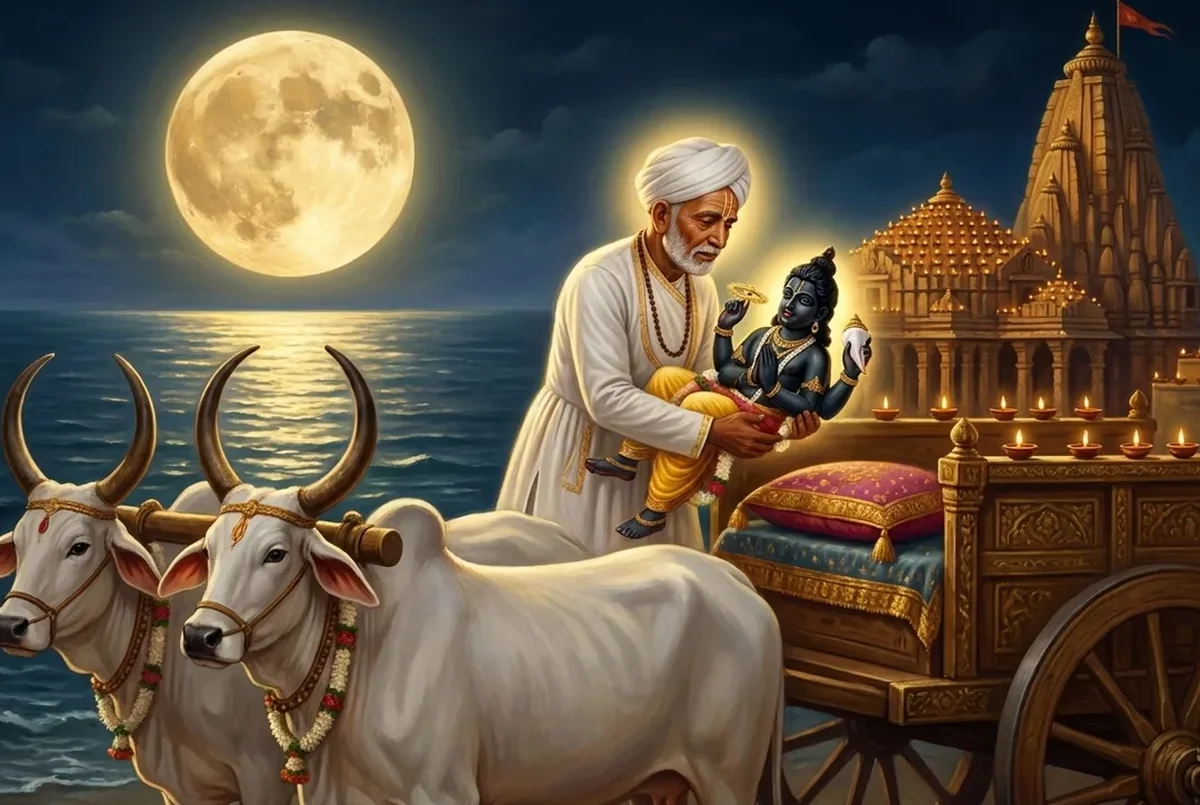
On the next Kartik Purnima, Bodana arrived in Dwarka with an old bullock cart. In the middle of the night, by the Lord's will, he lifted the image, which had become as light as a flower in his hands, and seated it in the cart. The Lord told him to sleep and drove the cart himself. Folk belief says that on the way the Lord touched a neem tree, one branch of which is said to be sweet to this day. By dawn the cart had reached Dakor.
In the morning, finding the image gone, the priests of Dwarka were in uproar. They followed Bodana all the way to Dakor. At the Lord's bidding, Bodana hid the image in the water of the Gomti lake. In the anger and confusion of the pursuit, a spear was thrown and struck the old devotee, and Bodana gave up his life with the Lord's name on his lips. Devotees remember his death with deep reverence, as the final offering of a life given wholly to God.
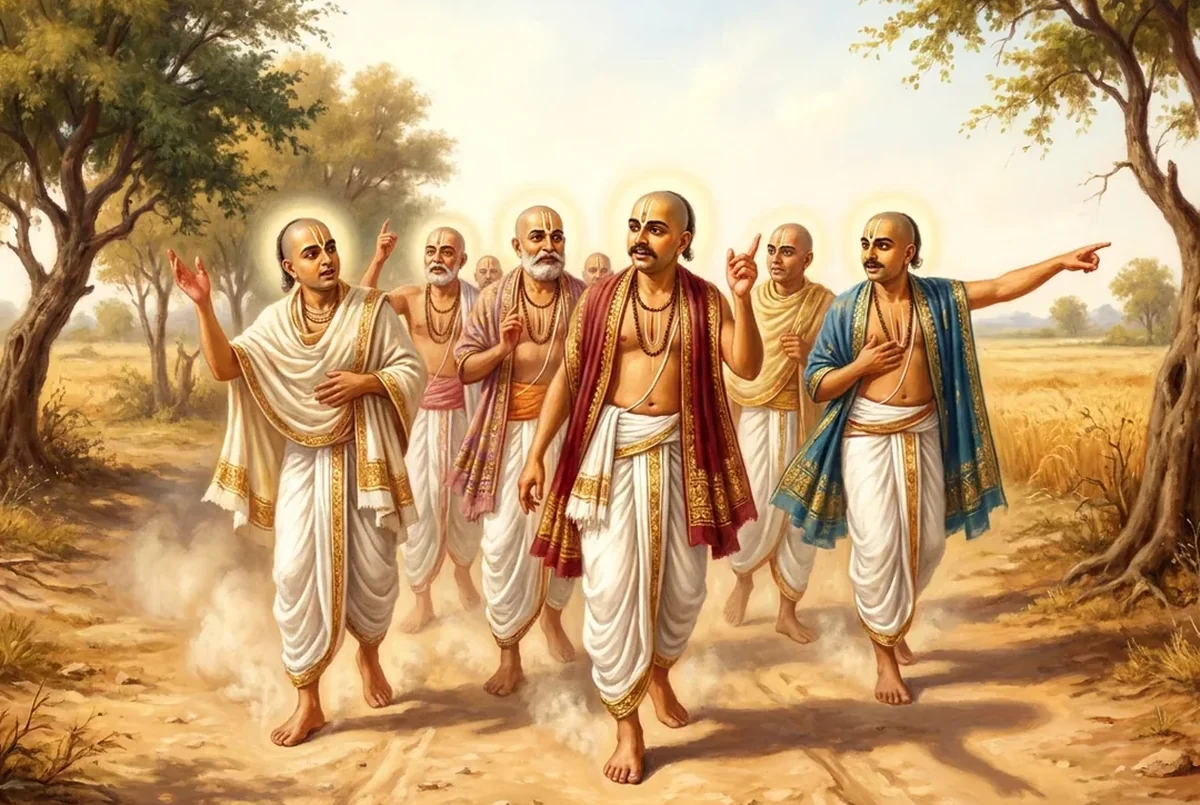
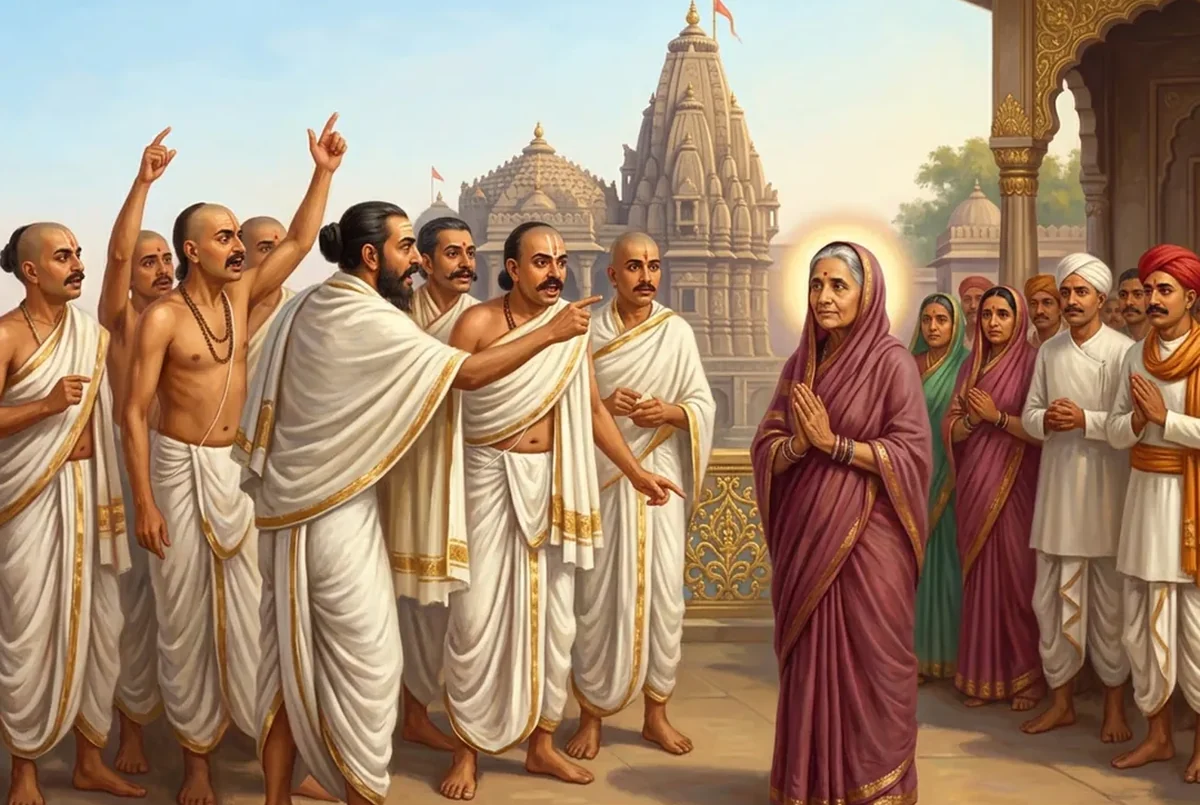
When the priests found the image, they demanded it back. Then the Lord told Gangabai in a dream, tell them to take gold equal to my weight and go home. The priests agreed, sure that a poor widow could never find so much gold. A great balance was set up on the bank of the Gomti. The Lord's image was placed on one pan, and the whole village held its breath.
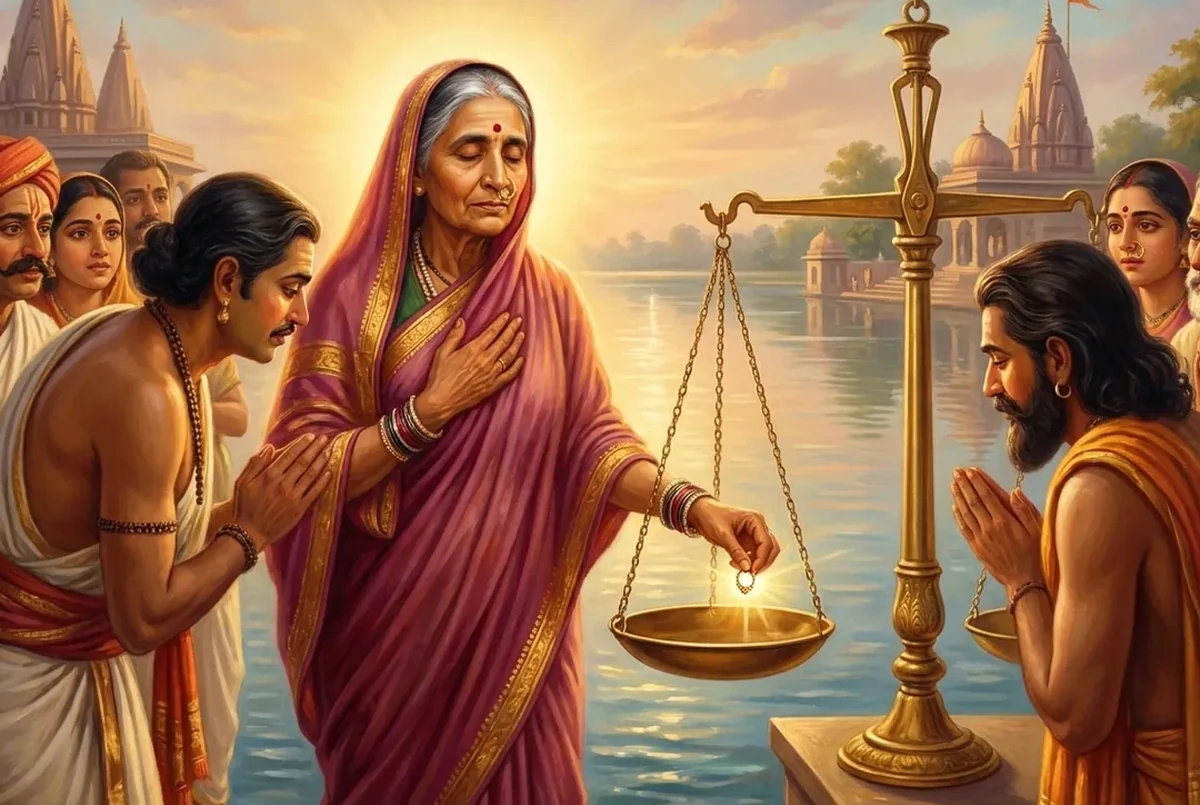
All the gold Gangabai owned was one small nose-ring. She closed her eyes, remembered the Lord and placed the nose-ring on the other pan. Everyone watched as the scale swayed and the two pans came level. The Lord who was to be weighed against a heap of gold had become as light as a widow's nose-ring. Many tellings say that a tulsi leaf was placed with it. The spot where the weighing took place is still shown on the bank of the Gomti.
The priests were sad to go home empty-handed, but the Lord did not disappoint them either. He told them that an image like this one would be found in a stepwell at Dwarka for them to worship. So the service of Dwarkadhish continued in Dwarka, while at Dakor Ranchhodrai made his home in his devotee's village. On full-moon days, especially Phagun Poonam, lakhs of devotees still walk to Dakor. The story says that God is weighed not in gold, but in love.
Source
The temple tradition of Dakor and Gujarat's devotional tradition. Details differ between tellings, for example whether a tulsi leaf was placed with the nose-ring, and how the image was found at Dwarka.