
Budhvar Vrat Katha
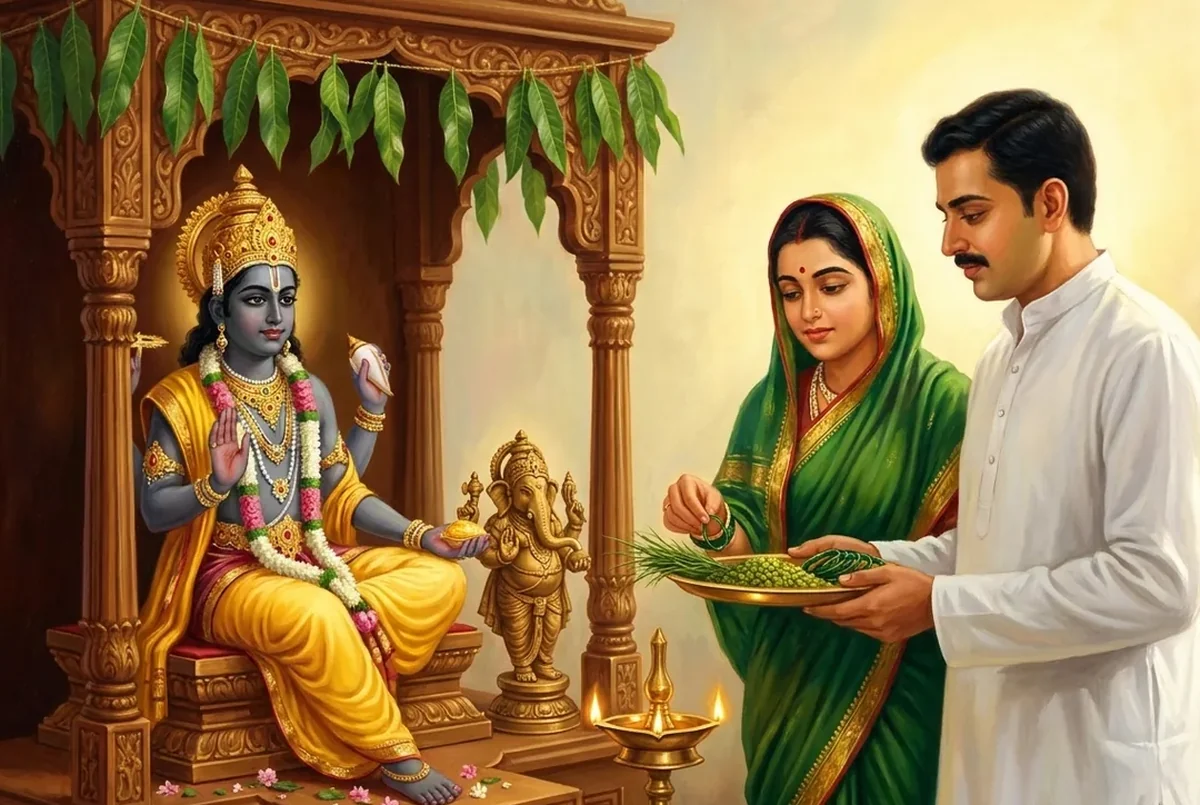
Why is this day celebrated?
Wednesday is the day of Budh among the nine planets, and in the tradition of navagraha worship Vishnu is held to be Budh's presiding deity, so it is Vishnu who is worshipped on this day; many homes also worship Ganesha. Budh is associated with intellect, speech, study, trade and travel, so the day's colour is green, and green things are offered and given away. Those keeping the vrat take only fruit through the day and eat one meal after the evening puja.
The katha
The katha says that a newly married man went to his wife's parents' home to bring her back. After a few days he spoke of leaving, and the day settled on was a Wednesday. The elders of the house stopped him: son, today is Wednesday, and we do not set out or send a daughter off on this day; stay one more day. It seemed pointless to him. What difference does a day make, he said, and he had the chariot yoked and set off with his wife.
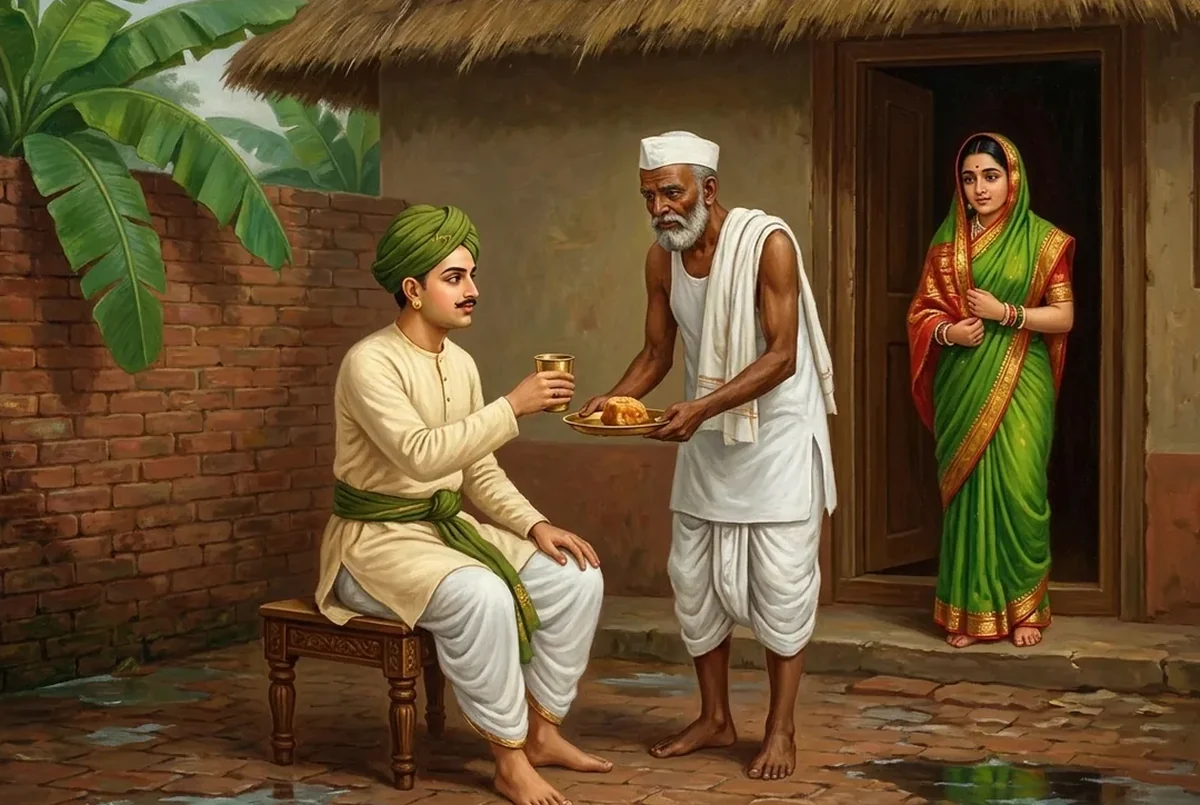
The road was long and noon came on. His wife said, I am very thirsty. He stopped the chariot in the shade of a tree, took a vessel and went to a river nearby for water. When he came back with it, he stopped where he stood. On the chariot, beside his wife, sat another man in exactly the same clothes, with exactly his own face, as though someone had held up a mirror.
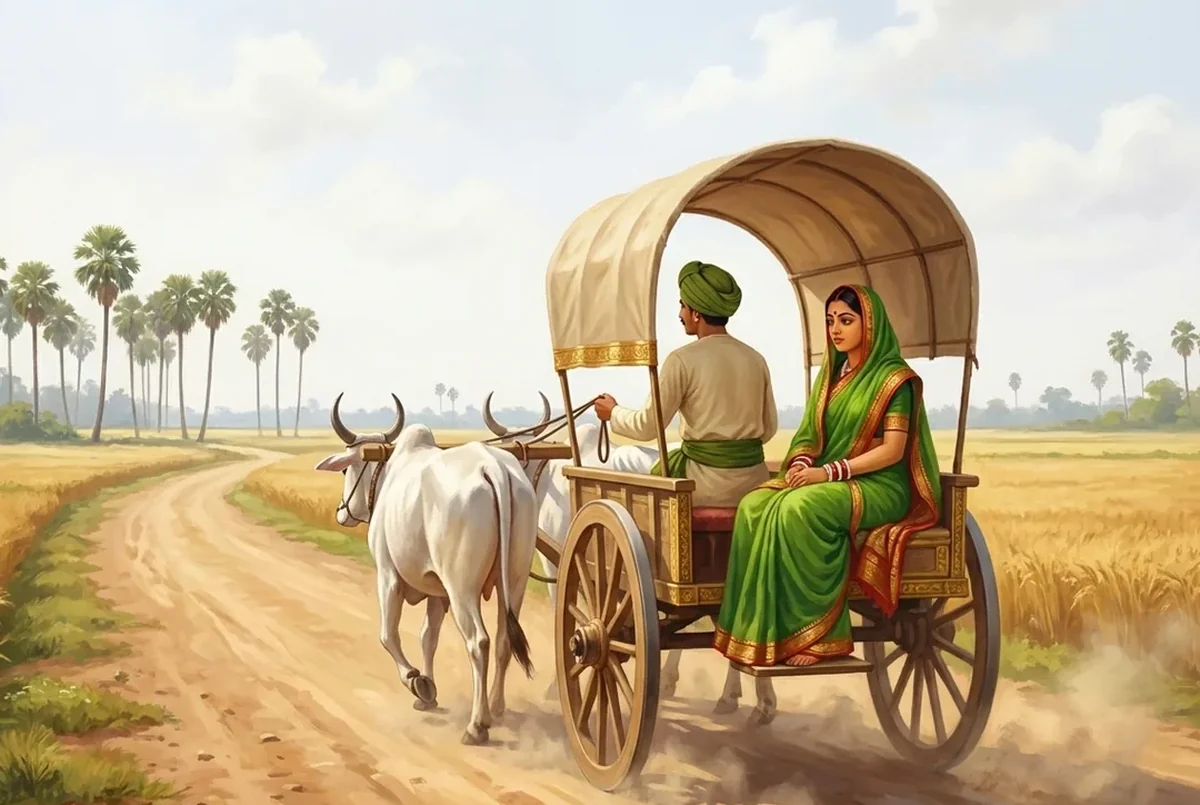
In anger he asked, who are you, and why are you sitting beside my wife? The other man answered just as calmly, she is my wife, and I am bringing her from her parents' house; who are you? Passers-by gathered at the noise, the quarrel grew, and the town's guards came too. People asked the woman, tell us, which of these is your husband? She went on looking at them both. They were alike. In a shaking voice she said only this: the one I set out from home with this morning is my husband, but now I cannot tell the two apart. Beyond that not a word came from her mouth.
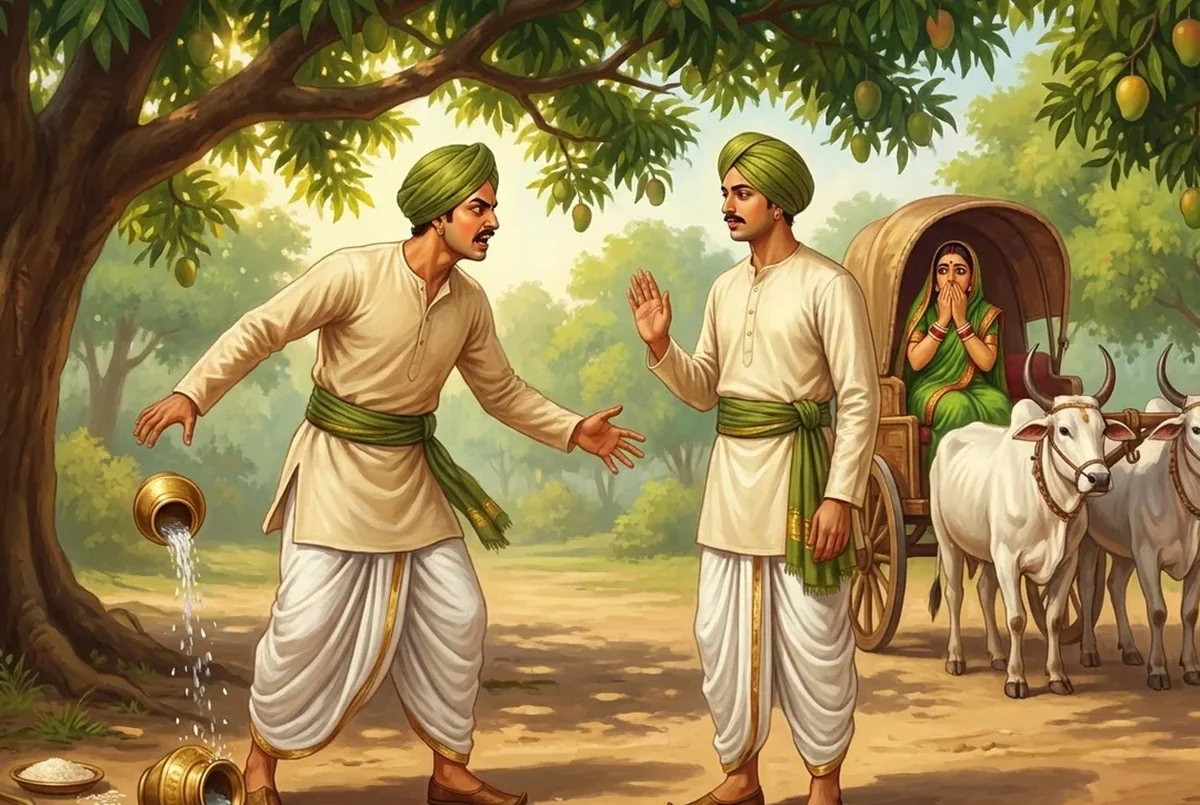
Now the man had no way left. He folded his hands, looked up at the sky and said, O God, what play is this, my wife is before me and I cannot even prove who I am. They say a voice was then heard from the sky: you were told not to travel on a Wednesday and you would not listen to your elders; this is Budh dev reminding you.
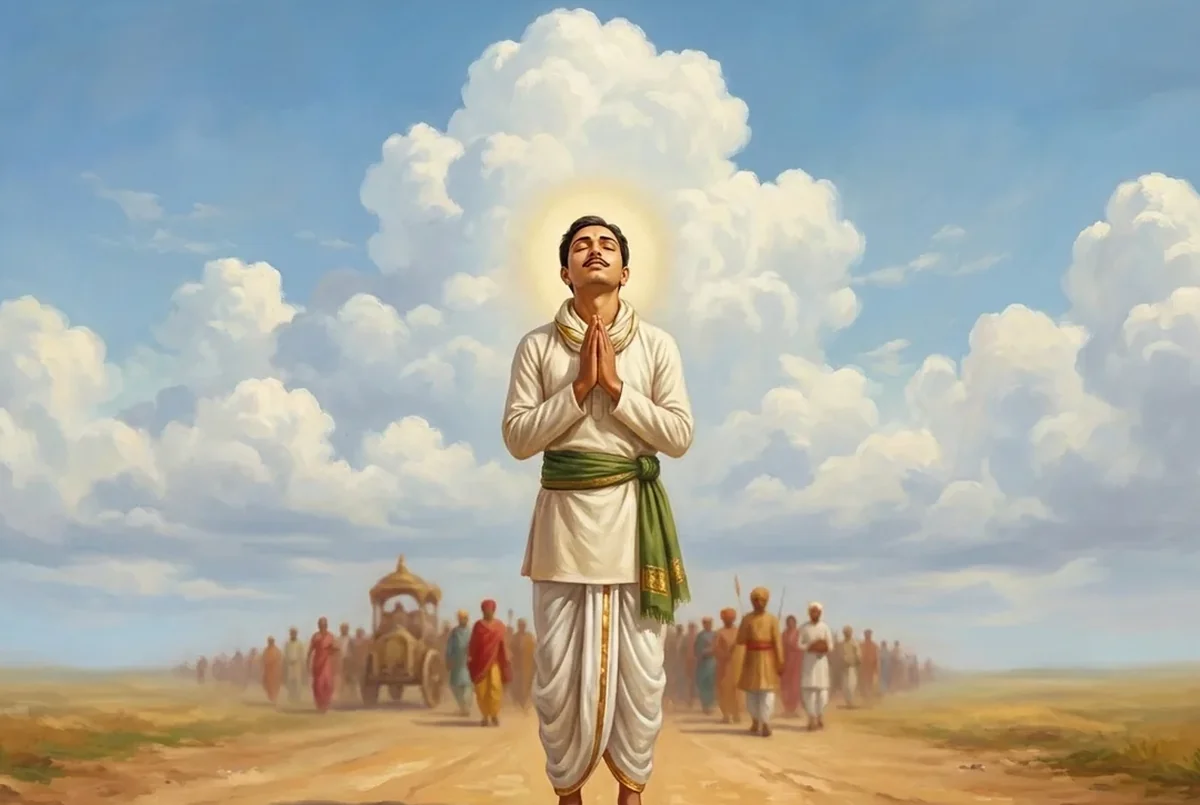
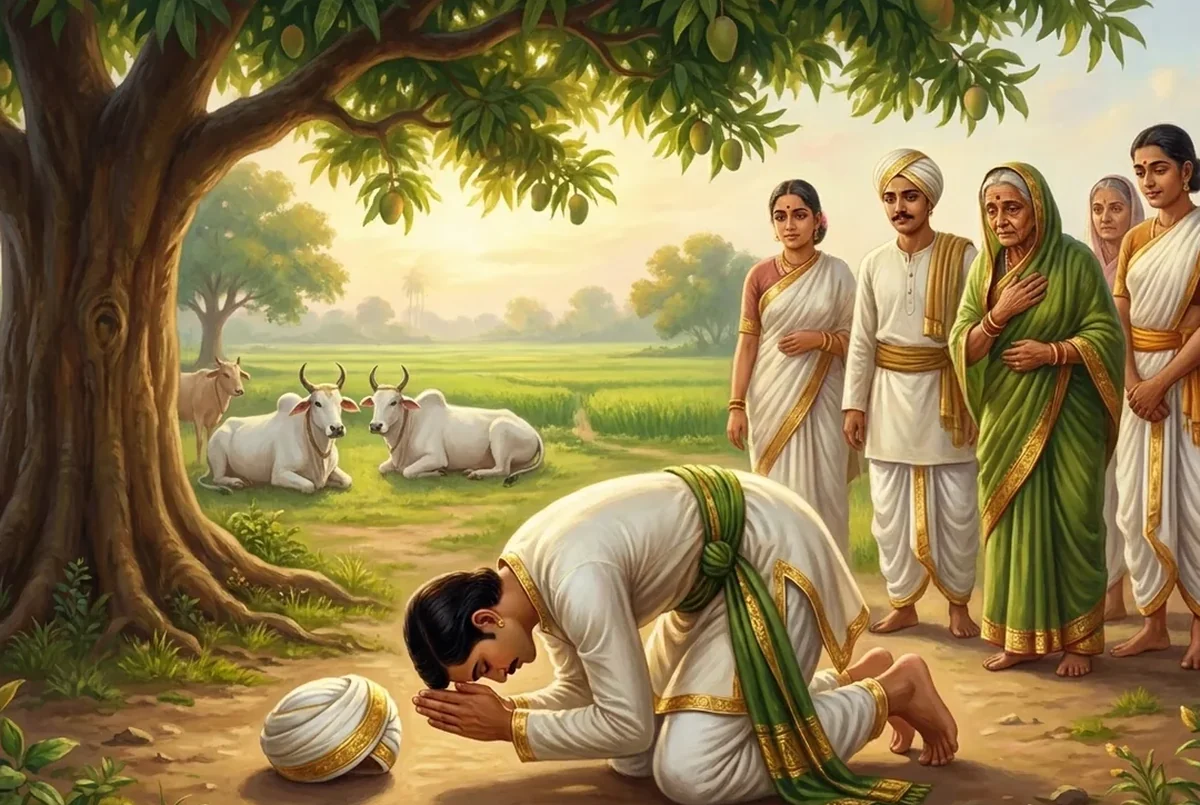
Hearing it, his pride broke. He bowed his head there and said, I was wrong, I made light of what my elders told me; Budh dev, forgive me. The moment he said it with a true heart, the other man vanished. The crowd thinned, tears ran from his wife's eyes, and the two of them reached their home safely. From that day they kept the Wednesday vrat as a rule.
The real heart of this katha is not fear of a weekday. It is that brushing aside the counsel of one's elders without thinking can bring a person to a place where he cannot even prove who he is. The katha says that whoever keeps the Wednesday vrat with faith and hears this story keeps a clear mind and careful speech, and finds fewer obstacles in travel and work. May Lord Vishnu give everyone good sense.
How it is observed
- On Wednesday one bathes in the morning, wears green or light-coloured clothes, and takes the sankalp of the vrat.
- Vishnu or Budh dev is worshipped with green durva grass, green moong, green flowers, green cloth, rice, sandalwood, incense and a lamp; in many homes durva is offered to Ganesha on this day.
- The day is kept on fruit, and after the evening puja and the katha one meal is eaten, with dishes of moong dal and green vegetables; simple sattvik food is kept on this day.
- Many keep the vrat for seven Wednesdays together and do the udyapan on the eighth, offering moong dal halwa as bhog and sharing it as prasad.
- It is the custom on this day to give green vegetables, moong, green cloth, and things like notebooks and books for students in charity.
- Those who cannot keep a full fast should keep it on fruit or with one meal, as their health allows.
Source
This Wednesday vrat katha is a story current in the vrat-katha tradition, not an episode from any Purana; it is told in several versions, and some booklets tell the same story with Shiva as part of Budh Pradosh. That Vishnu is Budh's presiding deity in navagraha worship is a traditional belief.