
Mangalvar Vrat Katha
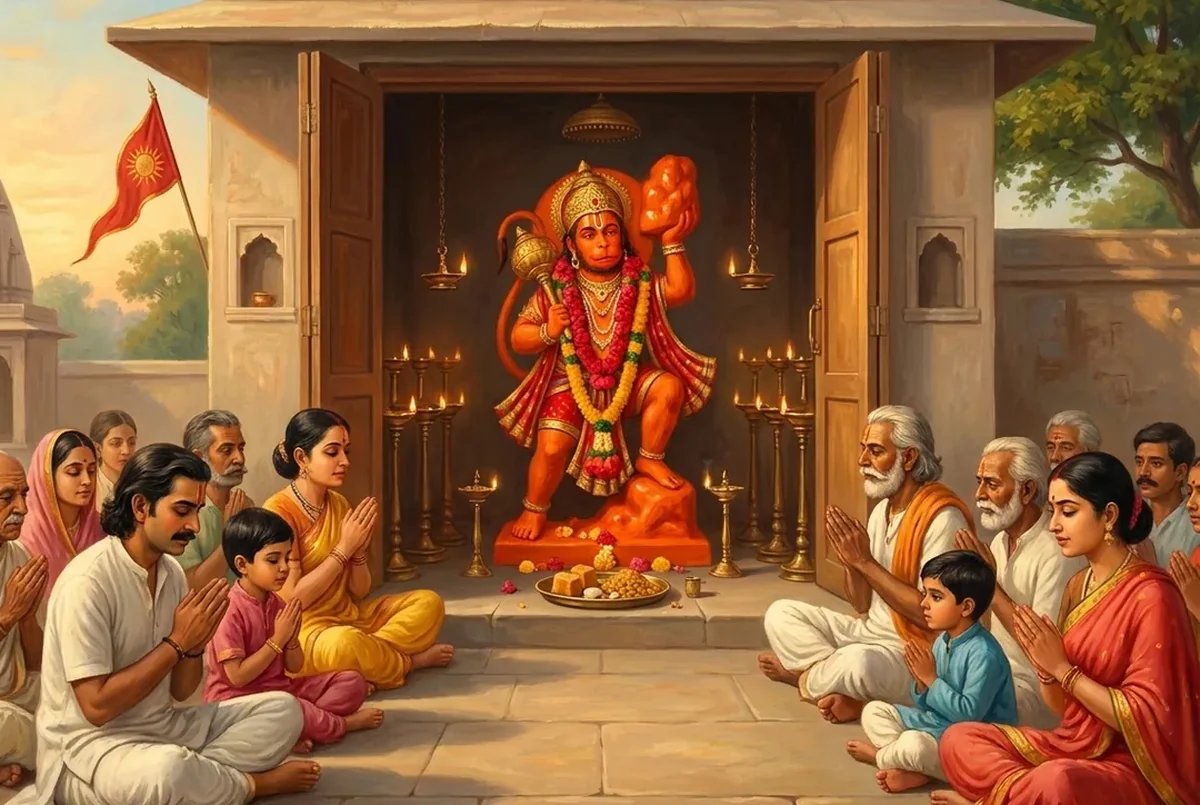
Why is this day celebrated?
Tuesday is held to be Hanuman's day, and among the nine planets it is also the day of Mangal. Devotees fast, offer sindoor and a chola to Hanuman, offer red flowers and gud-chana, and read the Hanuman Chalisa. Many keep the vrat for at least twenty-one Tuesdays, with the wish that troubles ease and courage comes into the heart.
The katha
The katha says that in a certain town there lived a brahmin couple. Their house lacked nothing, but the sorrow of having no child sat in both their minds. People they met would offer comfort, and they would smile and turn the talk aside. At last the brahmin thought, I will ask no more of men; I will ask Hanuman. He went out of the village to a shrine of Hanuman in the forest, and stayed there, serving and reading day and night.
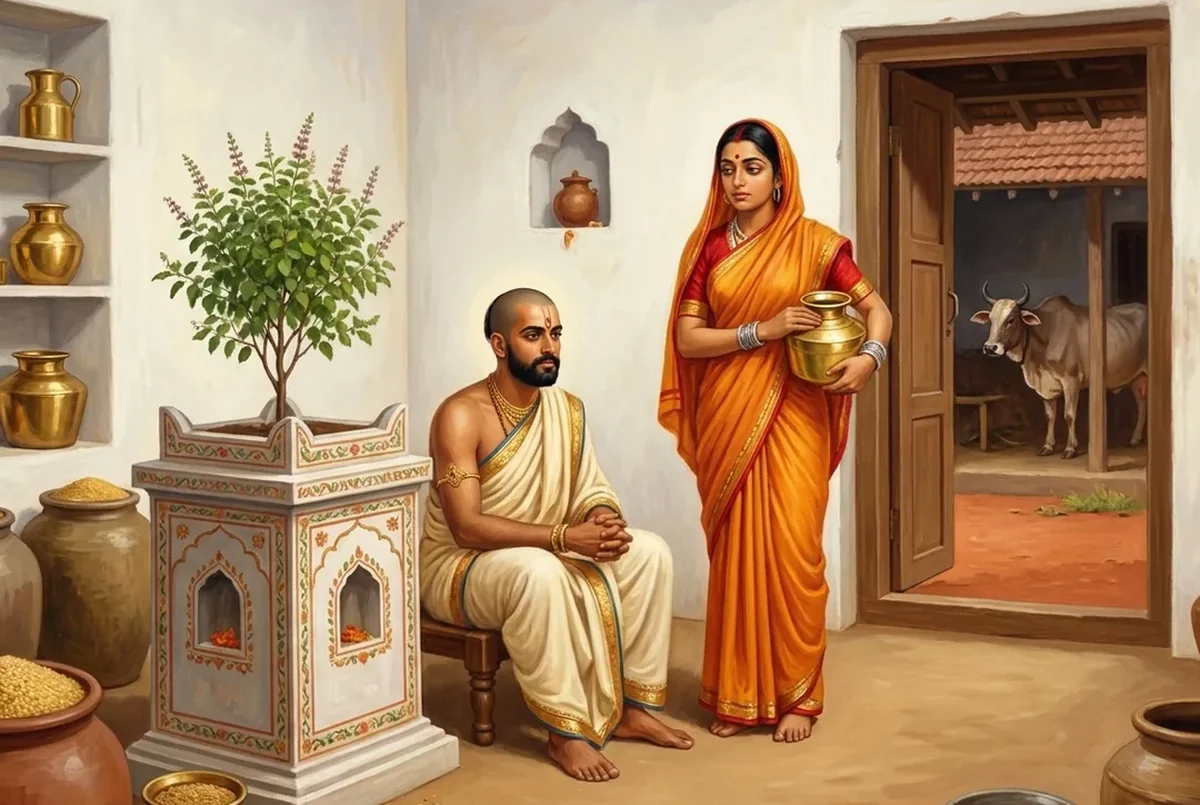
At home his wife chose her own way. Every Tuesday she fasted, cooked the bhog for Hanuman, offered it to him first, and only then ate her one meal. This was her rule and she did not break it even in hard times. Then came a Tuesday when nothing could be cooked at home and no bhog could be offered. It weighed on her. She resolved that she would not touch grain until she had made the offering on the next Tuesday.
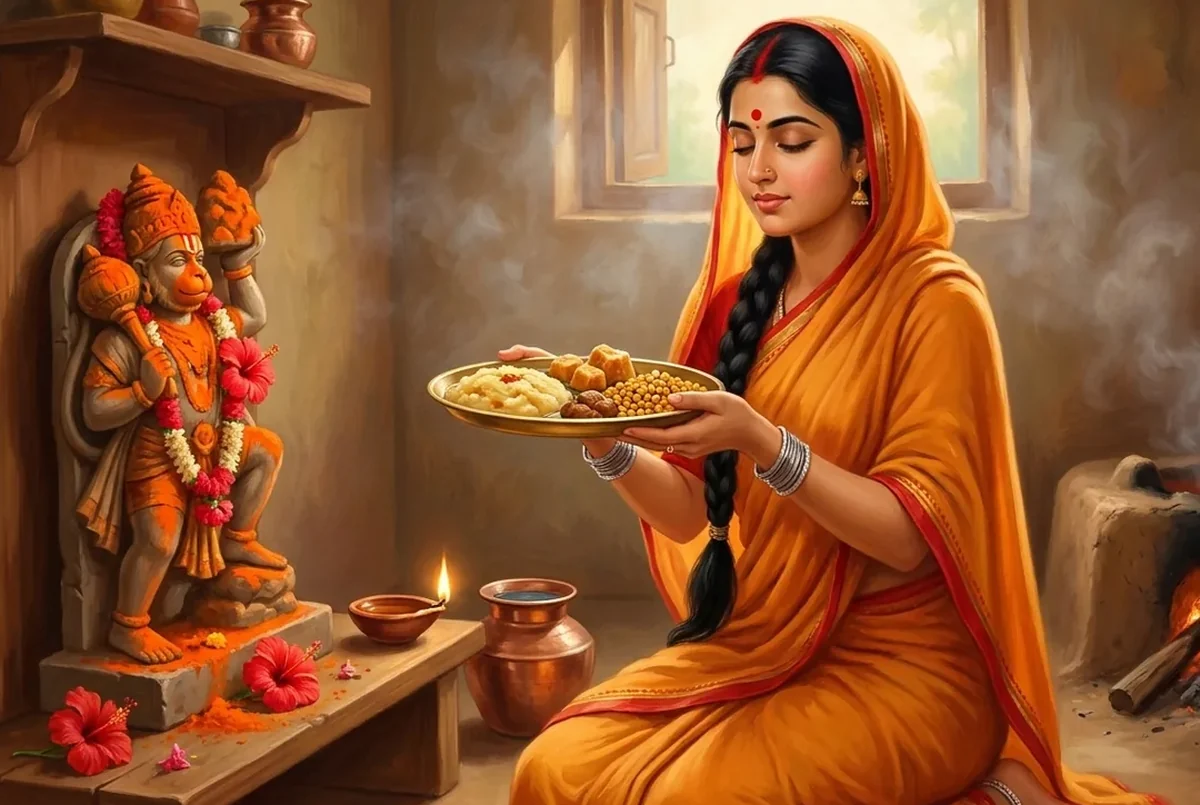
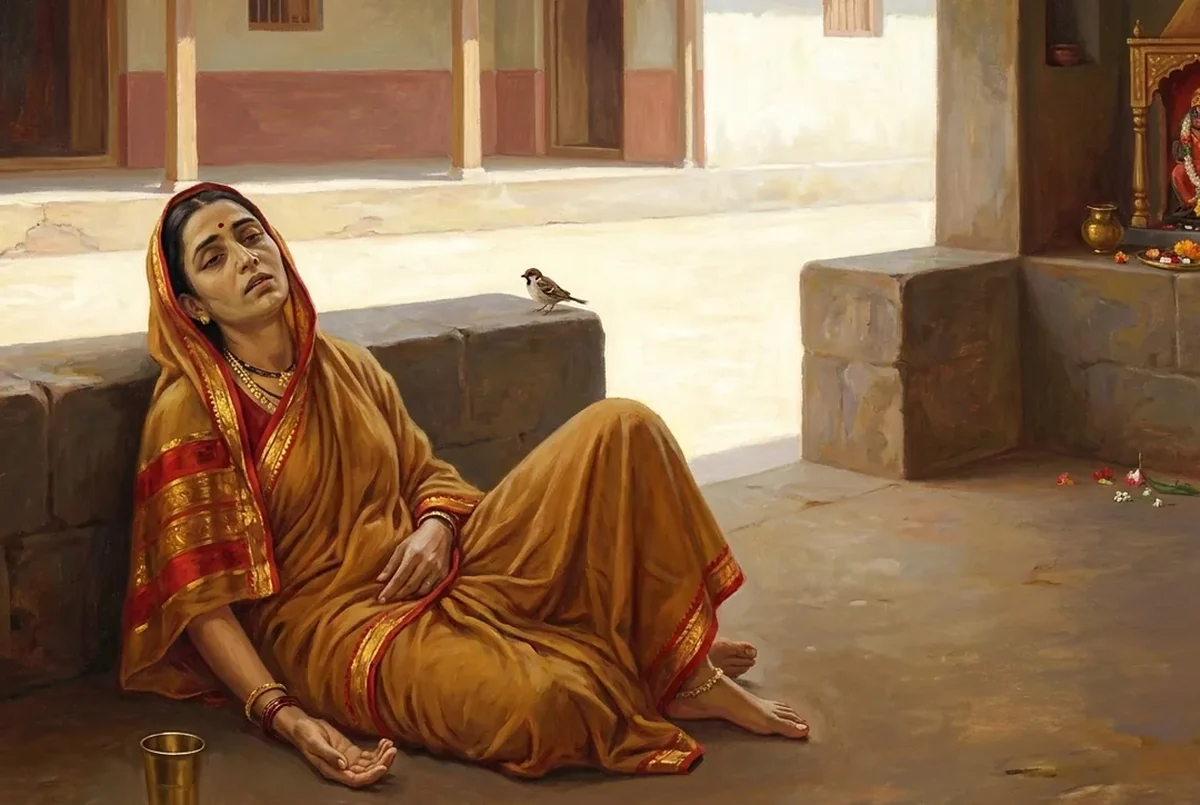
Six days passed. On the seventh day, a Tuesday, she had grown so weak with hunger and thirst that she felt giddy and fell. They say Hanuman appeared at that very moment. He said, I have seen your faith; rise, and take this boy, he will serve you well. When she opened her eyes a beautiful boy stood before her. She named him Mangal, because he had come on a Tuesday, and held him to her. The katha does not hold this scene up as an example for anyone to follow; the tradition asks for her nishtha, her steadiness, and never asks anyone to go hungry to that point.
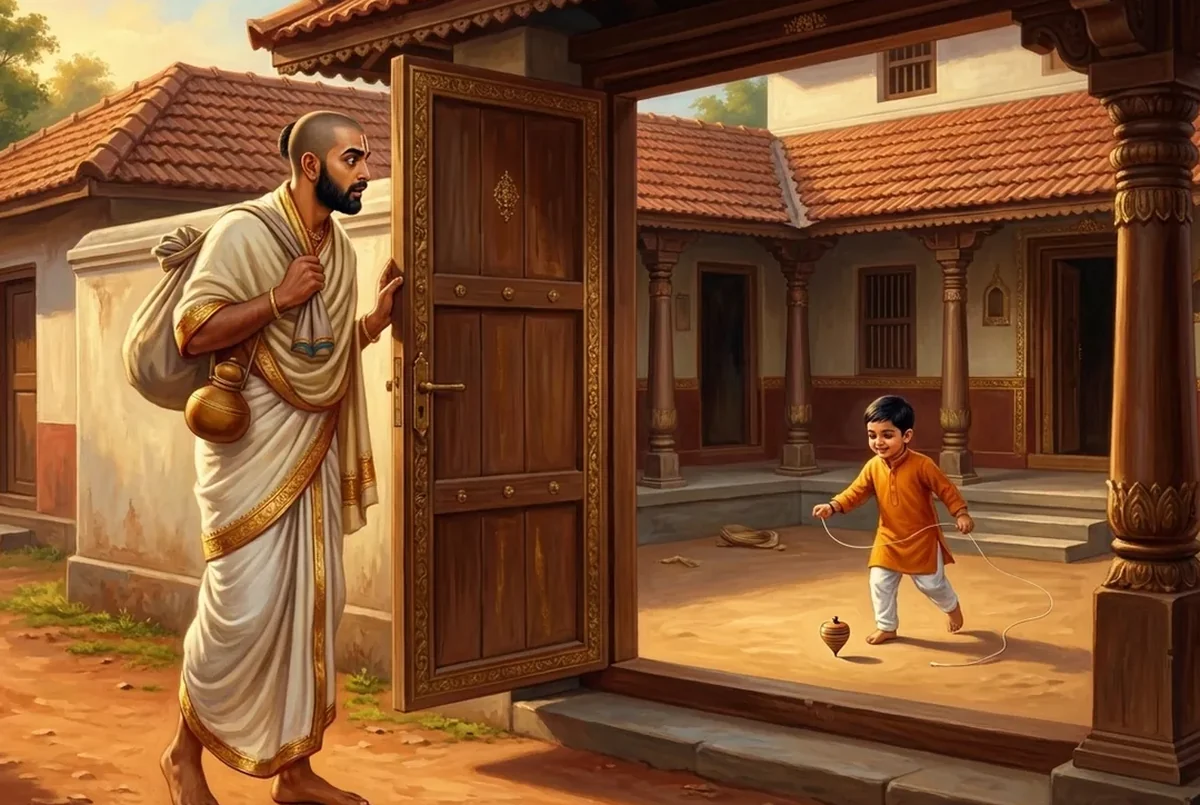
Some time later the brahmin returned home from the forest. Seeing a boy playing in the courtyard, he stopped short. His wife told him everything, but doubt took hold in his mind; it seemed to him that she was hiding something. This katha is really about where doubt takes a man. One day, full of that doubt, he left the boy by the village well and came back. When he reached the house the boy was already sitting in the courtyard, smiling.
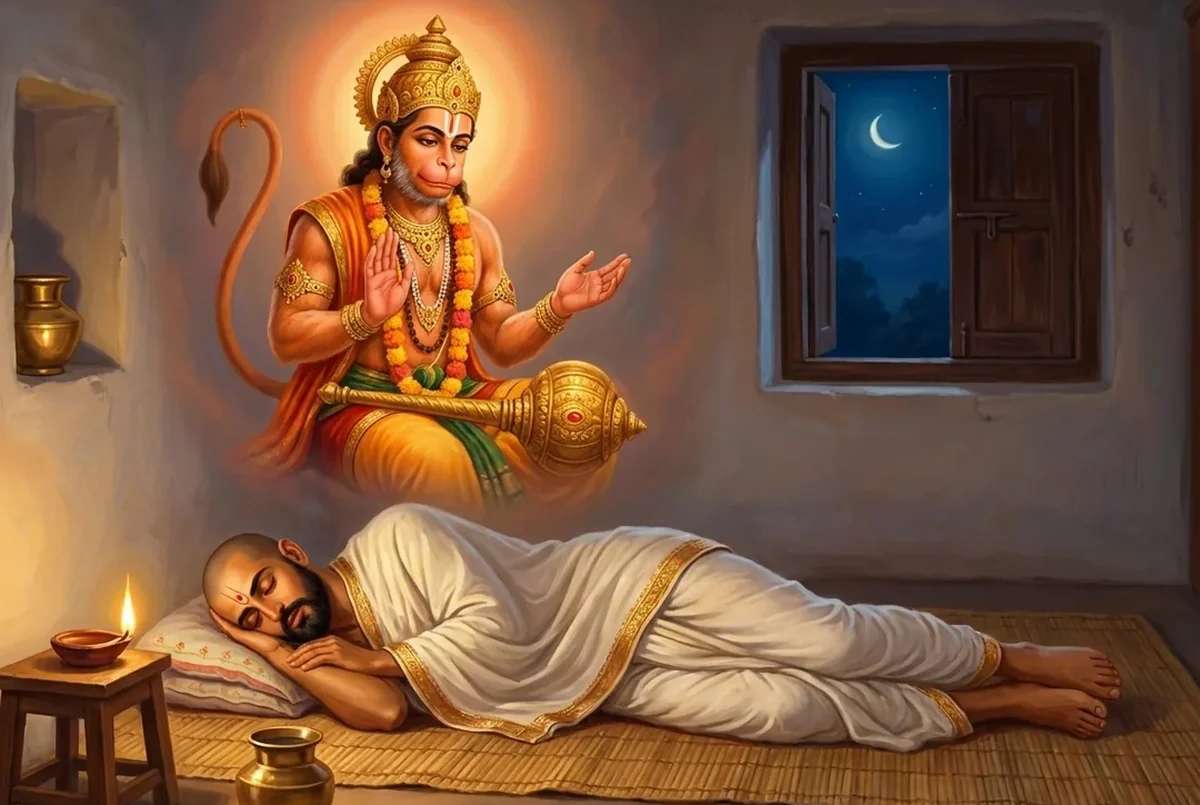
That night Hanuman came to the brahmin in a dream and said, your wife's vrat and her patience asked for this boy, and I have given him. Do not doubt her. When he woke, the brahmin's eyes filled. He asked his wife's forgiveness, and after that the two of them kept the Tuesday vrat together. They say Mangal grew up an upright and helpful man, who cared for his parents into their old age.
In this katha the patience matters more than the asking, and the sharpest lesson is that doubting one's own household breaks that household first. The katha says that whoever keeps the Tuesday vrat with faith and hears this story finds courage rising in them and a mind that does not waver in trouble. May Hanuman give everyone strength, good sense and patience.
How it is observed
- On Tuesday one bathes before sunrise, wears red, and takes the sankalp of the vrat; many begin on a Tuesday of the Shukla paksha and keep it for twenty-one Tuesdays.
- Hanuman is offered a chola of sindoor and chameli oil, red flowers, red cloth, gud-chana, boondi laddus and a coconut.
- The Hanuman Chalisa, Sunderkand or Bajrang Baan is read, and this vrat katha is heard after the evening puja.
- The day is kept on fruit and one meal is eaten in the evening, usually wheat-flour halwa, sweet roti or rot with jaggery; many homes take no salt on this day.
- At the end of the vrat, the udyapan is done by offering a chola to Hanuman, sharing the prasad, and giving jaggery, wheat, red cloth and sweets in charity.
- Those who cannot go without food should keep the vrat on fruit or with one simple meal, as their health allows.
Source
This Tuesday vrat katha is a story current in the vrat-katha tradition, carried by vrat-katha booklets and by word of mouth in homes; it is not found in this form in any Purana and is told in several versions, the boy being called Mangal in some and Mangaliya in others. Hanuman's link with Tuesday and the tradition of his worship come down from the Rama story and are very old.