
Shukravar Vrat Katha
Shukravar Vrat (Santoshi Mata)
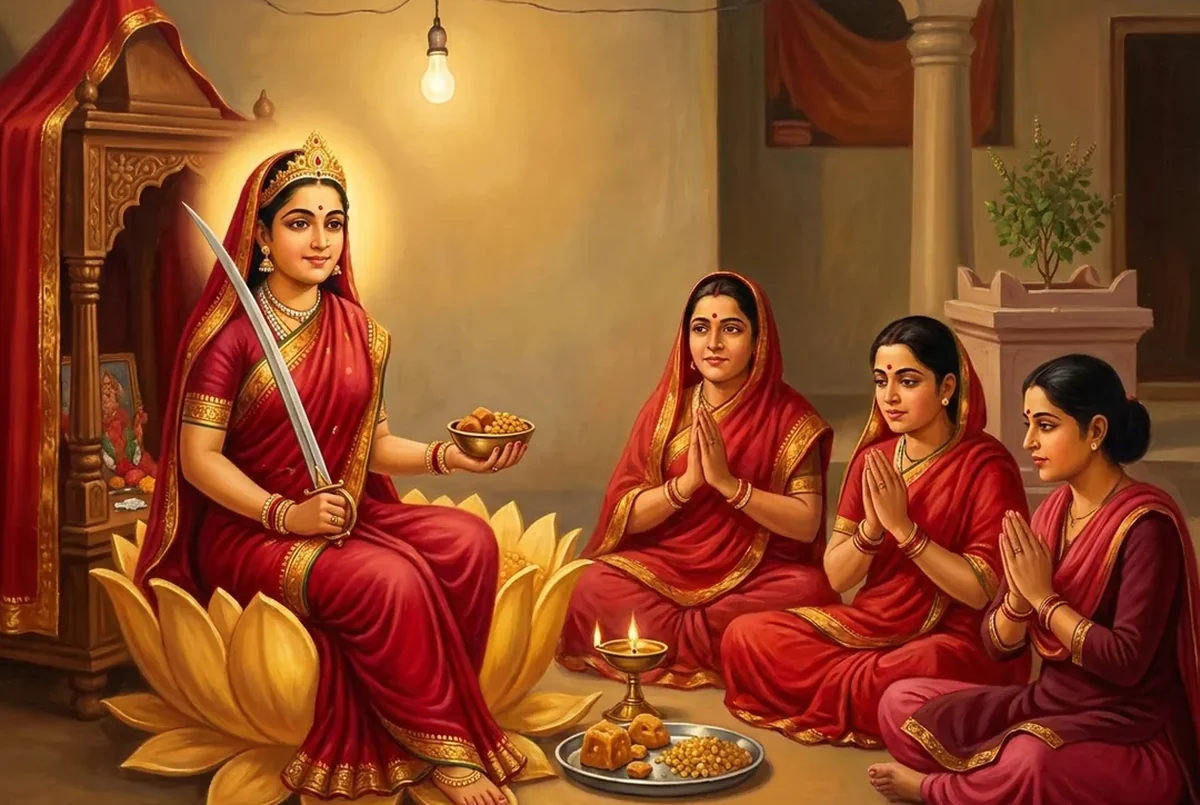
Why is this day celebrated?
Friday is held to be the goddess's day. In many North Indian homes the Santoshi Mata vrat is kept on this day; the offering is very simple, jaggery and gram, and nothing sour is taken in the house that day. Friday is also the day of Lakshmi's Vaibhav Lakshmi vrat, where kheer or a milk sweet is offered. In both, hearing the katha after the puja is held to be essential.
The katha
The katha says there was an old mother with seven sons. Six of them earned, and the youngest earned nothing. The mother fed the older sons first and gave the youngest whatever was left after them. The youngest was a simple soul and never said a word about it. One festival day he saw for himself that his mother had cooked dishes for the six and had rolled one laddoo for him out of what was left over. It went deep into him.
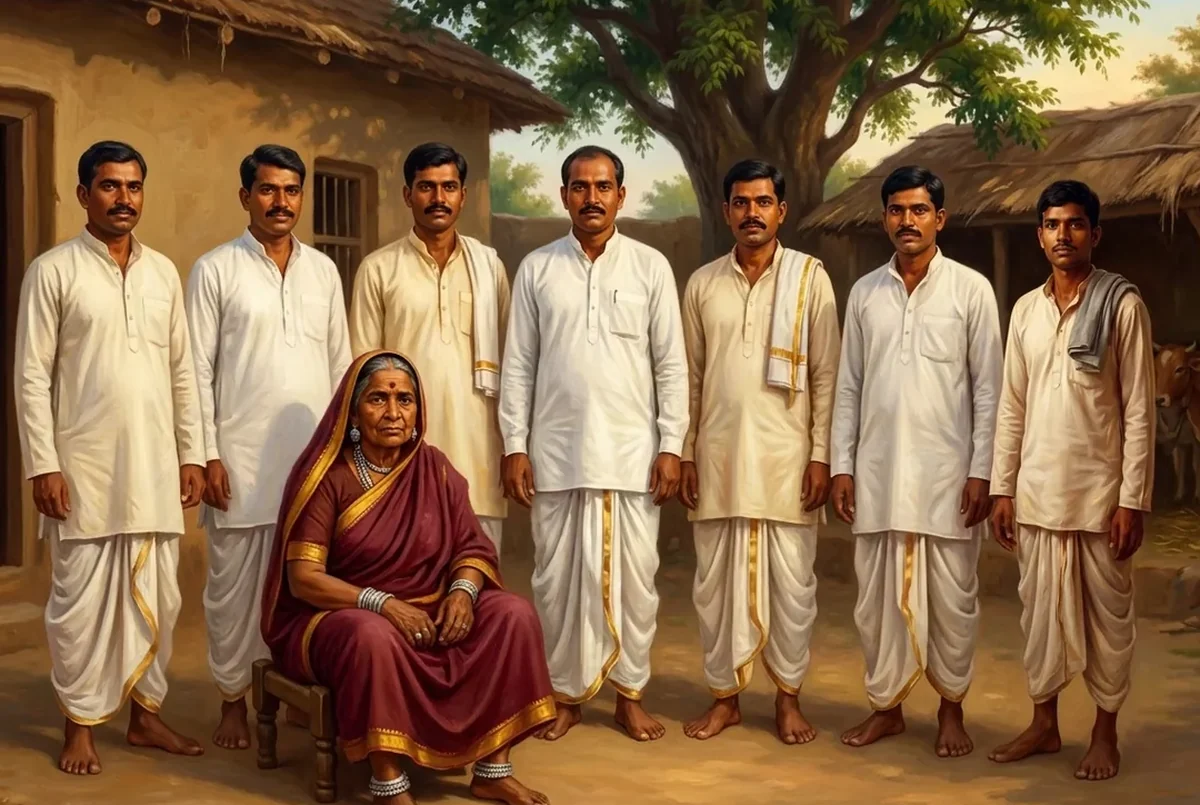
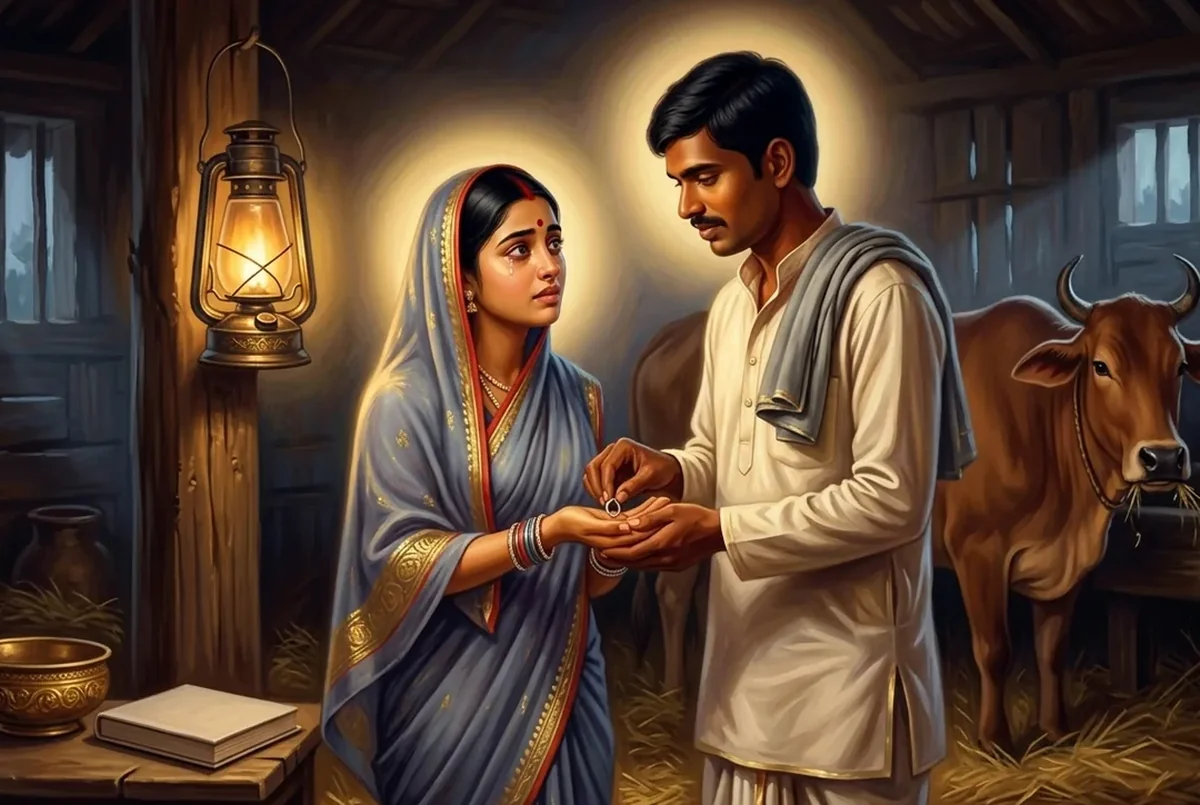
He decided that he would come home only when he could stand on his own feet. Before leaving he met his wife in the cowshed, gave her his ring as a token, and quietly left for a far country. There he found work with a merchant. He was hardworking and honest, so the merchant trusted him more and more, and in twelve years he became a partner in that very business. It never once occurred to him to send a letter home.
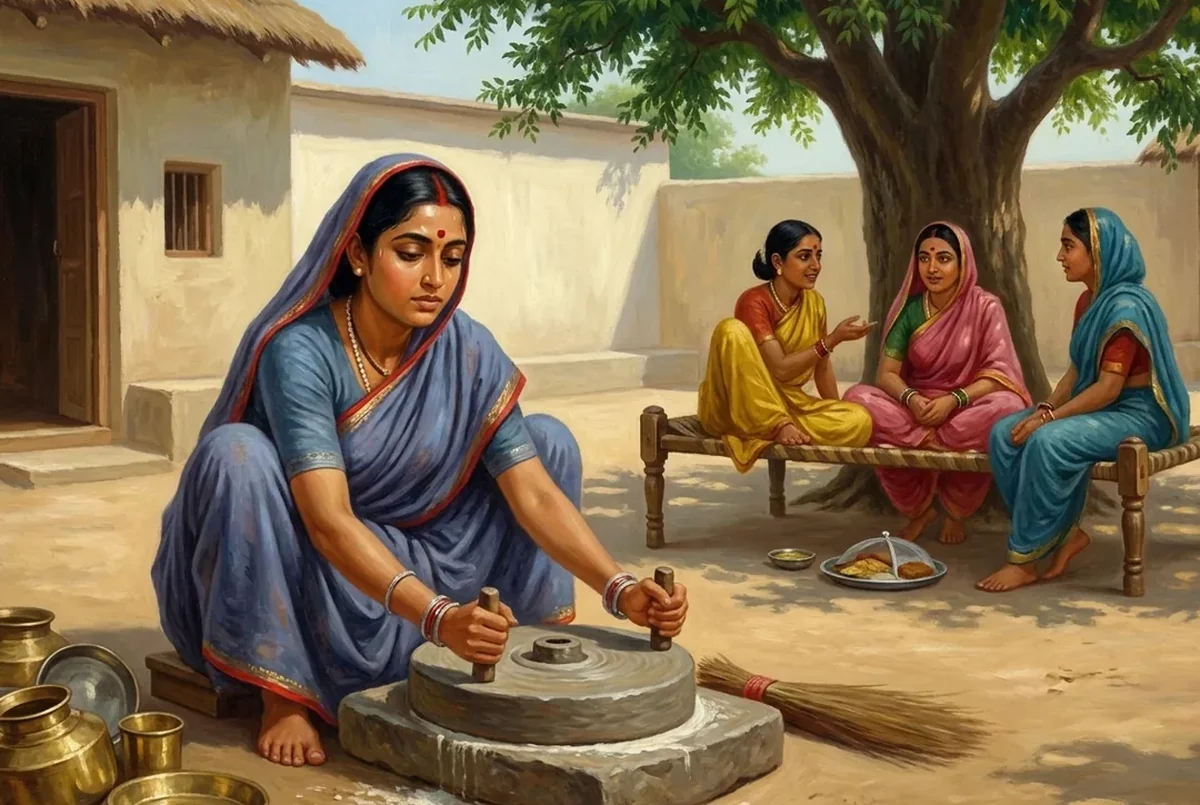
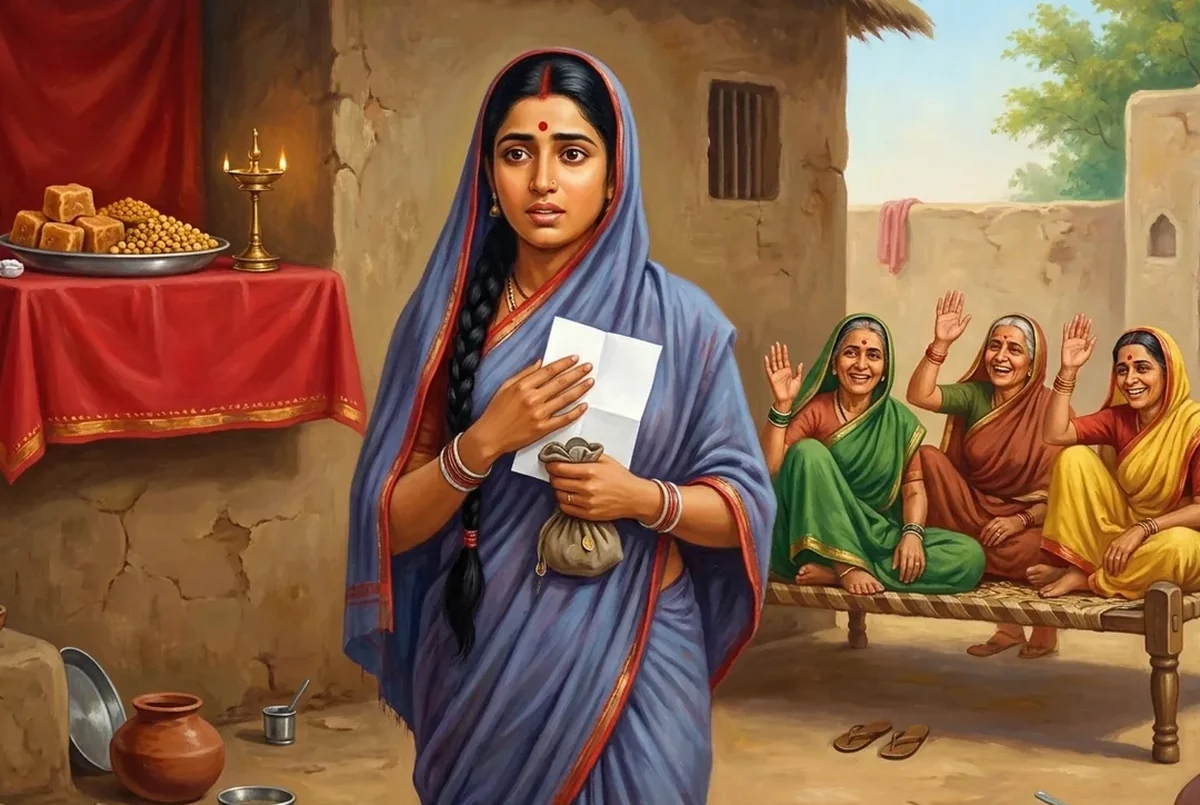
At home his wife's days were hard. The largest share of the work fell to her and the smallest share of everything else. She gathered firewood and said nothing. One day, coming back with the wood, she stopped near a temple where some women were sitting and listening to a katha. She asked what vrat this was. One of them said, this is Santoshi Mata's vrat, kept on Fridays; the offering needs only jaggery and gram, and nothing sour is taken in the house that day.
She began the vrat that same Friday. Two Fridays passed and a letter came from her husband in the far country; the next Friday money came too. The family laughed it off as coincidence, but she did not give up the vrat. They say that one night Santoshi Mata came to her husband in a dream and said, remember the one at home who is waiting for you. In the morning he settled his accounts and set out for home.
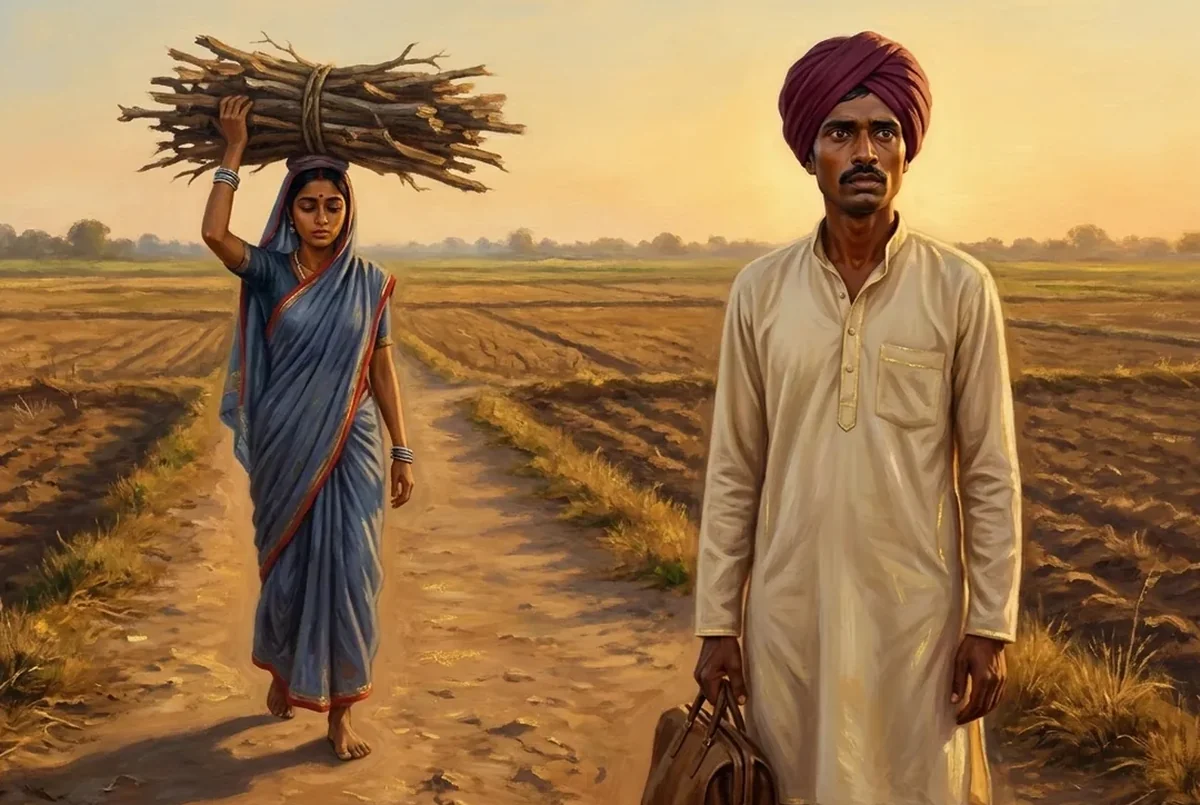
When he reached the village he saw his wife coming along with a bundle of firewood on her head. He asked at home how this had come about, and that day the household understood its mistake. His mother's eyes filled. They all sat down to eat together again, and the wife resolved that she would now do the udyapan of the vrat with a whole heart.
On the day of the udyapan she invited eight children to eat. There was much to do that day and she was on her feet from morning. In the middle of the meal some of the children asked for something sour, which the rule of that day sets aside. In her hurry, instead of sitting down and explaining, she pressed money into their hands, and they went out and bought it. That night, when everything had been cleared away, her heart was not satisfied. No one had said a word to her, but it seemed to her that a vrat held through twelve years of patience had been finished off on its last day without her attention in it.
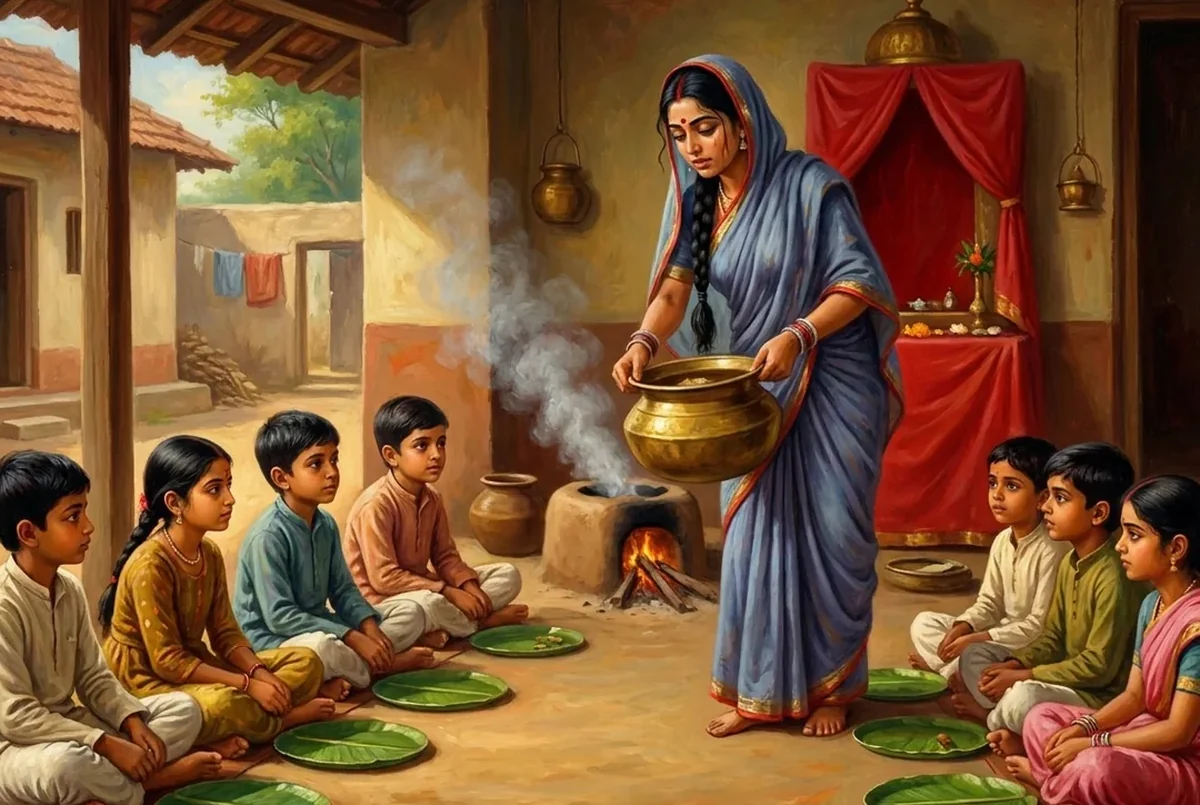
The next Friday she did the udyapan again with full care. She told the children beforehand that nothing sour would come into the house, cooked their food with her own hands, and gave them fruit instead of money. That day she felt the contentment she had not felt the first time. In time a son was born to her, and she began going to the temple with the child. The vrat's very name says this is the mother of santosh, of contentment; what is asked here is not a costly offering but a settled, contented mind. The katha says that whoever keeps this Friday vrat faithfully keeps contentment in their home. May Santoshi Mata keep everyone's mind at peace.
How it is observed
- On Friday one bathes in the morning and takes the sankalp of the vrat, and eats one simple meal during the day.
- A bowl filled with jaggery and gram is placed on a pot of water and Santoshi Mata is worshipped; the katha is heard with jaggery and gram held in the hand, and the same is then shared with everyone as prasad.
- Nothing sour is taken in the house that day, such as lemon, tamarind or sour chutney; this is the rule of the day, and since every household's custom differs a little, each family keeps it as it has come down to them.
- The vrat usually runs for sixteen Fridays, and when the wish of the heart is fulfilled the udyapan is done, with khaja or kheer and a gram dish cooked, eight children fed, and fruit given to them instead of money.
- The Vaibhav Lakshmi vrat is also kept on Fridays: Lakshmi is worshipped in the evening, kheer or a milk sweet is offered, the katha is heard, and the vrat is kept for eleven or twenty-one Fridays.
- Those who cannot keep a full fast should keep it on fruit or with one meal, as their health allows.
Source
This Santoshi Mata story is a katha current in the vrat-katha tradition, not an episode from any Purana. The vrat spread in North India during the twentieth century through vrat-katha booklets and posters, and reached homes everywhere after the 1975 film Jai Santoshi Maa; in the film's telling the goddess is called Ganesha's daughter. Several versions of the katha are told, and a few harsh passages have been deliberately kept brief in this retelling.