
Surya of Konark: Samba's twelve years and the Sun of the Chandrabhaga
Konark, Puri district, Odisha
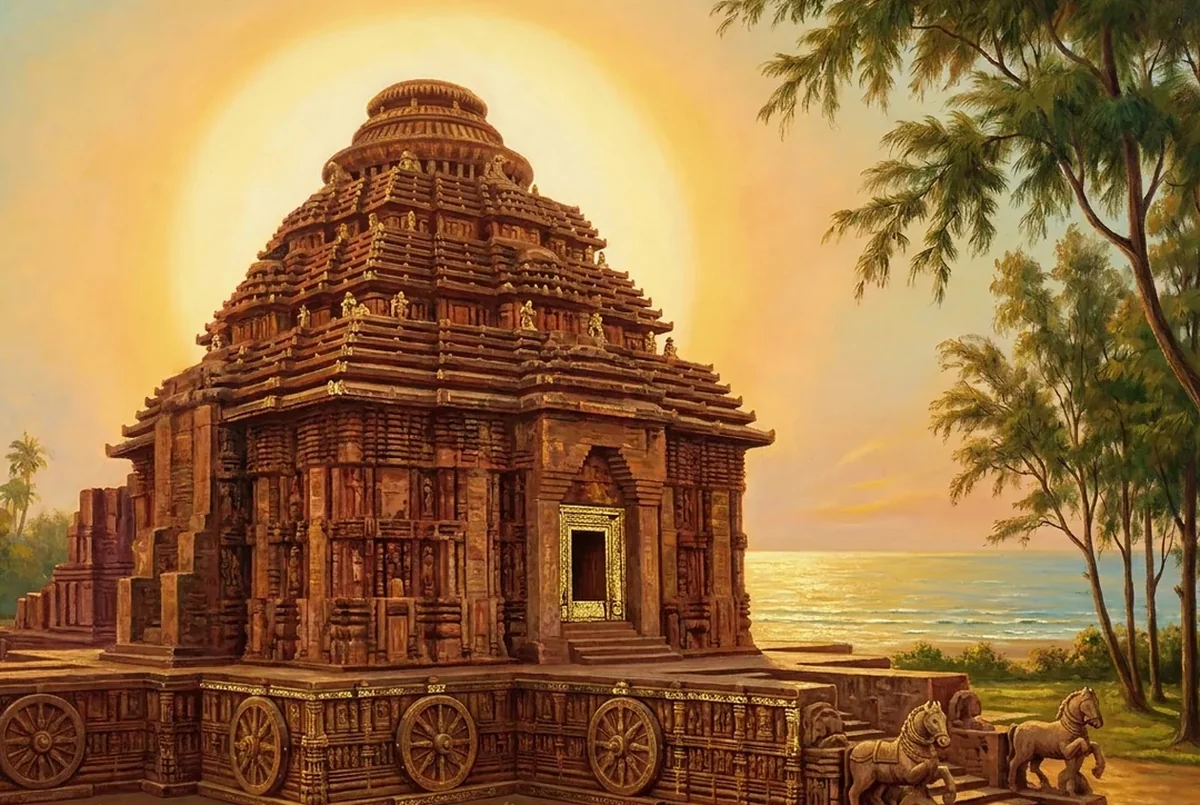
The Sun temple at Konark, standing by the sea in Odisha's Puri district, is Surya's chariot carved in stone, built in the thirteenth century by King Narasimhadeva I of the Eastern Ganga line. Tradition holds that this shore was a place of Sun worship long before that, and that Samba, the son of Krishna, regained his health here through penance. The temple is a ruin today, yet on the seventh day of the bright fortnight of Magha lakhs of people still gather on the Chandrabhaga shore to offer water to the rising Sun.
In Dwarka, Samba, the son of Krishna, was known for his beauty, and that beauty slowly settled inside him as pride. One day in the assembly he laughed at the thin frame and the appearance of the sage Durvasa. The sage said only this: the body you are so proud of will be your teacher. Within days Samba's body was taken by an illness that no medicine could touch.
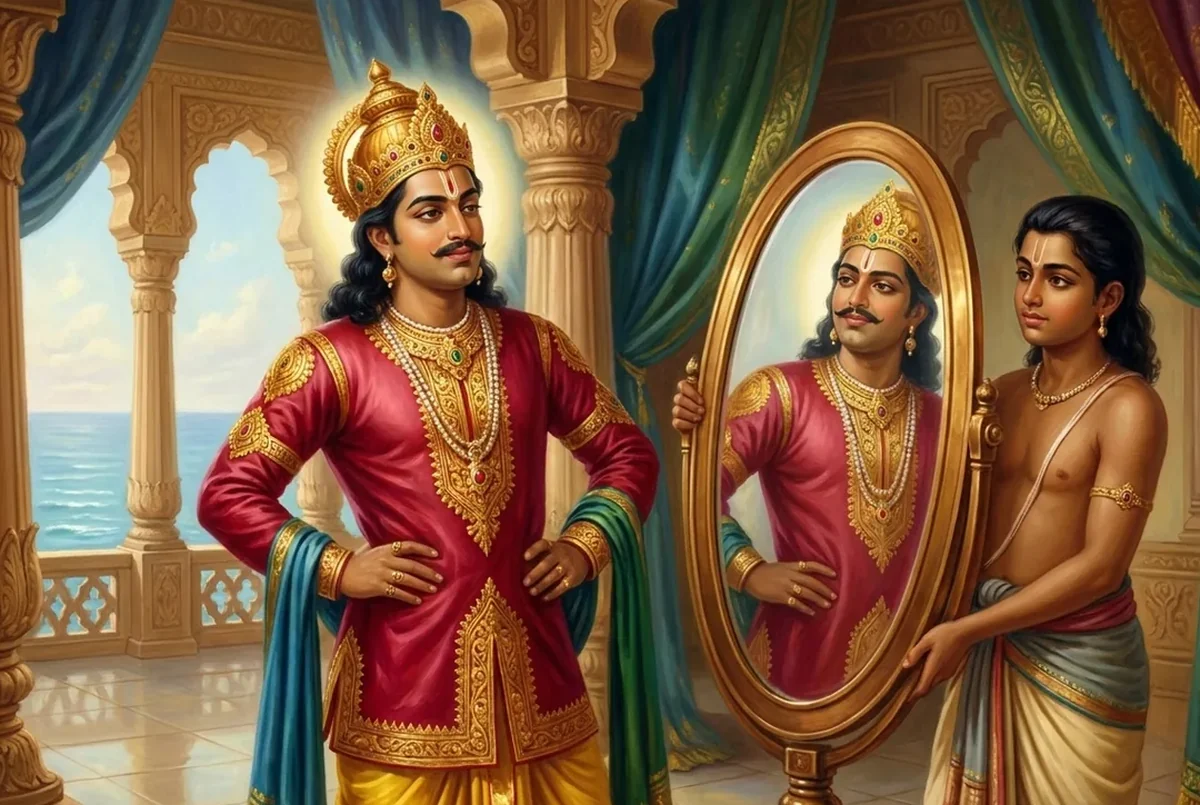
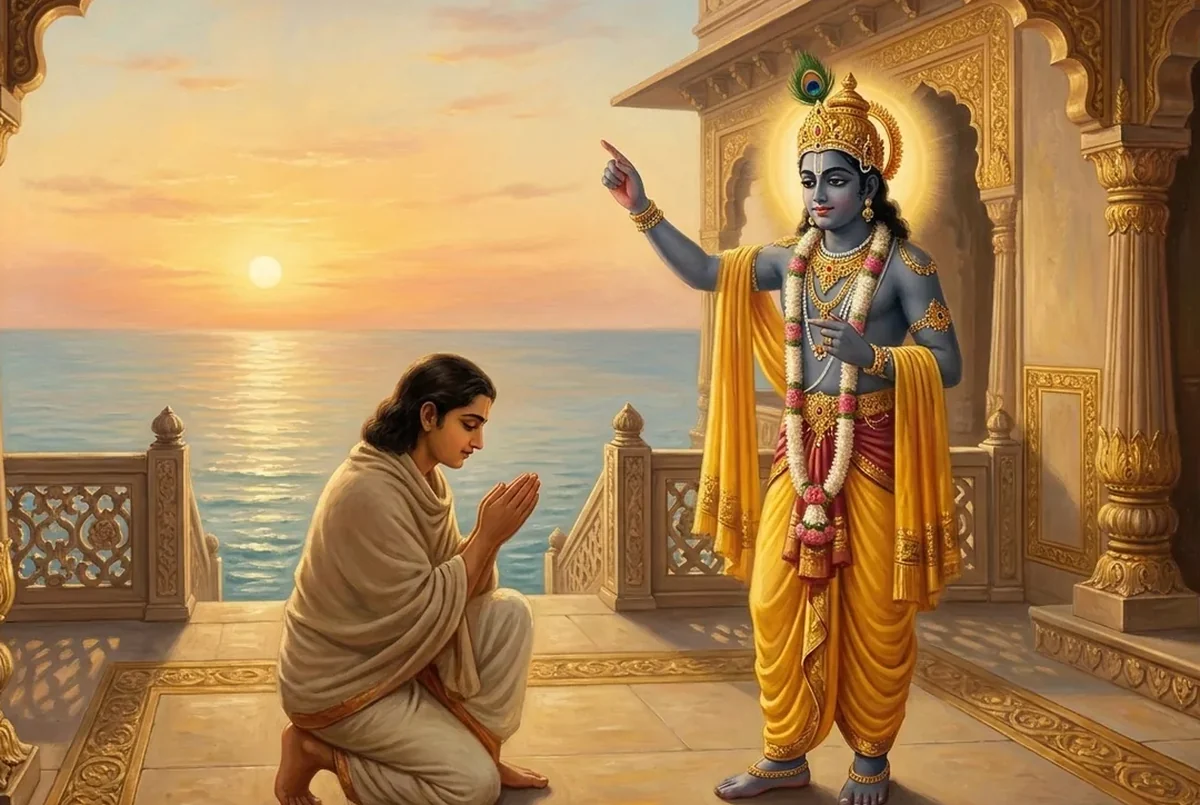
Samba went to his father. Krishna did not shield him from what he had done; he showed him the way. He said that Surya is the lord of the body and health rests in his hands, so leave the city and take refuge with him. Samba put aside the state of a prince and set out east, towards the sea.
Walking on, he came to a wood called Mitravana, for Mitra is one of the Sun's own names. There the river Chandrabhaga came down to meet the ocean. Samba decided to stay, and he bound himself to one rule: every day, before first light, he would step into the river and stand facing the place where the sun would rise.
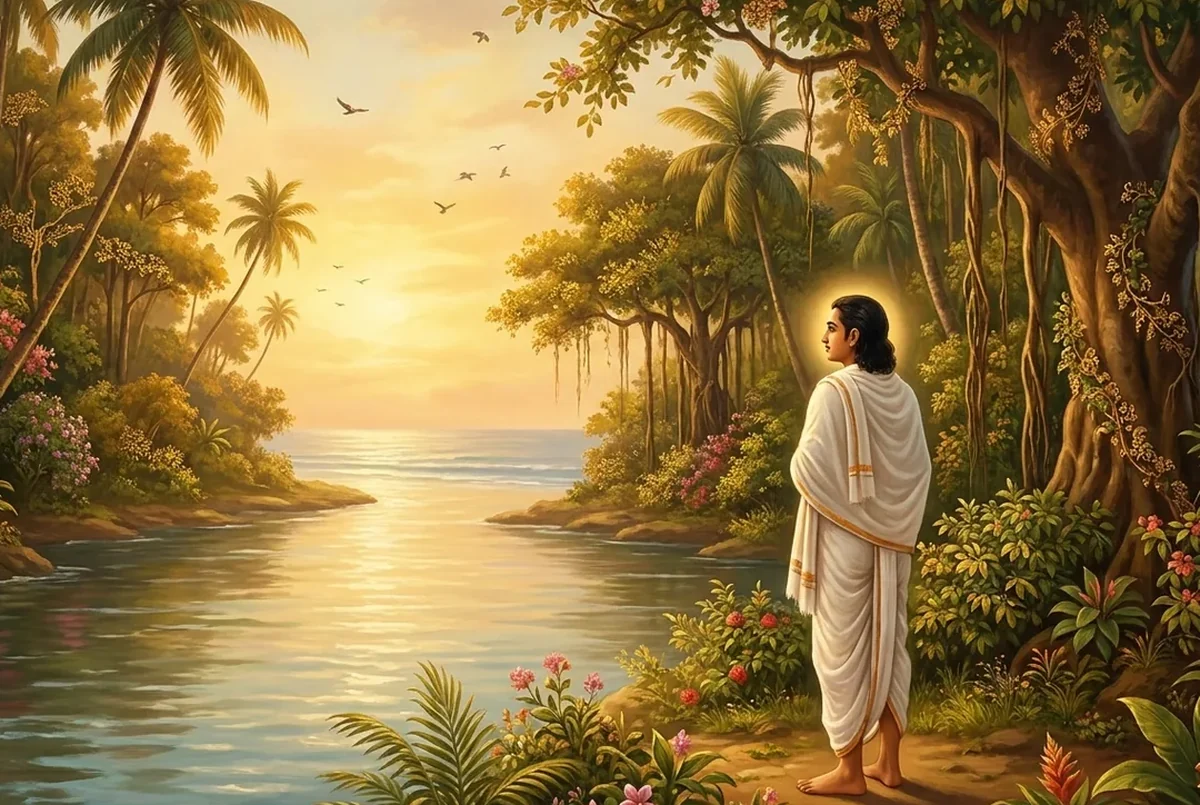
One year passed, then another, then many. There was no vision and no voice. His body grew thinner, the salt wind hardened his skin, but Samba did not let the rule go. For twelve years he stood on that same shore, at the same hour, facing the same direction.
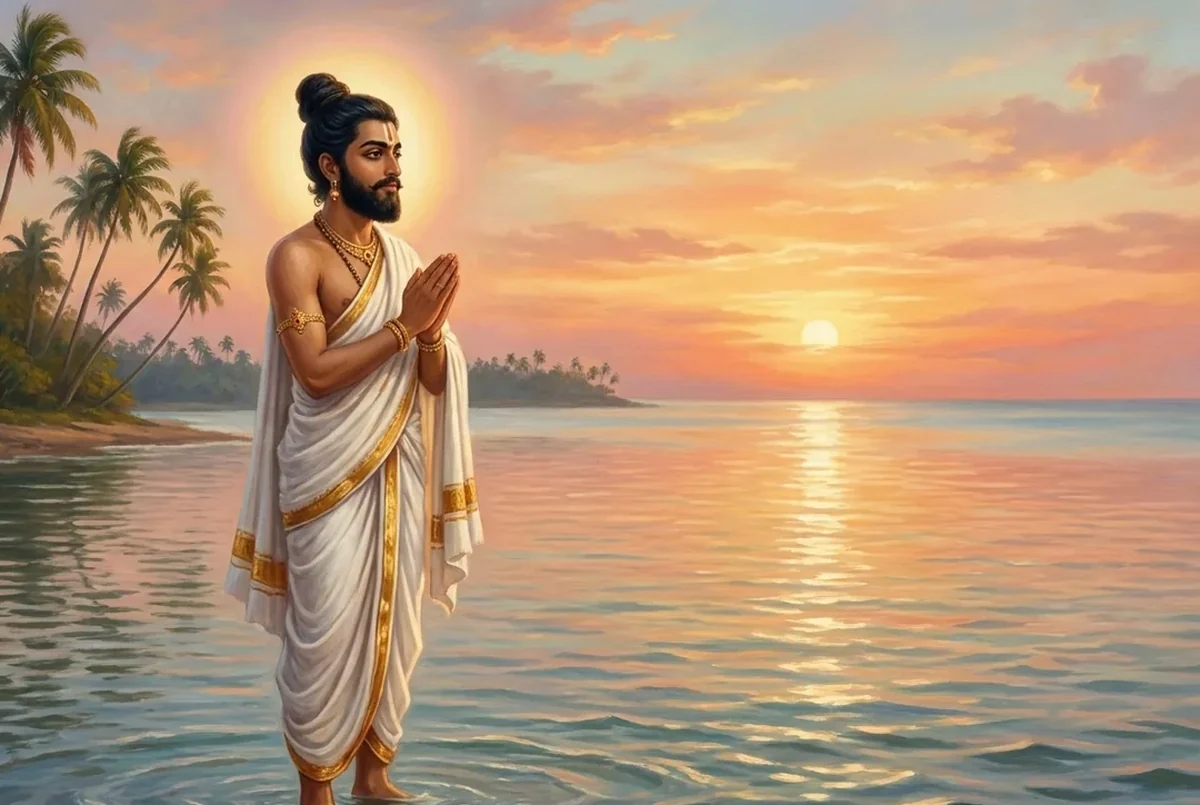
Then Surya was pleased, and Samba's body was made whole again. It is said that on that very morning, as he bathed, he found in the water of the Chandrabhaga an image of Surya, which tradition says Vishwakarma had shaped from the Sun's own light. Samba installed it there on the shore, and that ground came to be known as the ground of the Sun, Arka Kshetra.
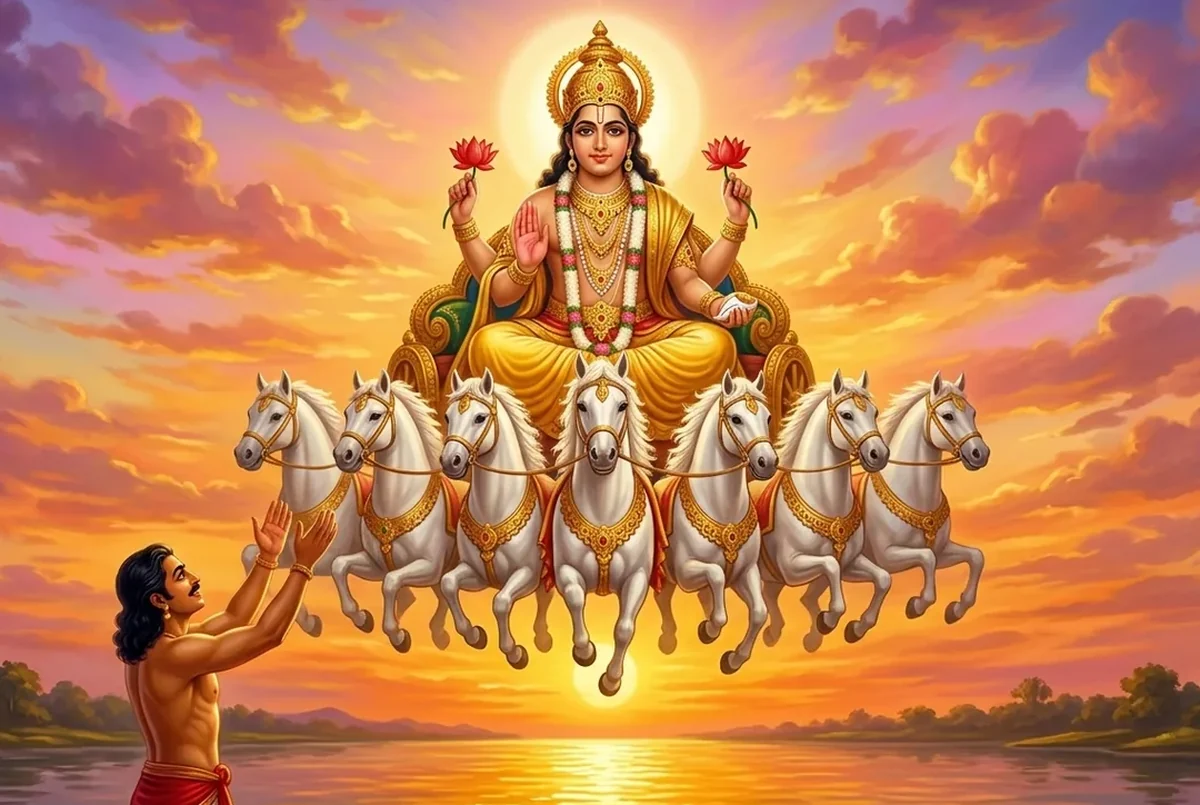
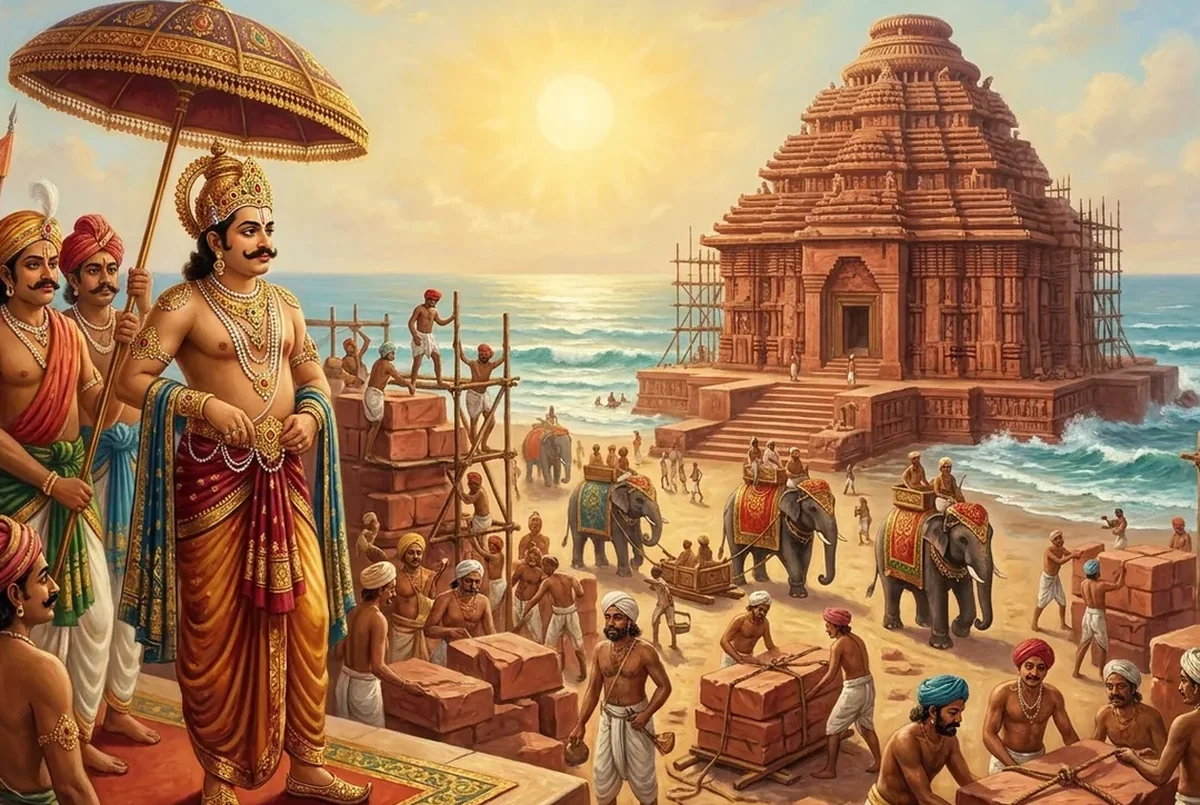
Centuries later, around 1250 CE, King Narasimhadeva I of the Ganga dynasty raised on this shore a temple such as no one had seen before. The whole temple is Surya's chariot: twenty-four great stone wheels along its sides and seven horses drawing it forward. The spokes of the wheels are cut so finely that it is said the hour of the day can be read from their shadow.
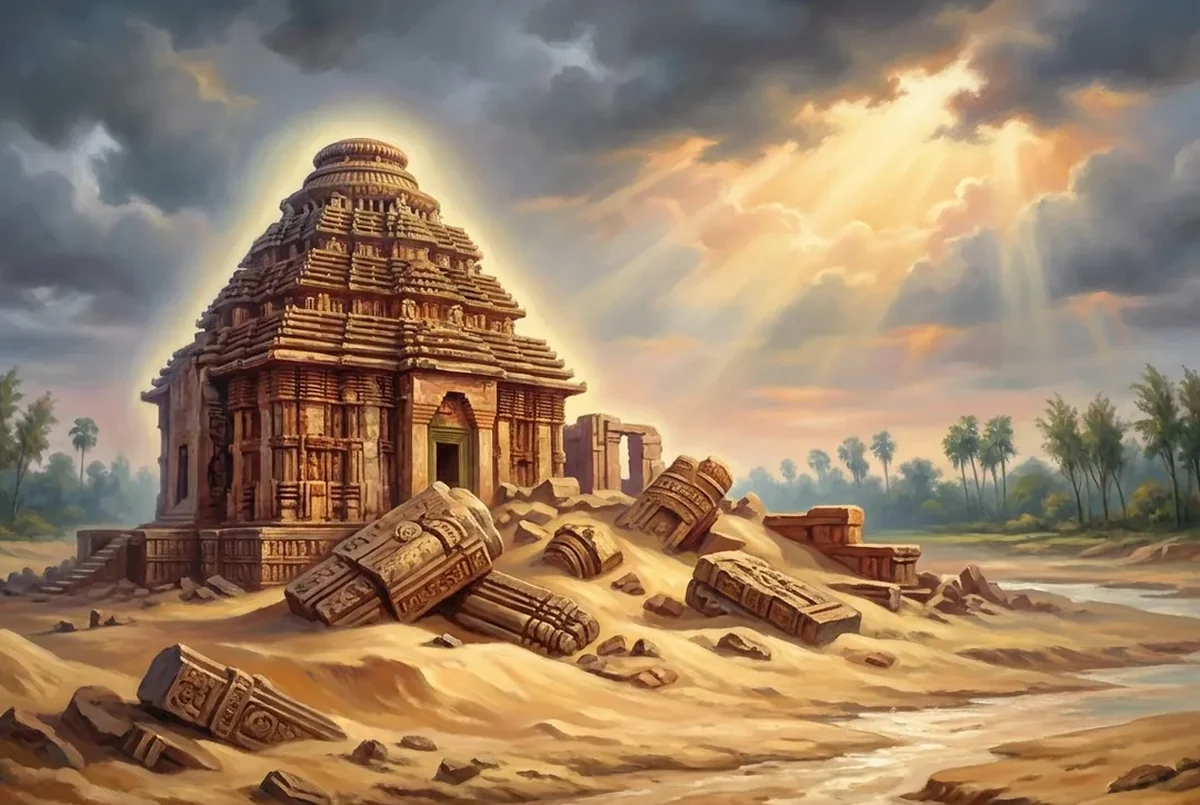
Time and the sea did not spare this chariot. The great tower above it fell, the sea drew back, and the Chandrabhaga sank under the sand. Seeing its darkening mass from far out, European sailors called it the Black Pagoda and took their bearings from it. Today there is no daily worship in the main sanctum; the temple stands as a magnificent ruin.
And still the practice did not break. Before dawn on Magha Shukla Saptami, while it is still dark, lakhs of people reach the Chandrabhaga shore, step into the water and wait for the first light, exactly as Samba once stood. The temple of stone fell; the habit of rising and standing before the Sun did not. The story says that the Sun asks no one their name or their standing, that he returns every morning and lays the same light on everyone, and that this is his greatest blessing.
Source
The story of Samba is told in the Samba Purana, and its versions differ across texts. Scholars identify the Mitravana of the Samba Purana with Multan, while Odisha's tradition places it at the Chandrabhaga near Konark. The Padma Purana calls Konark Arka Kshetra, and the rites of the Magha Saptami bath are described in the Brahma Purana. That the temple was built around 1250 CE by King Narasimhadeva I of the Eastern Ganga dynasty is established history.