
Jagannath: Daru Brahma: from Nila Madhava to Jagannath
Puri, Odisha
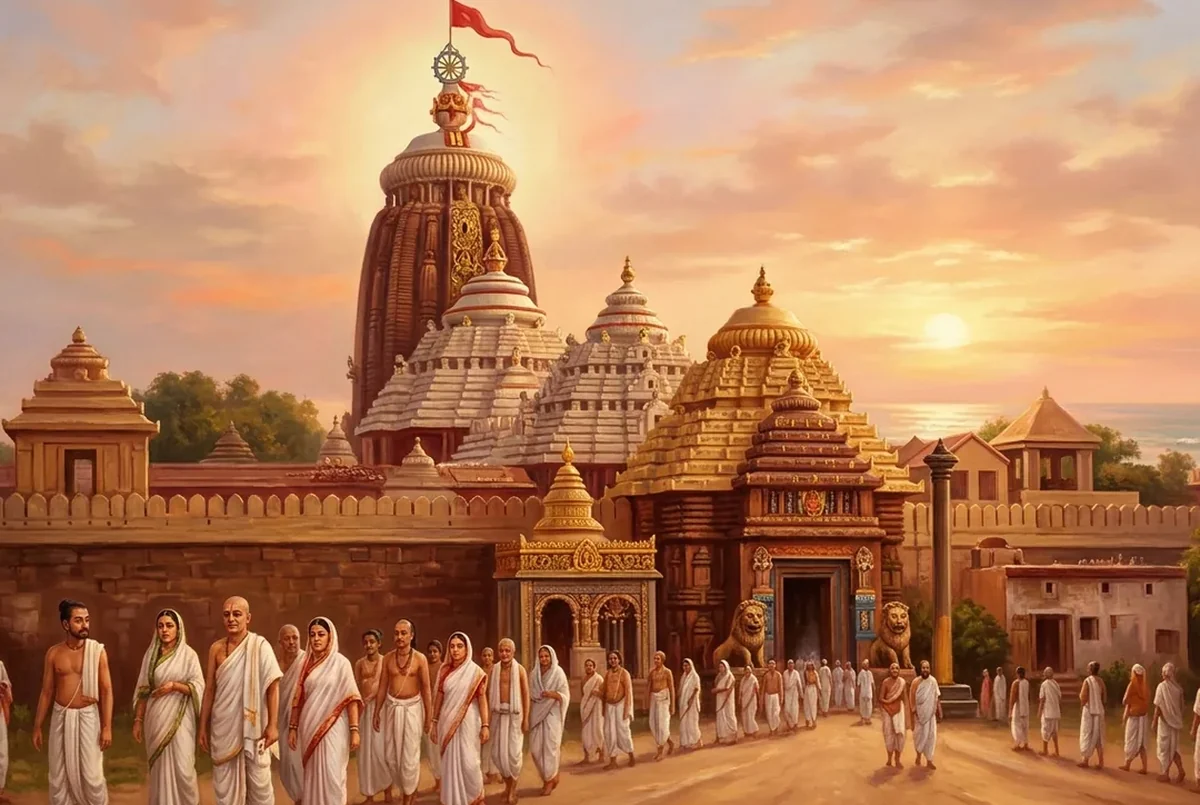
Mahaprabhu Jagannath is the heart of Odisha, seated in the Srimandir at Puri with his elder brother Balabhadra, sister Subhadra and Sudarshan. His image is not of stone or metal but of sacred neem wood, called Daru Brahma. This story tells how, through a king's devotion, a Sabar chief's love and a priest's persistence, the Lord came to be in this unique form.
Long ago King Indradyumna of Malwa was so devoted to Lord Vishnu that he had only one longing: to see the Lord with his own eyes. One day a pilgrim at his court said that in the east, by the sea, in the dense forest of Nilachal, the Lord was worshipped as Nila Madhava. The king sent his Brahmins in different directions to search. The young Vidyapati went east.
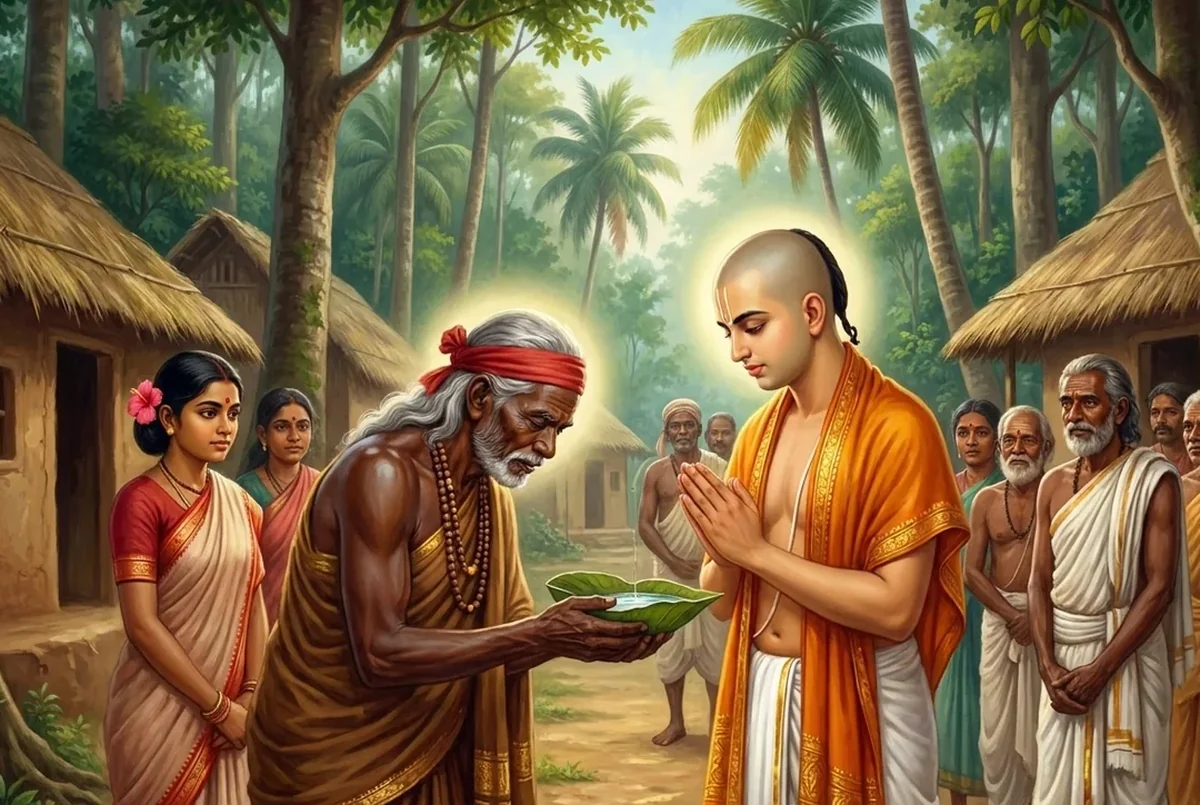
After a long journey Vidyapati reached a Sabar village in the forest, where the chief, Vishwavasu, welcomed him as an honoured guest. While he stayed there, affection grew between Vidyapati and Vishwavasu's daughter Lalita, and they were married. Vidyapati noticed that his father-in-law left every dawn with flowers, roots and fruit, and returned at midday smelling of sandal. Lalita told him that her father secretly served Nila Madhava.
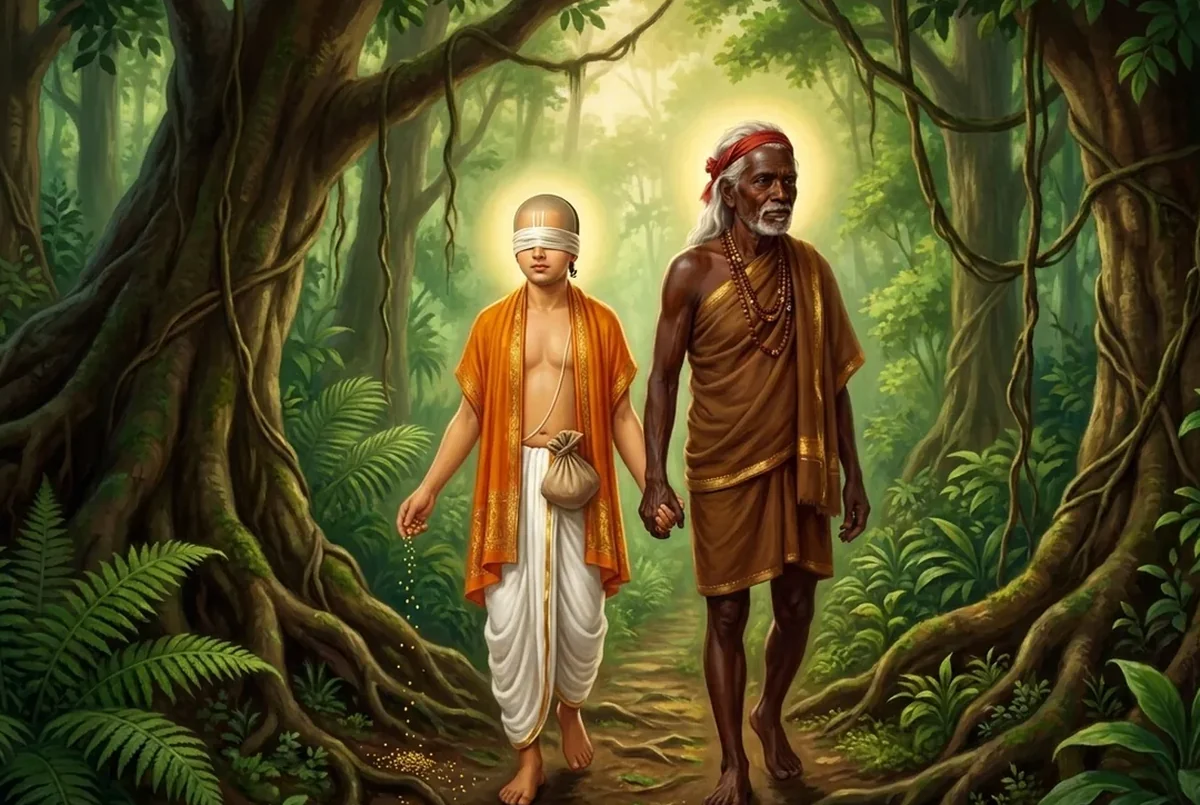
Vidyapati pleaded to see the Lord. At his daughter's urging Vishwavasu agreed, on the condition that Vidyapati go blindfolded. It is said that Vidyapati quietly dropped mustard seeds all along the way. In a secluded place the blindfold came off, and before him stood Nila Madhava, glowing like a sapphire. Every hair on Vidyapati's body stood on end. Some days later the rains made the mustard sprout and the path became clear. Vidyapati sent word to the king.
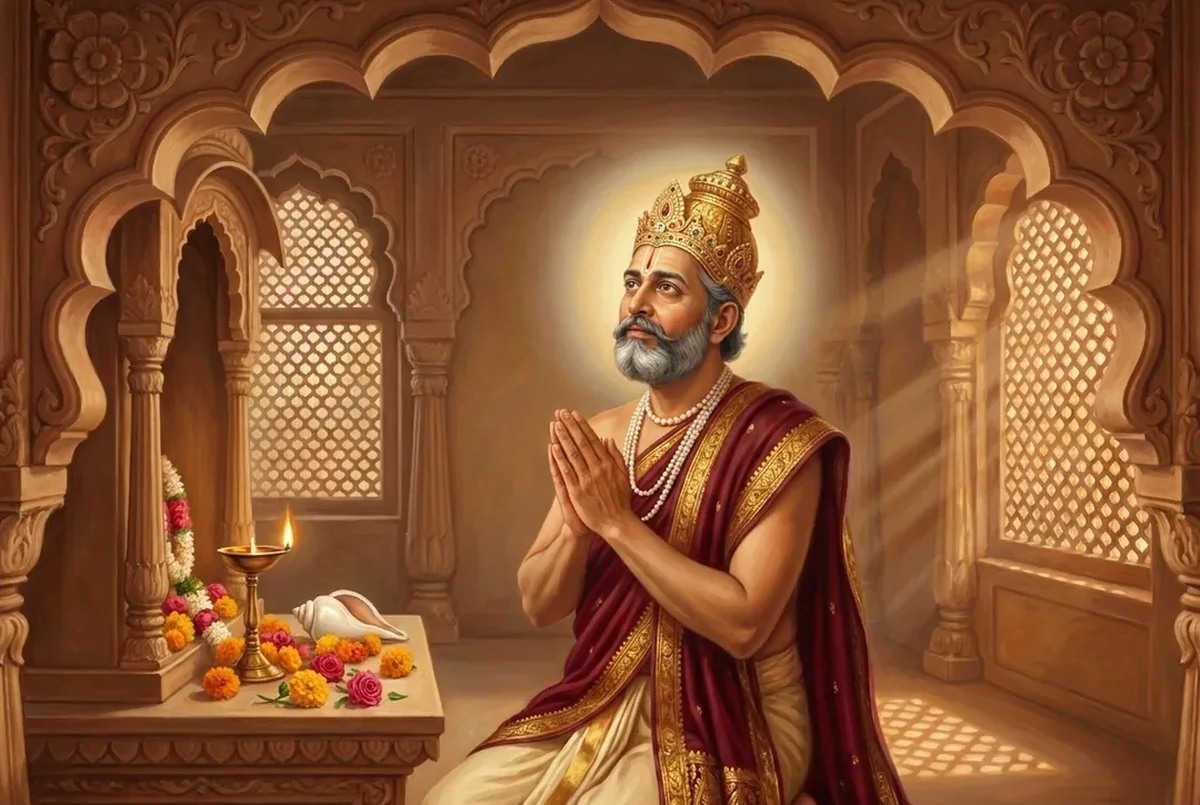
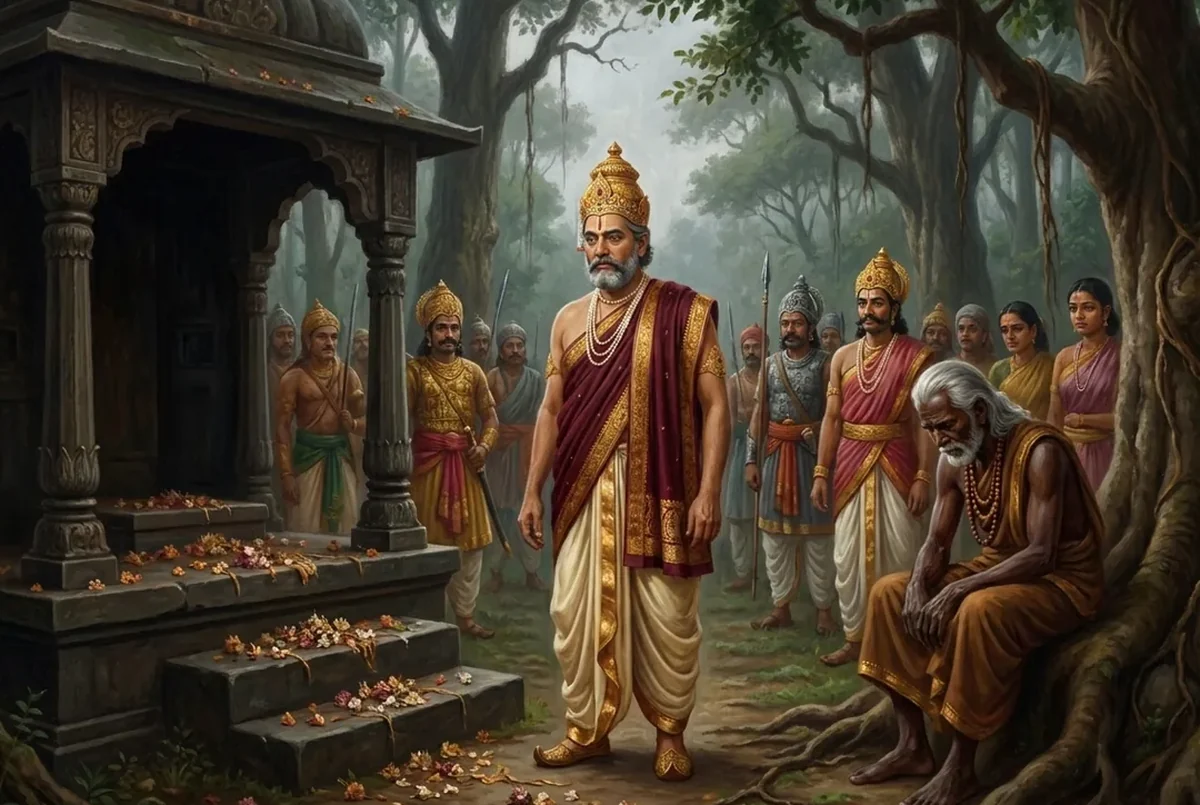
King Indradyumna reached Nilachal full of hope, but when he came to the spot, Nila Madhava had vanished. Vishwavasu's heart was broken too, for the god of his forest had been taken from him. In despair the king sat there fasting. Then a divine voice said: O king, build my temple on Nilachal; I will come as daru, sacred wood, floating in from the sea. The king built a vast temple and waited.
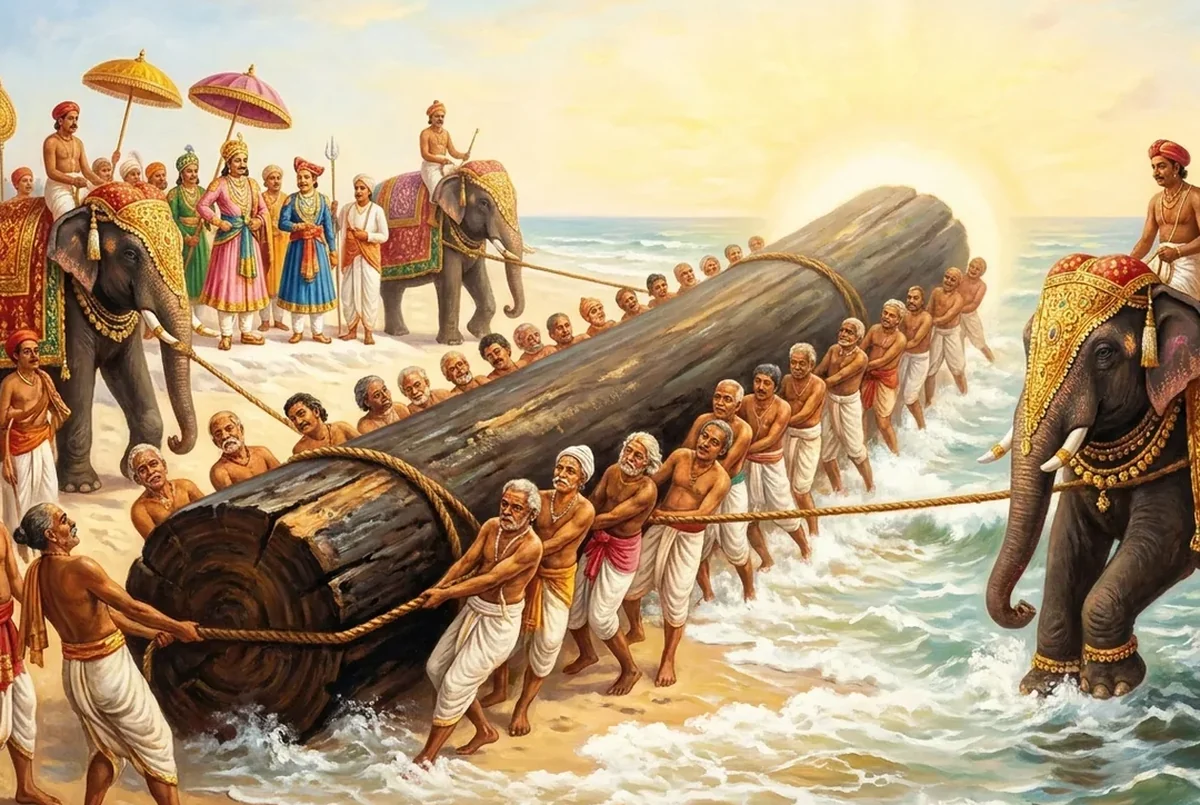
One day, as a dream had foretold, a huge log came floating on the waves near Bankimuhana. But it could not be lifted; elephants and hundreds of men could not move it. Folk tradition says the king was then told to call Vishwavasu with honour. The Sabar chief came, Vidyapati joined him, the king too put his hands to it, and the log rose as if it weighed nothing. The Lord showed that he belongs equally to king, Brahmin and the people of the forest.
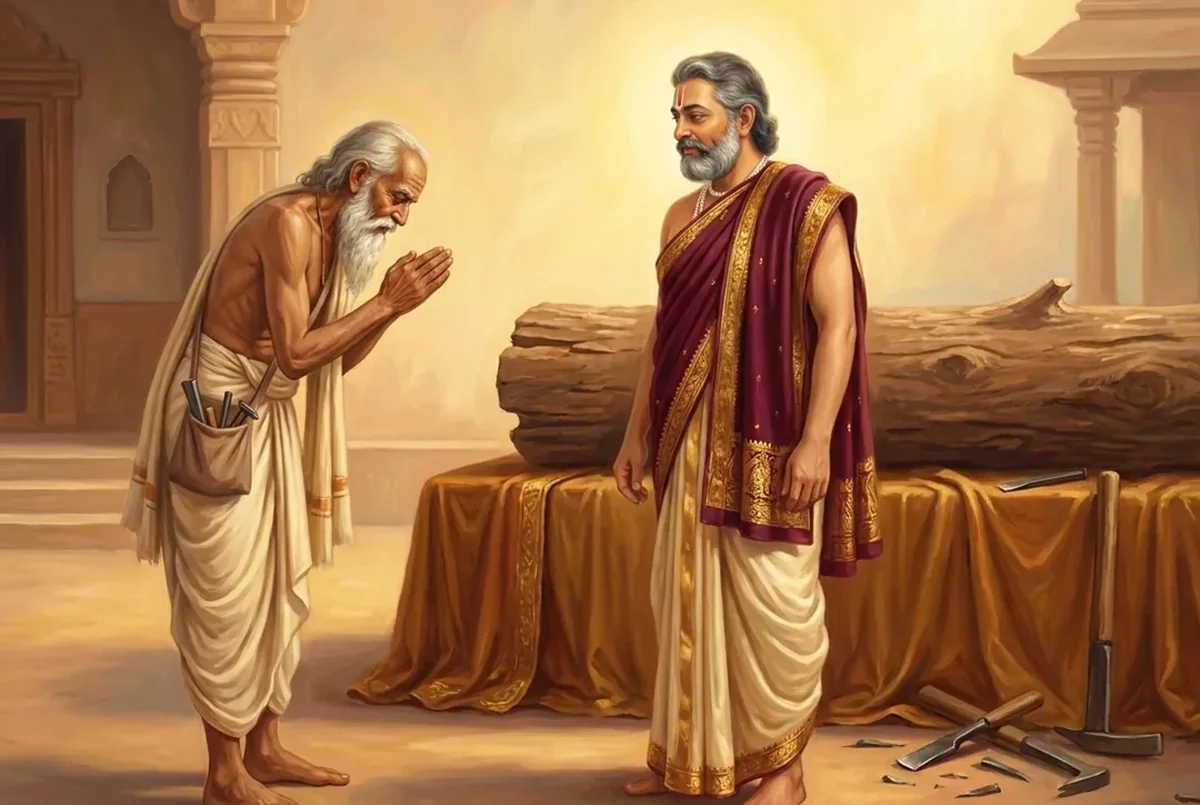
Now the question was who would carve the images. No craftsman could even begin work on that wood. Then an old sculptor came, remembered in Odisha's tradition as Ananta Maharana. He said he would work for twenty-one days in a closed room, and no one must open the door until then. The sound of chisel and mallet came from inside, and then, after some days, silence. Queen Gundicha feared something had happened to the old man, and at her insistence the doors were opened.
The sculptor was gone. Three images stood there, with great round eyes, short unfinished arms and no feet. The king wept, blaming his impatience for leaving the work unfinished. Then in a dream the Lord comforted him, saying this was the form in which he wished to be worshipped. The sculptor is believed to have been Vishwakarma himself, and some say the Lord himself. Devotees see in this form the Upanishad's words that the Supreme holds all without hands and reaches everywhere without feet.
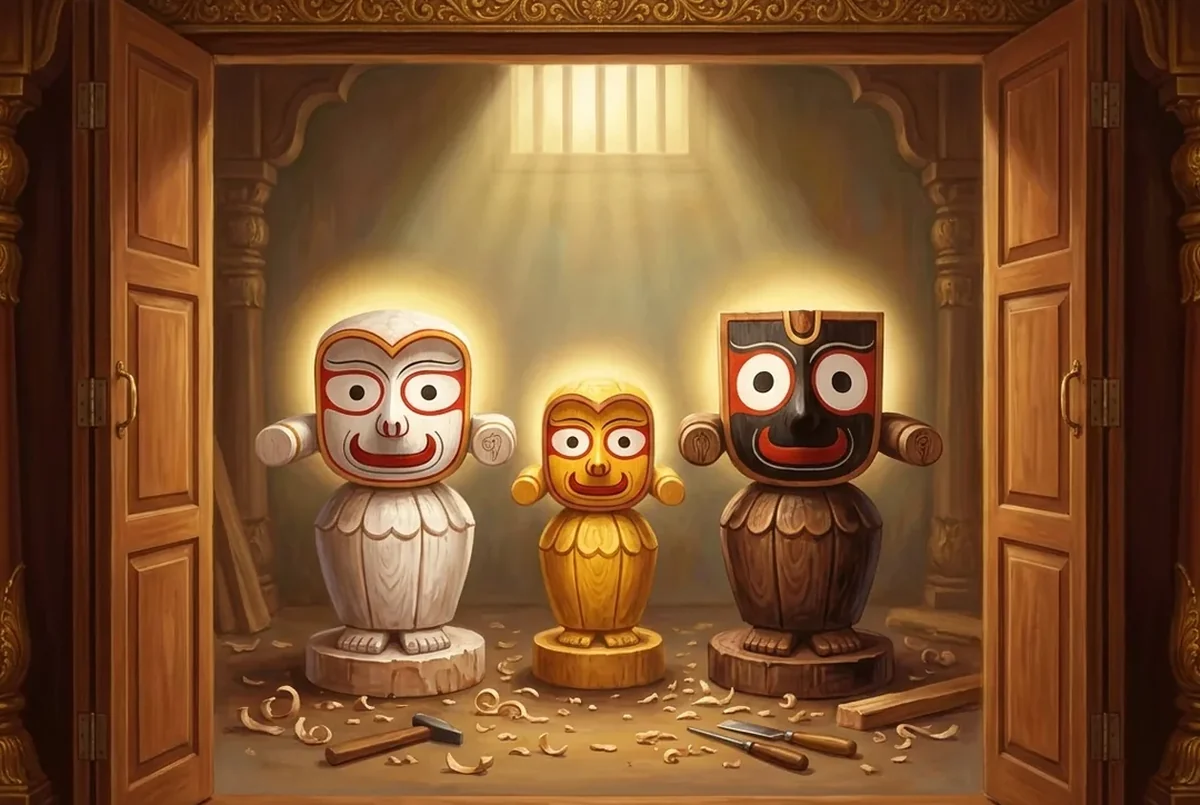
The king installed Balabhadra, Subhadra and Jagannath along with Sudarshan. Vishwavasu's descendants became the daitapatis, who still give the Lord his closest service during anasara and Nabakalebara. In years that have an extra month of Ashadha, Nabakalebara is held: new sacred wood is sought, and the Brahma padartha is placed from the old images into the new. So the story of the Daru Brahma comes alive again for every generation. Jai Jagannath.
Source
Indradyumna, the temple on Nilachal and the log from the sea: Skanda Purana, Utkala Khanda (Purushottama Kshetra Mahatmya). Lalita, the mustard seeds, the lifting of the log and Ananta Maharana come from Odisha's temple and folk tradition, which has several versions. Holding without hands and moving without feet: Shvetashvatara Upanishad 3.19.