
Lingaraj: Ekamra Kshetra and the Bindu Sagar
Bhubaneswar, Odisha
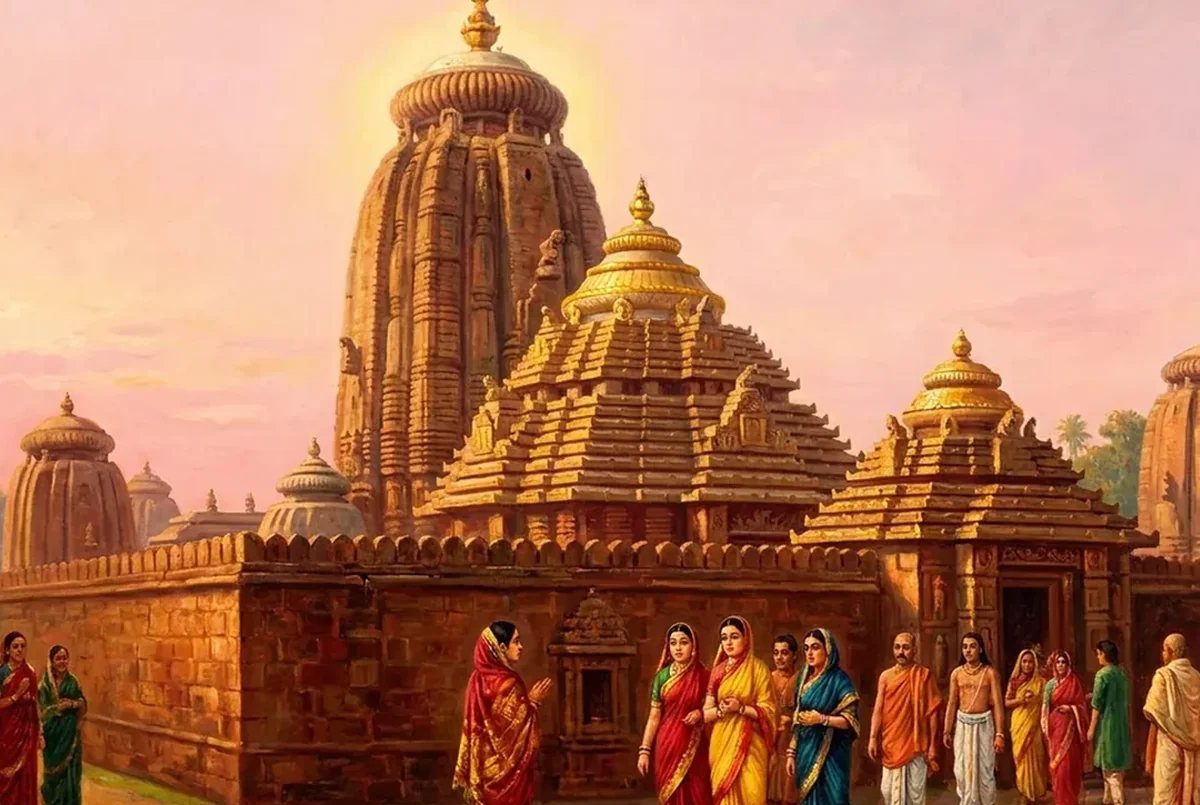
In the Lingaraj temple of Bhubaneswar, Lord Shiva is worshipped as a self-manifested linga, also called Tribhuvaneshwar, Lord of the three worlds, a name the city of Bhubaneswar carries. This ancient land is called Ekamra Kshetra and is also known as Gupta Kashi, the hidden Kashi. Lingaraj is worshipped as Harihara, so tulsi is offered here along with bel leaves.
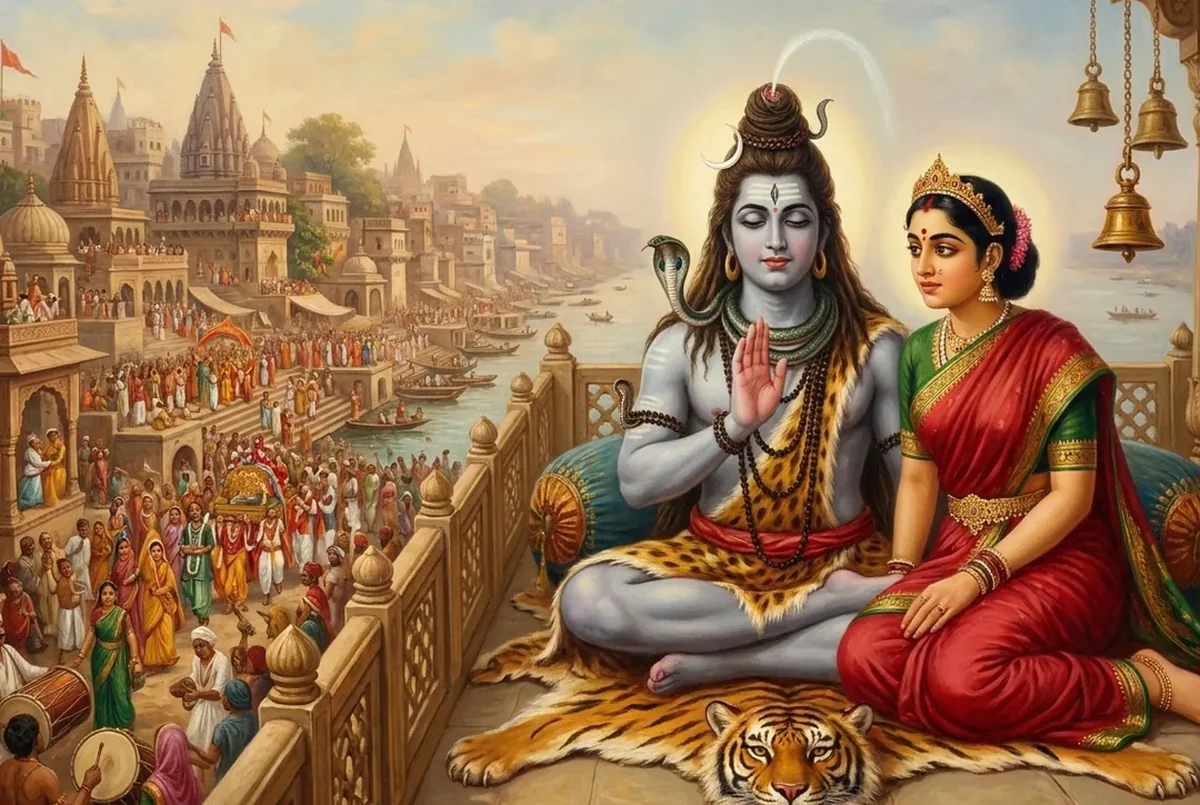
The story goes that after their marriage Lord Shiva and Mother Parvati lived in Kashi. Over time Kashi grew so crowded and noisy that Shiva decided to find a quiet place for meditation. He travelled east and came to a dense mango forest in the land of Utkala. There, beneath one great mango tree, he sank into meditation. Because of that single mango tree, the place came to be called Ekamra.
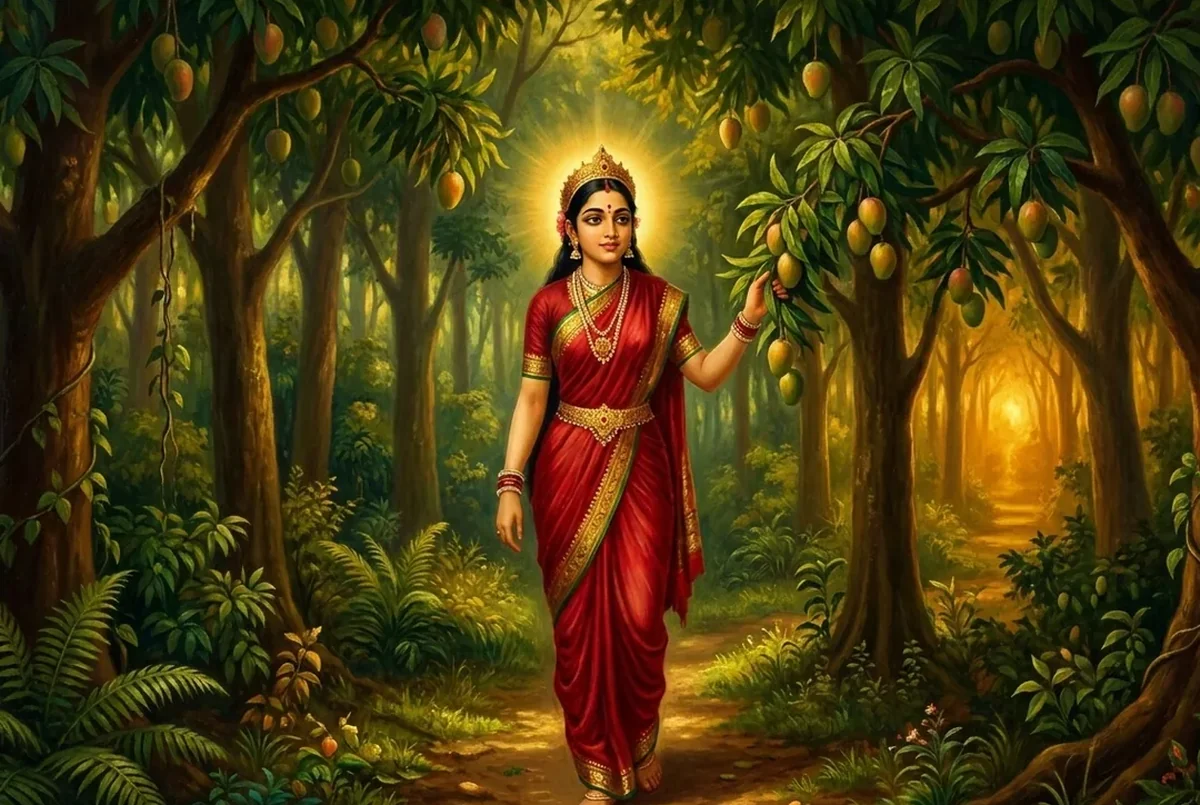
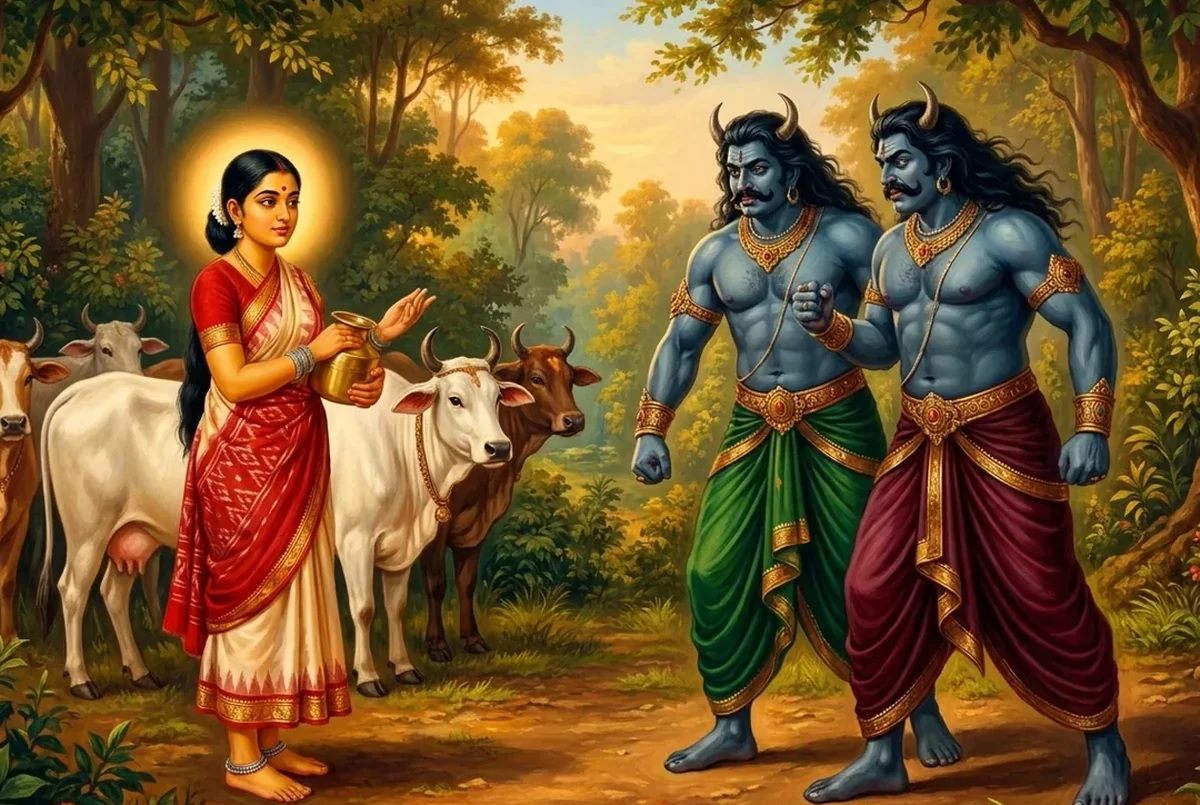
Shiva had left without telling Parvati. Searching for him, she reached the same forest. She saw that the cows of the forest would come on their own to a mango tree and let their milk flow onto one spot. A self-manifested linga was there. Parvati knew her lord was here. Taking the form of a cowherd woman, a gopalini, she began to live in the forest, serving the Lord along with the cows.
Two mighty asuras named Kirti and Vasa lived in that forest. They had a boon that no man could kill them, so they caused trouble without fear. Seeing the beautiful cowherd woman, both were infatuated and began to insist on marrying her. Parvati asked Shiva what she should do. Shiva said, their boon protects them from a man, not from a woman; their end will come at your hands.
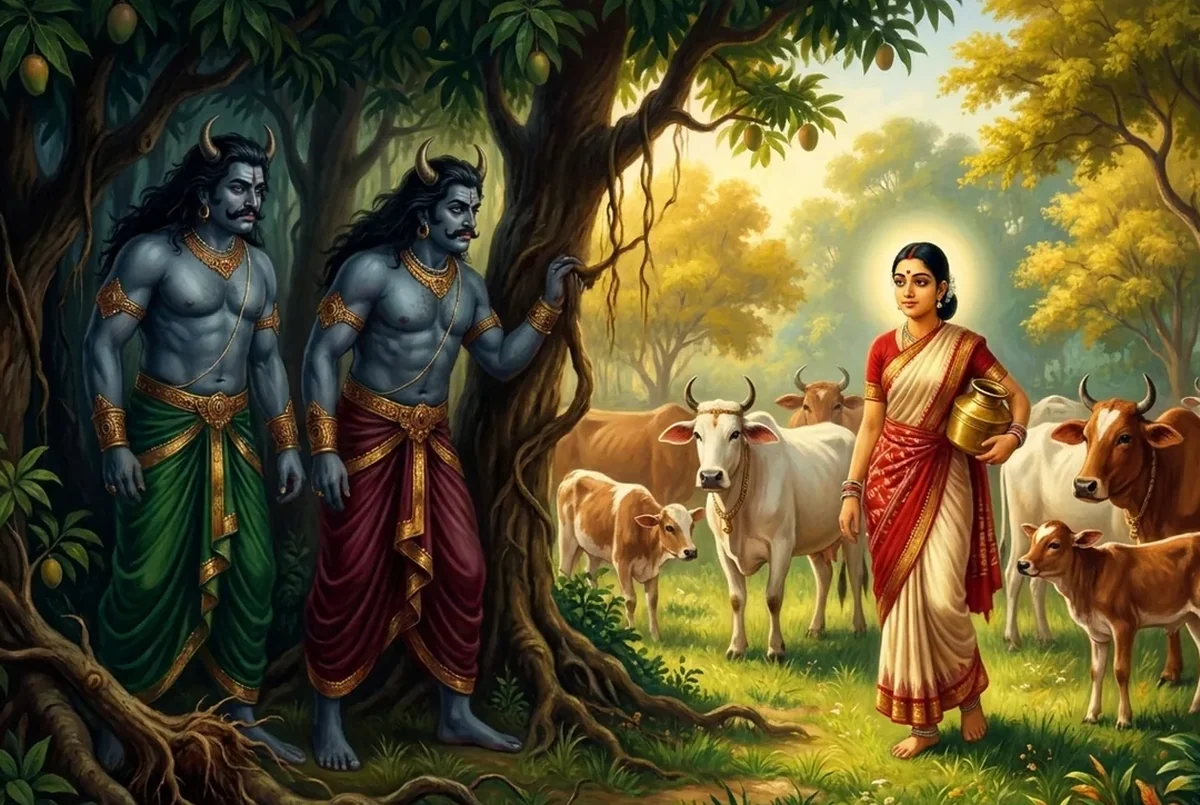
The next time the asuras came, the cowherd woman said, whoever carries me on his shoulders, I will listen to him. Full of pride, both came forward and lifted the goddess onto their shoulders. Then she began to grow heavier, as if the weight of the whole earth had come upon them. The asuras staggered and fell to their knees, and the goddess pressed them into the ground beneath her feet. The forest was peaceful and fearless again.
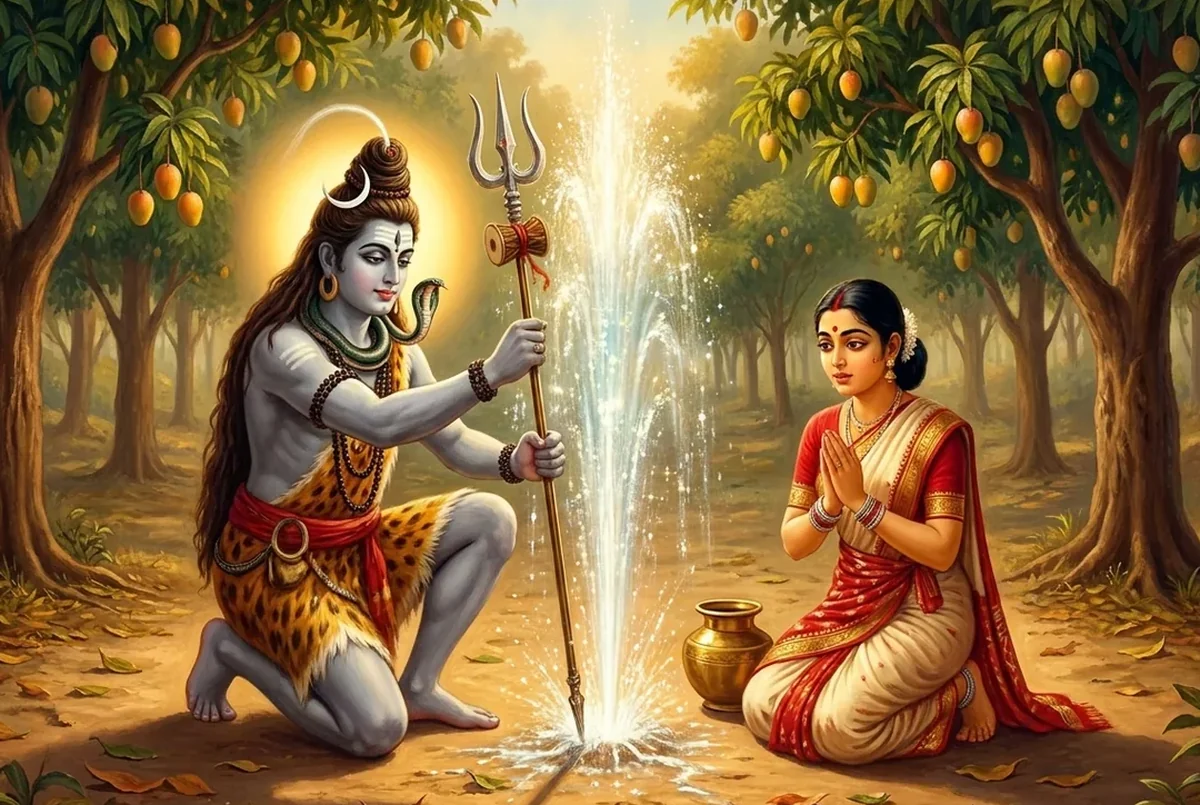
Then the goddess grew very thirsty, but there was no water anywhere near. Shiva struck the earth with his trident and a spring burst forth. Then he called upon all the holy rivers and tirthas, and each added one drop of its own. The great lake filled drop by drop came to be called Bindu Sagar, the ocean of drops. The goddess drank and her thirst was quenched, and its water is believed to hold the merit of every tirtha.
After this Shiva and Parvati made this land their home. The self-manifested linga came to be worshipped as Lingaraj, and here Shiva is also known as Krittivasa. Later a vast temple rose here, considered the crown of the Kalinga style of temple building. Lingaraj is believed to hold both Shiva and Vishnu, and so is called Harihara. This form says there is no difference between Shiva and Vishnu.
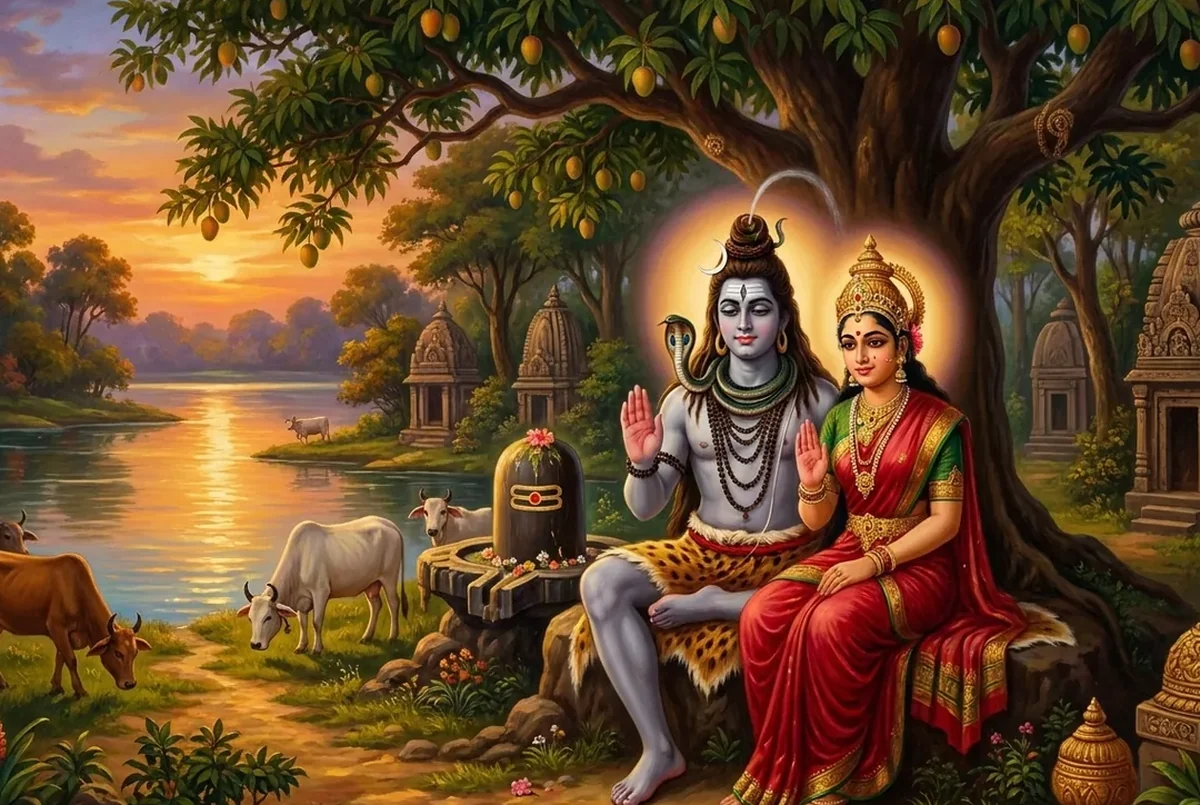
The custom remains that devotees first bathe in or sip the water of the Bindu Sagar, then go for darshan of Lingaraj. On Mahashivratri night the Mahadeepa is raised to the top of the temple, and devotees break their fast after seeing it. During Chandan Yatra the Lord is taken on boat rides on the Bindu Sagar, and on Ashokashtami the Rukuna Rath Yatra rolls out. The story of Ekamra says that where Shiva and Shakti are together, adharma cannot stand. Har Har Mahadev.
Source
The sthala purana tradition of Bhubaneswar, taken to rest on kshetra-mahatmya texts such as the Ekamra Purana. The story of Kirti, Vasa and the Bindu Sagar is told in several versions; in some, Shiva himself brings Parvati here after describing the glory of this land.