
Manasa: Behula, Lakhindar and Maa Manasa
Bengal
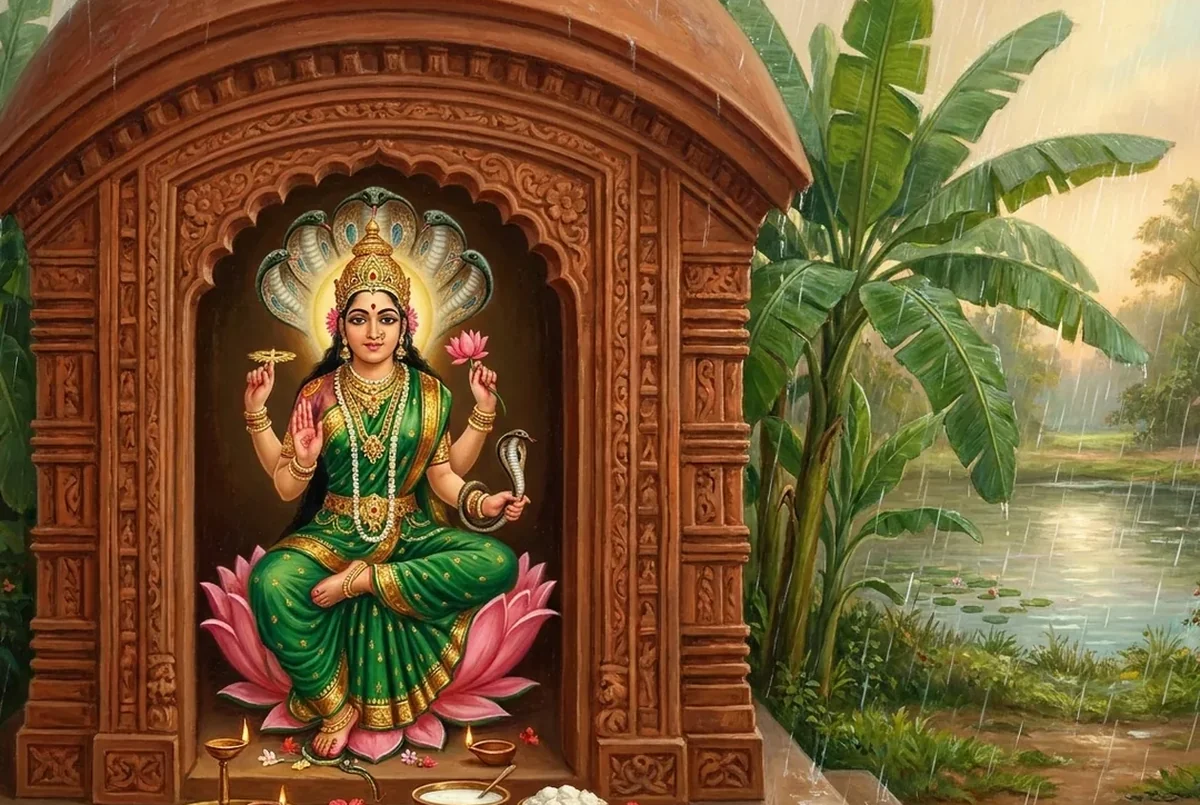
Manasa is the goddess of snakes, worshipped across Bengal and Assam for protection from snakebite and for the welfare of the family, especially in the rainy months of Shraban and Bhadra. Her best-loved story is that of Behula, who carried her husband's body down the river to the gods and brought his life back. It is told in the Manasamangal poems of medieval Bengal.
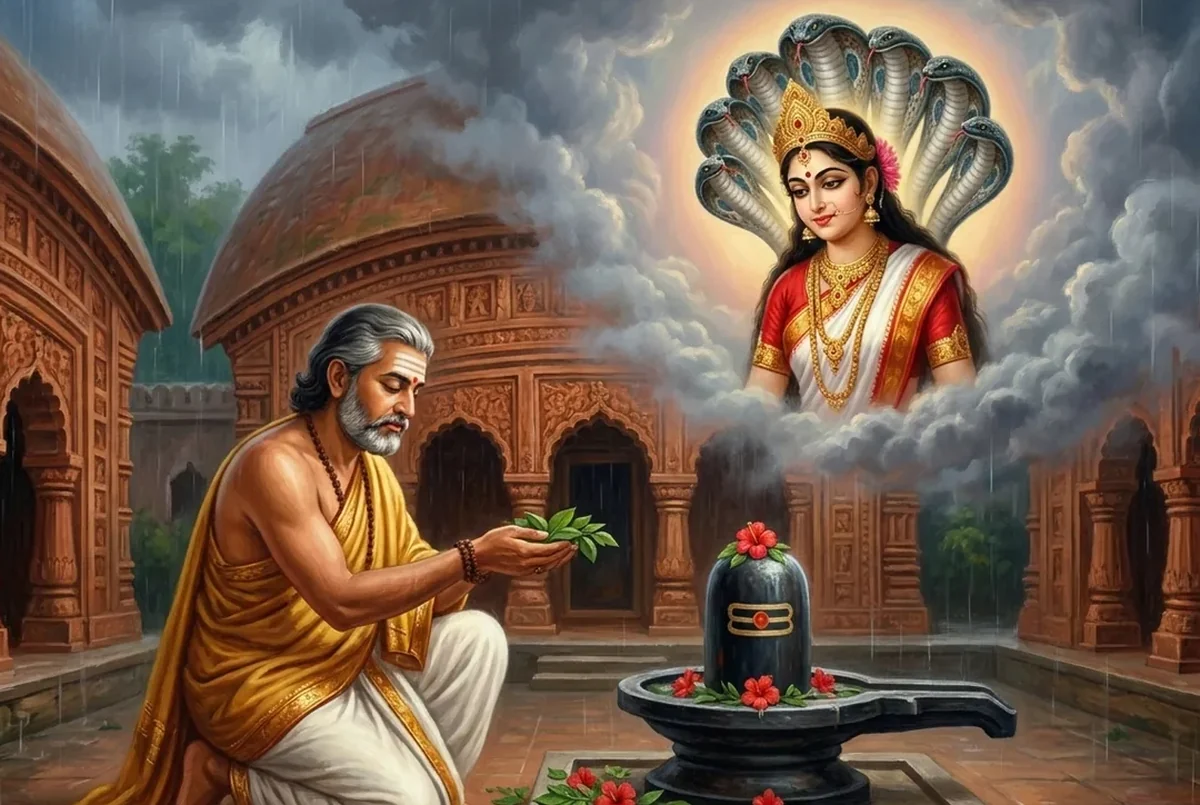
In the town of Champaknagar lived Chand Sadagar, a wealthy merchant and a devoted worshipper of Shiva. The goddess Manasa wished to be worshipped on earth, and she knew that if a man as proud and respected as Chand bowed to her, everyone would follow. But Chand refused outright. I worship only Mahadev, he said, and I will not offer a single flower to anyone else.
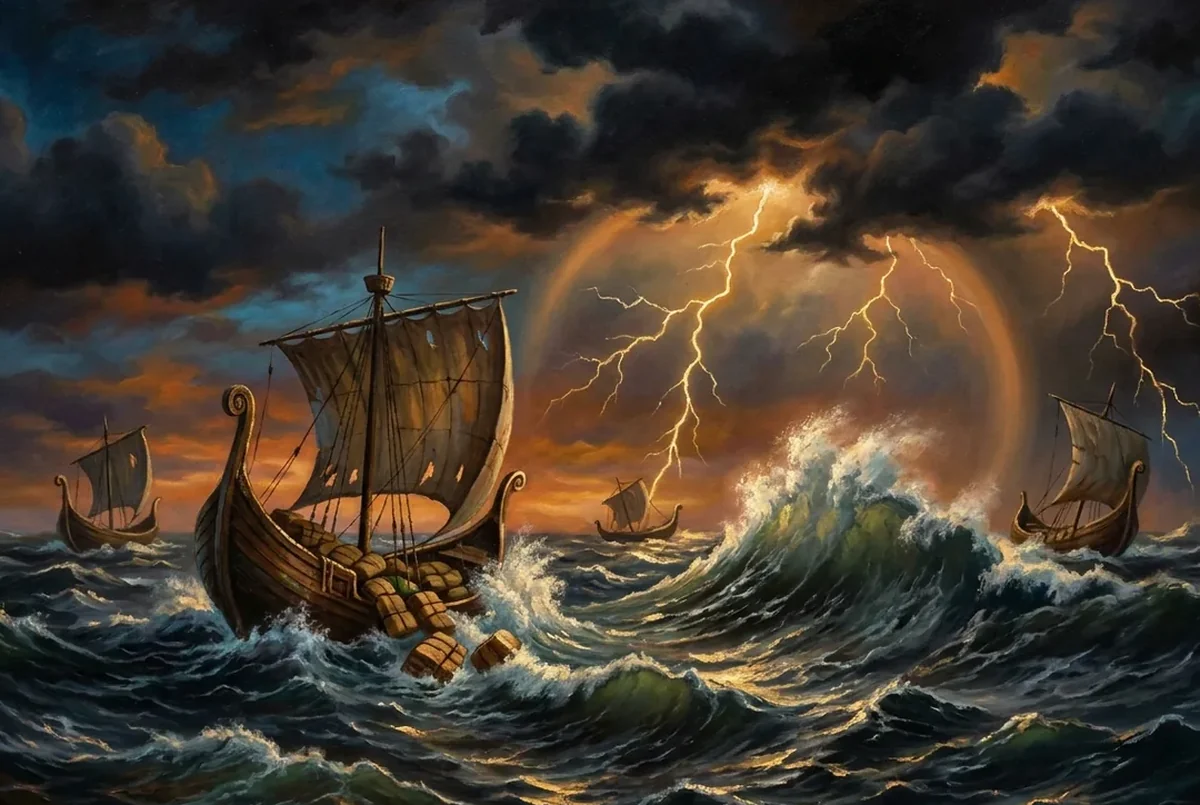
Manasa did not give up. One by one, Chand's six sons died of snakebite. His ships, laden with trade goods, sank in a storm, and Chand came home with nothing. Still he would not bow. Only his youngest son, Lakhindar, was left, and his mother Sanaka lived in constant fear.
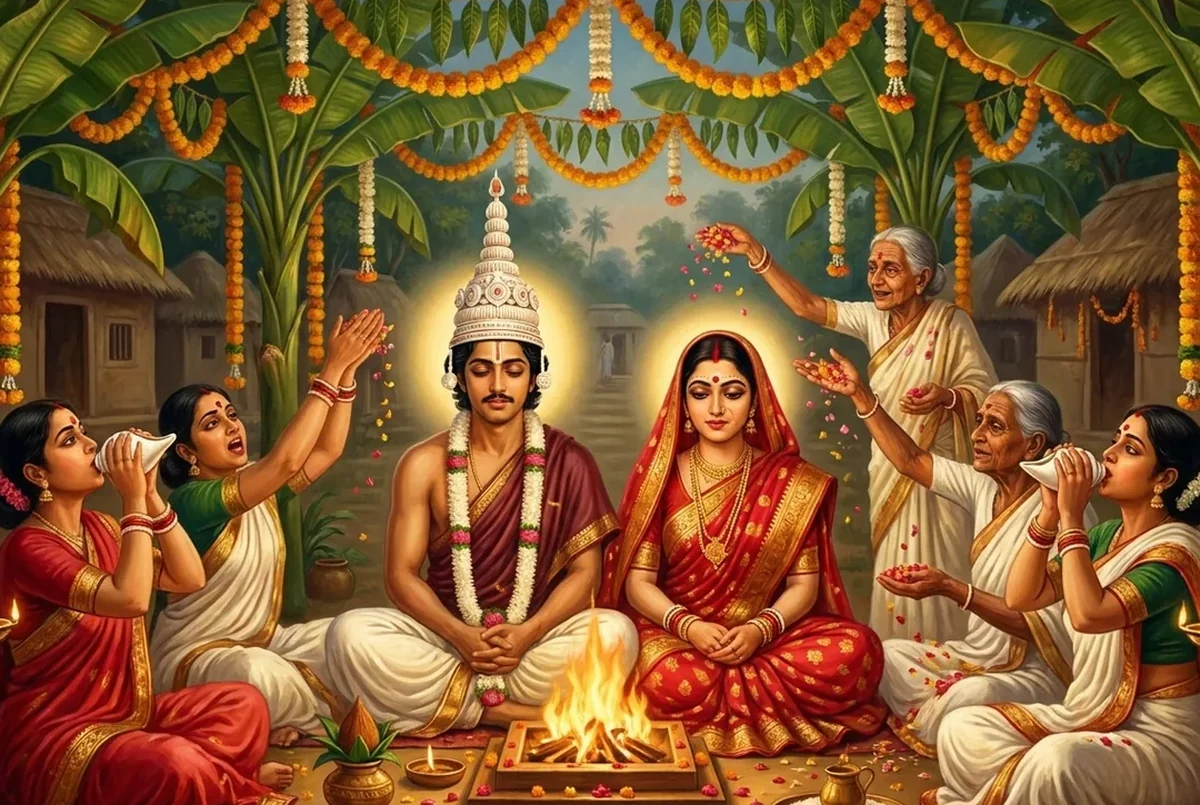
When Lakhindar grew up, he was married to Behula, the wise and devoted daughter of a merchant of Ujaninagar. To protect his son, Chand had an iron bridal chamber built on the Santali hill, without a crack wide enough for an ant. But at Manasa's bidding the builder left a hole as thin as a hair. On the wedding night, when the weary Behula dozed off, the serpent Kalnagini slipped in through that hole and bit Lakhindar. When Behula woke, her husband was gone.
The custom then was that one who died of snakebite was not cremated but set adrift on a raft. Behula made a decision that stunned everyone. I will go with him, she said, and I will not return until I have brought him back to life. On a raft of banana stems she sat with her husband's body, and the current of the Gangur river carried her away. Her family pleaded with her, but she did not turn back.
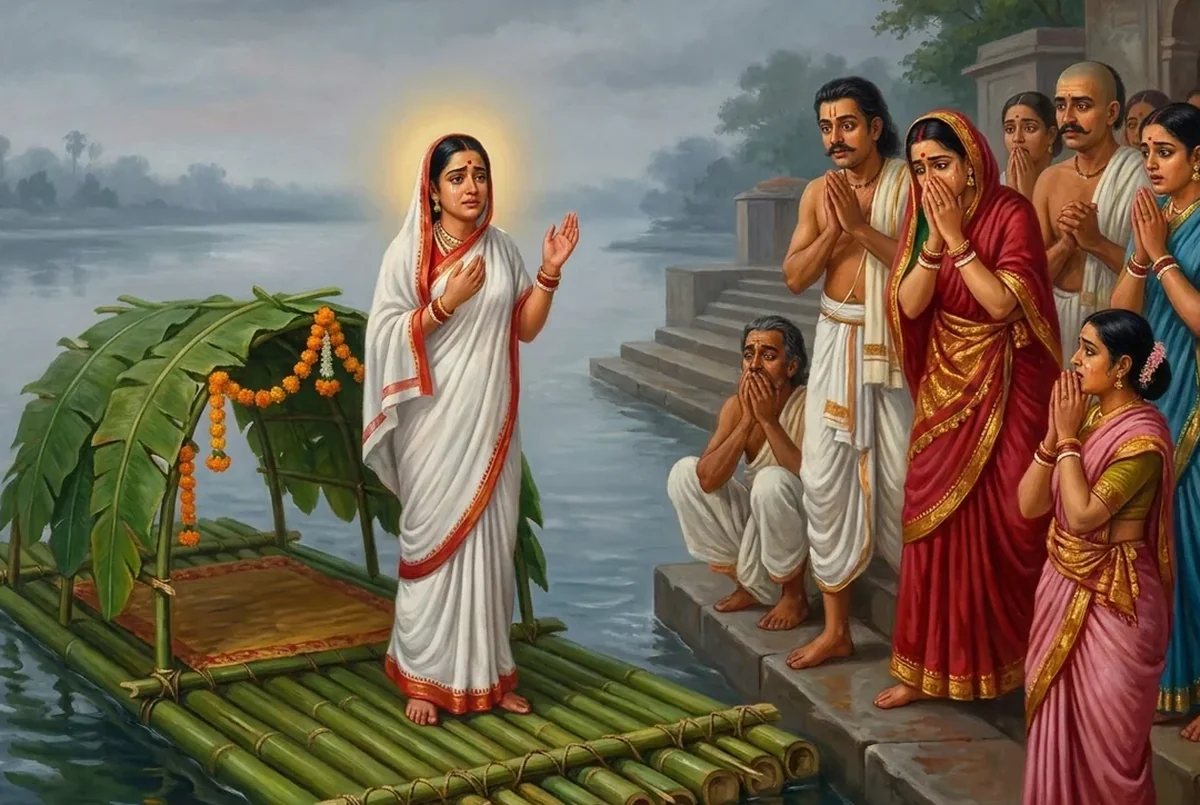
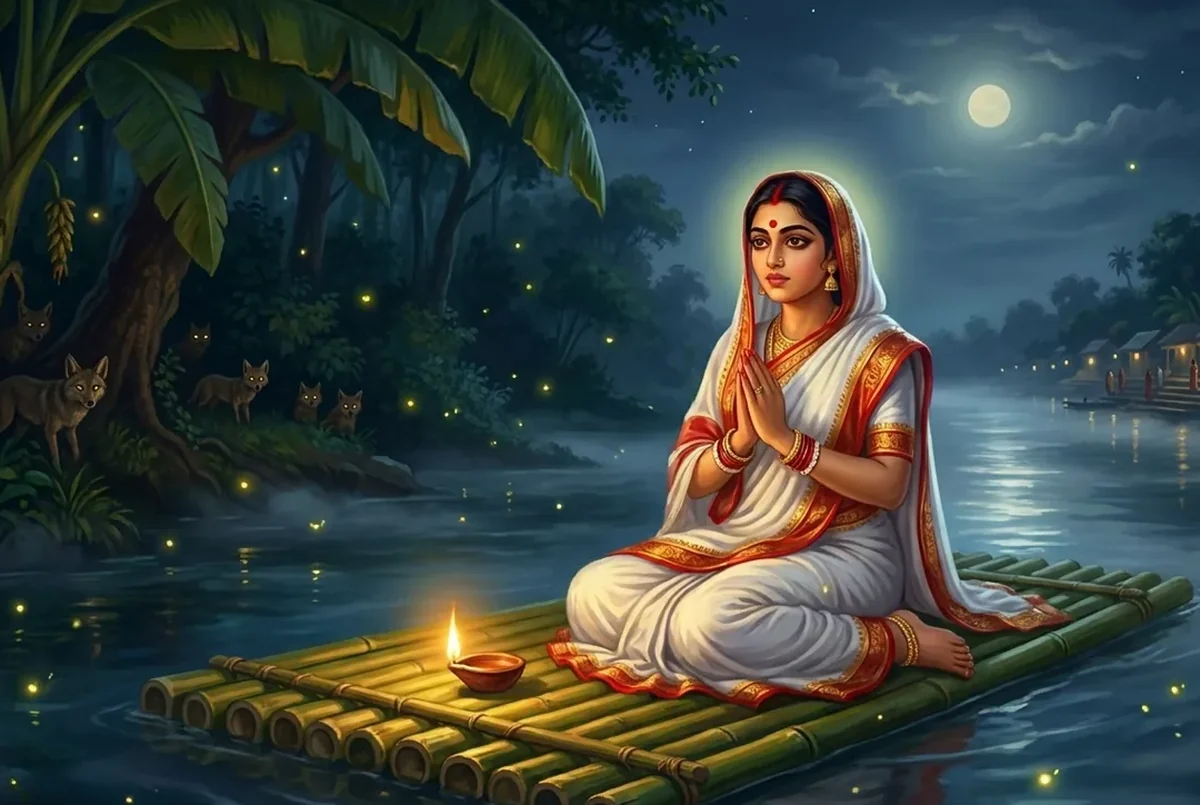
For months the raft drifted past villages, ghats and forests. People mocked her, some tried to lure her away, and wild creatures came near. Her husband's body wasted away, yet she guarded it and kept her mind on the gods. Nothing could break her resolve. At last the raft reached a ghat where a woman named Neta was washing clothes. Neta was the washerwoman of the gods and a companion of Manasa. Moved by Behula's courage, she agreed to take her to heaven.
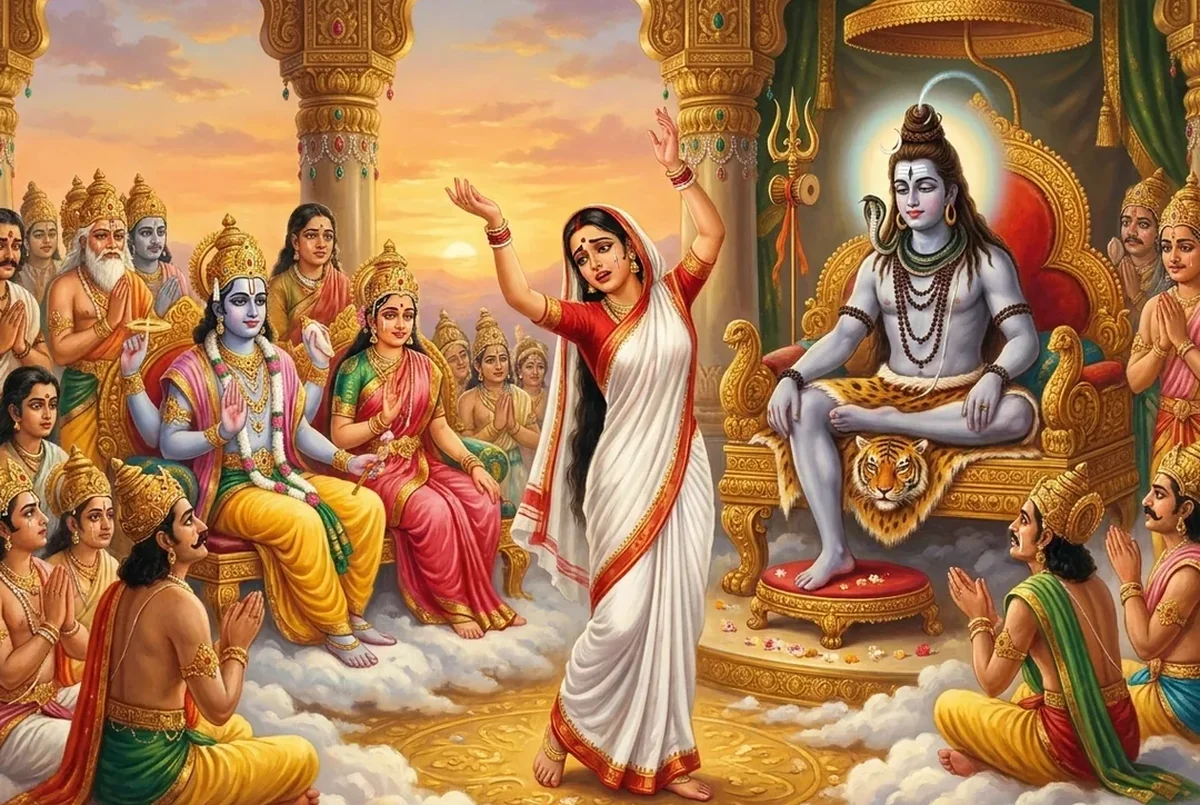
In the assembly of the gods, Behula danced with such skill and such sorrow that the whole court was moved. Shiva himself was pleased and asked what she wanted. She asked only for her husband's life. The gods called Manasa, and Manasa agreed on one condition: Chand Sadagar must worship her. Behula promised it would be so. Lakhindar opened his eyes, and with him Chand's six sons and the sunken ships were restored.
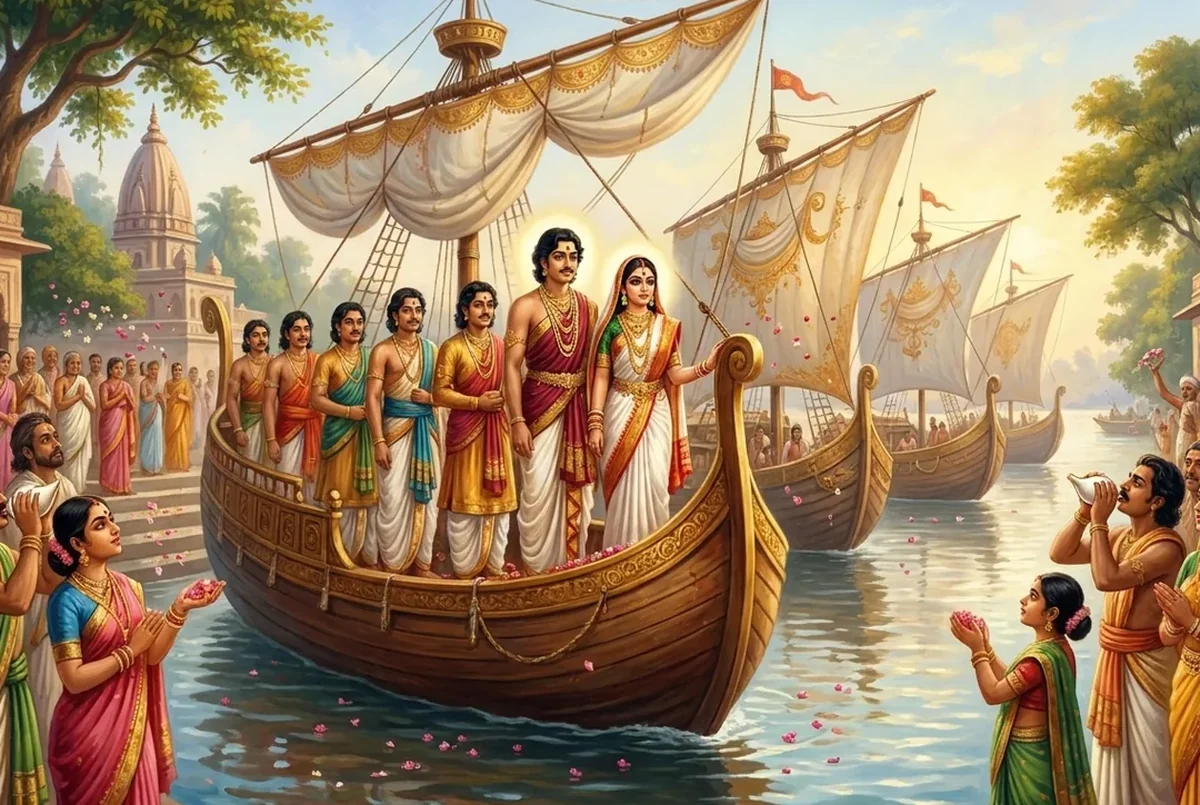
Behula returned to Champaknagar with her husband, his brothers and the ships. Chand's joy knew no bounds, but his old stubbornness still held him back. At last, for his daughter-in-law's sake, he agreed. With his left hand, and without looking at the goddess, he offered Manasa a single flower. Manasa accepted even that. From that day her worship spread to homes all over Bengal.
Behula's story has lived in the villages of Bengal for centuries. It is the story of a goddess who wanted a place in the hearts of ordinary people, of a father's unbending faith, and above all of a young woman whose love and courage carried her to the gods themselves. May Maa Manasa protect every home, and may every family find Behula's courage in hard times.
Source
The story comes from the Manasamangal poems of medieval Bengal, composed by poets such as Vijay Gupta, Bipradas Pipilai and Ketakadas Kshemananda; names, places and episodes differ from poet to poet, and in eastern Bengal the poem is also called the Padmapuran.