
Vitthal: Pundalik's service and Vitthal on the brick
Pandharpur, Maharashtra
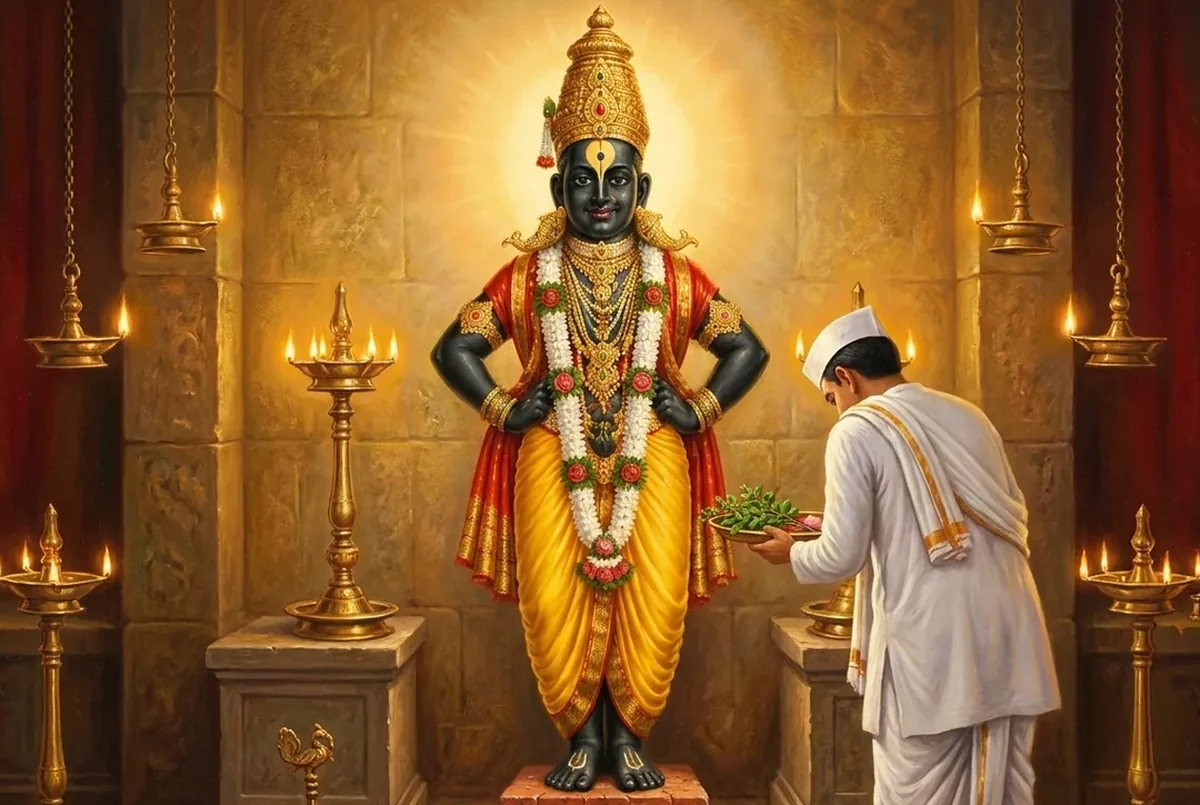
Vitthal, also called Panduranga and Vithoba, is Maharashtra's most beloved deity and is worshipped as a form of Lord Krishna. At Pandharpur, on the bank of the Chandrabhaga, he stands on a brick with his hands on his waist. This story tells why he stands there, and why serving one's parents is honoured as the highest devotion.
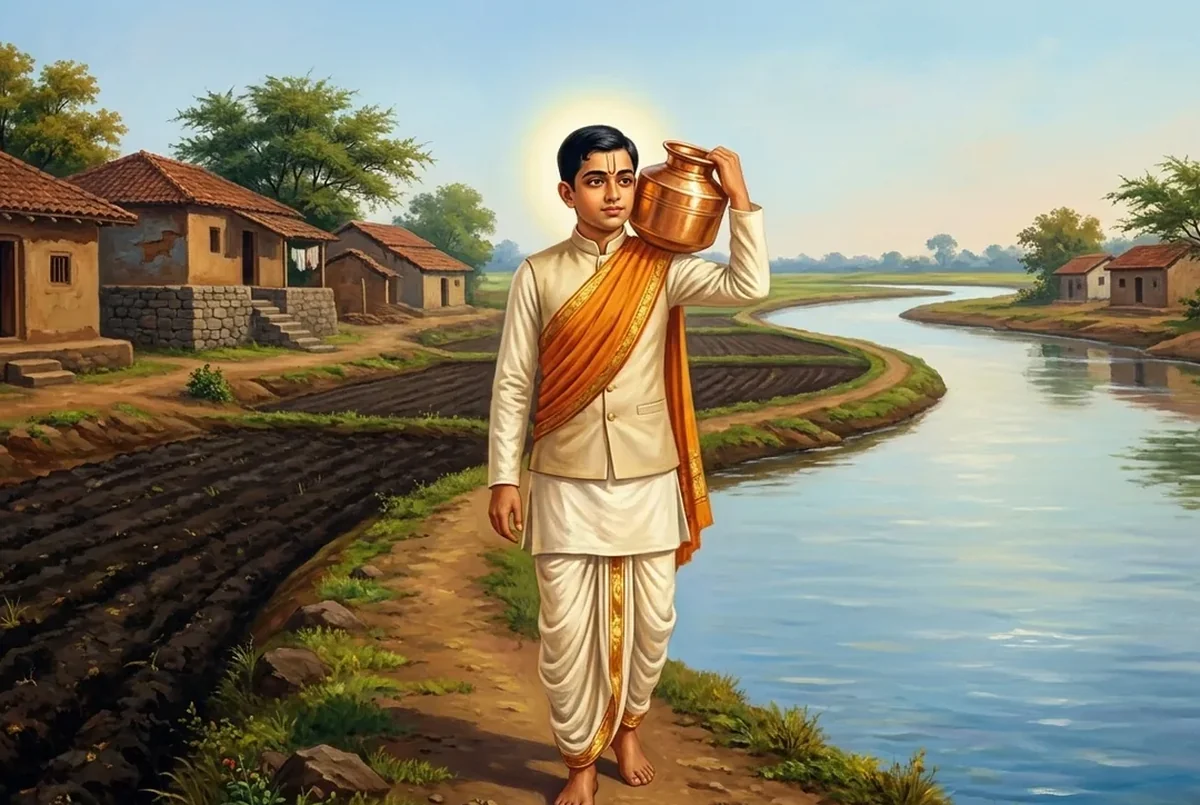
Long ago, on the bank of the Bhima, where the river curves like a crescent moon and is called the Chandrabhaga, there lived a young man named Pundalik. As a boy he was a loving and obedient son, but after his marriage his heart changed. He listened only to his wife and made his old parents do the hardest chores of the house. He cared nothing for their food, their medicine or their rest. Heartbroken, the old couple decided to spend their remaining days at Kashi, at the feet of the Lord.
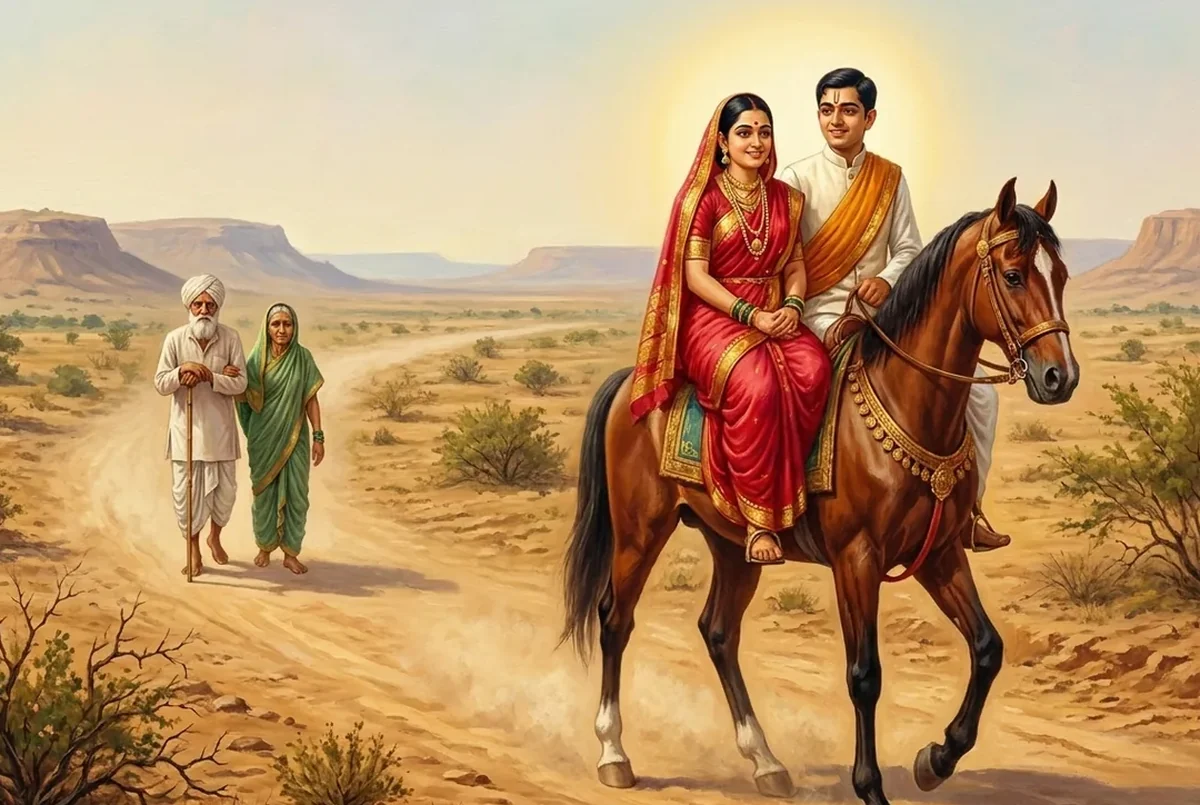
Pundalik and his wife set out on the pilgrimage too, but nothing changed. The young couple rode comfortably on a horse while the tired parents trudged behind them on the dusty road. On the way they stopped for the night at the ashram of the sage Kukkut. Pundalik noticed that the sage performed no grand rituals; he simply served his own mother and father with his whole heart. The humble ashram did not impress Pundalik much.
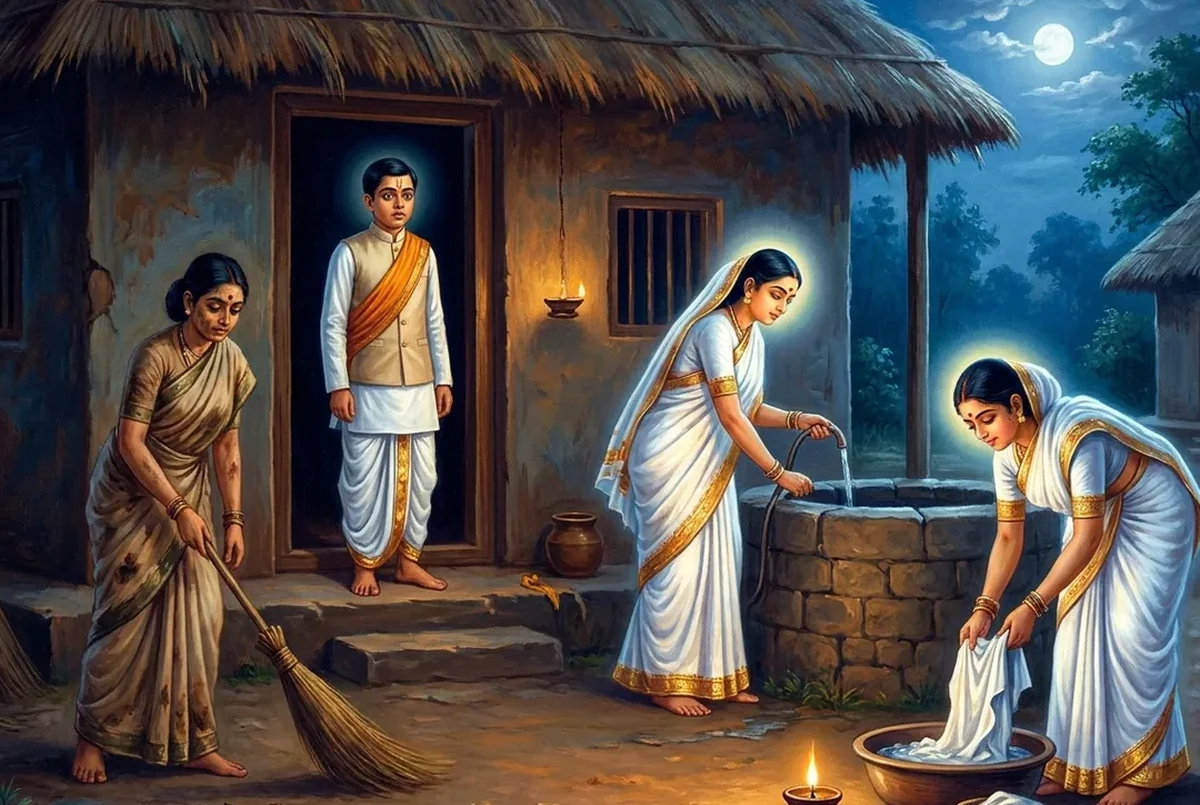
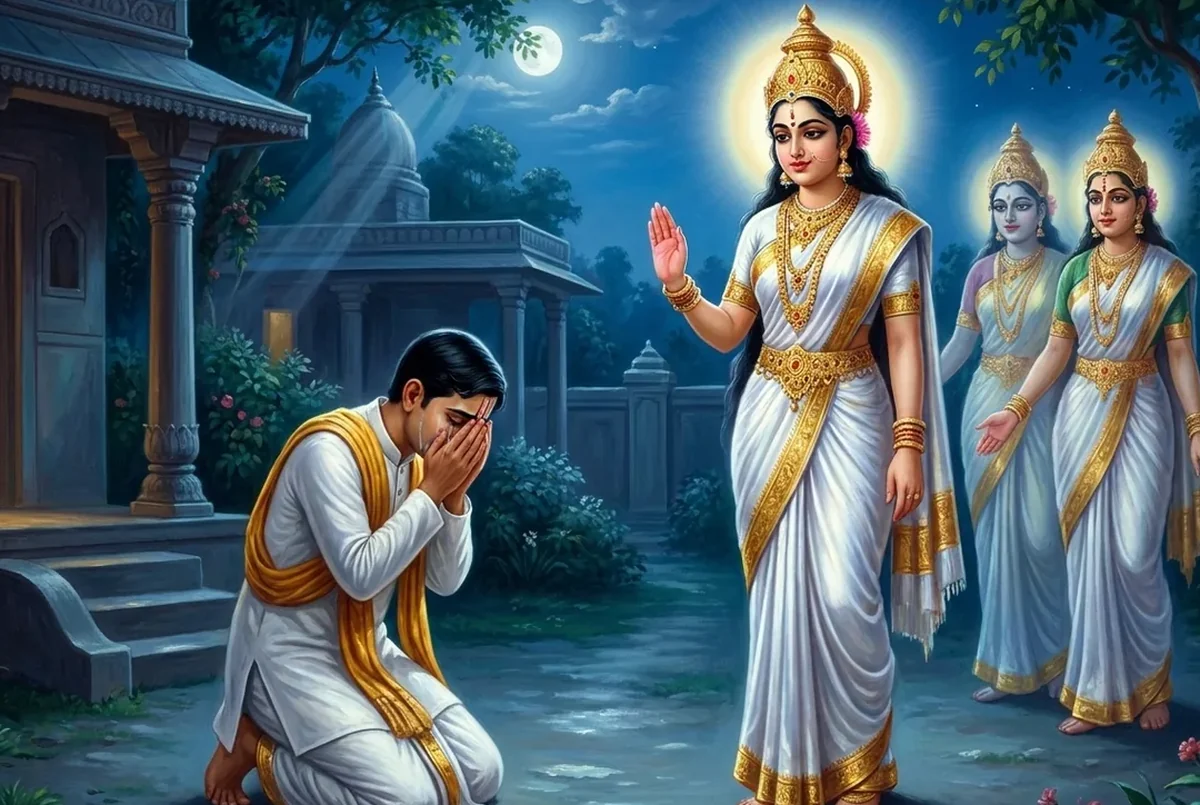
In the middle of the night Pundalik woke up. He saw three women in soiled clothes sweeping the ashram, fetching water and washing the sage's clothes. As soon as the work was done, their garments turned spotless and their faces began to glow. Astonished, Pundalik asked who they were. They said, we are Ganga, Yamuna and Saraswati. Pilgrims wash away their sins in our waters. To wash that stain from ourselves we come to serve this ashram, which is made holy by a son's service to his parents.
Then Mother Ganga looked at Pundalik and said, the sins of a son who hurts his parents are not washed away by the water of any tirtha. The words sank deep into his heart, and he wept all night. At dawn he fell at his parents' feet and begged their forgiveness. He seated them on the horse and walked beside them himself. He understood that the God he had set out to find in Kashi was already in his own home, in the form of his mother and father. They all returned to Pandharpur, and from then on his life was one of service.
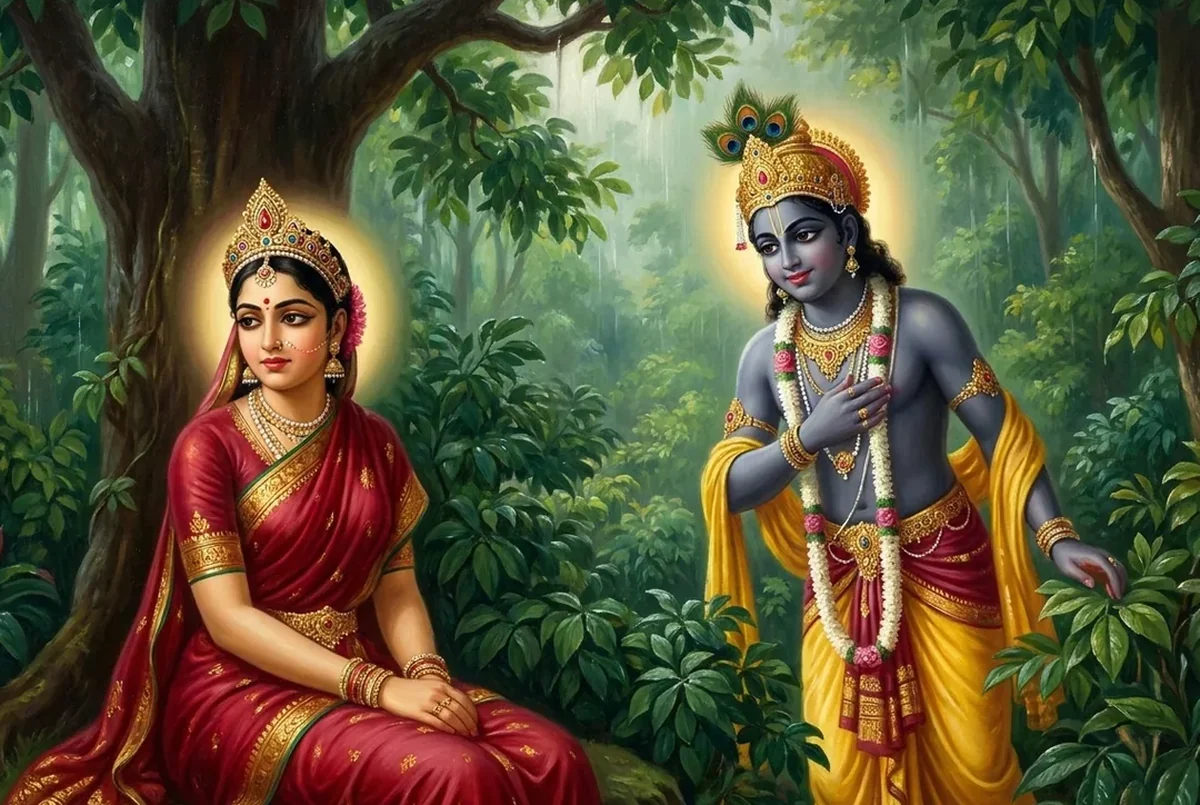
In those days Rukmini, hurt over something at Dwarka, had come away to the south and was staying in Dindirvan, near Pandharpur. Lord Krishna followed to bring her back. Hearing of Pundalik's devotion to his parents, the Lord wished to meet him. It was the rainy season and the ground all around was thick with mud. One day the Lord came and stood at Pundalik's door and called out, Pundalik, I have come to see you.
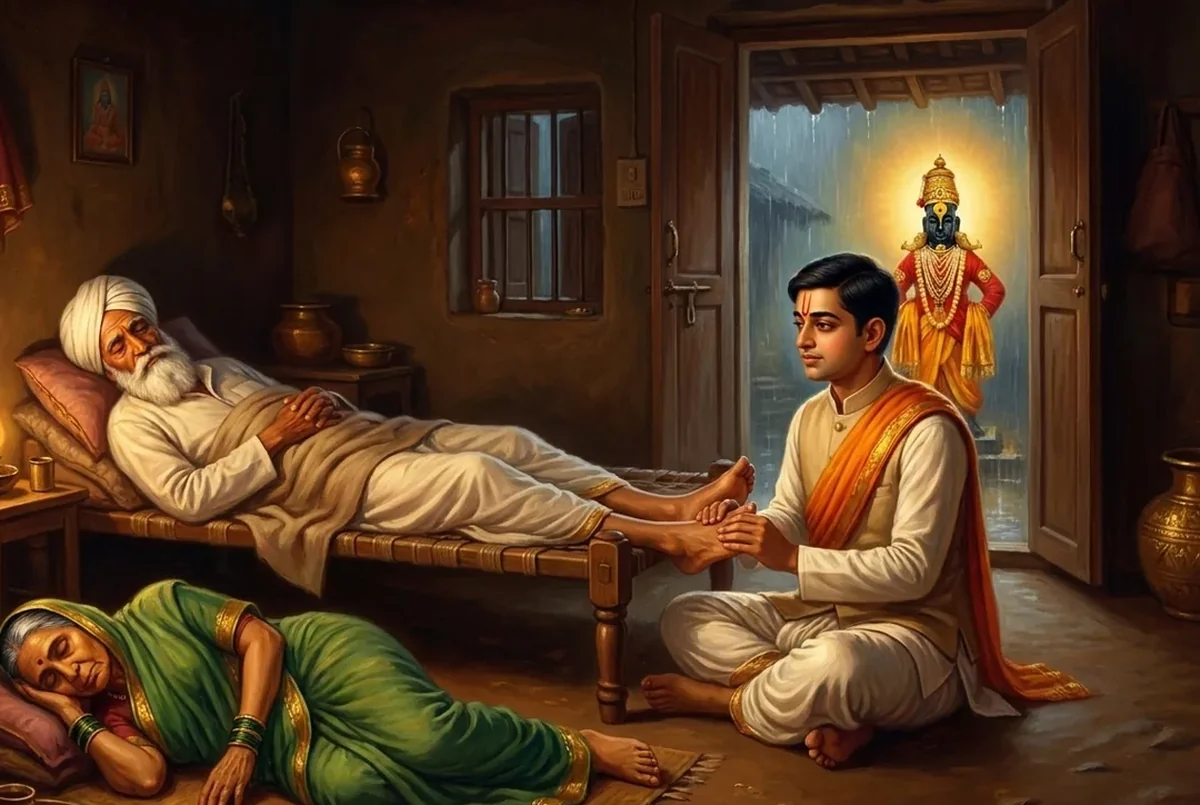
At that moment Pundalik was pressing his father's feet. He knew it was the Lord himself at the door, but he did not feel it right to leave his service half done. He pushed a brick that lay nearby towards the door and said humbly, Lord, it is muddy outside, please stand on this brick. Let my father fall asleep, and then I will attend to you. The Lord was so pleased by his devotee's love that he smiled, stepped onto the brick, placed both hands on his waist and waited.
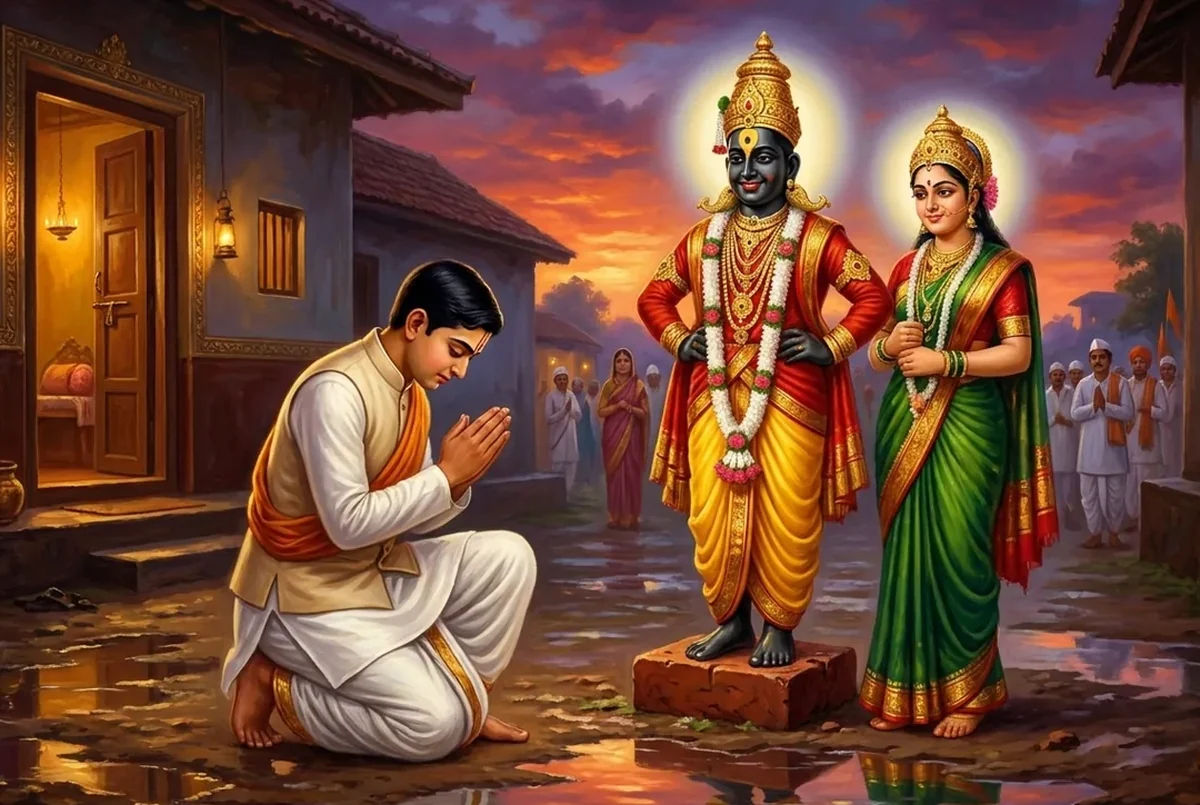
When his service was over, Pundalik came out, fell at the Lord's feet and asked forgiveness for the delay. The Lord said, your service has won me over, ask for a boon. Pundalik asked nothing for himself. He said, Lord, stay here just as you are, so that every devotee who comes may have your darshan. The Lord gave his word. Ever since, he has been Vitthal, the one who stands on the vit, the brick. Rukmini too took her place close by as Rakhumai.
Even today Pundalik's temple stands in the Chandrabhaga at Pandharpur, and pilgrims bathe in the river and bow to Pundalik first. On Ashadhi and Kartiki Ekadashi, lakhs of Varkaris walk the wari to meet their Vithu Mauli, calling out Pundalik Varade Hari Vitthal. The story reminds us that the Lord himself walks to a home where old parents are honoured, and waits there with love.
Source
The Pundalik story is told in the Panduranga Mahatmya texts, which are linked to the Skanda Purana and the Padma Purana, in Mahipati's Bhaktavijaya and in the abhangs of the Varkari saints. Details vary between versions.