
Devshayani Ekadashi Vrat Katha
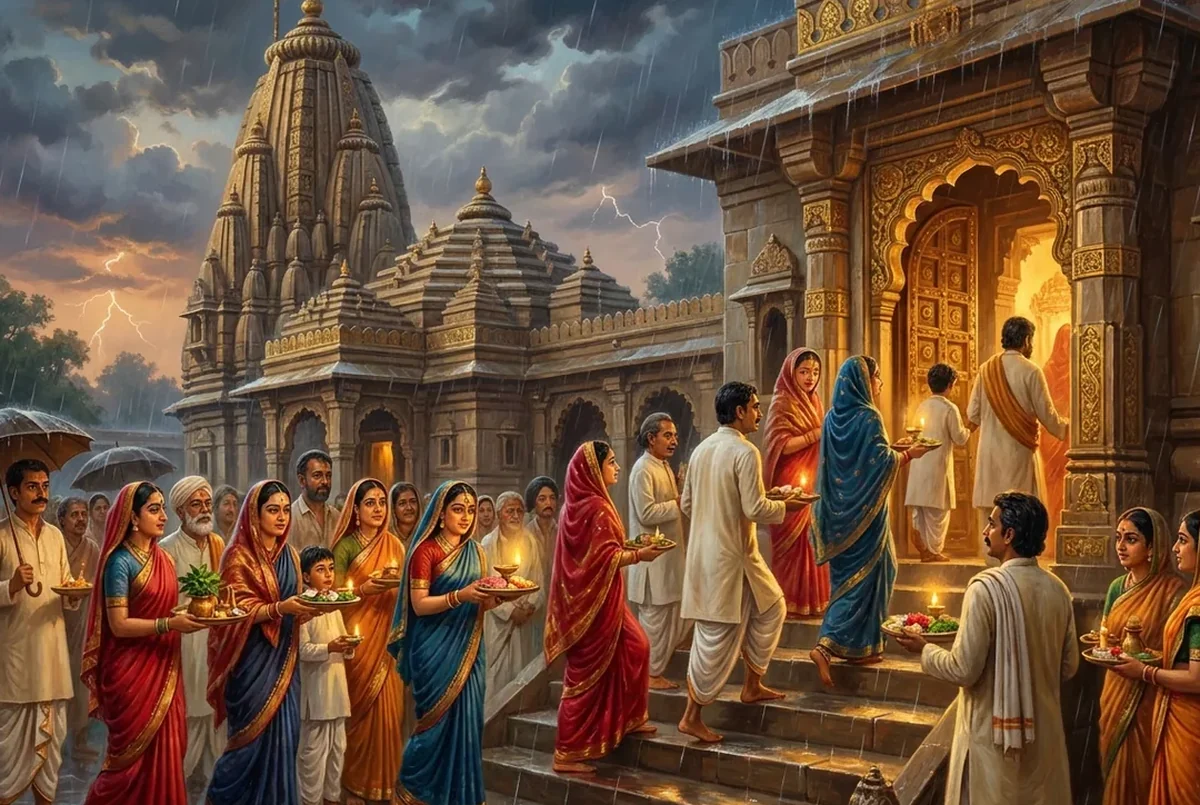
Devshayani Ekadashi — When is it
- 14 July 2027, Wednesday
| Ekadashi tithi | from 13 July, 12:09 PM until 14 July, 1:11 PM |
| Parana (breaking the fast): 15 July, 5:33 AM to 8:19 AM | |
| Sunrise · Sunset | 5:32 AM · 7:21 PM |
Times are for Delhi · 14 July 2027
Why is this day celebrated?
The Ekadashi of the bright half of Ashadha is called Devshayani Ekadashi, also Harishayani and Padma Ekadashi. Tradition holds that on this day Lord Vishnu enters four months of yoga nidra on the serpent Shesha in the ocean of milk, beginning the Chaturmas that ends on Dev Uthani Ekadashi. In Maharashtra the same day is Ashadhi Ekadashi, the great day of the Pandharpur Wari.
The katha
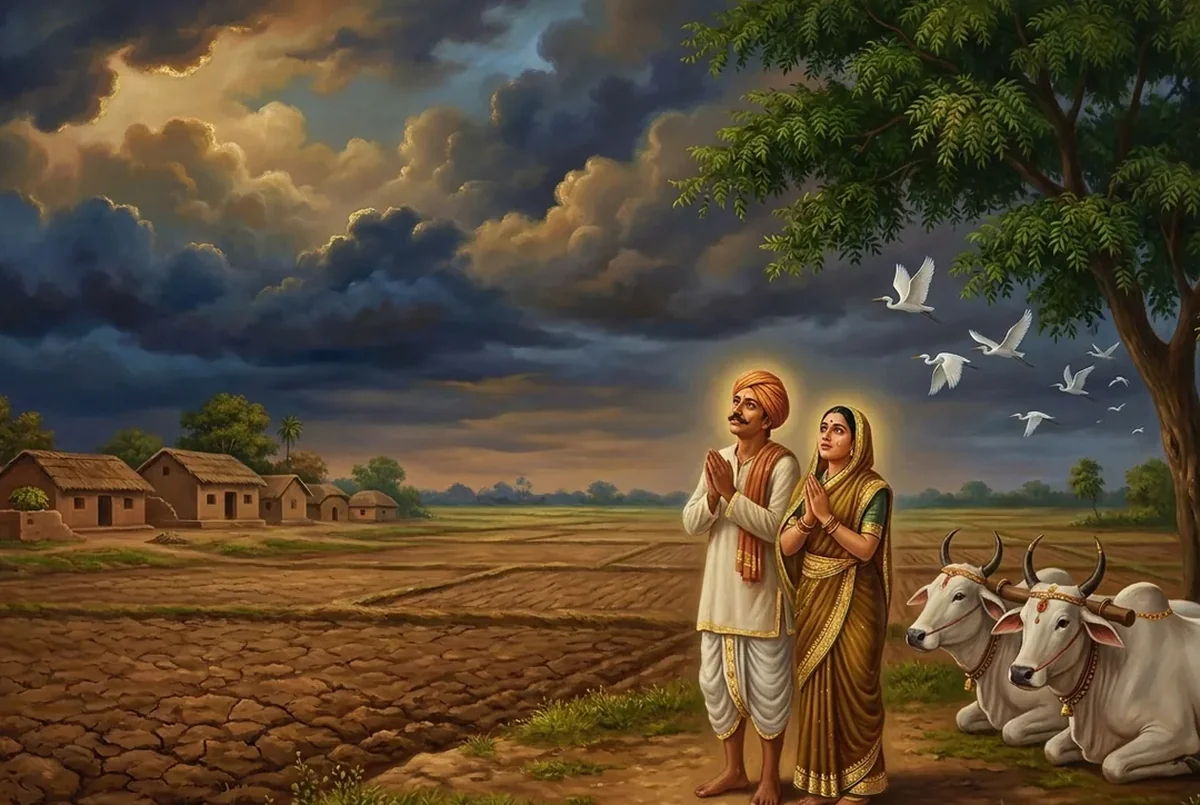
In Ashadha, when clouds gather and the earth waits for the first rain, the Ekadashi of the bright half arrives. Tradition says that on this day Lord Vishnu enters his yoga nidra on the serpent Shesha in the ocean of milk, while Goddess Lakshmi serves at his feet. This is not the sleep of weariness but a state of deep meditation. Folk belief says that during these four months Lord Shiva looks after creation, which is why the month of Sawan that follows belongs to Shiva.
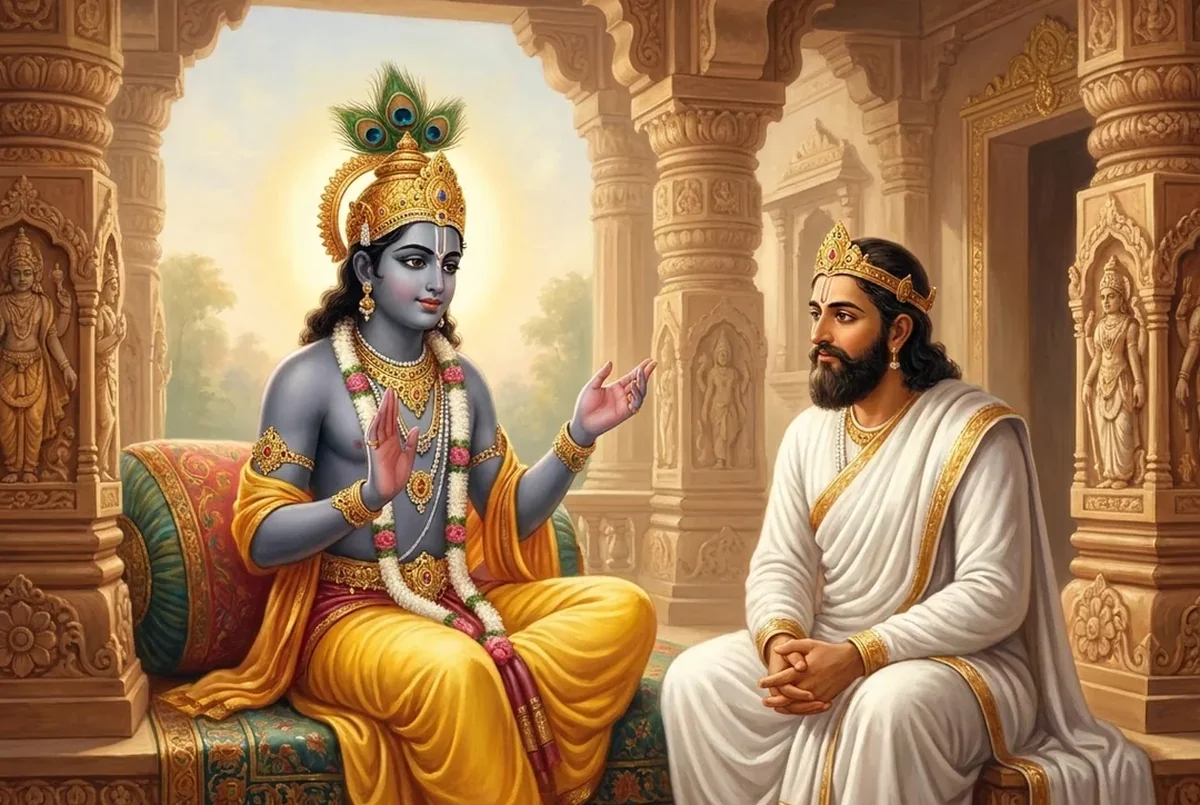
The story of this Ekadashi is found in the Bhavishyottara Purana, where Krishna tells Yudhishthira a story that Brahma once told Narada. In the Solar dynasty there was a great king named Mandhata. He was truthful and mighty, and cared for his people as if they were his own children. In his kingdom there was no shortage of grain or wealth, and everyone lived happily.
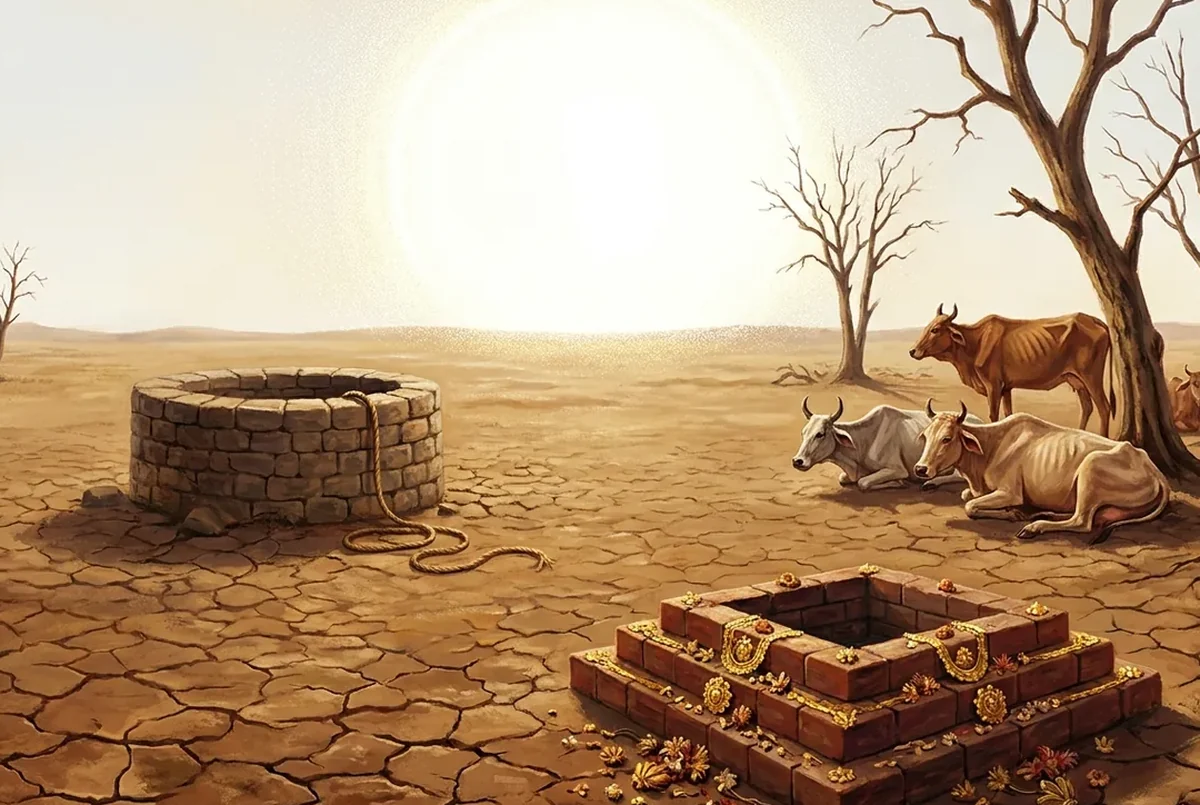
But a time came when no rain fell in his kingdom for three years in a row. Wells ran dry, fields cracked, cattle suffered from hunger, and even the yagnas stopped. His grieving people came to the palace and said, Maharaj, how can we live without grain? The king's heart grew heavy. He wondered what wrong he had done, that his people were paying for it.
To find the cause and a remedy, the king set out into the forest with a few companions. Passing many ashrams, he reached the hermitage of the sage Angiras, son of Brahma. The king bowed and told him of his trouble. The sage first described a harsh remedy, one that would have meant punishing a man who had committed no crime. The king folded his hands and said, great sage, I will not do good for my people by punishing an innocent person. Please show me another way.
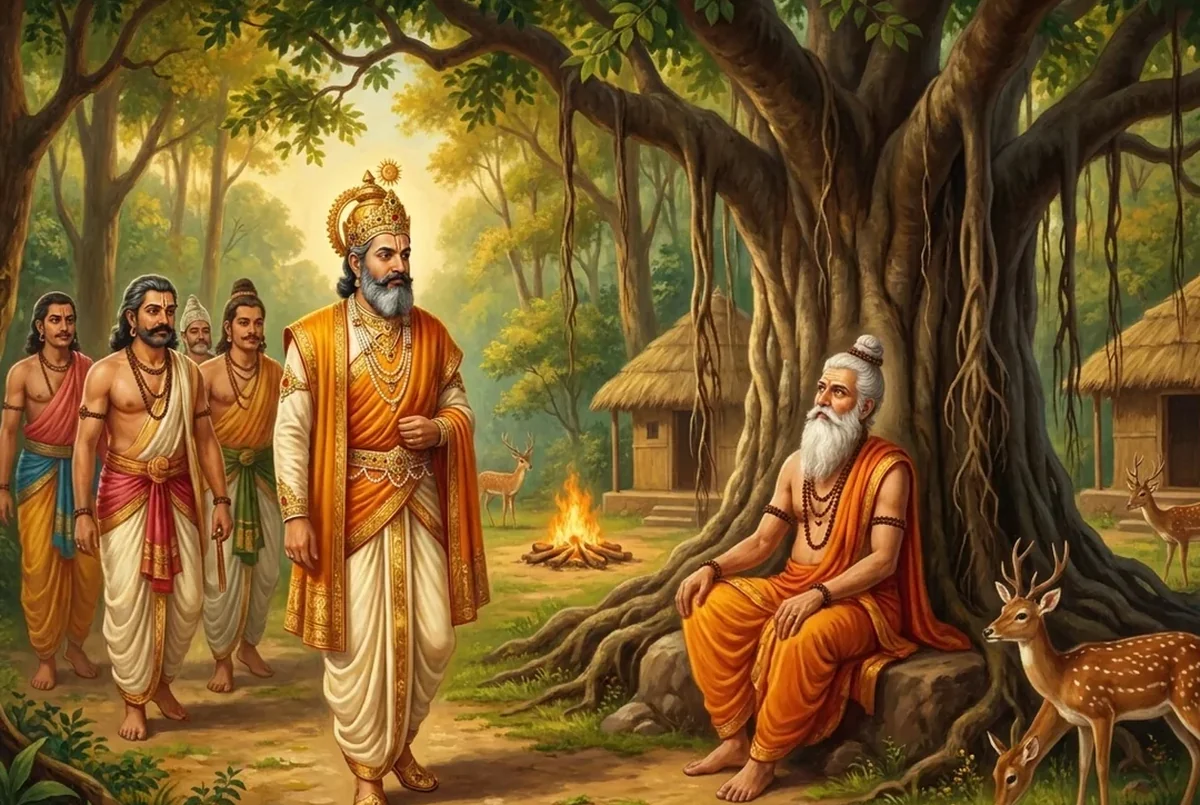
Pleased by the king's sense of dharma, the sage Angiras said, O king, keep the vrat of the Ekadashi named Padma, in the bright half of Ashadha. Keep it with faith together with your people, worship Lord Vishnu and stay awake through the night in prayer. By the power of this vrat, rain will surely come to your kingdom.
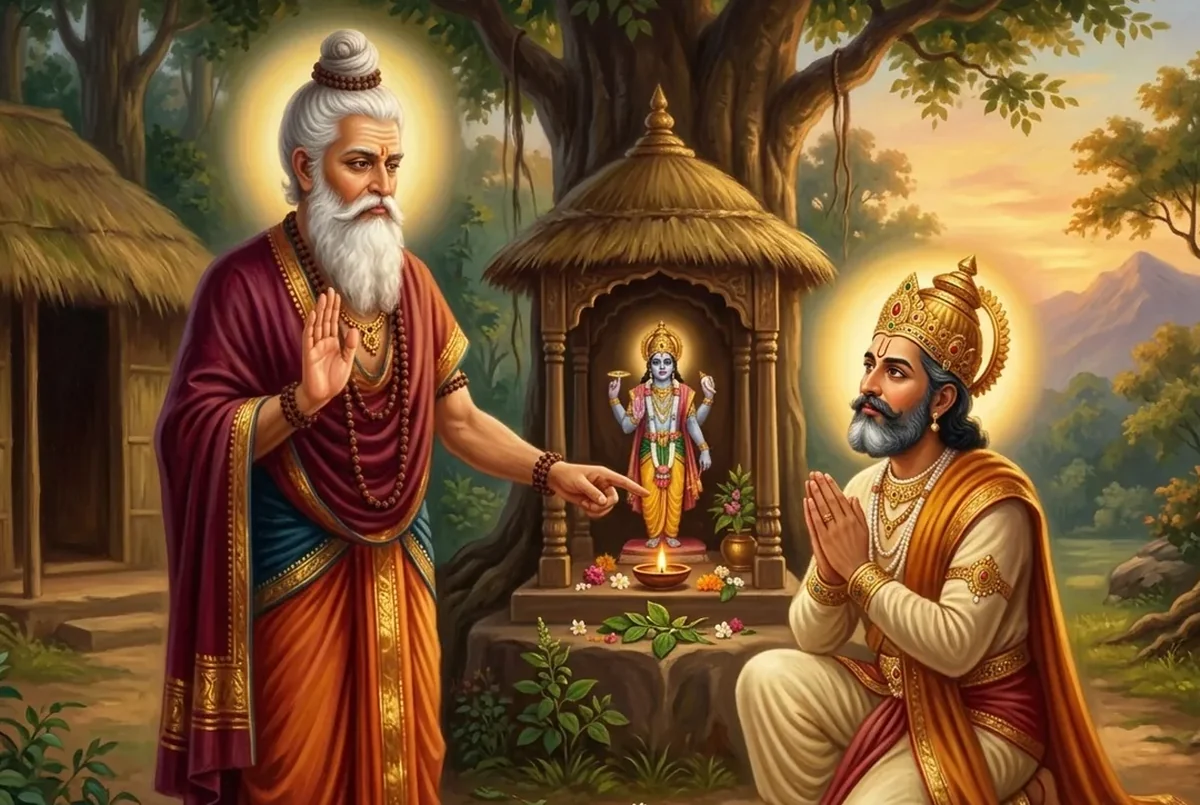
The king returned to his capital and had it proclaimed across the land. The king, the queens, the ministers and all the people kept the Ekadashi fast together, worshipped the Lord and sang bhajans all night. It is said that within a few days dark clouds filled the sky and heavy rain poured down. The fields turned green again, the granaries filled, and smiles returned to the people's faces.
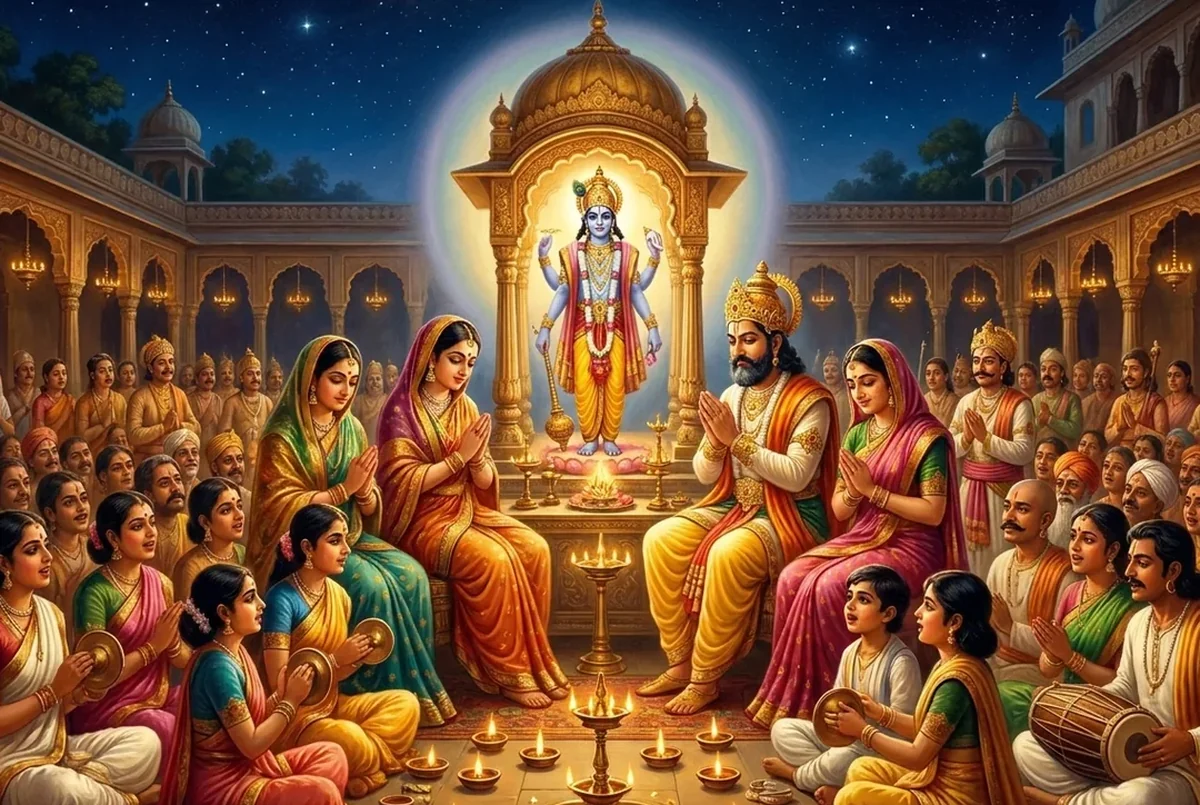
The Chaturmas that begins on Devshayani Ekadashi is a season of restraint and spiritual practice. Monks stay in one place for satsang, households follow simpler food and vows, and big ceremonies like weddings wait until Dev Uthani Ekadashi. The message of Mandhata's story is that grace pours down on the one who does not leave the path of dharma even in hard times. May Lord Vishnu keep happiness and plenty in every home.
How it is observed
- Simple sattvik food is taken from the night of Dashami; on Ekadashi no grains are eaten, and devotees take fruit or keep a waterless fast as they are able.
- Yellow clothes, yellow flowers, sandalwood, Tulsi leaves and fruit are offered to Lord Vishnu, and the Vishnu Sahasranama is recited or the katha is heard.
- In the evening many homes and temples lay the Lord's image on a decorated bed for his rest, and the night is spent awake in bhajan and kirtan.
- The vows of Chaturmas begin: many give up certain foods for four months, such as leafy greens in Sawan and curd in Bhadon, and ceremonies like weddings, housewarmings and mundan are put off until Dev Uthani Ekadashi.
- The fast is broken the next day, on Dwadashi, at the proper time.
Frequently asked questions
When is Devshayani Ekadashi 2027?
Devshayani Ekadashi 2027 is on 14 July 2027, Wednesday. Dates follow the Hindu panchang for Delhi; other cities can differ by a day.
What is the puja or fasting time for Devshayani Ekadashi 2027?
Ekadashi tithi from 13 July, 12:09 PM until 14 July, 1:11 PM (Delhi)
Why is Devshayani Ekadashi celebrated?
The Ekadashi of the bright half of Ashadha is called Devshayani Ekadashi, also Harishayani and Padma Ekadashi.
Source
King Mandhata's story is in the Bhavishyottara Purana as a dialogue between Krishna and Yudhishthira, retold here in brief; Vishnu's yoga nidra and the Chaturmas follow the Padma Purana and vrat tradition; the belief that Shiva looks after creation in Chaturmas is folk tradition.
Times by city — 14 July 2027
| City | Date | Parana time |
|---|---|---|
| Delhi | 14 July | 5:33 AM – 8:19 AM15 July, Thursday |
| Indore | 14 July | 5:50 AM – 8:31 AM15 July, Thursday |
| Mumbai | 14 July | 6:09 AM – 8:47 AM15 July, Thursday |
| Lucknow | 14 July | 5:22 AM – 8:06 AM15 July, Thursday |
| Patna | 14 July | 5:07 AM – 7:51 AM15 July, Thursday |
| Jaipur | 14 July | 5:42 AM – 8:26 AM15 July, Thursday |
| Bhopal | 14 July | 5:43 AM – 8:24 AM15 July, Thursday |
| Pune | 14 July | 6:06 AM – 8:44 AM15 July, Thursday |
| Ahmedabad | 14 July | 6:03 AM – 8:44 AM15 July, Thursday |
| Kolkata | 14 July | 5:00 AM – 7:41 AM15 July, Thursday |
| Hyderabad | 14 July | 5:50 AM – 8:27 AM15 July, Thursday |
| Varanasi | 14 July | 5:17 AM – 8:00 AM15 July, Thursday |
| Chennai | 14 July | 5:50 AM – 8:24 AM15 July, Thursday |
| Bengaluru | 14 July | 6:01 AM – 8:35 AM15 July, Thursday |
| Thiruvananthapuram | 14 July | 6:11 AM – 8:42 AM15 July, Thursday |
| Bhubaneswar | 14 July | 5:15 AM – 7:54 AM15 July, Thursday |