
Amalaki Ekadashi Vrat Katha
Amalaki Ekadashi — When is it
- 18 March 2027, Thursday
Why is this day celebrated?
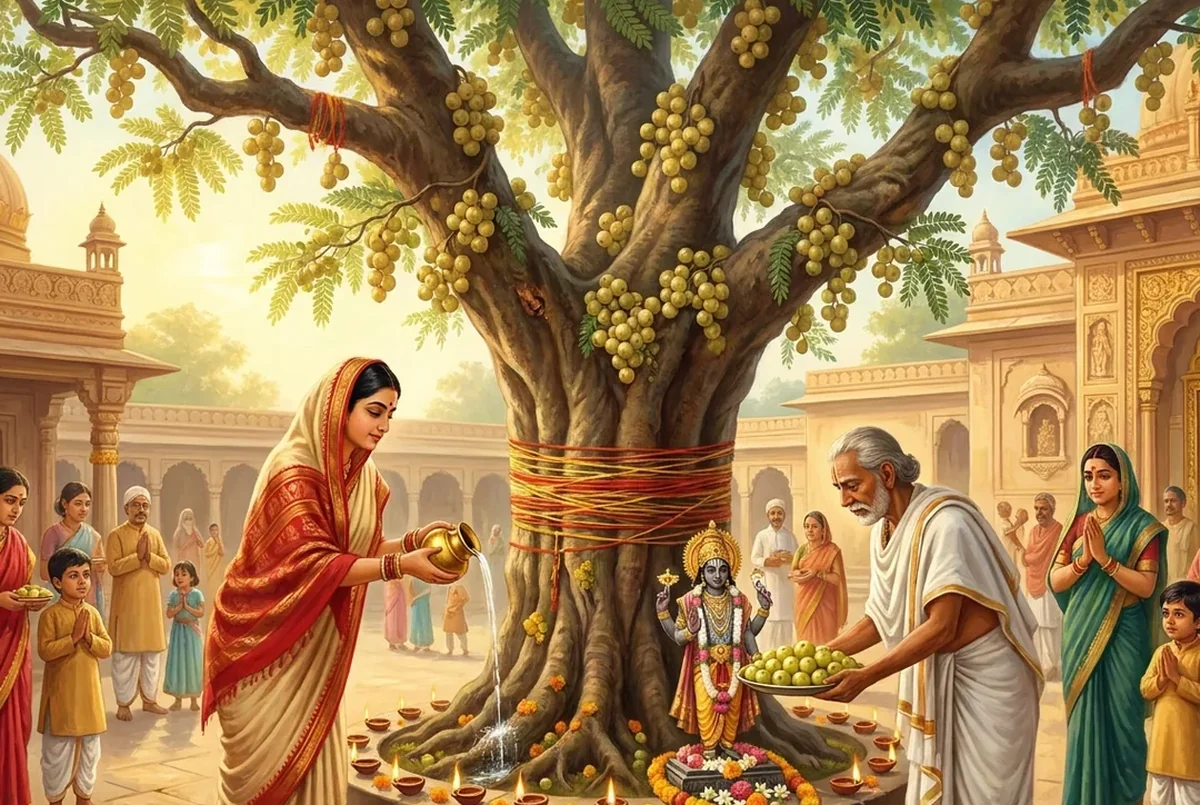
The Ekadashi of the bright fortnight of Phalgun is called Amalaki Ekadashi, also Amla Ekadashi. On this day the amla tree, the Indian gooseberry, is worshipped along with Lord Vishnu, because tradition holds the amla to be a tree especially dear to him. The katha tells of a hungry hunter who came into a temple courtyard to help himself, and who made up his mind there instead.
The katha
The katha is taken as told by the sage Vashistha to King Mandhata. In the city of Vaidish ruled a king named Chitraratha; both the king and his people were devotees of Lord Vishnu and gathered on every Ekadashi at the Vishnu temple on the riverbank. In the temple courtyard stood an old amla tree. Tradition says this tree grew at the beginning of creation from the tears of Brahma, overcome with devotion, and that the Lord blessed it so the gods would dwell in it from root to crown; from this came the custom of lighting a lamp beneath it.
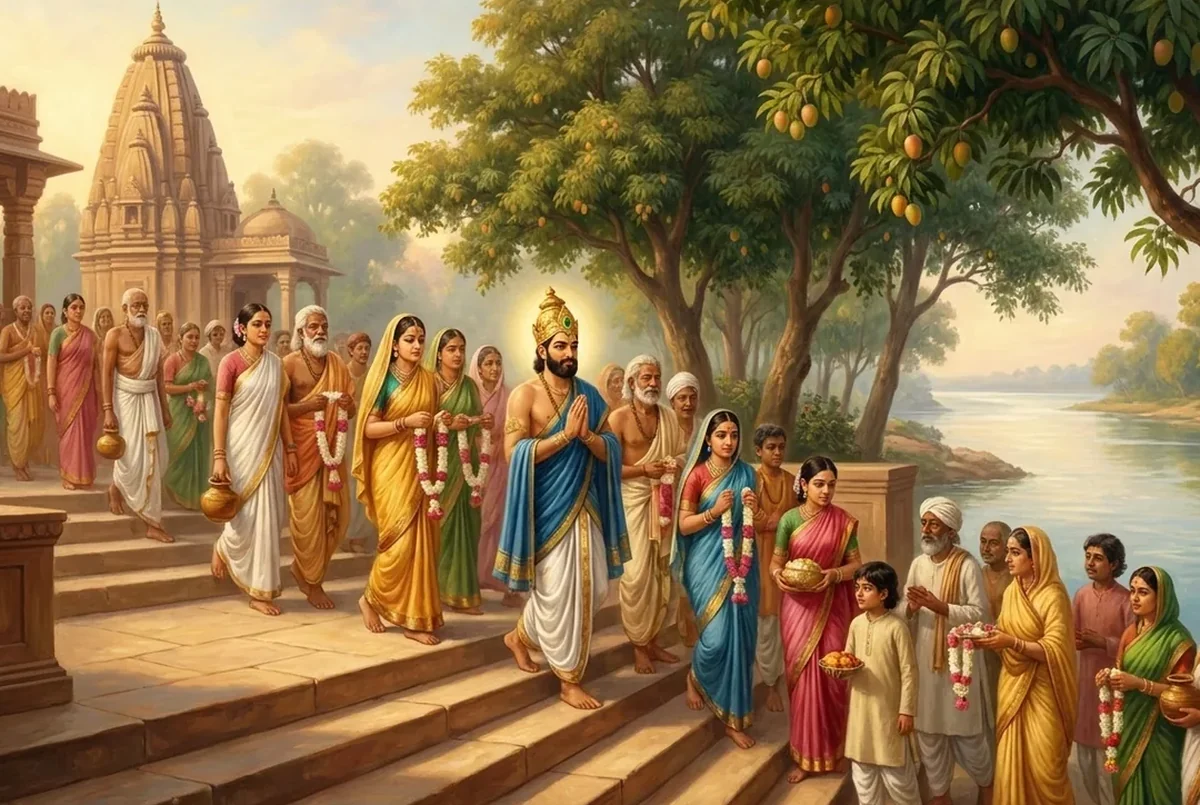
The Ekadashi of the bright half of Phalgun came. The king and his people poured water at the root of the tree, lit lamps and worshipped Lord Vishnu. Nobody ate grain that day. The night was cold, but rows of lamps burned in the courtyard and the sound of the bhajans carried across the river. The whole city had settled down to stay awake, and the prasad was to be shared only the next morning.
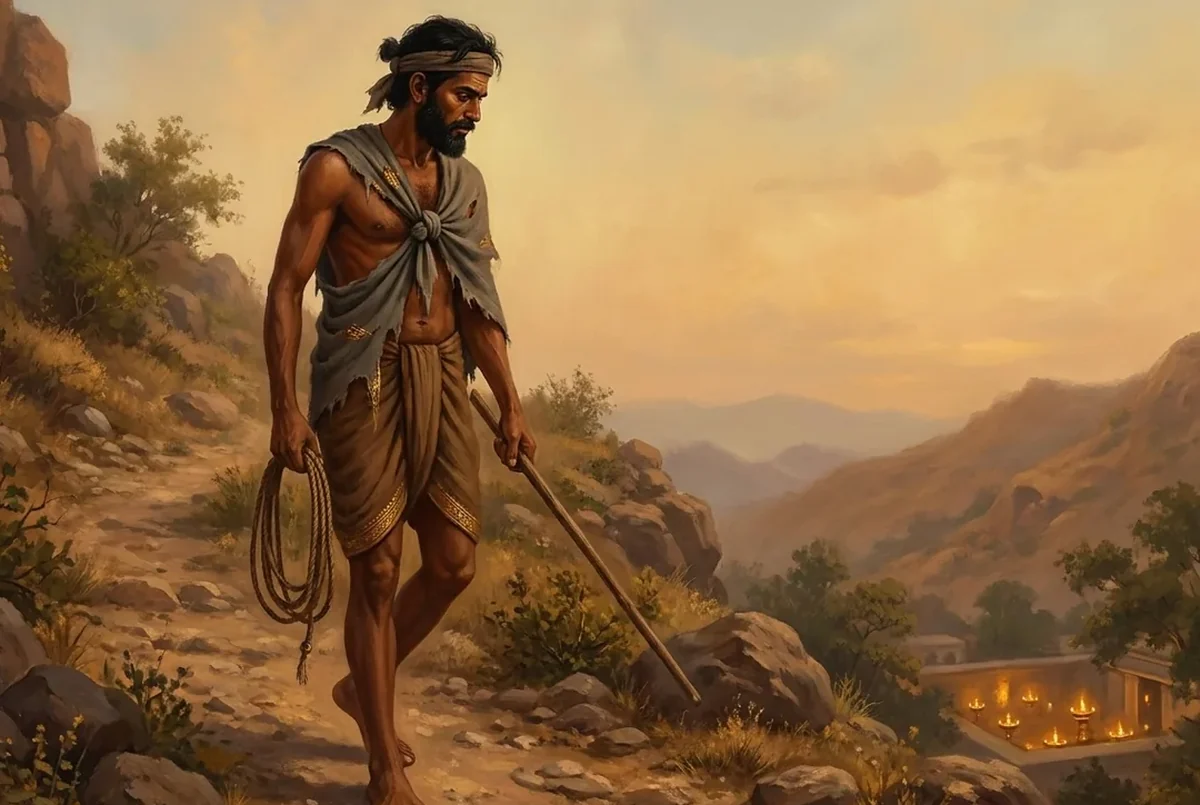
That evening a hunter came down from the hills and arrived there. His snare had stayed empty all day and he had eaten nothing for two days. He was the sort of man who puts his hand wherever he sees something; a crowd was an opportunity to him, not a prayer. Standing at the edge of the courtyard he saw fruit and sweets laid out on the plates and nobody's attention turned that way. He took a step towards them.
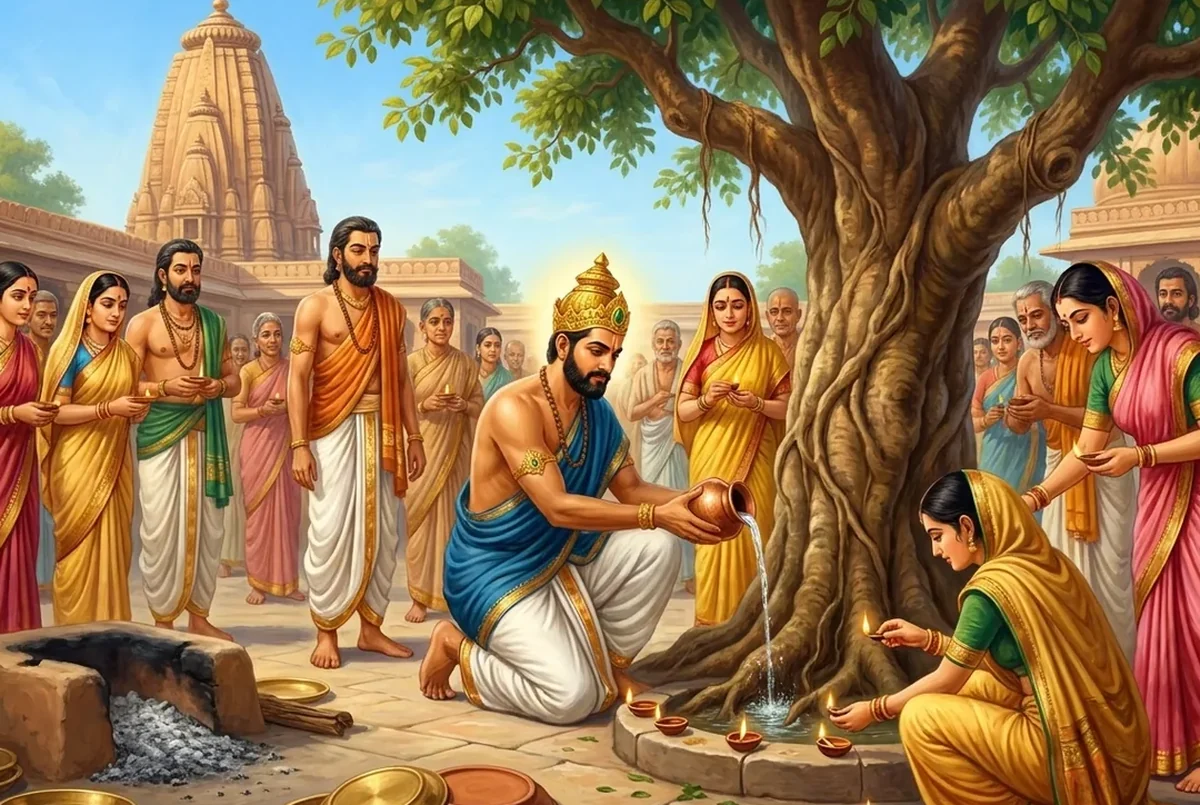
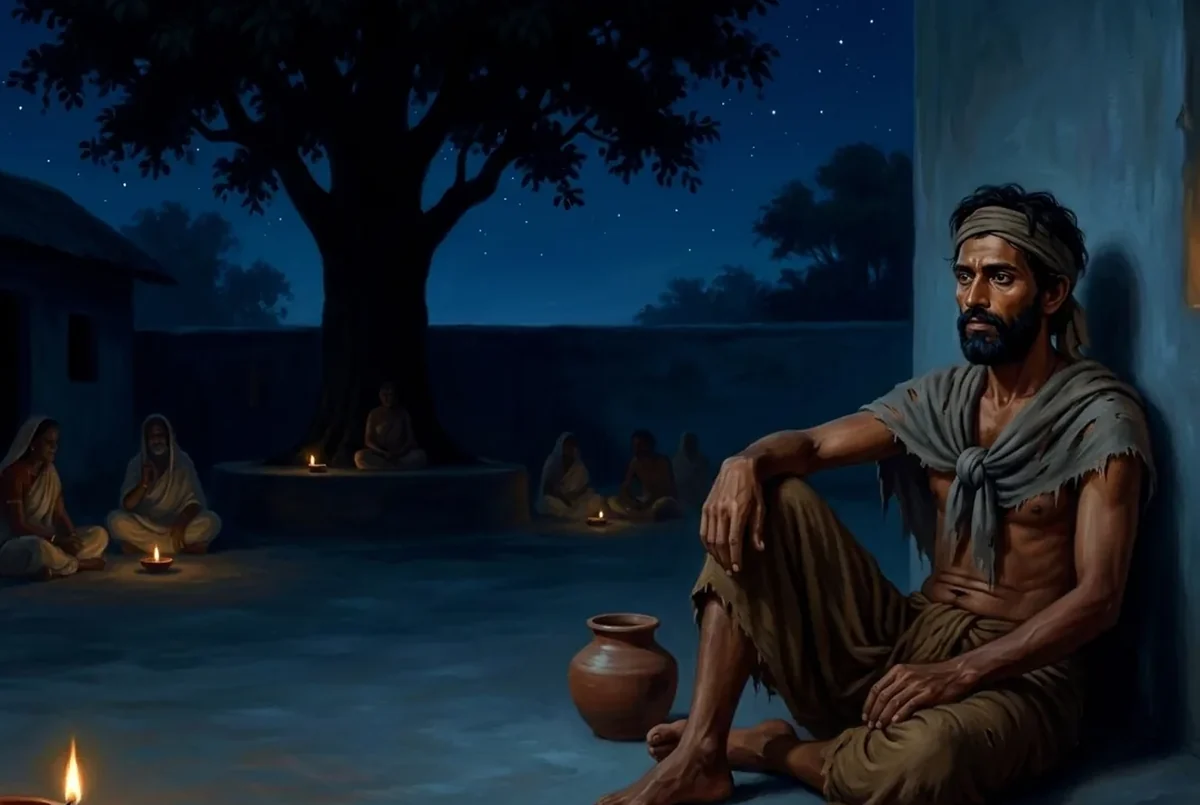
Then his eye fell on the root of the tree. The king himself was kneeling there pouring water, and the hundreds sitting around him had eaten nothing since morning. For the first time the hunter found something strange: that the hungry ones were content, and the one who had come to help himself was restless. He drew his foot back, sat down in a corner of the courtyard, and said in his mind, whatever these people do tonight, I will do the same.
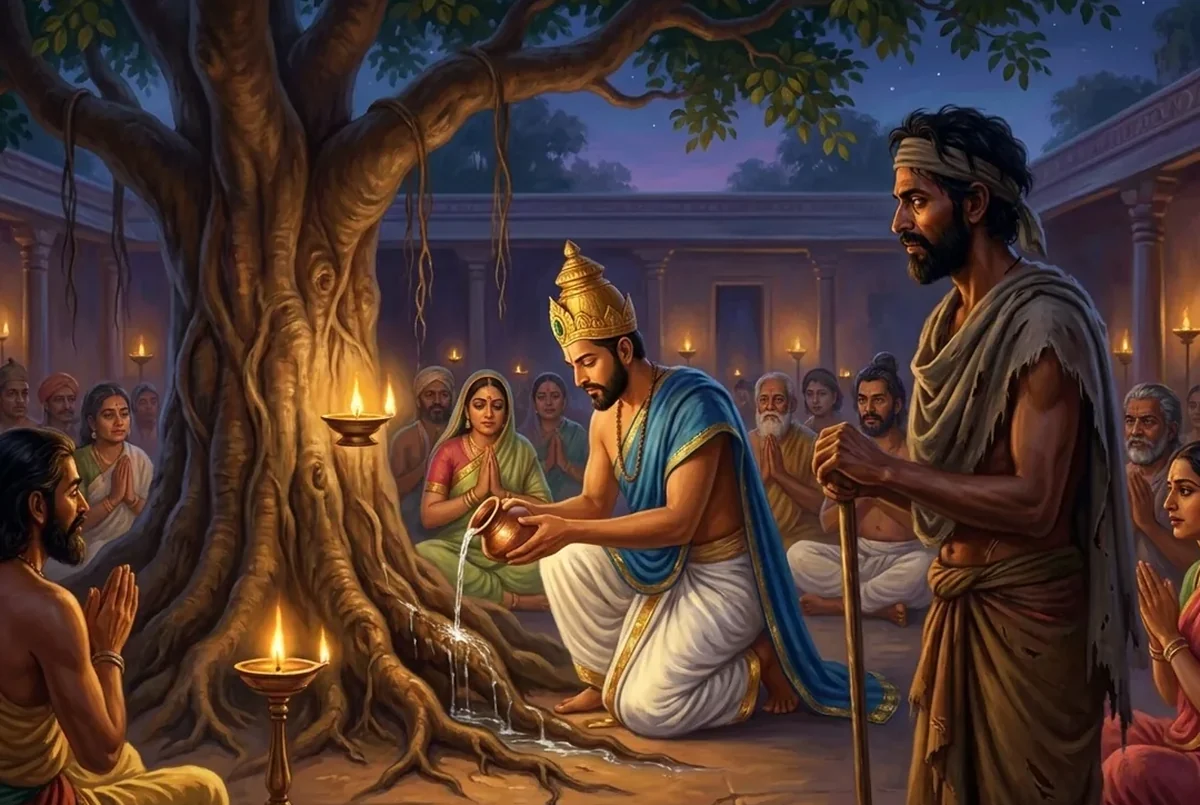
He sat there all night. He ate nothing and drank no water, and not once did he get up and leave. He did not know the words of the bhajans, so he repeated the Lord's name after the others. Hunger shook him from time to time, and each time he remembered what he had told himself. In the morning, when the prasad was shared, the king put the first plate into the stranger's hands and looked at him as though he were one of his own.
The katha says that the fruit of that one night's decision turned out to be greater than the rest of his life. After he left his body he was born in his next life as a king named Vasuratha, who ruled his people by dharma. Once he lost his way in the forest and fell asleep under a tree. Some robbers surrounded him and raised their weapons, but the katha says that not one blow reached the king; a bright light rose, the attackers fled, and he was not even scratched.
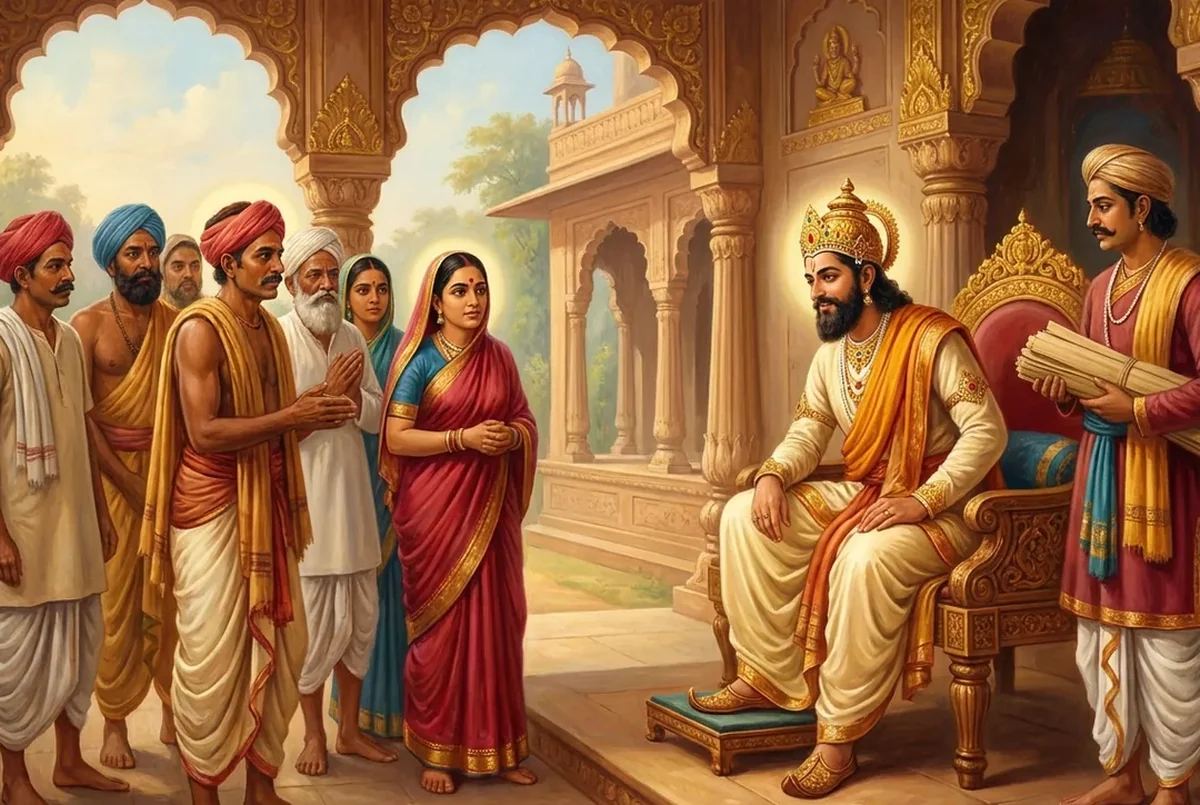
When he woke he could not understand what had happened. Tradition says that the protection he was given that day belonged to the one night when a hungry man chose a vigil over a theft. The heart of the katha is that the turn in a life does not come from some great renunciation but from a small decision, from drawing back a foot already lifted. The root of an amla tree is not seen, yet the whole tree stands on it. May Lord Vishnu give everyone the sense to recognise such a moment.
How it is observed
- Pour water at the root of an amla tree and worship it, light a lamp and walk around it; where there is no tree, the custom is to keep amla fruit in the puja instead.
- In many families the katha is heard sitting under the amla tree, and amla, grain and clothes are given in charity on this day.
- Offer Lord Vishnu yellow flowers, sandalwood, tulsi leaves, fruit and amla, and recite the Vishnu Sahasranama.
- Eat sattvik food on the evening of Dashami; on Ekadashi grains, rice and lentils are given up, and the fast is kept with fruit or without water, as one is able. Anyone who is unwell, elderly, pregnant or on medication should keep it only as their health allows.
- Stay awake at night with bhajan and kirtan, and break the fast on Dwadashi morning after bath, puja and charity; the parana time differs from city to city and with each year's tithi, so check your local panchang.
Frequently asked questions
When is Amalaki Ekadashi 2027?
Amalaki Ekadashi 2027 is on 18 March 2027, Thursday. Dates follow the Hindu panchang for Delhi; other cities can differ by a day.
Why is Amalaki Ekadashi celebrated?
The Ekadashi of the bright fortnight of Phalgun is called Amalaki Ekadashi, also Amla Ekadashi.
Source
In the vrat katha tradition the story of King Chitraratha and the hunter is linked to the Brahmanda Purana, where it is told by the sage Vashistha to King Mandhata; it is summarised here in our own words. Several stories are told about the origin of the amla tree; the most widely known one is given here, and it is best treated as puranic and folk tradition.
Times by city — 18 March 2027
| City | Date | Parana time |
|---|---|---|
| Delhi | 18 March | 7:13 AM – 8:52 AM19 March, Friday |
| Indore | 18 March | 7:13 AM – 8:57 AM19 March, Friday |
| Mumbai | 18 March | 7:13 AM – 9:09 AM19 March, Friday |
| Lucknow | 18 March | 7:13 AM – 8:37 AM19 March, Friday |
| Patna | 18 March | 7:13 AM – 8:20 AM19 March, Friday |
| Jaipur | 18 March | 7:13 AM – 8:57 AM19 March, Friday |
| Bhopal | 18 March | 7:13 AM – 8:51 AM19 March, Friday |
| Pune | 18 March | 7:13 AM – 9:05 AM19 March, Friday |
| Ahmedabad | 18 March | 7:13 AM – 9:10 AM19 March, Friday |
| Kolkata | 18 March | 7:13 AM – 8:07 AM19 March, Friday |
| Hyderabad | 18 March | 7:13 AM – 8:46 AM19 March, Friday |
| Varanasi | 18 March | 7:13 AM – 8:29 AM19 March, Friday |
| Chennai | 18 March | 7:13 AM – 8:39 AM19 March, Friday |
| Bengaluru | 18 March | 7:13 AM – 8:50 AM19 March, Friday |
| Thiruvananthapuram | 18 March | 7:13 AM – 8:52 AM19 March, Friday |
| Bhubaneswar | 18 March | 7:13 AM – 8:17 AM19 March, Friday |