
Apara Ekadashi Vrat Katha
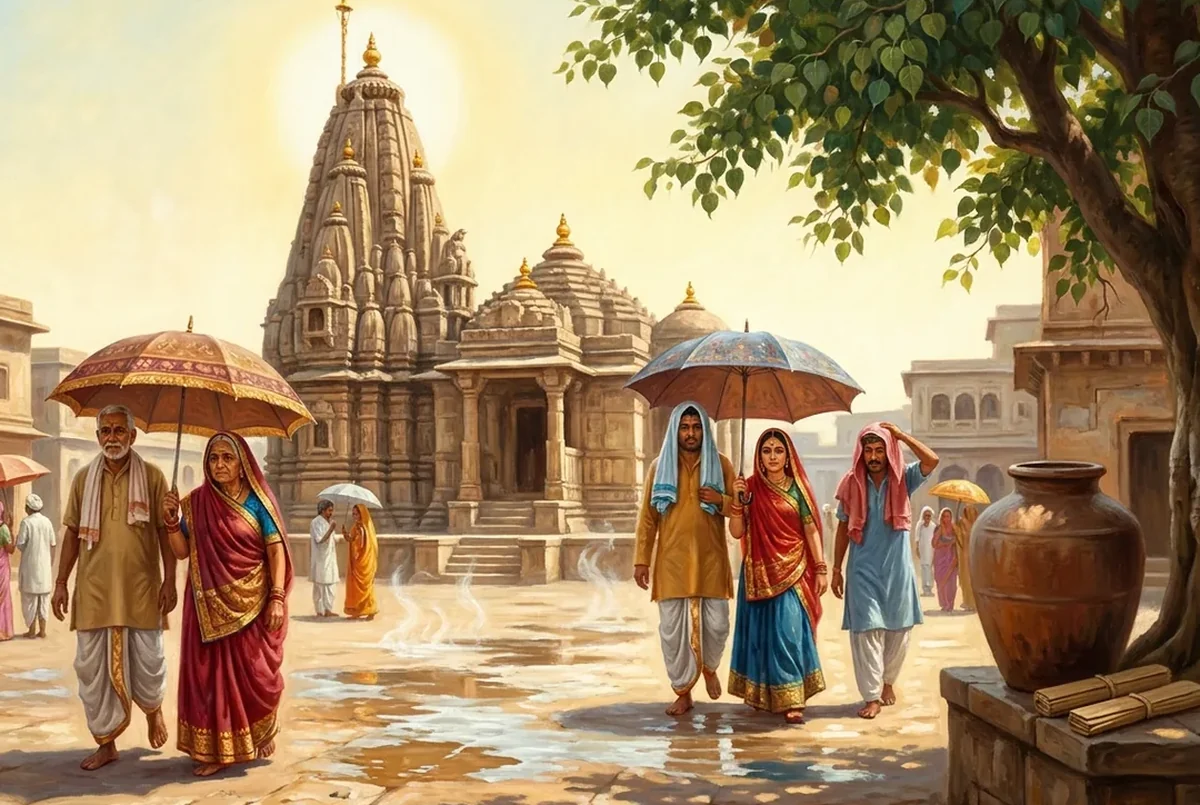
Apara Ekadashi — When is it
- 1 June 2027, Tuesday
Why is this day celebrated?
The Ekadashi of the dark fortnight of Jyeshtha is called Apara Ekadashi, and also Achala Ekadashi. In Punjab, Haryana and Jammu and Kashmir the same day is known as Bhadrakali Ekadashi, and in Odisha as Jalakrida Ekadashi. Apara carries the sense of that which has no far shore, that is, boundless merit. Its katha is unusual, because in it the merit of the fast is offered to another soul.
The katha
The story goes that long ago there was a king named Mahidhwaj. He was just, generous and a devotee of Lord Vishnu. No one was wronged in his kingdom and the people looked on him as a father. His younger brother Vajradhwaj was the opposite in nature, quick to anger and full of envy. One thorn stayed lodged in his mind, that both the throne and the people's love belonged to his elder brother.
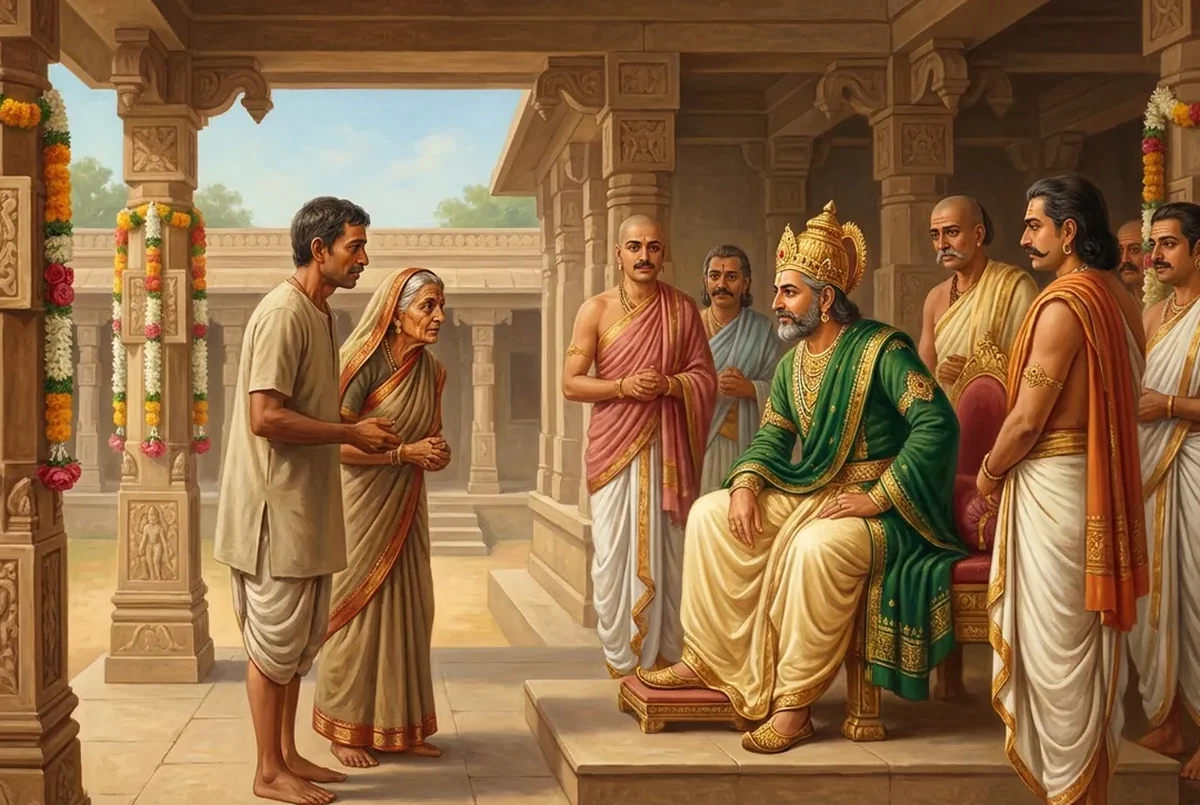
The envy grew, and one night Vajradhwaj secretly killed his elder brother. So that no one would find out, he carried the body into the forest and buried it under a peepal tree. In the morning it was given out in the city that the king had gone away somewhere. The crime stayed hidden, but the katha says that because the death was untimely and unjust, the king's soul found no rest.
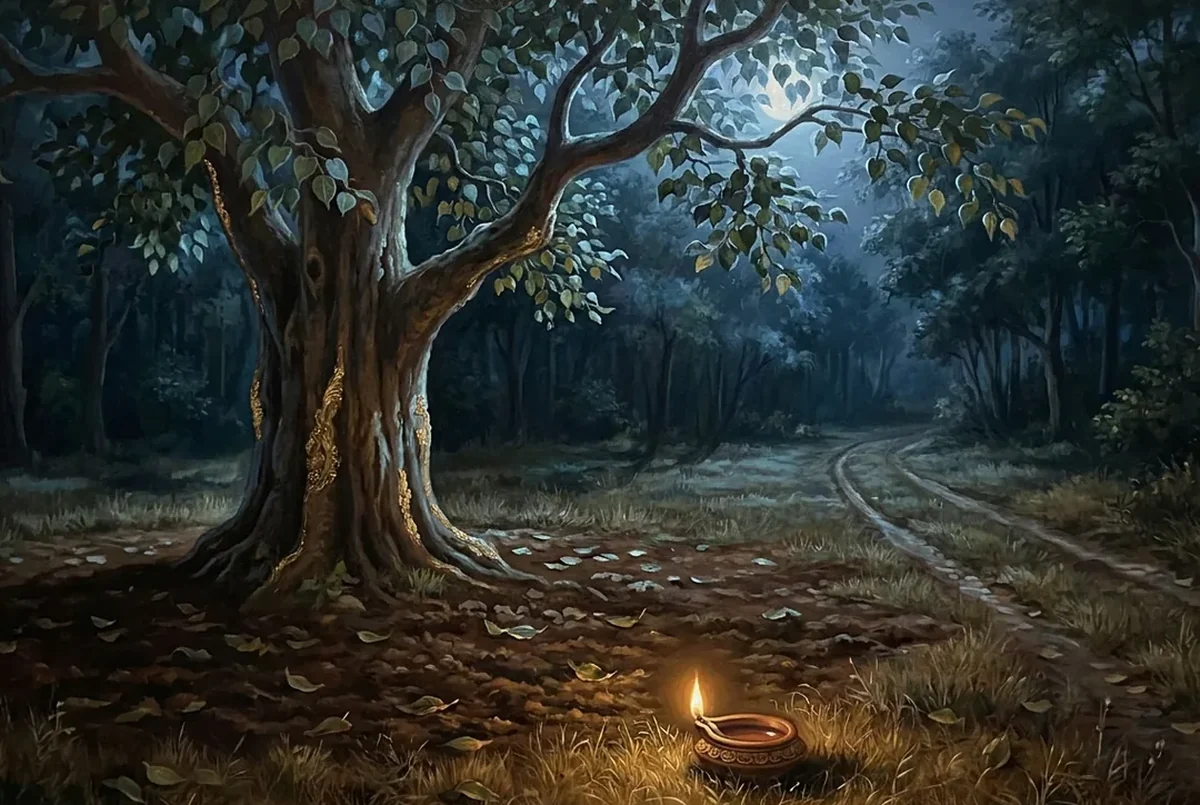
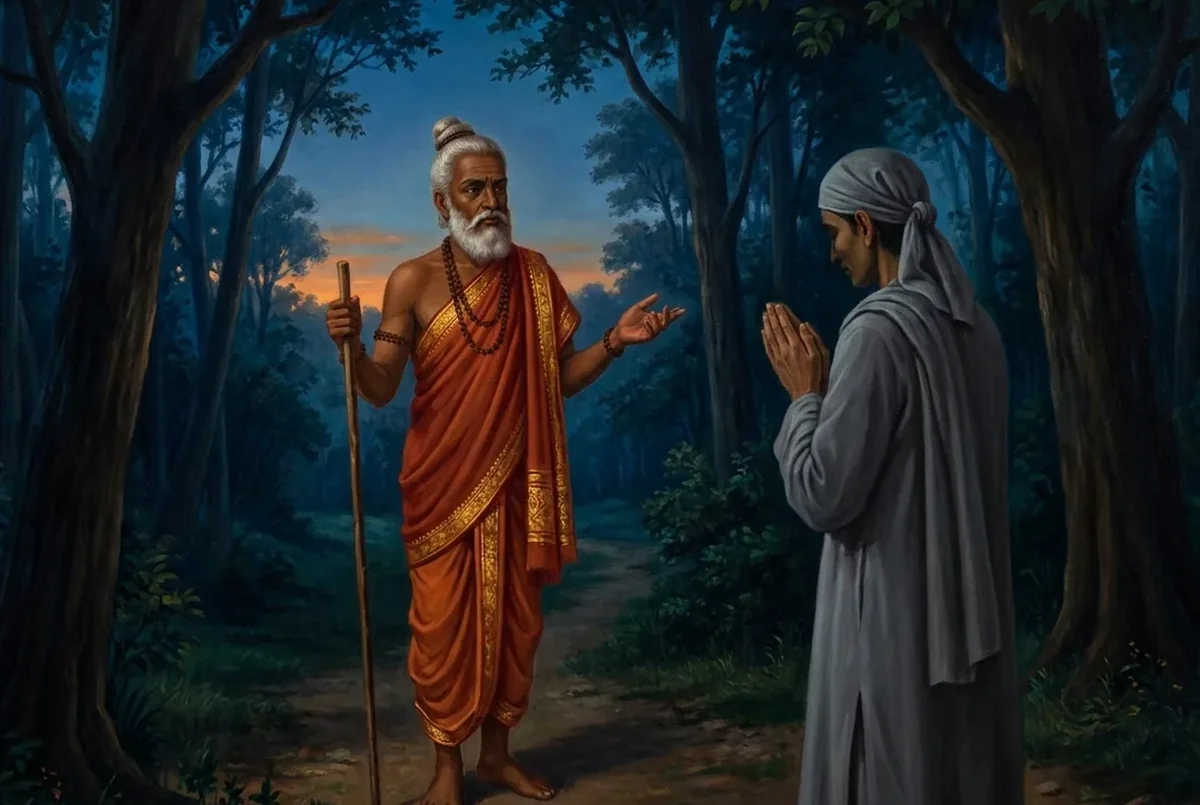
That soul began to wander near the peepal tree as a restless spirit. Any traveller who passed that way fled in fear. Slowly people stopped using the road and the place fell silent. Many years went by like this. Then one day a sage named Dhaumya passed through that forest. He paused near the tree and by the strength of his practice understood that some being there was in deep suffering.
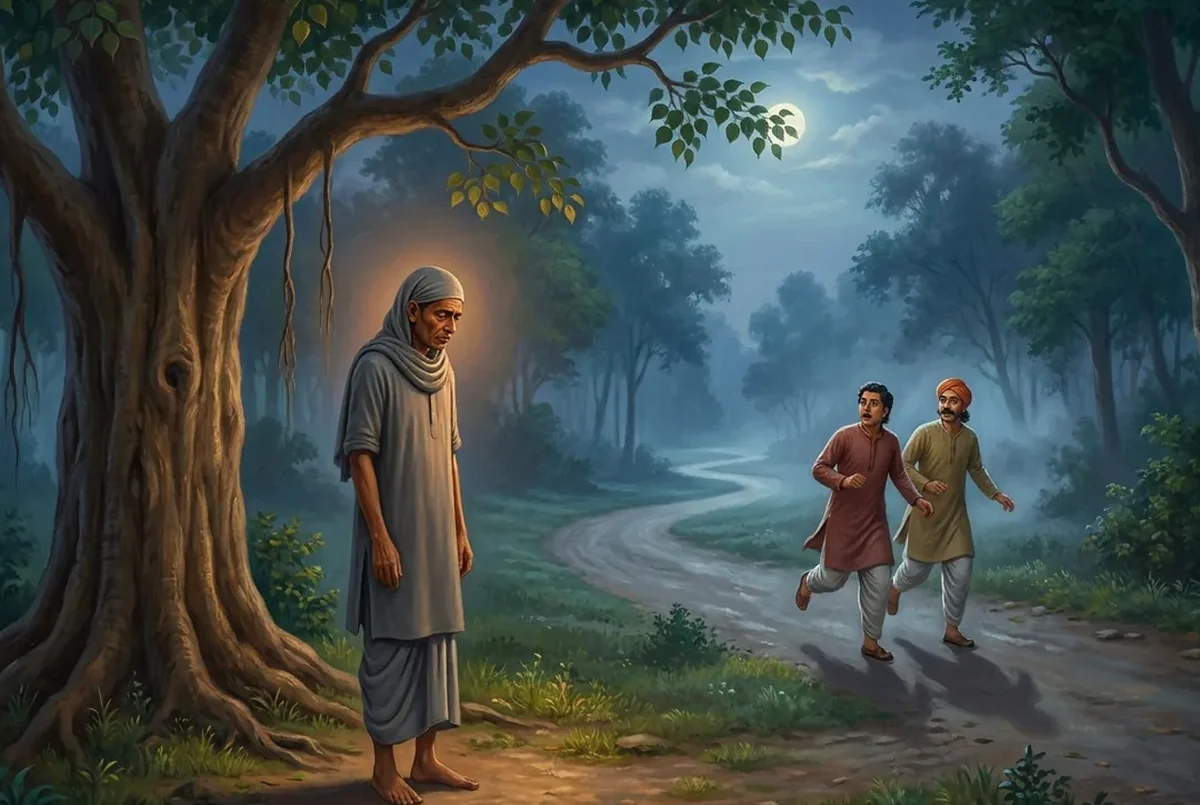
The sage called out to it and asked, who are you, and why are you in this state? The spirit told him everything, its name, its kingdom, its brother's treachery, and said, great sage, no fault was mine, and yet this wandering has fallen to me. Have mercy on me. Dhaumya's heart melted. Do not be afraid, he said, I will keep a vrat for you.
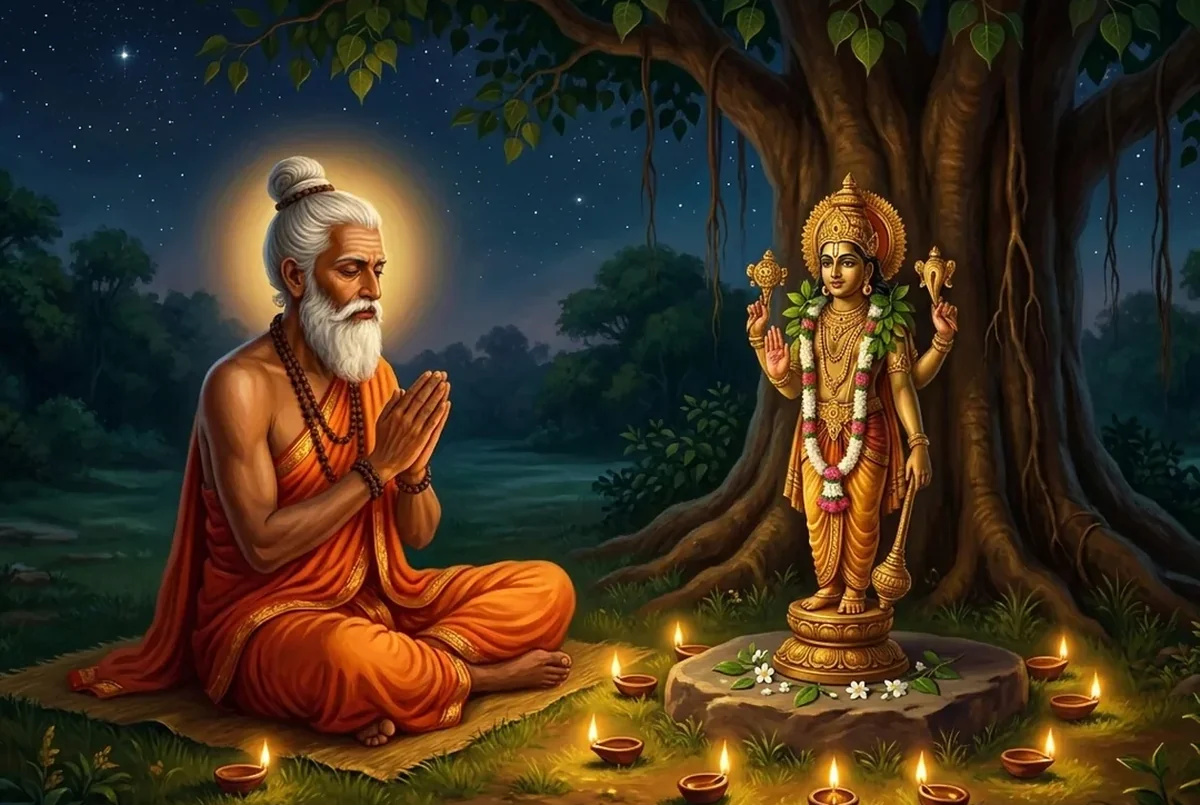
The Ekadashi of the dark fortnight of Jyeshtha came. The sage Dhaumya himself kept the Apara Ekadashi fast, worshipped Lord Vishnu, stayed awake through the night, and on Dwadashi folded his hands and said, let the whole merit of this vrat go to the soul of that king. The katha says that with those words the spirit's form fell away, the king received a radiant body, and bowing to the sage, he set out for the higher world.
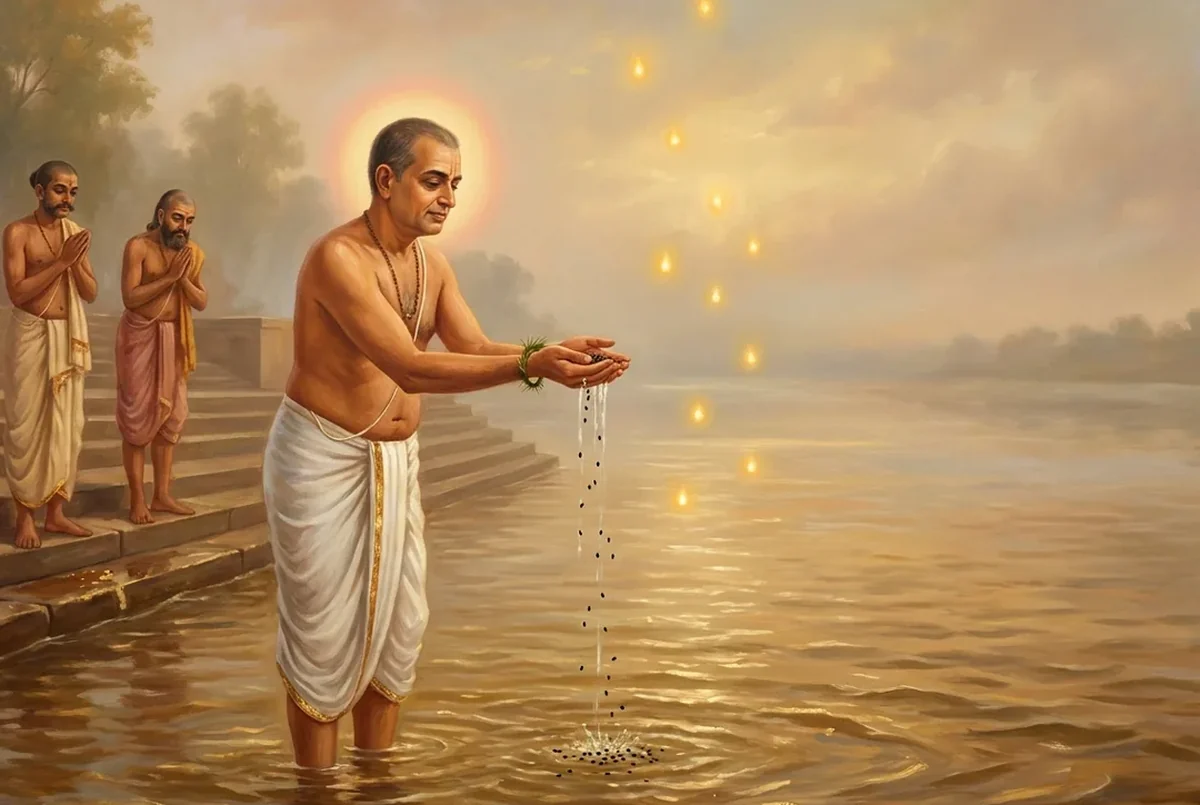
For this reason Apara Ekadashi is kept as a day for fasting and giving in the name of one's ancestors and of those one has lost. In the burning heat of Jyeshtha, giving water, sattu, earthen pots, umbrellas and fans is called especially auspicious on this day, for giving water to the thirsty is the simplest merit of this month.
The sense of the story is that deceit never stays hidden, and on the other hand a single day's restraint kept for a stranger can count for a great deal. Tradition holds that the Apara Ekadashi fast lightens the mind's burden of guilt, and that a prayer said for those who have gone is not wasted. May Lord Vishnu grant peace to all.
How it is observed
- The heat of Jyeshtha sets this vrat's own practice: give pots of water, sattu, fruit, umbrellas, fans and clothes, and arrange drinking water for travellers; that is held to be the special merit of this day.
- In many families the fast is kept on this day with a sankalp in the name of the ancestors or of someone they have lost, as the sage Dhaumya did in the katha.
- Eat one sattvik meal on the evening of Dashami; on Ekadashi bathe, take the vow, and eat no grain, especially rice, all day. It is a hot month, so only those whose health allows should keep a waterless fast; others may live on fruit, milk and water. Anyone who is unwell, elderly, pregnant or on medication should keep it only as their health allows.
- Offer yellow flowers, sandalwood, tulsi leaves and fruit to Lord Vishnu, light a lamp, listen to the Apara katha and chant Om Namo Bhagavate Vasudevaya.
- On Dwadashi morning, after bath, puja and charity, break the fast. The parana time differs from city to city and by date, so check your local panchang.
Frequently asked questions
When is Apara Ekadashi 2027?
Apara Ekadashi 2027 is on 1 June 2027, Tuesday. Dates follow the Hindu panchang for Delhi; other cities can differ by a day.
Why is Apara Ekadashi celebrated?
The Ekadashi of the dark fortnight of Jyeshtha is called Apara Ekadashi, and also Achala Ekadashi.
Source
This katha of Apara Ekadashi is commonly given in the Padma Purana as a dialogue between Krishna and Yudhishthira, and is also linked to the Brahma Purana; it is retold here in brief. The brother's name appears as Vajradhwaj in some versions and Brajdhwaj in others.
Times by city — 1 June 2027
| City | Date | Parana time |
|---|---|---|
| Delhi | 1 June | 5:23 AM – 8:10 AM2 June, Wednesday |
| Indore | 1 June | 5:41 AM – 8:22 AM2 June, Wednesday |
| Mumbai | 1 June | 6:00 AM – 8:29 AM2 June, Wednesday |
| Lucknow | 1 June | 5:12 AM – 7:57 AM2 June, Wednesday |
| Patna | 1 June | 4:58 AM – 7:42 AM2 June, Wednesday |
| Jaipur | 1 June | 5:33 AM – 8:18 AM2 June, Wednesday |
| Bhopal | 1 June | 5:34 AM – 8:16 AM2 June, Wednesday |
| Pune | 1 June | 5:57 AM – 8:29 AM2 June, Wednesday |
| Ahmedabad | 1 June | 5:54 AM – 8:29 AM2 June, Wednesday |
| Kolkata | 1 June | 4:51 AM – 7:33 AM2 June, Wednesday |
| Hyderabad | 1 June | 5:41 AM – 8:18 AM2 June, Wednesday |
| Varanasi | 1 June | 5:07 AM – 7:51 AM2 June, Wednesday |
| Chennai | 1 June | 5:41 AM – 8:15 AM2 June, Wednesday |
| Bengaluru | 1 June | 5:52 AM – 8:26 AM2 June, Wednesday |
| Thiruvananthapuram | 1 June | 6:02 AM – 8:29 AM2 June, Wednesday |
| Bhubaneswar | 1 June | 5:06 AM – 7:45 AM2 June, Wednesday |