
Papmochani Ekadashi Vrat Katha
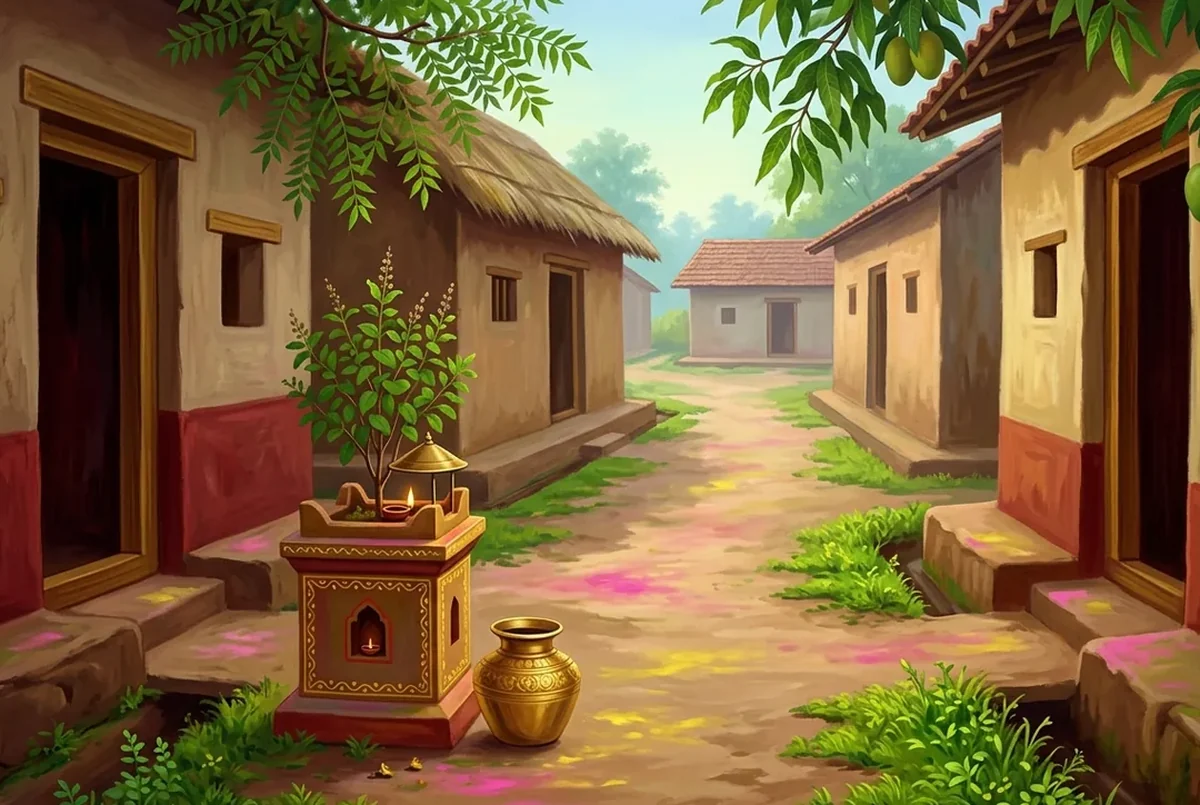
Papmochani Ekadashi — When is it
- 2 April 2027, Friday
Why is this day celebrated?
The Ekadashi of the dark fortnight of Chaitra is called Papmochani Ekadashi, which simply means the one that releases you from sin. It falls after Holi and before Chaitra Navratri, and in vrat tradition it is counted as the last Ekadashi of the year. The vrat year is reckoned from Chaitra to Chaitra, while Margashirsha Krishna Ekadashi is held to be the day the vrat itself came into being, so the two counts do not contradict each other. The katha holds that when a person places an honest regret before Lord Vishnu on this day, the mind grows lighter.
The katha
The story goes that there was a beautiful forest named Chaitraratha, where flowers bloomed in every season and gandharvas and apsaras came to wander. In a quiet corner of that forest, Medhavi, the son of the sage Chyavana, was performing severe penance. He was a worshipper of Shiva, and after years of practice such a calm power surrounded him that even the birds and animals of the forest moved about him without fear.
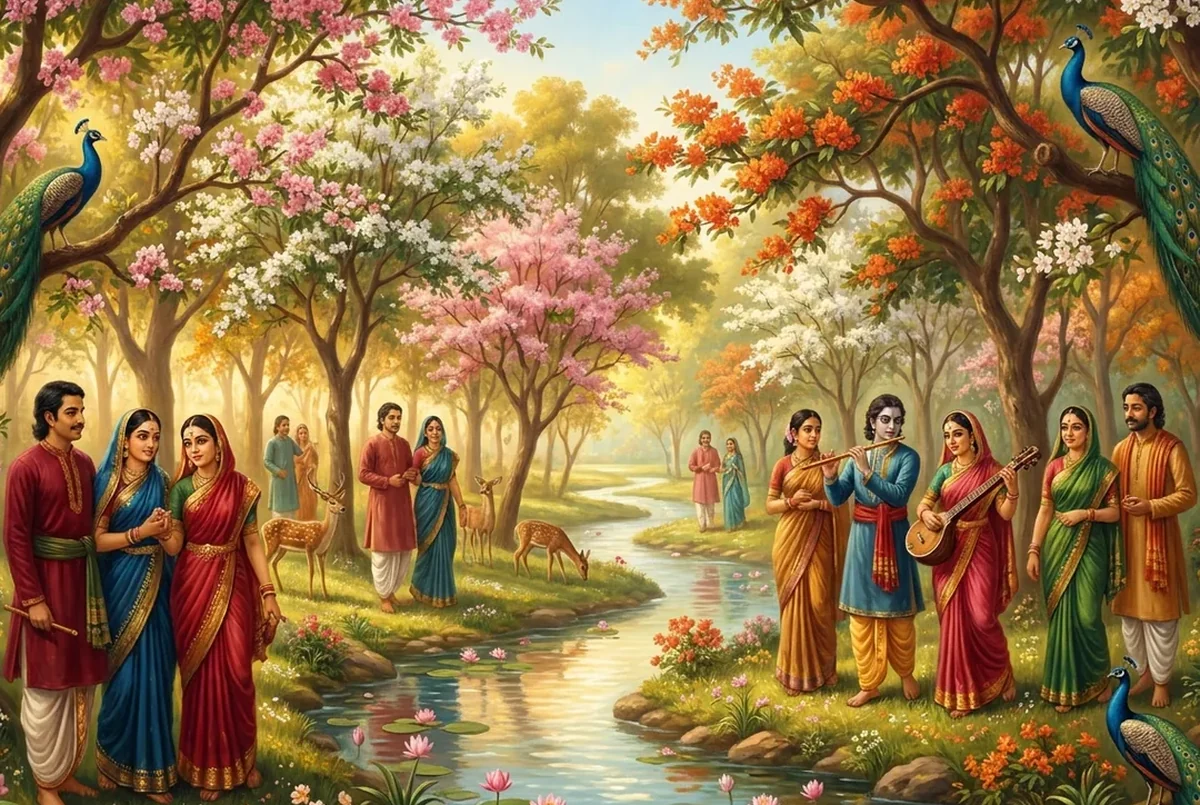
Kamadeva was uneasy about this penance, so he sent an apsara named Manjughosha to that forest. She settled a little distance from the hermitage and began to sing to the veena in a sweet voice. Days passed, and each day the singing came a little closer. One morning Medhavi opened his eyes, heard that voice, and his mind slipped away from his practice and fastened on the song instead.
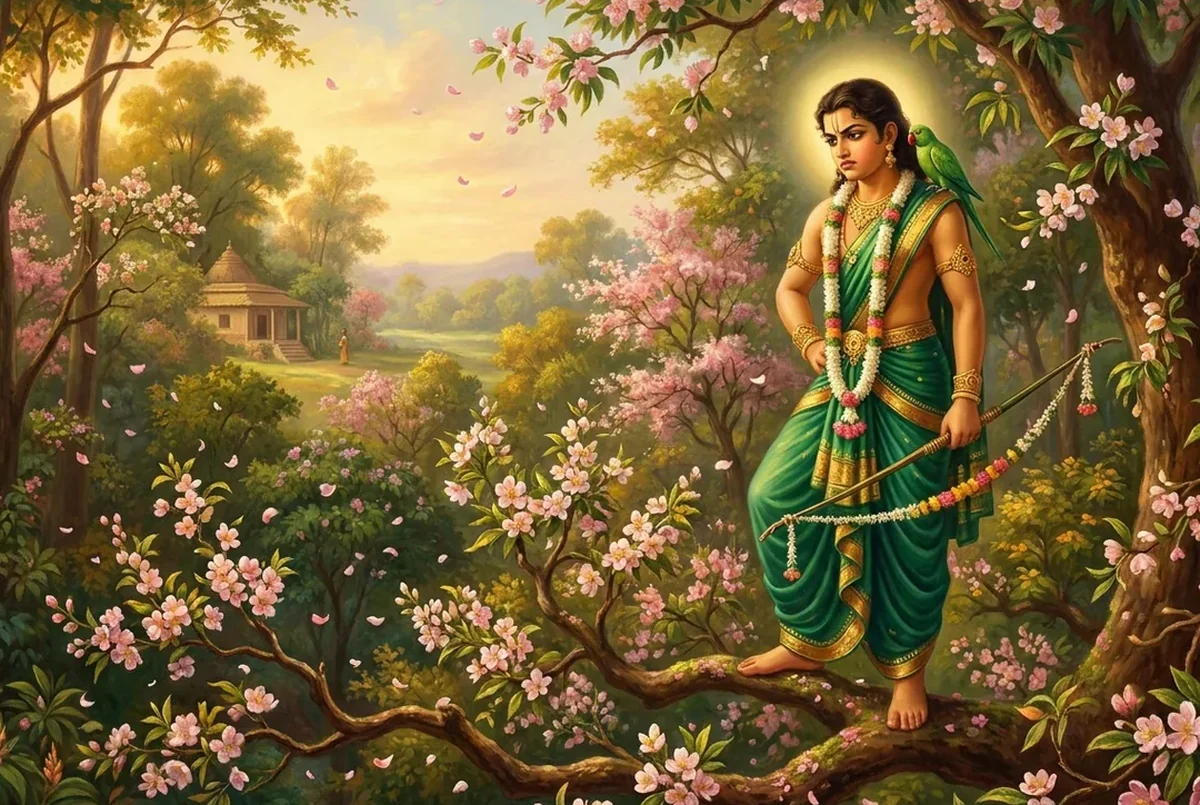
After that he lost all count of time. Medhavi began to live with Manjughosha, and it seemed to him that only a few days had gone by. The katha says that in this way fifty-seven years passed. One day Manjughosha folded her hands and said, O sage, give me leave now to return to the world of the gods. At those words Medhavi woke as if from sleep, looked at himself, and saw that years of penance had turned to ash.
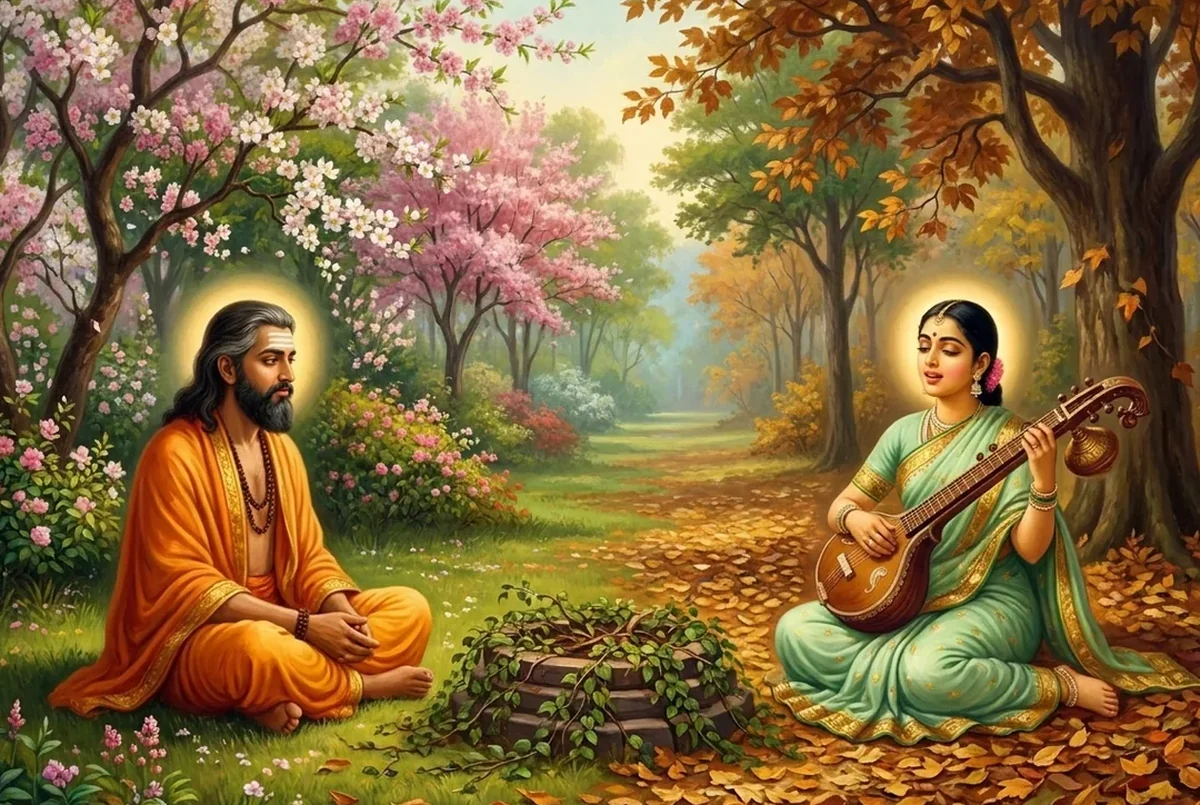
In anger he cursed her to become a pishachini, a hungry spirit. The apsara fell at his feet and said, in all these years I never dishonoured you; at least tell me a way out of this curse. Hearing her plea, the sage's anger cooled and he felt ashamed of his own state. He said, keep the fast of the Ekadashi in the dark fortnight of Chaitra with devotion, for it is Papmochani, the remover of sin.
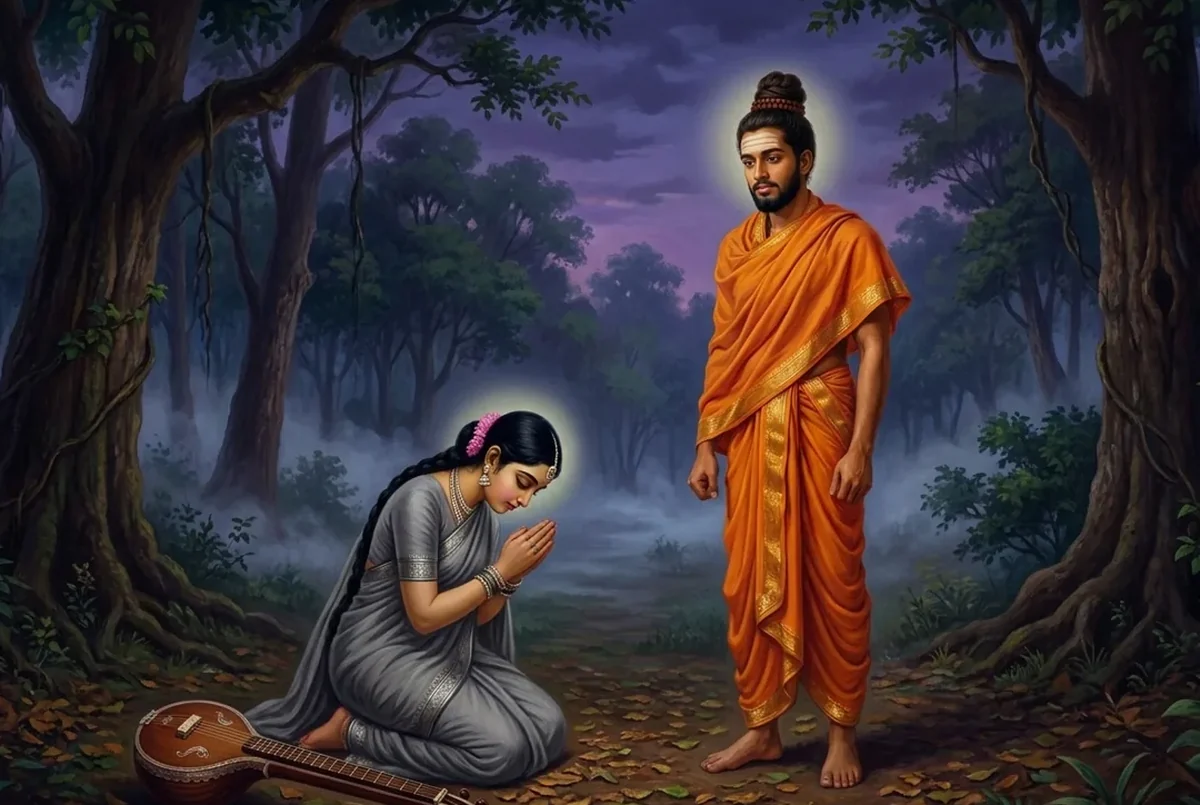
Medhavi then went to his father, the sage Chyavana. Having heard everything, Chyavana spoke plainly. My son, he said, first you lost your penance to desire, and then in anger you cursed a woman. Both faults are yours. The very fast you prescribed for her, keep it yourself. Medhavi bowed his head, accepted this, and kept that Ekadashi with his whole heart.
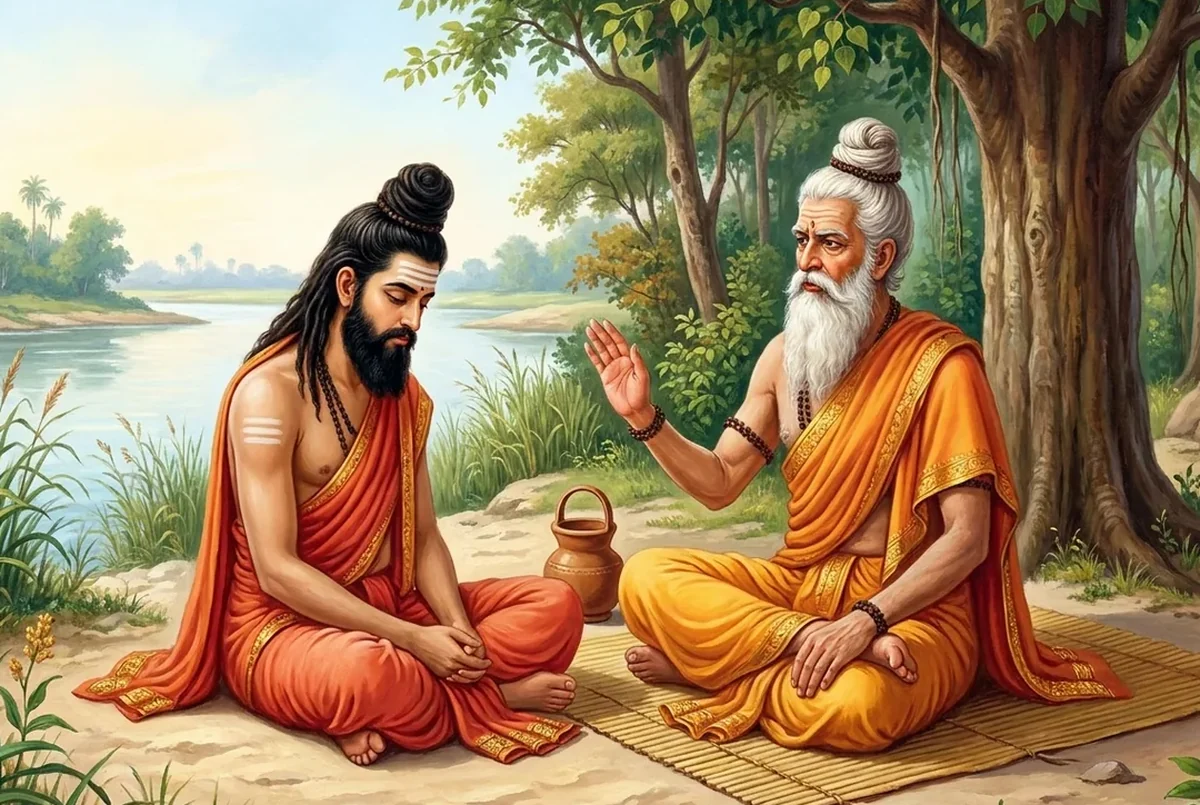
The katha says that by the power of the vrat Medhavi's mind grew clear and his practice took root again, and Manjughosha too was released from the spirit's body and returned to her own form in the heavens. The sense of the story is that desire and anger can both undo great discipline in a moment, and the cure for both is the same, to turn back. Papmochani Ekadashi is the day of that turning back.
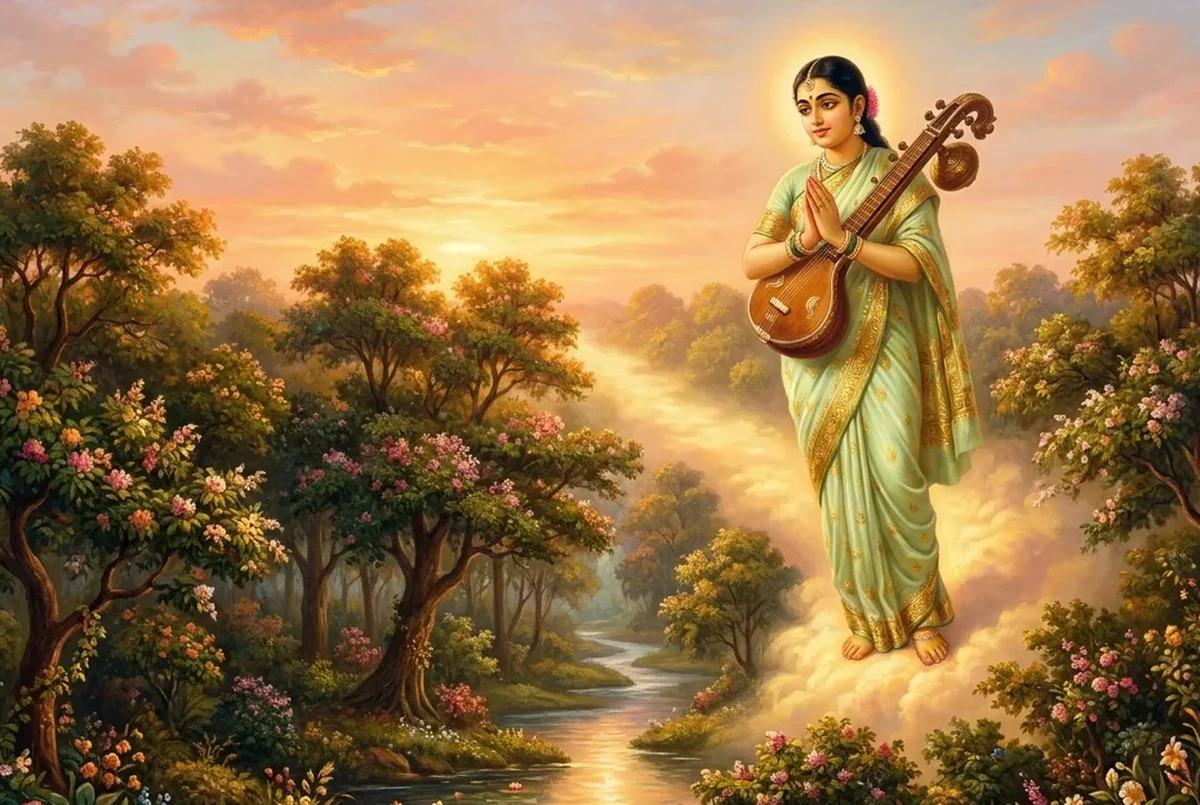
Tradition holds that keeping this fast with genuine regret and taking Lord Vishnu's name eases the weight a person carries. The katha promises no miracle and no reward; it says only that admitting a mistake honestly is the first step of mending it, and that nobody has fallen so far that the step is closed to them. Coming as it does at the close of the vrat year, Papmochani is kept as a day for settling old accounts with oneself. May Lord Vishnu keep every heart clear.
How it is observed
- Keep away from anger, harsh words and gossip all day; this is held to be the real discipline of this vrat.
- Offer yellow flowers, sandalwood, tulsi leaves and fruit to Lord Vishnu, light a lamp, listen to the Papmochani katha and chant Om Namo Bhagavate Vasudevaya.
- On the evening of Dashami eat one sattvik meal, avoiding garlic, onion and rice; on Ekadashi take the vow and eat no grain, especially rice, through the day, living on fruit, milk and water as you are able. Anyone who is unwell, elderly, pregnant or on medication should keep it only as their health allows.
- Spend the evening in bhajan or reading.
- The next morning, on Dwadashi, after bath, puja and a gift of food as you are able, break the fast, which is called parana; the parana time changes with the place and the date, so check your local panchang.
Frequently asked questions
When is Papmochani Ekadashi 2027?
Papmochani Ekadashi 2027 is on 2 April 2027, Friday. Dates follow the Hindu panchang for Delhi; other cities can differ by a day.
Why is Papmochani Ekadashi celebrated?
The Ekadashi of the dark fortnight of Chaitra is called Papmochani Ekadashi, which simply means the one that releases you from sin.
Source
In its most widely told form this vrat katha appears in the Bhavishyottara Purana as a dialogue between Krishna and Yudhishthira; some collections also place it in the Padma Purana as a dialogue between the sage Lomasha and King Mandhata. What is given here is that popular story retold in our own words.
Times by city — 2 April 2027
| City | Date | Parana time |
|---|---|---|
| Delhi | 2 April | 1:40 PM – 4:10 PM3 April, Saturday |
| Indore | 2 April | 1:45 PM – 4:14 PM3 April, Saturday |
| Mumbai | 2 April | 1:56 PM – 4:25 PM3 April, Saturday |
| Lucknow | 2 April | 1:25 PM – 3:55 PM3 April, Saturday |
| Patna | 2 April | 1:08 PM – 3:37 PM3 April, Saturday |
| Jaipur | 2 April | 1:45 PM – 4:15 PM3 April, Saturday |
| Bhopal | 2 April | 1:38 PM – 4:08 PM3 April, Saturday |
| Pune | 2 April | 1:52 PM – 4:21 PM3 April, Saturday |
| Ahmedabad | 2 April | 1:58 PM – 4:27 PM3 April, Saturday |
| Kolkata | 2 April | 12:55 PM – 3:24 PM3 April, Saturday |
| Hyderabad | 2 April | 1:34 PM – 4:02 PM3 April, Saturday |
| Varanasi | 2 April | 1:16 PM – 3:46 PM3 April, Saturday |
| Chennai | 2 April | 1:26 PM – 3:53 PM3 April, Saturday |
| Bengaluru | 2 April | 1:37 PM – 4:04 PM3 April, Saturday |
| Thiruvananthapuram | 2 April | 1:39 PM – 4:06 PM3 April, Saturday |
| Bhubaneswar | 2 April | 1:05 PM – 3:33 PM3 April, Saturday |