
Parivartini Ekadashi Vrat Katha
Parivartini Ekadashi — When is it
- 11 September 2027, Saturday
Why is this day celebrated?
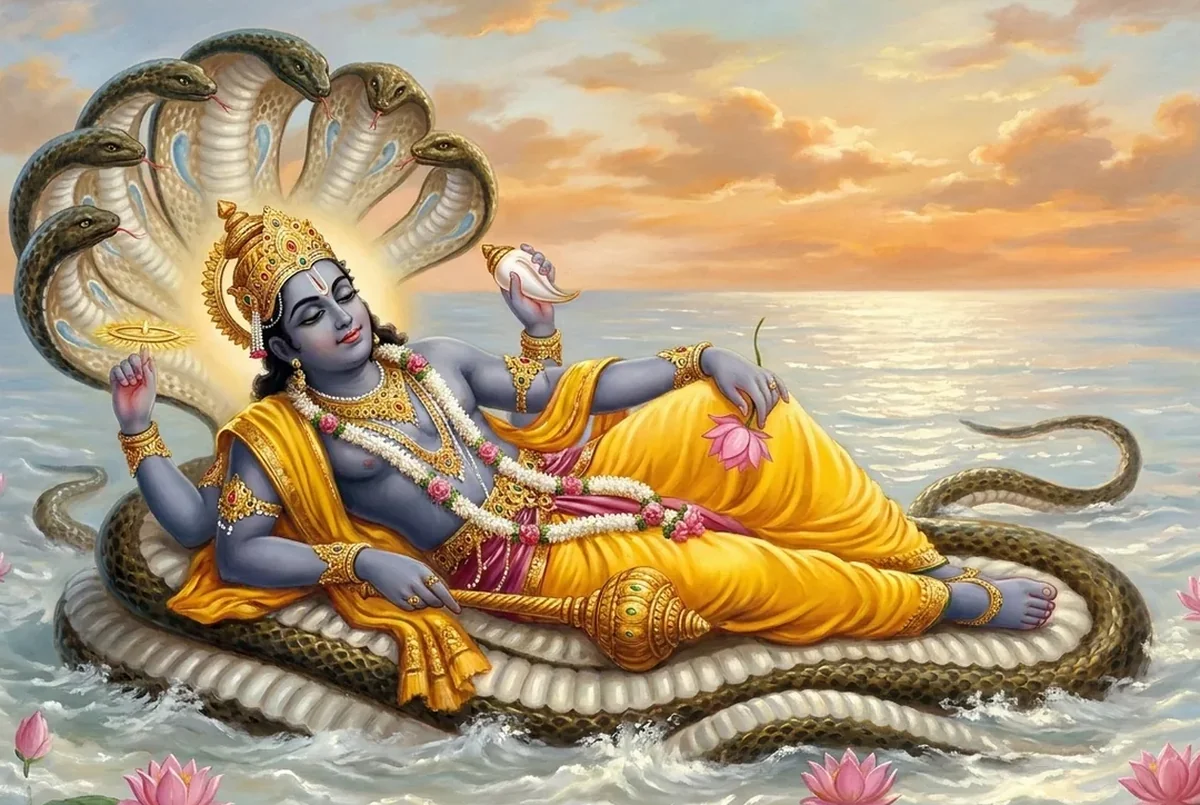
The ekadashi of the bright fortnight of Bhadrapad is called Parivartini Ekadashi. It is believed that on this day Lord Vishnu, lying in the yoga nidra of Chaturmas, turns on to his other side, which is why the day is called Parivartini, the turning, and also Parshva, the side. The Lord is worshipped on this day in his Vamana form, so it is also called Vamana Ekadashi. In Braj and many other places it is called Jaljhulani Ekadashi, when the deity is taken out for a ride on the water.
The katha
Lord Krishna told this story to Yudhishthira. From Devshayani Ekadashi in Ashadha I lie down to sleep, he said, and on the ekadashi of the bright fortnight of Bhadrapad I turn on my side. From that turning the day takes the name Parivartini, and from parshva, the side, it is called Parshva Ekadashi. On this day my Vamana form is worshipped. Then he told why that small form had to be taken at all.
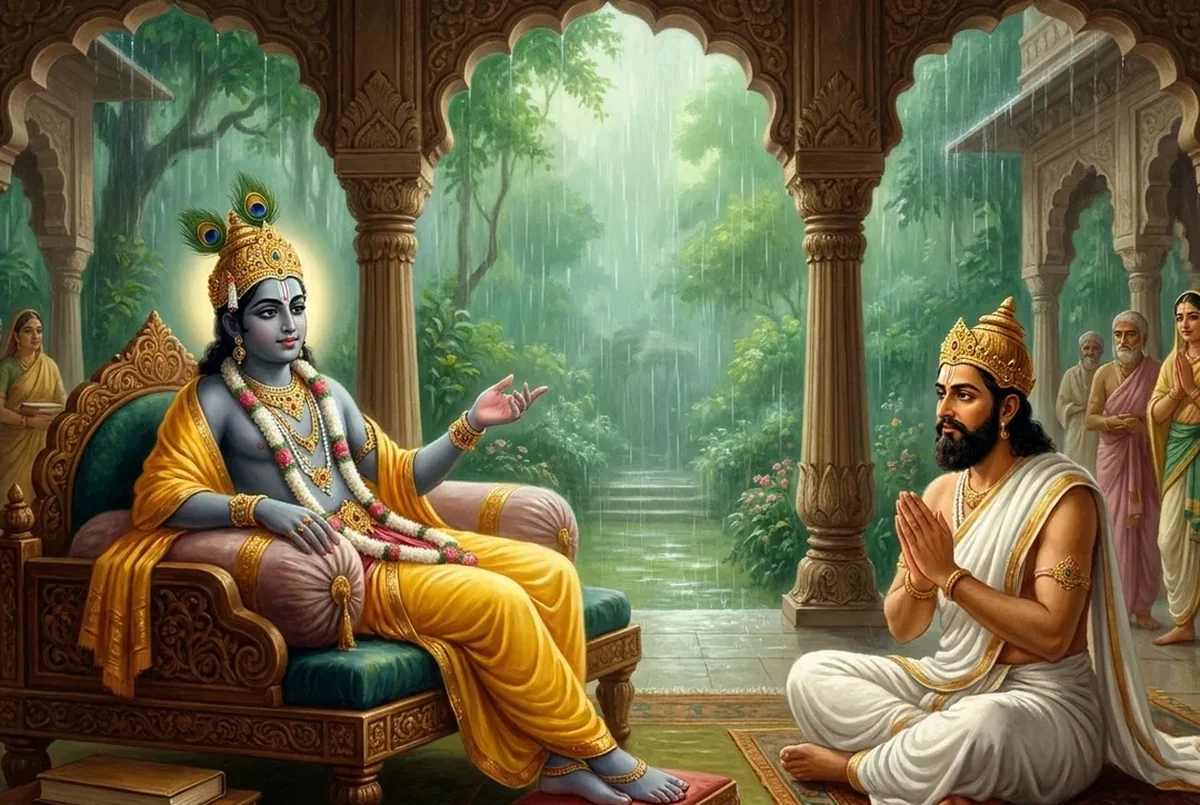
In the Treta Yuga there was an asura king named Bali, grandson of the great devotee Prahlad. He was born in the asura line, but by nature he was truthful, open handed and respectful to brahmins. He performed great yajnas and hard penance, and by that strength he won all three worlds, Indra's heaven included. The gods, left without a place of their own, went to Lord Vishnu for help.
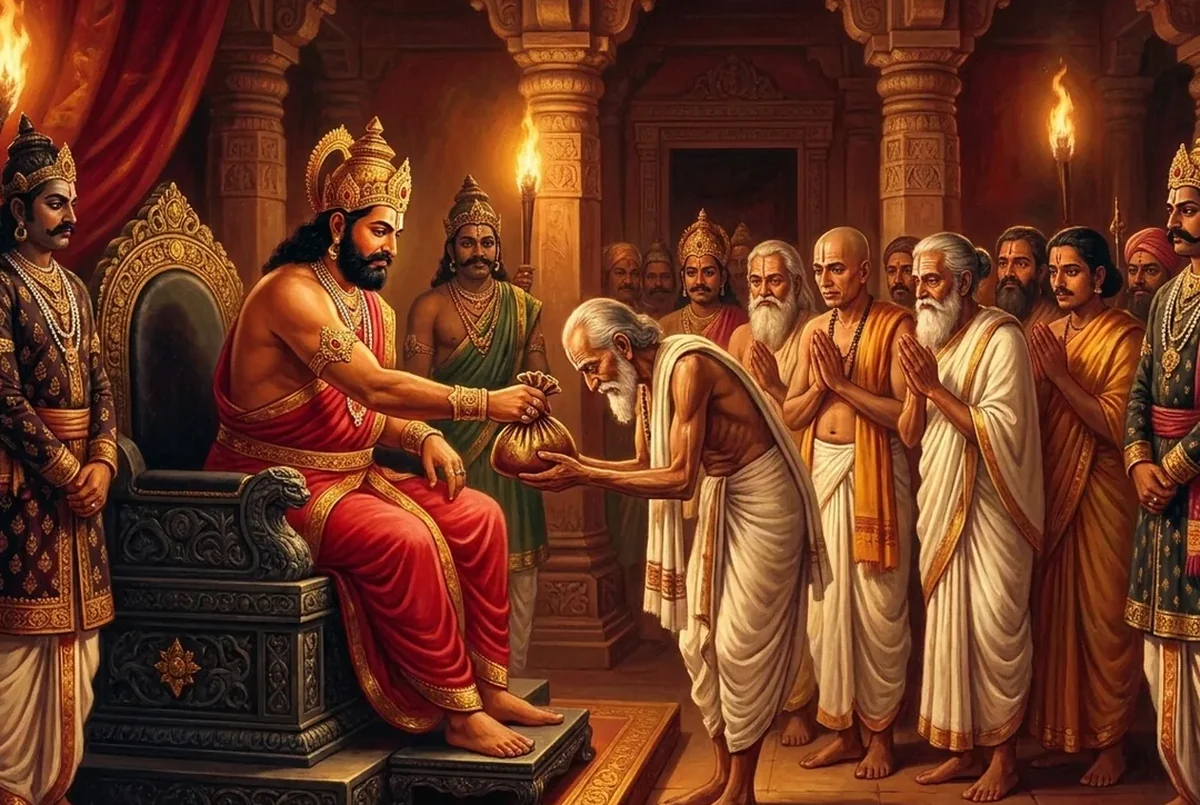
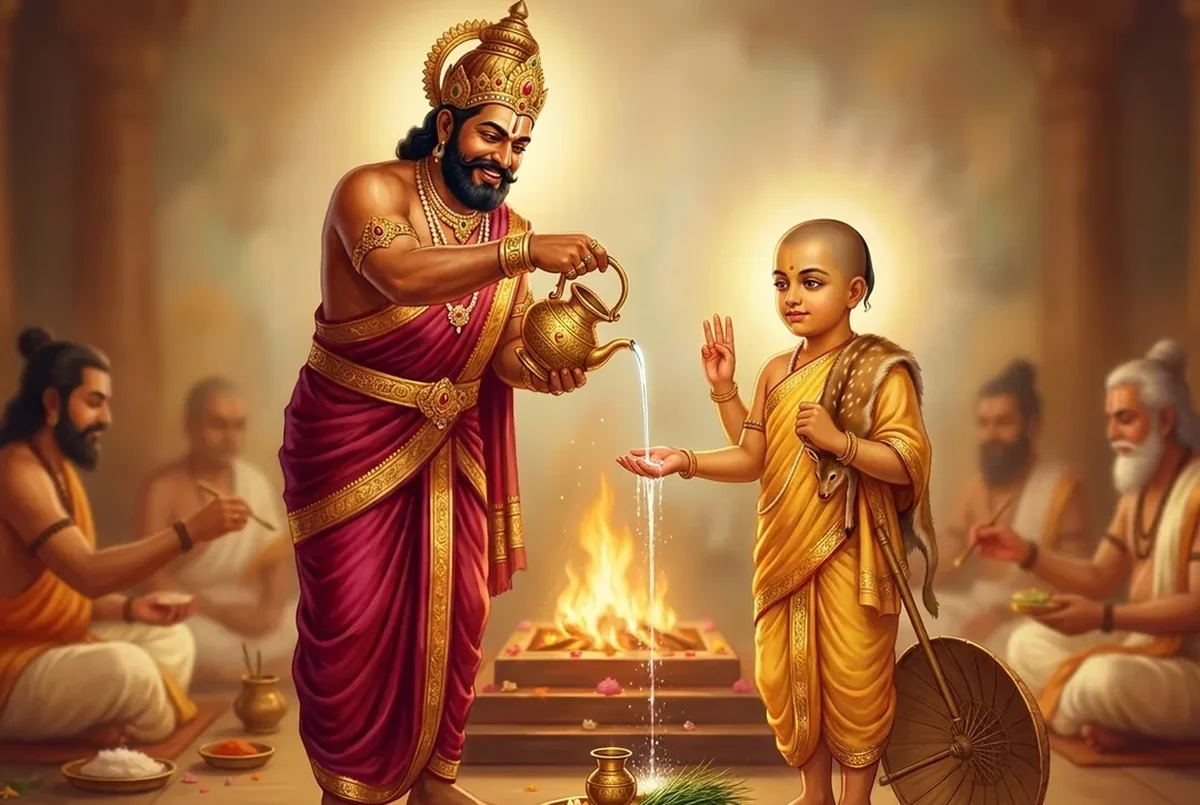
Bali was then performing a great yajna on the bank of the Narmada, and it was announced that whoever asked would receive. To that yajna came a small, shining brahmin boy with an umbrella and a wooden staff. This was Lord Vishnu as Vamana. Bali's teacher Shukracharya recognised him and quietly tried to stop the king, but Bali said, a guest at my yajna will not go away empty handed, whoever he may be.
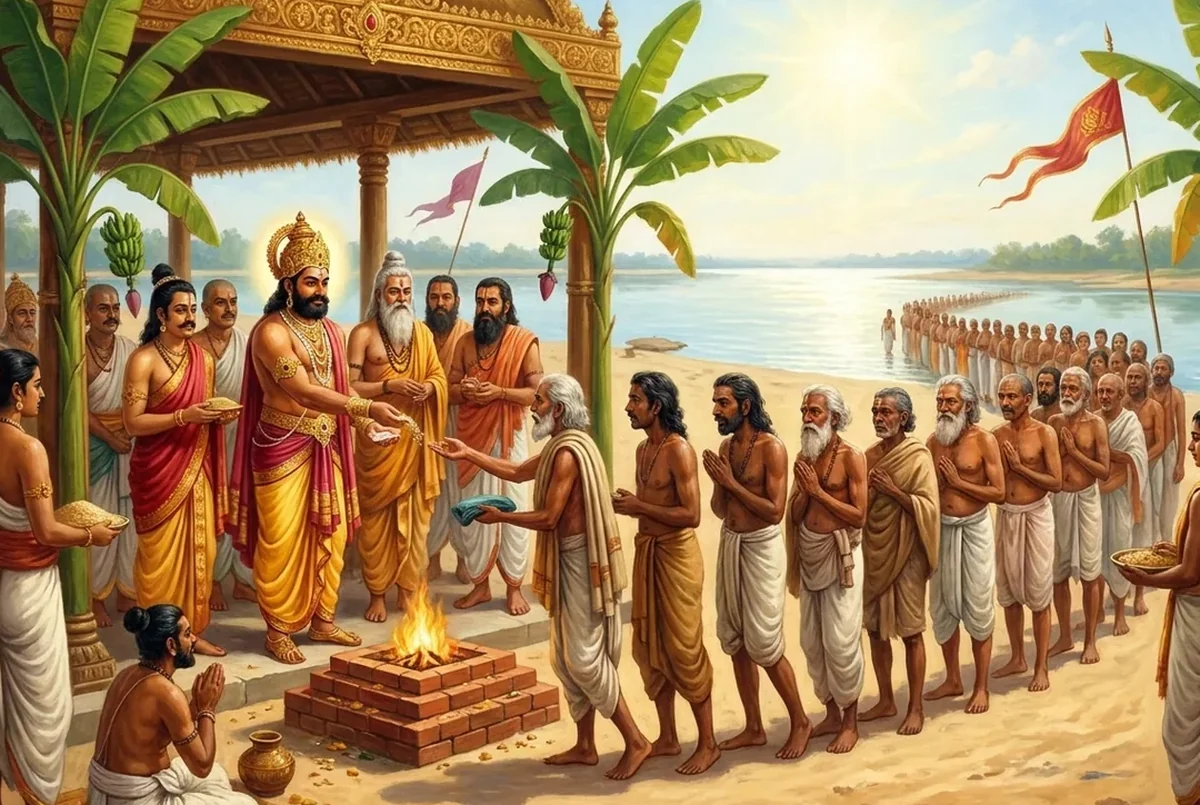
Vamana asked for very little, only three paces of land. Bali laughed and poured the water of the vow. Then the small boy began to grow, until those watching trembled. With one step he measured the whole earth, with the second the sky and the heavens. Then he asked, where shall I set the third. Bali did not think for even a moment. He bowed his head and said, let my word not be left unfinished; set the third pace on my head.
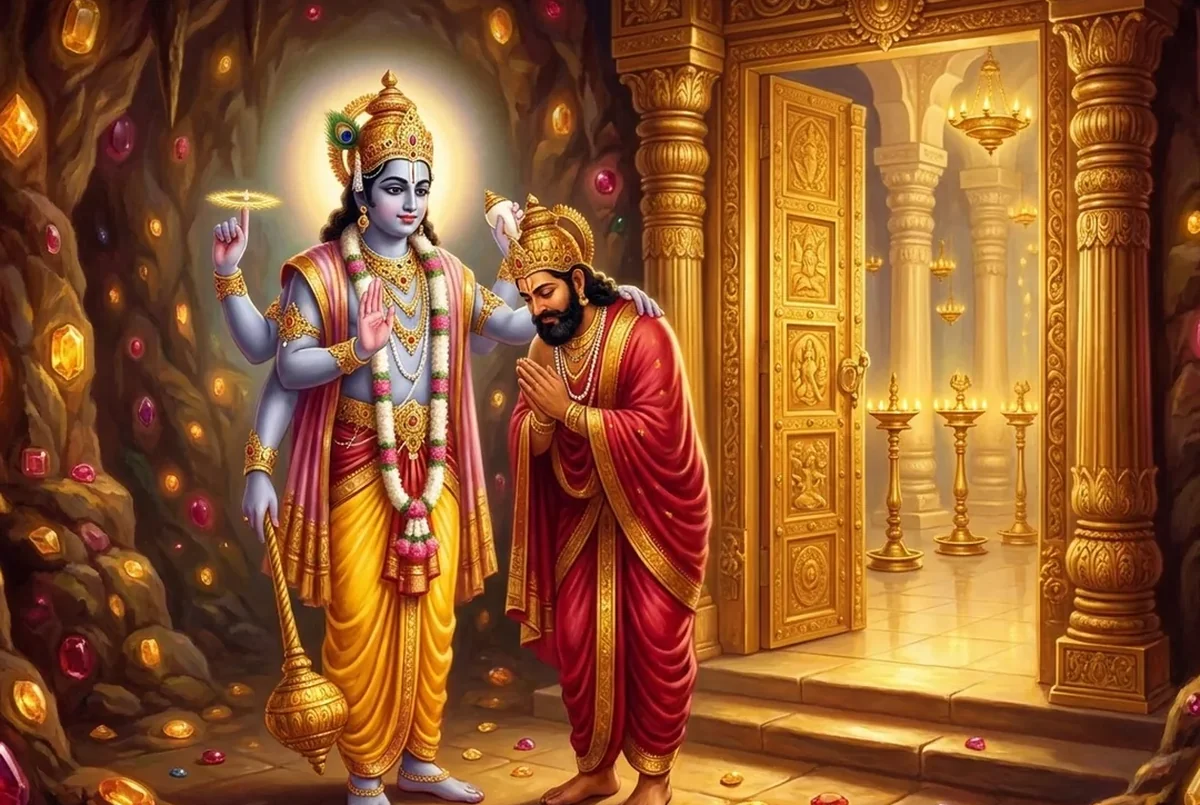
The Lord was pleased with him. You have given not a kingdom but your pride, he said, so you have not been defeated. He gave Bali the realm of Patala to rule, and promised that through the months of Chaturmas he would stay at Bali's door. That is why it is said that in these months one form of the Lord stays with Bali while another rests on Shesha in the ocean of milk, and that on this ekadashi he turns on his side.
The katha says that keeping the fast on this day, worshipping Vamana and giving curd, rice or grain in charity brings great merit. But the heart of the story is that Bali is no villain. He is one of those few who, when it came to giving, gave his own self, and the Lord honoured him by standing at his door. Learn to give, and give with an open hand. May Lord Vamana lift away our pride gently.
How it is observed
- Tradition names curd and rice as the special gift of this day; grain, an umbrella and clothes are given with them, according to your means.
- Worship the Lord in his Vamana form, or worship Shaligram and Lakshmi Narayan, offering yellow flowers, tulsi leaves and seasonal fruit; pluck the tulsi a day earlier.
- In many temples of Braj, Rajasthan and Maharashtra the deity is carried in a palanquin to a tank or river for a ride on the water, which is called Jaljhulani; at home too the deity is bathed and dressed in fresh clothes on this day.
- Eat one sattvik meal on the evening of Dashami; grain and rice are given up on Ekadashi, and the fast is kept on fruit or without water, as far as you are able. Anyone who is unwell, elderly, pregnant or on medication should keep it only as their health allows.
- Break the fast on Dwadashi morning at the proper time. The parana time differs from place to place and from year to year, so check the panchang for your own town.
Frequently asked questions
When is Parivartini Ekadashi 2027?
Parivartini Ekadashi 2027 is on 11 September 2027, Saturday. Dates follow the Hindu panchang for Delhi; other cities can differ by a day.
Why is Parivartini Ekadashi celebrated?
The ekadashi of the bright fortnight of Bhadrapad is called Parivartini Ekadashi.
Source
The story of the Vamana avatar and King Bali is told at length in the eighth canto of the Bhagavata Purana. The vrat mahatmya of Parivartini or Parshva Ekadashi comes from the ekadashi mahatmya tradition of the Padma Purana, where Lord Krishna tells it to Yudhishthira; some versions give the listener as Arjuna.
Times by city — 11 September 2027
| City | Date | Parana time |
|---|---|---|
| Delhi | 11 September | 6:04 AM – 8:33 AM12 September, Sunday |
| Indore | 11 September | 6:12 AM – 8:40 AM12 September, Sunday |
| Mumbai | 11 September | 6:25 AM – 8:53 AM12 September, Sunday |
| Lucknow | 11 September | 5:50 AM – 8:19 AM12 September, Sunday |
| Patna | 11 September | 5:34 AM – 8:03 AM12 September, Sunday |
| Jaipur | 11 September | 6:11 AM – 8:40 AM12 September, Sunday |
| Bhopal | 11 September | 6:06 AM – 8:34 AM12 September, Sunday |
| Pune | 11 September | 6:22 AM – 8:49 AM12 September, Sunday |
| Ahmedabad | 11 September | 6:25 AM – 8:53 AM12 September, Sunday |
| Kolkata | 11 September | 5:22 AM – 7:50 AM12 September, Sunday |
| Hyderabad | 11 September | 6:03 AM – 8:31 AM12 September, Sunday |
| Varanasi | 11 September | 5:43 AM – 8:11 AM12 September, Sunday |
| Chennai | 11 September | 5:58 AM – 8:25 AM12 September, Sunday |
| Bengaluru | 11 September | 6:09 AM – 8:36 AM12 September, Sunday |
| Thiruvananthapuram | 11 September | 6:13 AM – 8:39 AM12 September, Sunday |
| Bhubaneswar | 11 September | 5:33 AM – 8:01 AM12 September, Sunday |